Azin Asro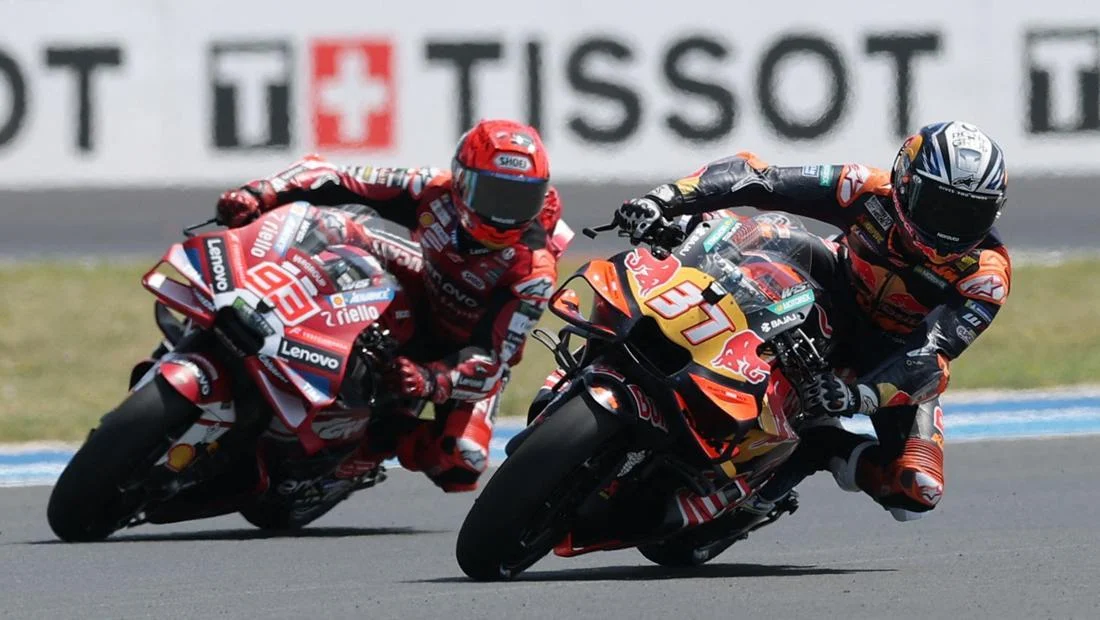
The landscape of Grand Prix motorcycle racing is undergoing a fundamental transformation, shifting away from a sport defined by the individual brilliance of the rider toward one governed by engineering precision and technological superiority. Pedro Acosta, the standout rookie for Red Bull KTM GasGas Tech3, has voiced significant concerns regarding this transition, suggesting that the current era of MotoGP is increasingly mirroring the technical dependency seen in Formula 1. Acosta’s observations highlight a growing sentiment within the paddock that the "human element" is being overshadowed by the "machine element," creating a scenario where even the most talented riders are unable to compensate for a technical deficit.
Acosta, who has been hailed as a generational talent following his rapid ascent through Moto3 and Moto2, argues that the era where a rider could win on a sub-par motorcycle is effectively over. In recent statements, he pointed out that a decade ago, the competition was primarily a showcase of rider skill, where the nuances of the pilot’s style could bridge the gap between different manufacturers. Today, however, the reliance on sophisticated electronics, complex aerodynamics, and ride-height devices has shifted the balance of power into the hands of the engineers.
The Shift from Rider Skill to Engineering Dominance
According to Acosta, the current state of MotoGP requires "the right weapon" to even consider a podium finish. He noted that ten years ago, while Honda and Yamaha were the dominant forces, the differences in their performance across various circuits allowed for a more balanced competition where the rider remained the primary variable. This historical perspective recalls the legendary battles between riders like Valentino Rossi, Casey Stoner, Jorge Lorenzo, and Dani Pedrosa, where individual riding styles often dictated the outcome of a race more than the specific technical specifications of the bike.
"This sport is increasingly becoming a sport for engineers," Acosta remarked during a recent interview. He emphasized that in the past, a rider did not necessarily need the absolute best machine on the grid to secure a victory. The versatility of the bikes allowed for a greater range of rider input. In contrast, the modern MotoGP prototype is a highly specialized piece of equipment that functions within a very narrow operational window. If the technical package—specifically the aerodynamic configuration and electronic settings—is not optimal, the rider’s ability to influence the result is severely limited.
Acosta’s comparison to Formula 1 is particularly poignant. For years, MotoGP fans and critics have prided themselves on the fact that, unlike F1, the rider still made the majority of the difference in motorcycle racing. However, with the introduction of "dirty air" issues, tire pressure sensitivities caused by aerodynamic wakes, and the necessity of ride-height devices to manage acceleration, the parallels between the two disciplines are becoming harder to ignore.
The Chronology of Technological Evolution in MotoGP
To understand Acosta’s critique, it is essential to trace the timeline of technological advancement that has led the sport to its current state. The shift began in earnest in the mid-2010s and has accelerated rapidly over the last five years.
In 2016, MotoGP introduced a unified electronic control unit (ECU) and spec software. The intention was to level the playing field and reduce the massive advantage held by the factory Honda and Yamaha teams. While this initially succeeded in making the grid more competitive, it also forced manufacturers to look for performance gains in other areas—most notably in aerodynamics and chassis geometry.
By 2019, Ducati had revolutionized the sport with the introduction of aerodynamic "winglets" and the "swingarm spoon." These innovations were designed to create downforce, reducing wheelies and improving braking stability. This sparked an aerodynamic arms race. Manufacturers began spending millions of dollars in wind tunnels, a practice previously more common in the automotive industry than in motorcycle racing.
Following the aero boom came the development of ride-height devices, often referred to as "holeshot devices." Initially used only for race starts, these mechanical systems now allow riders to lower the rear (and sometimes the front) of the bike while exiting corners. By lowering the center of gravity, the bike can accelerate harder without the front wheel lifting. While technologically impressive, these devices have added another layer of complexity that the rider must manage manually while traveling at speeds exceeding 300 km/h.
Supporting Data: The Decline of the "Aliens" and the Rise of European Tech
The data supports Acosta’s assertion that the "weapon" now dictates the results. For decades, Japanese manufacturers Honda and Yamaha dominated the sport. Between 1975 and 2021, these two brands won the vast majority of premier-class titles. However, the recent shift toward an "engineering-first" philosophy has seen European manufacturers—Ducati, KTM, and Aprilia—surpass their Japanese counterparts.
In the 2023 and 2024 seasons, the dominance of Ducati has been nearly absolute. During the 2023 season, Ducati won 17 out of 20 Grand Prix races. The sheer volume of data collected from eight Ducatis on the grid allows their engineers to refine settings with a level of precision that smaller or less technologically advanced operations cannot match. This has led to a "locked-in" grid where the top spots are often occupied by the same manufacturer, regardless of the individual rider’s historical pedigree.

For example, Marc Marquez, widely considered one of the greatest riders in history, struggled for years on an uncompetitive Honda before eventually making the difficult decision to move to a satellite Ducati team in 2024 just to remain competitive. This move serves as a practical validation of Acosta’s point: even an eight-time world champion cannot overcome a significant technical disadvantage in the modern era.
The Role of Electronics and Mechanical Failures
Acosta also highlighted the fragility of modern success, noting that riders are now at the mercy of complex systems that can fail through no fault of their own. "If the rear device does not work properly, you are stuck," he explained. The integration of these systems means that a minor sensor failure or a mechanical glitch in the ride-height system can relegate a front-runner to the back of the pack instantly.
This level of technical sensitivity has changed the psychological profile of racing. Riders must now be "systems managers" as much as they are athletes. They must monitor tire pressures, manage multiple engine maps, and activate mechanical levers at precise moments, all while navigating a track with twenty other riders. Acosta suggests that because the bikes are so stable and "perfect" due to these aids, the only way to gain an advantage is to take "extra risks" that push the boundaries of physics, often leading to spectacular and dangerous crashes.
Reactions from the Paddock and Governing Bodies
Acosta is not alone in his assessment. Retired legends like Casey Stoner have long been vocal critics of the increasing reliance on electronics and aerodynamics, arguing that it diminishes the spectacle of the sport. Stoner has frequently stated that the bikes have become "too easy" to ride in terms of throttle control but "too difficult" to race because the aerodynamics make overtaking nearly impossible due to the turbulence created for the following rider.
Current riders have also expressed frustration. Many have noted that the "slipstream effect," which used to be an advantage for overtaking, has turned into a disadvantage. The "dirty air" coming off the back of a modern MotoGP bike with extensive aero-fairings causes the front tire of the following bike to overheat and the pressure to spike, making it nearly impossible to maintain a close distance through corners.
In response to these growing concerns, the Grand Prix Commission and the FIM (Fédération Internationale de Motocyclisme) have announced a major regulatory overhaul scheduled for 2027. These new rules aim to reduce the technological complexity of the bikes by:
- Reducing engine displacement from 1000cc to 850cc to lower top speeds.
- Implementing stricter bans on ride-height and holeshot devices.
- Significantly reducing the allowed surface area for aerodynamic wings.
- Restricting the amount of GPS data and technical telemetry manufacturers can use.
These changes are a direct acknowledgment that the sport has drifted too far toward the "engineer-led" model Acosta describes.
Broader Impact and the Future of MotoGP
The implications of Acosta’s critique extend beyond the results on the scoreboard. There is a commercial and entertainment risk associated with the "F1-ification" of MotoGP. The primary draw of motorcycle racing has always been the visible, visceral struggle of a human being wrestling a powerful machine. When the machine becomes so stable that it looks like it is on rails, and when the winner is determined by who has the best aero-package rather than who is the bravest on the brakes, the sport risks losing its core audience.
Furthermore, the cost of remaining competitive is skyrocketing. The need for specialized aerodynamicists and data scientists has increased team budgets significantly. This creates a barrier to entry for new manufacturers and puts immense pressure on independent satellite teams to align themselves with the most technologically advanced factories.
Pedro Acosta’s comments serve as a wake-up call from a member of the new generation. As a rider who has succeeded in the current environment, his critique carries weight because it is not born of "sour grapes" but of a genuine concern for the identity of the sport. While the 2027 regulations offer a glimmer of hope for a return to a more rider-centric era, the next two seasons will continue to be a battle of the "arms race," where the brilliance of the rider is just one component in a much larger, engineer-driven machine.
In conclusion, the evolution of MotoGP into a high-tech engineering competition represents a double-edged sword. While the machines are faster and more sophisticated than ever before, the gap between the "haves" and the "have-nots" has widened. As Acosta suggests, the challenge for the future of MotoGP will be to find a way to let the rider’s talent shine through the layers of carbon fiber and code, ensuring that the world’s premier motorcycle racing series remains a contest of human skill rather than just a laboratory for industrial innovation.