Bambang Pamungkas
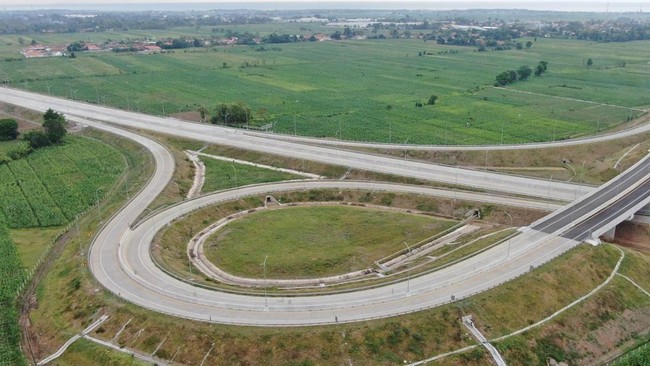
The Indonesian Ministry of Public Works and Housing (PUPR) has announced ambitious plans to functionally open approximately ten new toll road segments by the end of 2026, specifically targeting the crucial Christmas and New Year (Nataru) holiday period of 2026-2027. This strategic initiative aims to significantly enhance traffic flow and reduce congestion across major arteries, particularly in Sumatra and Java, facilitating smoother travel for millions of Indonesians during one of the busiest times of the year. The completion of construction by late 2026 is a key target, ensuring these vital infrastructure links are available for public use during the peak holiday season.
Strategic Imperative: Enhancing National Connectivity
This proactive measure underscores the government’s unwavering commitment to accelerating infrastructure development, a cornerstone of President Joko Widodo’s administration. The functional opening of these new segments is not merely about managing holiday traffic; it represents a critical step in realizing the broader vision of a seamlessly connected archipelago, fostering economic growth, and improving logistical efficiency across regions. The Head of the Toll Road Regulatory Agency (BPJT), Ni Komang Rasminiati, emphasized that this plan is intricately aligned with the ongoing construction progress across various parts of the country. Speaking at the "Infra Talks" event at the PUPR Ministry office in Jakarta on Friday, June 19, 2026, Komang stated, "Indeed, in line with construction progress, there are currently plans for approximately 10 segments. The hope is that these can be completed by the end of 2026 and can be functionally opened to support traffic movement during Nataru."
The Nataru period traditionally witnesses a massive exodus of urban populations to their hometowns and tourist destinations, placing immense pressure on existing road networks. By introducing new functional segments, the government aims to disperse traffic, reduce travel times, and enhance safety for travelers. This approach, which involves opening roads for temporary use before their full operational launch, has been successfully implemented in previous years, providing immediate relief during peak periods.
Key Projects Spearheading Nataru Connectivity
The planned functional openings span across the islands of Sumatra and Java, targeting critical bottlenecks and extending vital corridors. These projects are part of larger, interconnected networks designed to transform inter-island logistics and regional accessibility.
Sumatra’s Transformative Links:
A significant portion of the new functional segments lies within the ambitious Trans-Sumatra Toll Road (JTTS) network, a flagship national strategic project. The JTTS, spanning over 2,700 kilometers, is envisioned as the backbone of Sumatra’s economic development, connecting its northern and southern provinces.
-
Sigli-Banda Aceh Toll Road, Section 1 (Padang Tiji-Seulimeum): This segment is crucial for improving connectivity in Aceh, the westernmost province of Indonesia. The Sigli-Banda Aceh toll road itself is approximately 74 kilometers long, divided into six sections. The opening of Section 1 will significantly reduce travel time between Padang Tiji and Seulimeum, bypassing winding and often congested traditional routes. This improved access is expected to boost tourism in Aceh, renowned for its natural beauty and cultural heritage, and facilitate the movement of goods and services within the region. The broader Sigli-Banda Aceh project, once fully operational, will link the provincial capital Banda Aceh with Sigli, a key regional hub, cutting travel time by more than half.
-
Palembang-Betung Toll Road, Section 1 (Keramasan-Pulau Rimau): This segment is part of the larger 112-kilometer Palembang-Betung toll road, which is a vital component of the southern Sumatra corridor. The Keramasan-Pulau Rimau section will alleviate congestion on the existing national road, particularly around Palembang, the capital of South Sumatra. Palembang is a major economic center and a gateway to other parts of Sumatra. The completion of this section will enhance connectivity between Palembang and various industrial and agricultural areas, improving logistics for commodities like palm oil, rubber, and coal. The full Palembang-Betung toll road is critical for linking the provinces of South Sumatra and Jambi, further extending the reach of the JTTS and streamlining the distribution of goods across the island.
The Trans-Sumatra Toll Road has been a monumental undertaking, facing challenges such as land acquisition and complex geological conditions. However, the government, through state-owned enterprises like PT Hutama Karya, has consistently pushed for its completion, recognizing its immense potential to unlock Sumatra’s economic potential. Since its inception, several sections of JTTS have been progressively opened, already demonstrating a tangible impact on regional economies and inter-city travel.
Java’s Strategic Enhancements:
Java, as the most populous island and economic powerhouse of Indonesia, constantly requires upgrades to its infrastructure to keep pace with rapid urbanization and economic activity. The new functional segments here are designed to relieve pressure on existing, often over-capacity, routes.
-
Probolinggo-Banyuwangi Toll Road, Section 3 (Paiton-Besuki): This segment forms part of the Trans-Java Toll Road network, which stretches from Merak in the west to Banyuwangi in the east. The Probolinggo-Banyuwangi toll road, also known as Probowangi, is a critical link for connecting East Java’s northern coast with its easternmost tip, serving as a gateway to Bali via ferry. Section 3, specifically from Paiton to Besuki, will enhance access to industrial zones and tourist attractions along the northern coast of East Java. The full Probowangi toll road, once completed, will significantly reduce travel time to popular destinations like Mount Bromo and the Ijen Crater, boosting tourism in the region. Furthermore, it will facilitate the movement of agricultural products and manufactured goods from East Java’s hinterland to major ports and markets. The Trans-Java network, largely completed, has already revolutionized inter-city travel and logistics across Java, and the continued extension to Banyuwangi will solidify its impact.
-
Jakarta-Cikampek II Selatan Toll Road, Section 6 (Kutanegara-Sadang): This project is particularly vital for alleviating chronic congestion on the notorious Jakarta-Cikampek (Japek) main toll road, one of the busiest arteries in Southeast Asia. The Jakarta-Cikampek II Selatan (Japek II Selatan) is designed as an alternative route, running parallel to the existing Japek toll road. Section 6, connecting Kutanegara and Sadang, will provide a much-needed bypass, especially for traffic heading towards Bandung and other parts of West Java from Jakarta. The Japek II Selatan, approximately 62 kilometers long, aims to distribute traffic load and offer a smoother, faster journey for commuters and logistics vehicles. The existing Japek toll road often experiences severe bottlenecks, particularly during long weekends and holiday seasons. The new functional segment is expected to significantly reduce travel time and improve predictability for journeys along this critical corridor, benefiting both daily commuters and long-distance travelers.
The strategic placement of these segments in both Sumatra and Java highlights a comprehensive national approach to infrastructure development, targeting both regional connectivity and major inter-island arteries.
Government Oversight and Commitment
Ni Komang Rasminiati reiterated the government’s unwavering commitment to strict oversight of the construction progress to ensure that the target completion by the end of 2026 is met. "These are among the potential [segments] that we will continue to increase our supervision over, for their construction completion by the end of 2026, so that they can be functionally opened for the upcoming Nataru period," she affirmed. This rigorous monitoring includes regular site inspections, performance evaluations of contractors, and coordination meetings with all stakeholders, including toll road concession holders and local governments.
The functional opening process itself involves meticulous preparation. While the main carriageways are ready, ancillary facilities such as rest areas, full lighting, and landscaping might still be under construction. However, safety remains paramount, with temporary facilities and enhanced traffic management measures put in place to ensure safe passage for motorists. This phased approach allows the public to benefit from reduced travel times while construction on non-essential elements continues.
Broader Impact and Implications
The functional opening of these ten toll road segments carries significant implications across various sectors, extending beyond mere traffic management.
Economic Catalyst:
Improved connectivity is a powerful economic catalyst. Reduced travel times and logistics costs directly benefit industries reliant on efficient supply chains. Businesses can transport goods more quickly and at lower costs, enhancing competitiveness and potentially leading to lower consumer prices. For example, the Trans-Sumatra Toll Road is expected to cut logistics costs by up to 30%, making Sumatra’s agricultural and industrial products more competitive. Similarly, better access to industrial parks in West and East Java through the new segments will attract further investment and facilitate trade.
Tourism Boost:
Easier access to previously hard-to-reach destinations will undoubtedly spur domestic tourism. The segments in Aceh and East Java, for instance, open up new possibilities for travelers to explore Indonesia’s diverse landscapes and cultural heritage. This influx of tourists supports local economies, creating jobs and stimulating growth in hospitality, retail, and related services. The Nataru period itself is a prime tourism season, and these new roads will make it more accessible for families to visit relatives and holiday destinations.
Regional Development and Equity:
Infrastructure development is a key tool for addressing regional disparities. By connecting remote or less-developed areas to major economic centers, toll roads can stimulate local economies, attract investment, and create new opportunities for residents. The Trans-Sumatra Toll Road, in particular, aims to develop new growth corridors and alleviate the concentration of economic activity solely on Java.
Social Benefits:
Beyond economic gains, the new roads offer significant social benefits. Reduced travel times mean more quality time for families, less stress for commuters, and quicker access to essential services like healthcare and education. Enhanced safety on modern toll roads, compared to often dilapidated and congested national roads, also contributes to public well-being.
Environmental Considerations (Mitigation Efforts):
While large infrastructure projects inevitably have environmental footprints, modern toll road construction in Indonesia often incorporates mitigation strategies. These include adherence to environmental impact assessments (AMDAL), reforestation efforts along road margins, and designs that minimize disruption to local ecosystems and communities. The government also explores sustainable materials and construction techniques where feasible.
Challenges and Mitigation
Despite the ambitious targets, several challenges persist in large-scale infrastructure projects. Land acquisition, while significantly streamlined by recent regulations, can still present hurdles. Funding, though largely secured through a mix of state budgets, state-owned enterprise investments, and private partnerships, requires continuous monitoring. Furthermore, ensuring the quality and durability of construction in diverse geographical and climatic conditions is paramount.
The government has proactively addressed these challenges through various mechanisms:
- Accelerated Land Acquisition: Presidential decrees and special committees expedite the land acquisition process, crucial for maintaining project timelines.
- Diverse Funding Models: Employing Public-Private Partnerships (PPP), government guarantees, and capital injections into state-owned enterprises ensures financial viability.
- Strict Quality Control: BPJT and PUPR Ministry implement rigorous quality control measures, regular audits, and independent assessments to ensure structural integrity and safety standards are met.
- Multi-Stakeholder Coordination: Close collaboration between the PUPR Ministry, BPJT, Ministry of Transportation, National Police, local governments, and toll road concessionaires is essential for seamless project execution and operational readiness.
The Road Ahead: A Vision for Continuous Growth
The functional opening of these ten toll road segments for Nataru 2026-2027 is a testament to Indonesia’s sustained drive for infrastructure modernization. It signals a future where connectivity is not just an aspiration but a tangible reality, progressively linking cities, regions, and islands. As the country moves towards its "Golden Indonesia 2045" vision, robust infrastructure will be fundamental in supporting a high-income economy, fostering innovation, and enhancing the quality of life for all citizens.
The expansion of the toll road network is expected to continue beyond 2026, with many more segments planned or under construction. The focus will likely shift towards completing existing networks, adding feeder roads, and integrating smart transportation technologies such as intelligent traffic systems, electronic toll collection, and real-time information systems to further optimize traffic flow and enhance user experience. The commitment to building a resilient, efficient, and interconnected transportation network remains a top national priority, promising a more prosperous and accessible Indonesia for generations to come.