Azin Asro
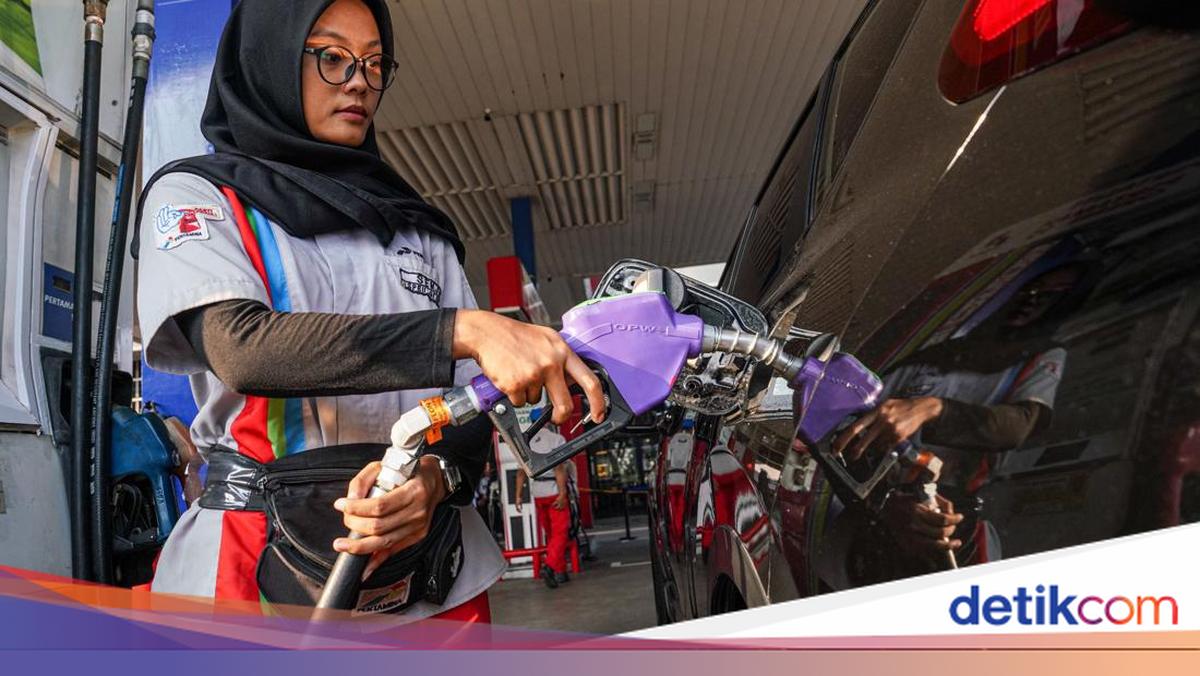
PT Pertamina (Persero), through its commercial sub-holding Pertamina Patra Niaga, has officially implemented a price adjustment for its RON 92 fuel product, Pertamax. The retail price has been set at Rp 16,250 per liter, marking an increase of Rp 3,950 from the previous price point. Despite this significant upward shift, the national energy company emphasizes that the current retail rate remains substantially below the actual market value, or the "economic price," of the fuel. This decision highlights the ongoing challenge of balancing the financial health of the state-owned enterprise and the national budget against the necessity of maintaining the purchasing power of the Indonesian public.
According to Roberth M. V. Dumatubun, the Corporate Secretary of Pertamina Patra Niaga, the latest price adjustment does not yet fully reflect the true economic costs associated with the procurement, refining, and distribution of high-octane fuel. He noted that the current price level is still heavily influenced by government intervention and internal corporate subsidies aimed at cushioning the impact of global oil price surges on domestic consumers.
The Discrepancy Between Retail and Economic Pricing
The concept of "economic price" is central to the current energy discourse in Indonesia. For a product like Pertamax, which is classified as a General Fuel Type (Jenis Bahan Bakar Minyak Umum or JBU), the price is theoretically supposed to fluctuate in accordance with the Mean of Platts Singapore (MOPS) and the global price of crude oil. However, the Indonesian government and Pertamina have historically intervened to prevent extreme volatility from reaching the pumps.
Roberth M. V. Dumatubun explained that the current adjustment brings the price of Pertamax to approximately 50% of its true economic value. "With a higher RON and superior quality, the economic price of Pertamax is naturally far above that of Pertalite (RON 90)," Roberth stated. He further clarified that if Pertamina were to follow the international market strictly without any fiscal buffer, the price would be significantly higher than the Rp 16,250 currently charged to motorists.
Supporting this sentiment, Sigit Setiawan, VP of Commercial & Shipping Business Development at Pertamina Patra Niaga, revealed that the market price for RON 92 fuel—based on global geopolitical conditions and supply chain constraints—should ideally reside in the range of Rp 20,000 to Rp 21,000 per liter. "We have held the price at lower levels for a considerable duration to protect the public. At one point, while the market suggested a price of over Rp 20,000, we maintained it at Rp 12,300," Sigit explained. The recent jump to Rp 16,250 is therefore presented as a "middle-ground" solution intended to ensure the sustainability of fuel supply while acknowledging the rising costs of global energy.
Chronology of Price Intervention and Adjustments
The timeline of this price adjustment reveals a strategic effort by the Indonesian government to delay the impact of global inflation. Initially, as global crude prices began to climb earlier in the year, there was significant pressure to adjust fuel prices by the start of the second quarter.
In coordination with Pertamina, the government decided to freeze the price of Pertamax on April 1, 2026 (based on the provided context), despite the widening gap between the production cost and the selling price. This "price freeze" was intended to maintain economic stability during a crucial period, likely coinciding with periods of high seasonal demand or sensitive macroeconomic shifts.
It was only on June 10 that the adjustment was finally enacted. This decision was not made in isolation; other private fuel entities operating in Indonesia, such as Shell, BP, and Vivo, also adjusted their prices to reflect the increasing costs of importing and distributing refined petroleum products. The collective move by all fuel providers underscores the reality of the "new normal" in energy costs, driven by a combination of limited global refining capacity and geopolitical tensions that have disrupted traditional supply routes.
Comparative Analysis: Indonesia vs. Southeast Asian Neighbors
To provide a broader perspective on the new Pertamax price, it is essential to look at the fuel landscapes of neighboring ASEAN nations. Fuel pricing structures vary significantly across the region due to differing subsidy models, tax regimes, and domestic oil production capabilities.
In Malaysia, the fuel market is unique due to heavy government subsidies. Malaysia does not widely market RON 92; instead, it focuses on RON 95 and RON 97. The subsidized version of RON 95 is sold at a fixed rate of 2.05 ringgit (approximately Rp 8,796), which is significantly lower than Indonesia’s Pertamax. However, the non-subsidized version of RON 95 in Malaysia is priced closer to the market at 3.72 ringgit (approximately Rp 16,444), which is almost identical to the new Pertamax price in Indonesia.
Thailand presents a different scenario, where fuel prices are more closely aligned with global market fluctuations. In Thailand, RON 91 fuel is sold at approximately 42.74 baht, which translates to roughly Rp 23,327 per liter. This is significantly higher than the adjusted Pertamax price, illustrating the level of protection Indonesian consumers still receive.
The Philippines, which relies heavily on imports and has a deregulated downstream oil industry, sees even higher prices. Unleaded RON 91 is priced at approximately 90.36 pesos (Rp 26,430), while RON 95 reaches 96.87 pesos (Rp 28,335). High-performance RON 97 fuel in the Philippines can exceed Rp 30,800 per liter.
In contrast, Vietnam offers one of the few examples where fuel is currently slightly more affordable than the new Pertamax rate. RON 92 in Vietnam is priced at approximately Rp 14,000 per liter. This regional variance highlights that while the jump to Rp 16,250 feels substantial to Indonesian consumers, the price remains competitive and relatively low compared to the non-subsidized markets of Thailand and the Philippines.
Macroeconomic Implications and the Fiscal Burden
The decision to keep Pertamax prices below the economic threshold has direct implications for Indonesia’s state budget (APBN). When Pertamina sells fuel below the cost of acquisition and production, the shortfall must be covered. For subsidized fuels (JBT) like Diesel and assigned fuels (JBKP) like Pertalite, the government provides direct subsidies or compensation. For Pertamax (JBU), while it is technically non-subsidized, the "holding" of prices results in a financial burden that affects the company’s cash flow and the government’s eventual compensation payments to the state-owned enterprise.
Economists argue that the Rp 3,950 increase is a necessary move to safeguard the fiscal health of the country. If the government were to continue absorbing the massive price gap for RON 92, it would divert funds away from other critical sectors such as infrastructure, education, and healthcare. Furthermore, maintaining an artificially low price for a high-octane fuel primarily used by the middle and upper classes is often viewed as an inefficient use of state resources.
"The point is that there is a significant role played by both the government and Pertamina in the current price of Pertamax," Roberth Dumatubun concluded. By not passing the full Rp 20,000+ market price to the consumer, the government is effectively providing an "implicit subsidy" to ensure that the transition to higher energy costs does not trigger a domestic inflationary spiral.
Impact on Consumer Behavior and Logistics
One of the primary concerns regarding the increase to Rp 16,250 is the potential for "consumption shifting." As the price gap between Pertamax (RON 92) and the subsidized Pertalite (RON 90) widens, there is a high likelihood that some motorists will downgrade their fuel choice. Pertalite remains priced at a much lower, subsidized rate, making it an attractive alternative for budget-conscious drivers.
However, automotive experts warn that such a shift could have long-term negative effects on modern vehicle engines designed for higher-octane fuel. Using lower-octane fuel can lead to engine "knocking," reduced fuel efficiency, and higher maintenance costs over time. From an environmental perspective, a mass shift back to Pertalite could also hinder Indonesia’s efforts to reduce carbon emissions, as higher-octane fuels like Pertamax generally offer cleaner combustion.
In the logistics and transport sector, the impact of the Pertamax hike is expected to be moderate. Most commercial logistics fleets in Indonesia rely on subsidized Biosolar (Diesel). However, ride-hailing services and small-scale delivery businesses that utilize motorcycles and private cars may feel the pinch, potentially leading to slight adjustments in delivery fees or service surcharges.
Looking Ahead: Global Uncertainty and Energy Security
The adjustment of Pertamax prices serves as a reminder of Indonesia’s vulnerability to global energy market shocks. As a net importer of oil, Indonesia remains at the mercy of international crude prices and the strength of the Rupiah against the US Dollar.
Pertamina has signaled that it will continue to monitor global developments closely. The company’s priority remains the "trilemma" of energy: security, equity, and sustainability. Ensuring that fuel is available at every gas station across the archipelago (energy security) requires a stable financial foundation, which the recent price adjustment seeks to bolster.
While the increase to Rp 16,250 is a difficult pill for the public to swallow, the data suggests that it is a calculated step in a broader strategy to navigate an era of expensive energy. By keeping the price at roughly 50% of its international economic value, the Indonesian government is attempting to walk a tightrope—mitigating the fiscal deficit while preventing the kind of social unrest that often accompanies sharp rises in the cost of living. As global geopolitical tensions show no signs of immediate abatement, the dialogue between market reality and social protection will likely remain the defining feature of Indonesia’s energy policy for the foreseeable future.