Eko Sulistyo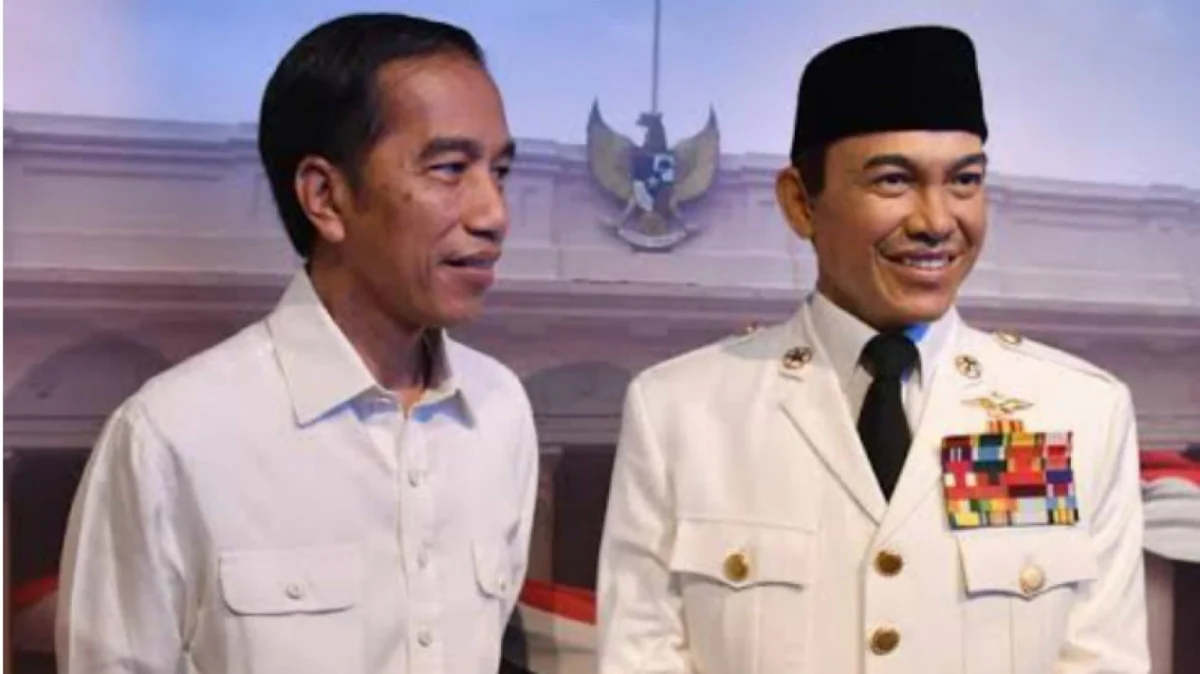
The historical tapestry of the Republic of Indonesia is intricately woven with specific dates and months that carry profound symbolic weight. Among the twelve months of the calendar, June stands out as a period of extraordinary significance for the nations executive leadership. Statistical analysis of Indonesias eight presidents reveals a remarkable pattern: exactly half of the nations leaders to date were born in June. This group includes the founding father Soekarno, the long-serving Soeharto, the intellectual reformer BJ Habibie, and the current transformative leader Joko Widodo. This concentration of presidential births has led historians and political observers to categorize June as the "Month of National Leadership," providing a unique lens through which to examine the evolution of the Indonesian state from its revolutionary roots to its modern democratic emergence.
The chronological distribution of these births spans sixty years, from the dawn of the 20th century to the early 1960s, reflecting the diverse socio-political backgrounds that shaped the Indonesian archipelago. The legacies of these four men—Soekarno, Soeharto, BJ Habibie, and Joko Widodo—represent the distinct eras of Indonesian history: the Old Order, the New Order, the Reformation (Reformasi), and the contemporary era of infrastructure and global integration. While their ideologies and governing styles varied significantly, their shared birth month serves as a perennial point of reflection for the Indonesian public on the qualities required to lead a nation of such vast geographic and cultural complexity.
Soekarno, the first President of Indonesia, was born on June 6, 1901, in Surabaya, East Java. Known as the "Son of the Dawn" (Putra Sang Fajar), Soekarno’s life was inextricably linked to the struggle for independence from Dutch colonial rule. His birth in the first year of the 20th century was often cited by his supporters as a sign of his destiny to lead Indonesia into a new age. Soekarno’s leadership was defined by his charisma, his oratory skills, and his synthesis of various political ideologies into the national philosophy of Pancasila.
A pivotal moment in the documentation of his presidency occurred on June 6, 1950, during his 49th birthday celebration. Held at the Istana Negara (State Palace) in Jakarta, the event was more than a personal milestone; it was a display of national unity in a fledgling republic. Historical archives from the National Archives of the Republic of Indonesia (ANRI) depict an atmosphere of warmth and high-level diplomacy. The presence of his wife, Fatmawati, and various national figures underscored the transition from a revolutionary government to a formal state apparatus. For Soekarno, birthdays were rarely about the self; they were extensions of the national identity. This is further emphasized by the proximity of his birthday to June 1, the day he delivered the speech that birthed Pancasila. Consequently, the first week of June is often celebrated by nationalists as a period of ideological renewal.
Following the revolutionary zeal of Soekarno, the presidency shifted to Soeharto, who was born on June 8, 1921, in the small village of Kemusuk, Yogyakarta. Born into a humble farming family, Soeharto’s rise through the military ranks culminated in a presidency that lasted from 1967 to 1998. His birthday, falling just two days after Soekarno’s, highlights a stark contrast in leadership archetypes. While Soekarno was the romantic revolutionary, Soeharto was the "Smiling General" who prioritized "Order and Development" (Pembangunan).
During his three decades in power, Soeharto’s birthdays were typically marked by formal state functions. Unlike the digital transparency of the modern era, documentation of these events was tightly controlled and filtered through state-run media outlets like TVRI. These celebrations were often attended by the "Golongan Karya" elite and foreign dignitaries, serving as an annual reaffirmation of the New Order’s stability. For the Indonesian public during that era, June 8 was a reminder of the centralized authority that governed the nation. Analysis of his tenure suggests that his birthdays were utilized as a tool for political consolidation, reinforcing his image as the "Father of Development" (Bapak Pembangunan) through orchestrated public displays of loyalty from the provinces.
The transition from the New Order to the era of Reformasi was spearheaded by Bacharuddin Jusuf Habibie, the third president, born on June 25, 1936, in Parepare, South Sulawesi. Habibie’s birth in the latter half of June adds a technological and intellectual dimension to the months presidential legacy. An aeronautical engineer by training, Habibie spent much of his life in Germany before returning to Indonesia to lead the nations high-tech industrialization efforts.
Habibie’s presidency was the shortest in Indonesian history, lasting only 512 days, yet it was arguably one of the most consequential. He assumed office in May 1998 amidst the Asian Financial Crisis and massive civil unrest. His birthday in June 1998, just one month after taking the oath of office, was a somber affair focused on stabilizing the economy and laying the groundwork for democratic elections. Habibie’s legacy is defined by his decision to allow a referendum for East Timor, the liberalization of the press, and the decentralization of power. His birthdays in his later years were celebrated by the public as the "Father of Technology," with many reflecting on his vision for an Indonesia that competed on the global stage through innovation rather than just natural resources.
The fourth "June President" is the seventh and current leader, Joko Widodo, popularly known as Jokowi, born on June 21, 1961, in Surakarta, Central Java. Jokowi’s birth coincides with the date of Soekarno’s death (June 21, 1970), a fact often noted by political commentators as a symbolic passing of the populist torch. Emerging from a background as a furniture businessman and mayor, Jokowi’s presidency since 2014 has focused on massive infrastructure projects, social welfare programs, and moving the national capital to East Kalimantan.
In a sharp departure from his predecessors, Joko Widodo is known for his aversion to formal birthday celebrations. Throughout his two terms, he has consistently requested that no special parties or state events be held in his honor. On June 21, he is typically found working in the field, conducting "Blusukan" (impromptu visits) to markets or construction sites. This approach aligns with his "man of the people" persona, reinforcing a narrative of humble service over elitist ritual. However, despite his personal modesty, his birthdays trigger massive social media engagement, with millions of Indonesians using digital platforms to send well-wishes, reflecting the shift in how the presidency interacts with the public in the 21st century.
The concentration of these four figures in June has significant implications for Indonesias political culture. The Indonesian Democratic Party of Struggle (PDI-P), the nations largest political party, officially designates June as "Bulan Bung Karno" (the Month of Bung Karno). This month-long commemoration includes seminars, cultural festivals, and political rallies that celebrate the birth of Pancasila (June 1), Soekarno’s birth (June 6), and his passing (June 21). This cultural branding has effectively turned June into a period of intense political reflection and ideological campaigning.
From a data-driven perspective, the "June phenomenon" provides a unique case study in leadership cycles. The four presidents born in this month represent nearly 80% of the total years Indonesia has been an independent nation. Soekarno led for 22 years, Soeharto for 32 years, Habibie for nearly 2 years, and Joko Widodo for 10 years. Collectively, these June-born leaders have steered the country for approximately 66 years of its 79-year history (as of 2024). This dominance suggests that the historical narrative of Indonesia is, in many ways, the narrative of its June-born statesmen.
Reactions from historians and sociologists often point to the diverse geographical origins of these leaders as a testament to the "Bhinneka Tunggal Ika" (Unity in Diversity) motto. Soekarno and Soeharto represented the heartland of Java, Habibie brought the perspective of the "Outer Islands" (Sulawesi), and Jokowi represents the modern urban transformation of Central Java. The fact that they all share a birth month is seen by many as a cosmic coincidence that binds these disparate threads of Indonesian identity together.
Furthermore, the evolution of how these birthdays are marked reflects the democratization of Indonesia. Under Soeharto, the birthday was a state ritual of power. Under Habibie, it was a moment of precarious transition. Under Jokowi, it has become a decentralized digital event where the president remains a "servant" of the people. This progression mirrors the nations journey from an authoritarian state to one of the world’s most vibrant democracies.
In conclusion, the month of June serves as a chronological anchor for the Indonesian presidency. The lives of Soekarno, Soeharto, BJ Habibie, and Joko Widodo encompass the entirety of the nations struggles, failures, and triumphs. As the nation moves forward, the "Month of Statesmen" will likely continue to be a time when Indonesians pause to evaluate the direction of their country, honoring the legacies of the past while looking toward the leadership of the future. Whether by coincidence or historical destiny, June remains the most significant month in the calendar of Indonesian leadership, marking the arrival of the men who shaped the largest archipelago in the world.