Nila Kartika Wati
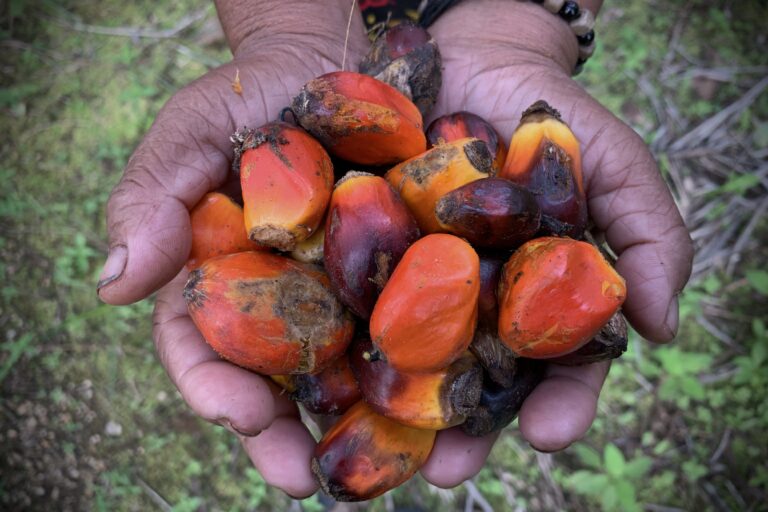
Indonesia currently stands as the undisputed global leader in palm oil production, accounting for more than half of the world’s supply. With an estimated 16.38 million hectares of plantations stretching across its archipelago and dozens of long-established seed research institutions, the nation’s dominance in the sector is a pillar of its national economy. However, a series of developments throughout 2025 has highlighted a startling irony: the world’s palm oil powerhouse is looking back toward the crop’s ancestral home in Africa to solve its internal productivity crises. In April 2025, Indonesia imported 82,000 oil palm seeds from Tanzania, a move that has sparked intense debate among industry stakeholders, environmentalists, and smallholder farmers regarding the true motives behind the policy and its potential long-term repercussions for the country’s agricultural landscape.
The official justification provided by the Indonesian Palm Oil Association (GAPKI) and the Oil Palm Germplasm Consortium centers on the necessity of genetic enrichment. Proponents of the import argue that Indonesian palm oil varieties, while high-yielding in the past, are facing a plateau in productivity. By introducing genetic material from Tanzania, the consortium aims to broaden the local gene pool, potentially creating hybrids that are more resilient to climate change, pests, and diseases, while simultaneously boosting stagnant yields. Despite these scientific explanations, a growing chorus of critics from civil society and farmer organizations suggests that the "genetic diversity" argument may be a convenient narrative masking deeper structural failures in national palm oil governance.
The core of the controversy lies in the disparity between the experiences of large-scale corporate plantations and the millions of independent smallholders who underpin the industry. While large companies possess the capital and infrastructure to integrate and experiment with new imported varieties, smallholder farmers—who manage roughly 40% of Indonesia’s total palm oil area—face a much more precarious reality. For these farmers, the introduction of African seeds represents an unknown variable in an already volatile market. There is no guarantee that seeds evolved in the Tanzanian climate and soil will perform optimally in the varied ecosystems of Sumatra, Kalimantan, or Papua. The risk of crop failure or sub-optimal yields is a burden that smallholders must carry alone, without the safety nets available to industrial giants.
The Crisis of Governance and Uncertified Seeds
Gunawan, a representative from the National Council of the Oil Palm Smallholders Union (SPKS), has challenged the government’s focus on genetics as the primary solution to stagnation. He points to data released by the Ministry of Agriculture in October 2025, which revealed a systemic failure in the seed distribution chain. According to the report, between 40% and 70% of the oil palm seeds currently circulating among farmers are uncertified or "fake" seeds. These low-quality seeds, often sold by unscrupulous middlemen, are the true culprits behind the nation’s lackluster productivity.
The prevalence of uncertified seeds is a symptom of weak oversight and a lack of access to formal markets for small-scale growers. When farmers plant these inferior seeds, the trees may take longer to mature and produce significantly less fruit, regardless of how much fertilizer is applied. Gunawan argues that if the government were serious about increasing productivity, the priority should be a massive crackdown on illegal seed networks and a streamlined process for farmers to access high-quality, locally-produced certified seeds. "If palm oil productivity is stagnant, the problem is not merely the genetics of the plant," Gunawan stated. "It is a matter of governance that has been allowed to leak on many sides for a long time."
This sentiment is echoed by Marselinus Andri, also of SPKS, who emphasizes that the hurdles facing smallholders are multi-faceted. Beyond the quality of seeds, farmers are struggling with the soaring costs of fertilizers and the slow implementation of the People’s Palm Oil Replanting (PSR) program. The PSR program, designed to help smallholders replace aging, unproductive trees with superior varieties, has been plagued by bureaucratic red tape and land legality issues. For many farmers, the promise of imported African seeds feels like a distraction from the fundamental lack of infrastructure and support that prevents them from reaching their current potential.
Chronology of a Shifting Strategy
The timeline of events in 2025 suggests a coordinated shift in Indonesia’s palm oil strategy, moving toward both intensification and geographic expansion.
- April 2025: The arrival of 82,000 seeds from Tanzania. This marked a symbolic moment where the world’s largest producer admitted a reliance on external genetic resources.
- October 2025: The Ministry of Agriculture’s data dump regarding the 40-70% uncertified seed rate. This provided the empirical evidence needed for critics to argue that the problem was internal management rather than biological limitations.
- December 2025: A high-level meeting between President Prabowo Subianto and regional heads from across Papua. During this summit, the President explicitly linked palm oil expansion to national energy security, specifically the production of biofuels.
The December meeting revealed a target of 600,000 hectares of new palm oil plantations in Papua. This directive has raised alarms within the environmental community. Achmad Surambo of Sawit Watch suspects that the import of African seeds is directly linked to this planned expansion. New seeds may be being vetted specifically for their performance in the unique, often more humid and undisturbed environments of the eastern provinces, where existing Indonesian varieties might not have been tested as extensively.
The Papua Frontier: Energy Security vs. Environmental Integrity
The push into Papua is framed by the government as a necessity for the "green energy transition." As Indonesia moves toward higher biofuel mandates—progressing from B35 toward B50 and beyond—the demand for Crude Palm Oil (CPO) as a feedstock is skyrocketing. To meet these domestic mandates while maintaining export volumes, the state believes it must find new land. Papua, with its vast tracts of forest, is the final frontier for this expansion.
However, the environmental cost of such a move is potentially catastrophic. Research conducted by Sawit Watch indicates that the ecological carrying capacity of Papua is already under severe strain. Of the 75,308 hectares of existing plantations in the region, a significant portion is already situated within sensitive areas, including primary forests and conservation zones. The proposed 600,000-hectare expansion threatens to accelerate deforestation in one of the world’s last remaining biodiversity hotspots.
Furthermore, the "biofuel" justification is viewed by some analysts as a double-edged sword. While it reduces reliance on fossil fuel imports, the conversion of primary forests into palm oil monocultures releases massive amounts of stored carbon, potentially neutralizing the carbon-saving benefits of the biofuel itself. This creates a cycle of environmental degradation that undermines Indonesia’s international climate commitments.
Economic and Social Implications for the Future
The decision to import seeds and expand into Papua reflects a broader ideological divide in how Indonesia views its most valuable commodity. On one side is the industrial-extractive model, which prioritizes volume, biofuel targets, and corporate expansion. On the other is a regenerative, smallholder-centric model that prioritizes land rights, governance, and the optimization of existing plots.
The economic implications of the seed import could also lead to a distortion of the local market. Indonesia has invested decades into developing its own seed producers, such as Pusat Penelitian Kelapa Sawit (PPKS). By favoring imports, the government may inadvertently undermine these domestic institutions. If large corporations begin to prefer African-derived varieties, the demand for local seeds could drop, leading to a loss of domestic research capacity and making the country more dependent on foreign intellectual property in the long run.
For the smallholder, the risk is even more personal. As the industry pivots toward Papua and high-tech imported genetics, the millions of farmers in Sumatra and Kalimantan fear they will be left behind. Without access to affordable fertilizer, clear land titles, and a transparent supply chain, they cannot compete with the massive, state-backed projects planned for the east.
Conclusion: A Question of Purpose
As Indonesia navigates the complexities of 2025 and beyond, the palm oil sector stands at a crossroads. The import of 82,000 seeds from Tanzania is more than a simple agricultural transaction; it is a signal of a systemic shift. It highlights a government that is looking for "silver bullet" biological solutions to what are essentially political and administrative problems.
The stagnation of productivity in Indonesia is not a failure of the soil or the seed, but a failure of the system to protect its most vulnerable participants—the smallholders—and its most precious resource—the forests of Papua. The data suggests that by simply fixing the "leaks" in governance, such as the 70% uncertified seed rate, Indonesia could significantly increase its output without felling a single tree in Papua or importing a single seed from abroad.
Ultimately, the question facing the nation is for whom this massive industry is truly being run. If the goal is sustainable prosperity for the Indonesian people, the focus must return to the millions of farmers currently struggling with uncertified seeds and lack of support. If the goal is merely to meet aggressive biofuel targets at any cost, then the expansion into Papua and the reliance on foreign genetics may continue, but at a price that the environment and the smallholder may not be able to pay. The paradox of the world’s palm oil giant importing seeds from Africa serves as a stark reminder that in the race for production, the most important factors are often the ones closest to home.