Bambang Pamungkas
France is currently in the grip of an intense and widespread heatwave, with temperatures projected to reach a scorching 42 degrees Celsius in some regions, prompting an unprecedented surge in demand for cooling appliances and igniting serious concerns for public health and infrastructure. As the mercury climbs, residents across the nation are resorting to "panic buying" of fans and air conditioners, queuing for hours outside electronics stores in a desperate bid to find relief from the relentless heat. The situation underscores Europe’s increasing vulnerability to extreme weather events, a trend highlighted by recent meteorological reports indicating the continent is warming at more than twice the global average.
Escalating Crisis: Meteorological Warnings and Soaring Temperatures
The current heatwave, which has gripped much of France, has led to a dramatic escalation of meteorological alerts. Météo-France, the national meteorological service, has extended its heat warnings, elevating the number of departments under the highest vigilance status from 49 to 54 out of the country’s total of 101. This significant expansion of red and orange alerts reflects the broadening geographical reach and intensifying severity of the heat phenomenon.
On Monday, June 22, 2026, the city of Bordeaux, located in the southwest, bore the brunt of the extreme conditions, with temperatures soaring to an estimated 42 degrees Celsius. The capital city, Paris, also experienced an exceptionally hot day, with forecasts predicting a peak of 38 degrees Celsius. These figures stand significantly above the average temperatures typically observed for this period, signaling a profound deviation from normal seasonal patterns. The intensity of the heat has been attributed to a persistent high-pressure system, often referred to as a "heat dome," trapping hot air over the region and preventing cooler air masses from penetrating. This meteorological phenomenon has created a stifling environment, particularly in urban areas where the "urban heat island" effect exacerbates the perceived temperatures.
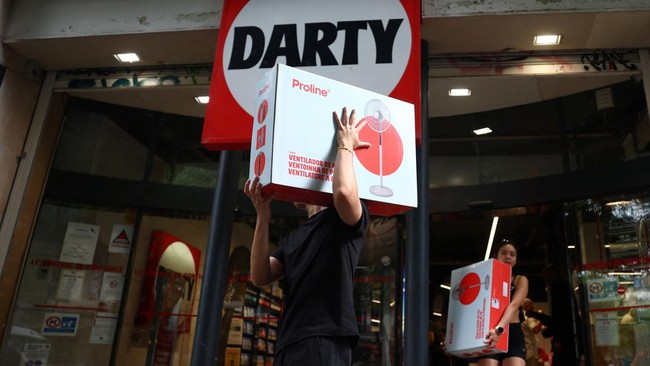
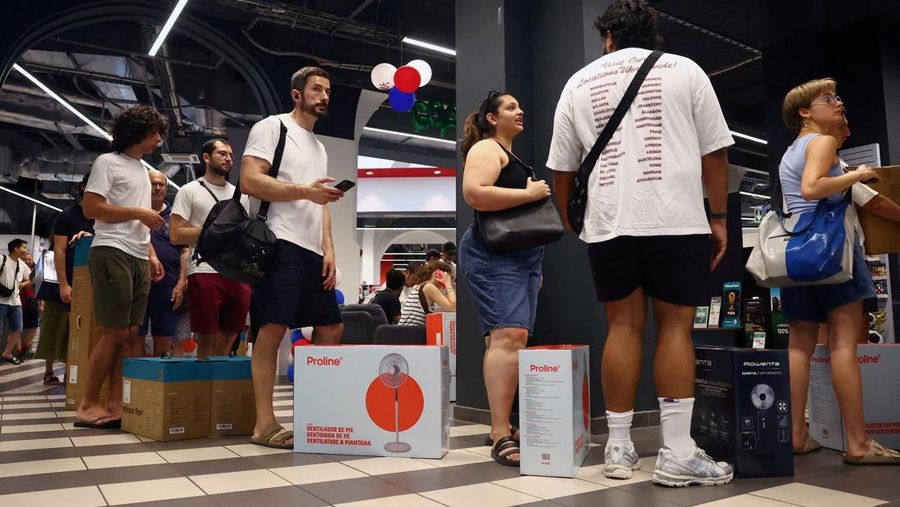
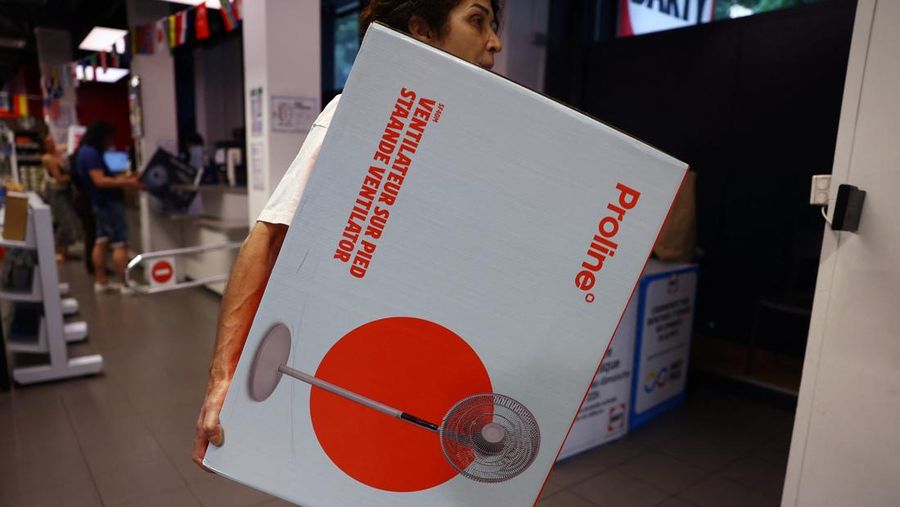
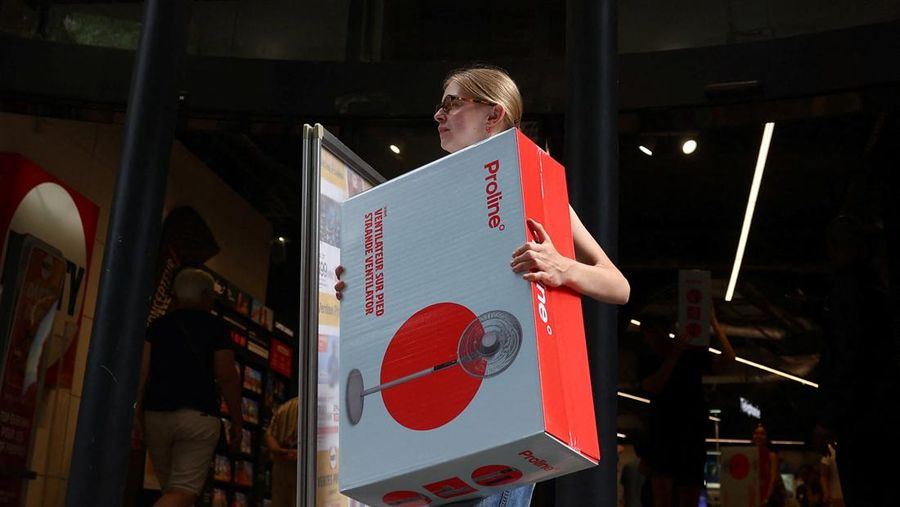
By Tuesday, June 23, 2026, as depicted in compelling photographic evidence from Paris, the immediate impact of the prolonged heat became acutely visible. Citizens were seen forming long queues outside branches of electronics and home appliance stores, such as Darty, eager to purchase standing fans and humidifiers. This visible rush for cooling devices illustrates the immediate and widespread need for relief as residential and commercial spaces struggle to cope with the oppressive heat. The scenes of people carrying large boxes containing newly acquired fans through the streets of Paris and other cities became a common sight, symbolizing the collective effort to mitigate the effects of the extreme temperatures.
Public Health and Safety Measures
The escalating heatwave has triggered widespread public health advisories from French authorities. Health officials have urged residents, particularly vulnerable populations such as the elderly, young children, and individuals with pre-existing medical conditions, to take extreme precautions. Recommendations include staying hydrated by drinking plenty of water, avoiding strenuous outdoor activities during the hottest parts of the day (typically between 11 AM and 4 PM), seeking refuge in cooler, air-conditioned spaces, and taking cool showers or baths. Public fountains and misting stations have been activated in numerous cities, providing temporary relief, while emergency services have been placed on high alert to respond to an anticipated increase in heat-related illnesses such as dehydration, heat exhaustion, and heatstroke.
The government has also activated its national heatwave plan, a multi-faceted strategy developed in response to lessons learned from previous extreme heat events, most notably the devastating 2003 heatwave which claimed thousands of lives across Europe. This plan includes daily monitoring of temperatures, public awareness campaigns, outreach to vulnerable individuals, and the establishment of "cool rooms" or designated public spaces where people can escape the heat. Local municipalities have been instructed to identify and open such spaces, including libraries, museums, and community centers, ensuring they are accessible to all citizens.
Disruptions Across Key Sectors
The profound impact of this unusually hot weather extends far beyond individual discomfort, causing significant disruptions across several critical sectors.
Education: In a preventative measure to protect students and teaching staff from the dangerous high temperatures, thousands of schools across France have either been forced to close temporarily or to significantly alter their daily schedules. This has involved either shortening school days, shifting class timings to cooler parts of the morning, or transitioning to remote learning where feasible. Such decisions highlight the severity of the threat posed by the heat to public well-being, particularly for children who are more susceptible to heat-related illnesses.
Infrastructure: The intense heat places immense strain on national infrastructure. The electricity grid, for instance, faces unprecedented demand as millions of households and businesses activate air conditioning units and fans simultaneously. This surge in consumption risks overloading the system, potentially leading to localized power outages. Transportation networks are also vulnerable; railway tracks can buckle under extreme heat, leading to speed restrictions and delays, while asphalt roads can soften, causing damage and safety concerns. Water resources also come under pressure, with increased evaporation and usage for irrigation and cooling potentially leading to localized water restrictions in regions already prone to scarcity.
Agriculture: The agricultural sector is facing significant challenges. Prolonged periods of extreme heat and drought conditions can severely impact crop yields, leading to losses in various agricultural products, from cereals and fruits to vegetables. Livestock also suffers under these conditions, with heat stress affecting animal health and productivity. Farmers are scrambling to implement irrigation strategies and provide adequate shade and water for their animals, but the scale of the challenge is immense.
Economy: Beyond the immediate surge in sales of cooling devices, the heatwave has broader economic implications. While retailers of fans and air conditioners experience a boom, other sectors, such as tourism and outdoor recreation, may see a downturn. Productivity in various industries can decrease due to workers struggling in high temperatures, and the costs associated with emergency response, healthcare, and infrastructure repairs can be substantial. The "panic buying" observed in stores like Darty, while a boon for certain retailers, also points to a broader market disruption, potentially leading to temporary shortages and even price inflation for essential cooling equipment.
Europe’s Warming Trend: A Broader Context
The current heatwave in France is not an isolated event but rather a stark manifestation of a troubling global trend, particularly pronounced in Europe. A report released by the World Meteorological Organization (WMO) in April – though the specific year of publication is not provided in the original text, it implies a recent and relevant assessment – underscored that Europe is experiencing warming at a rate more than double the global average. This makes it one of the most rapidly warming continents on Earth, rendering it exceptionally vulnerable to the impacts of climate change.
Scientific consensus overwhelmingly links the increasing frequency and intensity of such extreme heat events to anthropogenic climate change. Rising global temperatures create conditions conducive to more frequent and prolonged heatwaves, with models predicting that such events will become even more common and severe in the coming decades if global greenhouse gas emissions are not drastically reduced. The WMO report likely detailed various indicators of this warming, including increasing average temperatures, a higher number of heatwave days, and shifts in precipitation patterns.
Historically, Europe has grappled with significant heatwaves, with the summer of 2003 standing as a particularly grim reminder of the human cost. That event led to an estimated 70,000 excess deaths across the continent, prompting European nations, including France, to develop comprehensive national heatwave plans. While these plans have improved preparedness and response mechanisms, the current conditions suggest that the intensity and breadth of heat events continue to challenge existing strategies. The sight of a woman using a red umbrella for shade in Nantes on June 22, 2026, as captured by REUTERS, serves as a simple yet powerful visual of the daily adjustments citizens are forced to make to cope with the relentless sun.
Adapting to a New Climate Reality
The recurrent and intensifying heatwaves are forcing France and other European nations to re-evaluate their long-term climate adaptation strategies. Beyond immediate emergency responses, there is a growing imperative for urban planning that incorporates heat mitigation measures, such as increasing green spaces, planting more trees for natural shade, implementing cool pavement technologies, and promoting energy-efficient building designs that reduce reliance on air conditioning. Public infrastructure, from transportation to energy grids, will require significant investment to become more resilient to extreme temperatures.
Furthermore, public education campaigns must evolve to continuously inform citizens about the risks and preventative measures, moving beyond reactive warnings to proactive lifestyle adjustments. The "panic buying" of fans, while understandable, also points to a societal unpreparedness for such sustained periods of heat, highlighting the need for broader strategies that ensure equitable access to cooling solutions and climate-resilient housing.
The current heatwave in France is more than just an uncomfortable weather event; it is a critical indicator of a rapidly changing climate reality. The collective scramble for cooling devices, the closure of schools, and the strain on public services are tangible signs of a nation grappling with unprecedented environmental challenges. As Europe continues to warm at an alarming rate, the lessons learned from this and future heatwaves will be crucial in shaping more resilient societies capable of enduring the escalating impacts of climate change. The year 2026 serves as another stark reminder that adapting to and mitigating the effects of global warming is no longer a distant concern but an immediate and pressing priority.