Azin Asro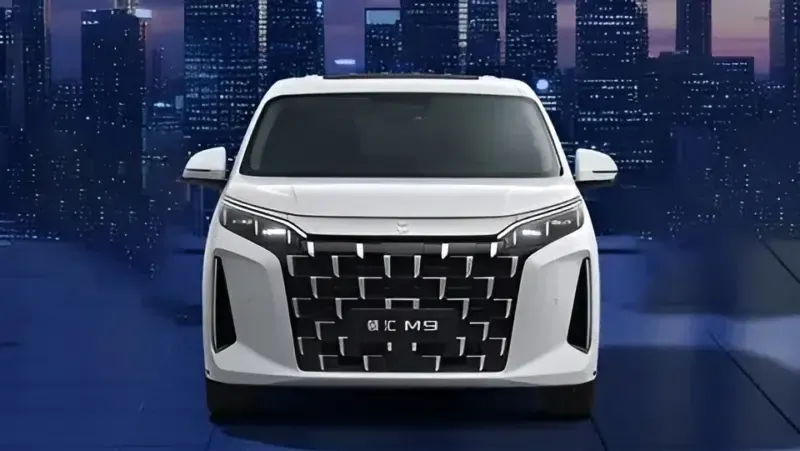
The global landscape of the automotive industry is witnessing a significant shift as BYD, the world’s leading manufacturer of New Energy Vehicles (NEVs), begins the strategic rollout of its latest fleet-focused model, the Linghui M9. This large-scale Multi-Purpose Vehicle (MPV), featuring signature sliding doors and a sophisticated plug-in hybrid powertrain, has officially begun arriving at dealerships across mainland China. While the physical units are now available for viewing and corporate evaluation, BYD has notably withheld the official retail pricing, a move that has sparked intense speculation among industry analysts and corporate fleet managers alike. The Linghui M9 represents more than just a new model; it is the flagship of a specialized sub-brand designed to dominate the rapidly evolving ride-hailing and corporate transport sectors, distinguishing these high-utilization vehicles from BYD’s increasingly premium consumer-oriented lineup.
The Strategic Genesis of the Linghui Sub-Brand
The introduction of the Linghui M9 is a calculated move within BYD’s broader corporate ecosystem. Launched officially in early February 2024, the Linghui sub-brand was established with a singular mission: to serve the commercial transport, taxi, and online ride-hailing markets. By creating a dedicated brand for these sectors, BYD aims to protect the brand equity of its core "BYD" nameplate, which is moving upmarket with models like the Han, Tang, and the premium "Yangwang" and "Fangchengbao" lines.
Historically, BYD has been a dominant force in the taxi industry, particularly with the success of the BYD e5 and the purpose-built D1, developed in collaboration with the ride-hailing giant Didi. However, as the Chinese consumer market becomes more discerning, there is a strategic necessity to separate "workhorse" vehicles from "lifestyle" vehicles. The Linghui brand architecture currently consists of two primary series: the e-series and the M-series. The e-series, including the e5, e7, and e9, consists entirely of battery-electric vehicles (BEVs) designed for urban efficiency. The M9, however, stands out as the sole representative of the M-series, utilizing a plug-in hybrid (PHEV) configuration to offer the long-range versatility required for inter-city corporate travel and high-occupancy transport.
Design Philosophy and Technical Specifications
The Linghui M9 is an imposing presence on the road, drawing clear inspiration from the luxury MPV segment currently dominated by the Toyota Alphard and BYD’s own upscale Denza D9. Despite its commercial positioning, the M9 does not compromise on scale or road presence. It shares a significant portion of its DNA with the BYD Xia DM-i, a premium consumer MPV, yet it features distinct branding elements that identify it as a Linghui product.
In terms of physical dimensions, the Linghui M9 is a full-sized MPV designed to maximize interior volume. It measures 5,200 mm in length, 1,970 mm in width, and 1,805 mm in height. Perhaps most importantly for passenger comfort, the vehicle boasts a substantial wheelbase of 3,045 mm. This extended wheelbase allows for a spacious cabin configuration, typically expected to feature a 2-2-3 or 2-3-2 seating arrangement, providing ample legroom for passengers in all three rows. The vehicle’s curb weight is recorded at 2,470 kg, reflecting the robust build quality and the weight of its dual-motor hybrid system and battery pack.
The exterior design is characterized by a massive front grille, a staple of modern Chinese MPV aesthetics. While the layout mirrors the BYD Xia, the Linghui M9 utilizes unique chrome trim patterns and, of course, the new Linghui logo. The inclusion of power-sliding doors is a critical feature for the ride-hailing market, offering ease of ingress and egress in tight urban parking spots and providing a "premium service" feel for passengers using high-end ride-hailing tiers.
Powertrain and Performance: The PHEV Advantage
Unlike its siblings in the Linghui e-series, the M9 utilizes a Plug-in Hybrid Electric Vehicle (PHEV) system, likely based on BYD’s fifth-generation DM-i technology. This choice is highly strategic for the corporate and taxi sectors. While pure electric vehicles are ideal for short-range urban taxis with access to rapid charging infrastructure, many corporate fleets and premium ride-hailing services require the ability to travel long distances without the downtime associated with charging.
The PHEV system in the M9 allows drivers to operate in pure electric mode during congested city driving, significantly reducing operational costs and emissions. When the battery is depleted or when high-speed highway cruising is required, the internal combustion engine engages to either power the wheels or act as a generator for the electric motors. This "best of both worlds" approach eliminates range anxiety—a crucial factor for drivers whose income depends on constant vehicle availability.
Market Chronology and Sales Performance Context
The journey of the Linghui M9 to the showroom floor has been a swift one. Following the brand’s announcement in February, BYD accelerated production to meet the demands of corporate contracts. However, the broader market for this specific vehicle type has seen some volatility. Data indicates that the BYD Xia (the consumer sibling of the M9) experienced a cooling of demand in mid-2024. In May, sales figures for the Xia-class MPV platform in China were recorded at 648 units, a decrease from the 897 units sold in previous months.
Analysts suggest this dip may be attributed to several factors, including the anticipation of the Linghui M9’s launch. Corporate buyers who might have previously purchased the BYD Xia for fleet use may have delayed their acquisitions to wait for the Linghui-branded version, which is expected to offer a more cost-effective service package and a specialized warranty tailored for high-mileage commercial use. Furthermore, the overall MPV market in China is becoming increasingly crowded with new entrants from Li Auto, XPeng, and Zeekr, forcing established players to diversify their offerings.
Implications for the Ride-Hailing Industry
The arrival of the Linghui M9 at dealerships signals a new era for the "Premier" and "Business" tiers of ride-hailing services like Didi Chuxing and Meituan. In major Chinese Tier-1 cities such as Beijing, Shanghai, and Shenzhen, there is a growing demand for high-capacity vehicles that can accommodate business delegations or large families.
The Linghui M9 addresses several pain points for fleet operators:
- Brand Separation: By using the Linghui brand, operators can offer a distinct "professional" service that doesn’t feel like a standard family car.
- Operational Efficiency: The PHEV powertrain reduces fuel costs compared to traditional internal combustion engine MPVs like the Buick GL8, which has long been the king of China’s corporate fleet market.
- Maintenance and Support: BYD is expected to roll out specialized service centers for the Linghui brand, focusing on rapid turnaround times to ensure that commercial vehicles spend more time on the road and less time in the shop.
Competitive Landscape and Global Potential
While the Linghui M9 is currently a China-focused product, its development holds significant implications for BYD’s international ambitions. In markets across Southeast Asia, Europe, and South America, BYD is already making inroads with its passenger vehicles. The creation of a dedicated fleet sub-brand could eventually be exported to international markets where ride-hailing and airport transfer services are major economic drivers.
In the domestic Chinese market, the M9 faces stiff competition. The Buick GL8 remains a formidable opponent due to its long-standing reputation in the corporate world. Additionally, GAC’s Trumpchi M8 and the hybrid versions of the Toyota Sienna are popular choices. However, BYD’s vertical integration—manufacturing its own batteries, semiconductors, and hybrid systems—gives the Linghui M9 a potential price advantage that could be devastating for competitors once the official MSRP is announced.
Future Outlook and Conclusion
As the first units of the Linghui M9 undergo dealer preparation and test drives by corporate representatives, the industry is watching closely for the final piece of the puzzle: the price. If BYD prices the M9 aggressively, it could trigger a mass migration of fleet buyers away from traditional gasoline-powered MPVs toward this electrified alternative.
The Linghui M9 is a testament to BYD’s agility. By identifying a gap between affordable electric taxis and ultra-luxury consumer MPVs, BYD has created a "middle-ground" workhorse that combines luxury aesthetics with commercial practicality. Whether it is used for VIP airport transfers, high-end ride-hailing, or as a versatile corporate shuttle, the Linghui M9 is poised to become a common sight on Chinese roads.
The success of the M9 will ultimately be judged by its reliability under the grueling conditions of commercial use. If it can maintain the high standards set by previous BYD fleet vehicles while offering the enhanced comfort of a sliding-door MPV, the Linghui sub-brand may well become the gold standard for the professional transport industry in the New Energy era. For now, the distribution to dealers marks the beginning of a new chapter in BYD’s quest for total market saturation, ensuring that they have a vehicle for every possible use case in the modern automotive landscape.