Azin Asro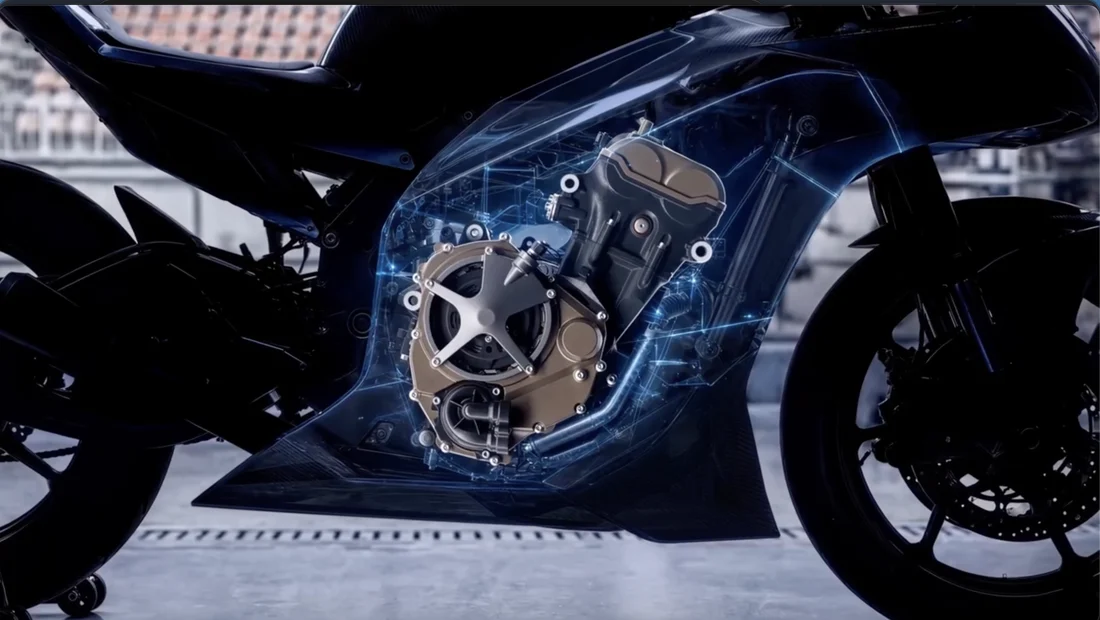
Yamaha Motor Co., Ltd. has been officially designated as the exclusive engine and chassis supplier for the Moto3 World Championship beginning in 2028, marking a fundamental shift in the technical regulations of the Grand Prix entry class. This landmark agreement between Yamaha and Dorna Sports, the commercial rights holder for MotoGP, stipulates that the Japanese manufacturer will provide a standardized technical package for all competitors in the junior category for an initial six-year term, spanning from 2028 through the 2033 season. This transition signals the end of the current multi-manufacturer era in Moto3, which has been defined by the competition between Honda, KTM, and various KTM-group brands such as Husqvarna, GASGAS, and CFMOTO.
The decision to move toward a spec-series format in the Moto3 class mirrors the successful model established in the Moto2 category, which has utilized a single-engine supplier since 2010. However, the Yamaha-Moto3 partnership goes a step further by providing not only the powerplant but also a unified chassis platform, creating a level playing field where rider talent and team setup become the primary differentiators. The core of this new era will be Yamaha’s acclaimed CP2 engine platform, a move intended to modernize the class and provide a more logical stepping stone for riders ascending the "Road to MotoGP" ladder.
The Evolution of the Junior Class: From 125cc to CP2
The Moto3 class was introduced in 2012 as a replacement for the long-standing 125cc two-stroke category. For over a decade, the class has been powered by high-revving, 250cc single-cylinder four-stroke engines. While these machines have provided some of the most exciting and close-quarters racing in motorcycle sport, the costs associated with developing bespoke, prototype 250cc racing engines have risen significantly.
Under the current regulations, manufacturers like Honda and KTM have invested heavily in research and development to extract maximum performance from the 250cc limit. This has resulted in incredibly sophisticated machinery, but it has also created a financial barrier for new manufacturers and a high operational cost for privateer teams. By appointing Yamaha as a sole supplier, Dorna aims to stabilize these costs and ensure the long-term sustainability of the championship’s entry level.
The timeline for this transition is strategically paced. While the agreement begins in 2028, the development phase is already in motion. Yamaha and MotoGP organizers plan to unveil the prototype of the new Moto3 machine in 2027. This will allow for a full year of testing and refinement before the bikes are handed over to the teams for the 2028 season opener.
Technical Analysis: The CP2 Engine and the Power-to-Weight Ratio
The selection of the Yamaha CP2 engine marks a significant departure from traditional Moto3 engineering. The CP2 is a 689cc, liquid-cooled, inline-twin engine featuring Yamaha’s "Crossplane" philosophy, most notably a 270-degree crankshaft. This configuration is currently the heart of Yamaha’s most successful middleweight production motorcycles, including the YZF-R7 supersport, the MT-07 hyper-naked, the XSR700 retro-roadster, and the Ténéré 700 adventure bike.
In its standard commercial form, the CP2 engine produces approximately 74 to 75 horsepower at roughly 8,750 rpm, with a strong emphasis on linear torque delivery. For the Moto3 championship, the engine will likely undergo racing modifications to optimize its performance for the track. However, the primary goal is not just raw horsepower; rather, it is the optimization of the power-to-weight ratio.
Current Moto3 250cc engines produce around 60 horsepower and are fitted into extremely lightweight chassis, with a minimum bike-and-rider weight of 152 kilograms. By moving to a 689cc twin, the overall weight of the motorcycle will inevitably increase. However, the increased displacement and torque of the CP2 engine will allow for a higher power ceiling, potentially pushing the machines closer to 85–90 horsepower in race trim. This change is designed to make the bikes feel more substantial and prepare riders for the heavier, more powerful 765cc Triple engines used in Moto2 and the 1,000cc monsters of the MotoGP class.
The 270-degree crank of the CP2 provides a firing interval that mimics the feel of a V-twin, offering excellent rear-wheel traction and a distinct exhaust note. This "character" is seen as a vital educational tool for young riders, teaching them throttle management and grip feel in a way that the high-strung, "screamer" 250cc singles cannot.
Strategic Rationale: Cost Control and Talent Development
The shift to a single-brand supplier is a calculated move by the MotoGP Sports Entertainment Group to preserve the financial health of the paddock. Carlos Ezpeleta, the Chief Sporting Officer of Dorna Sports, has been vocal about the necessity of this change. According to Ezpeleta, the primary driver is the reduction of overhead costs for the teams.
"The decision to make Moto3 a single-brand championship with Yamaha was made to reduce costs," Ezpeleta stated. "Our experience has led us to understand that while technical competition is great, the primary purpose of Moto2 and Moto3 is to develop talent and provide a clear pathway to MotoGP. The best way to do that is in a controlled-cost environment. The only real way to achieve that is with a single supplier."
In the current Moto3 landscape, teams must lease or purchase expensive engine packages and chassis from manufacturers, often requiring frequent and costly rebuilds due to the high-stress nature of 250cc racing engines. A spec-series model allows for economies of scale, standardized spare parts, and a more predictable budget for independent teams. It also prevents a "development war" between manufacturers that can lead to one brand dominating the field, as has occasionally happened in the past.
Impact on the MotoGP Hierarchy
The introduction of Yamaha as the sole supplier for Moto3 has broader implications for the entire Grand Prix ecosystem. Currently, the "Road to MotoGP" follows a specific technical progression:
- JuniorGP/Talent Cups: 250cc Single-cylinder (approx. 50-55 hp)
- Moto3: 250cc Single-cylinder Prototype (approx. 60 hp)
- Moto2: 765cc Three-cylinder (approx. 140 hp)
- MotoGP: 1000cc Four-cylinder (approx. 300 hp)
The jump from a 60 hp Moto3 bike to a 140 hp Moto2 bike is significant, not just in terms of power, but in terms of physical size and weight. By introducing a 689cc twin-cylinder Moto3 bike, the technical gap between the classes is narrowed. Riders will become accustomed to managing the inertia and torque of a multi-cylinder engine earlier in their careers.
Furthermore, this move strengthens Yamaha’s presence in the paddock. While Yamaha has a legendary history in the premier class, their involvement in the smaller categories has been limited in recent years compared to KTM’s massive "orange army" footprint. By becoming the sole supplier for Moto3, Yamaha ensures that every future MotoGP star will have spent their formative years racing Yamaha machinery.
Potential Challenges and Industry Reactions
While the move is seen as a win for cost-efficiency, it is not without its critics. Traditionalists argue that the essence of Grand Prix racing is technical competition between manufacturers. The removal of Honda and KTM from the Moto3 grid as manufacturers may diminish the variety of the championship. There are also questions regarding the "prototype" status of the class. If the bikes are based on production-derived engines like the CP2, some argue that Moto3 moves closer to a "Supersport 300" or "Twins Cup" format rather than a pure prototype category.
However, the reality of modern motorsport economics often necessitates such compromises. Most Moto3 teams are private entities that rely on sponsorship and rider funding. Lowering the barrier to entry ensures that the grid remains full and competitive.
Honda and KTM have not yet officially detailed their future plans for the junior categories post-2027. It is possible that these manufacturers will shift their resources toward increased support in the Moto2 class or focus more heavily on their premier-class programs. Alternatively, they may continue to support young riders through talent academies while the riders compete on the spec Yamaha machinery.
Looking Ahead to 2028
As the 2027 unveiling approaches, the industry will be watching closely to see how Yamaha adapts the CP2 platform for the rigors of Grand Prix racing. The challenge will be to create a chassis that maintains the nimble, agile handling characteristics that Moto3 is known for, while accommodating a larger, heavier twin-cylinder engine.
The 2028 season will mark the beginning of a new chapter. With a standardized Yamaha platform, the focus will shift entirely to the human element. The riders who emerge at the top of the standings will do so knowing they had the exact same equipment as their rivals, reinforcing Moto3’s reputation as the ultimate proving ground for the world’s fastest teenagers.
In conclusion, the appointment of Yamaha as the sole supplier for Moto3 is a pragmatic and strategic evolution of the sport. It prioritizes the financial stability of the teams and the educational progression of the riders over manufacturer-led technical competition. As the CP2 engine prepares to take center stage, the future of the Moto3 World Championship looks to be one of parity, sustainability, and high-octane development for the next generation of MotoGP legends.