Nila Kartika Wati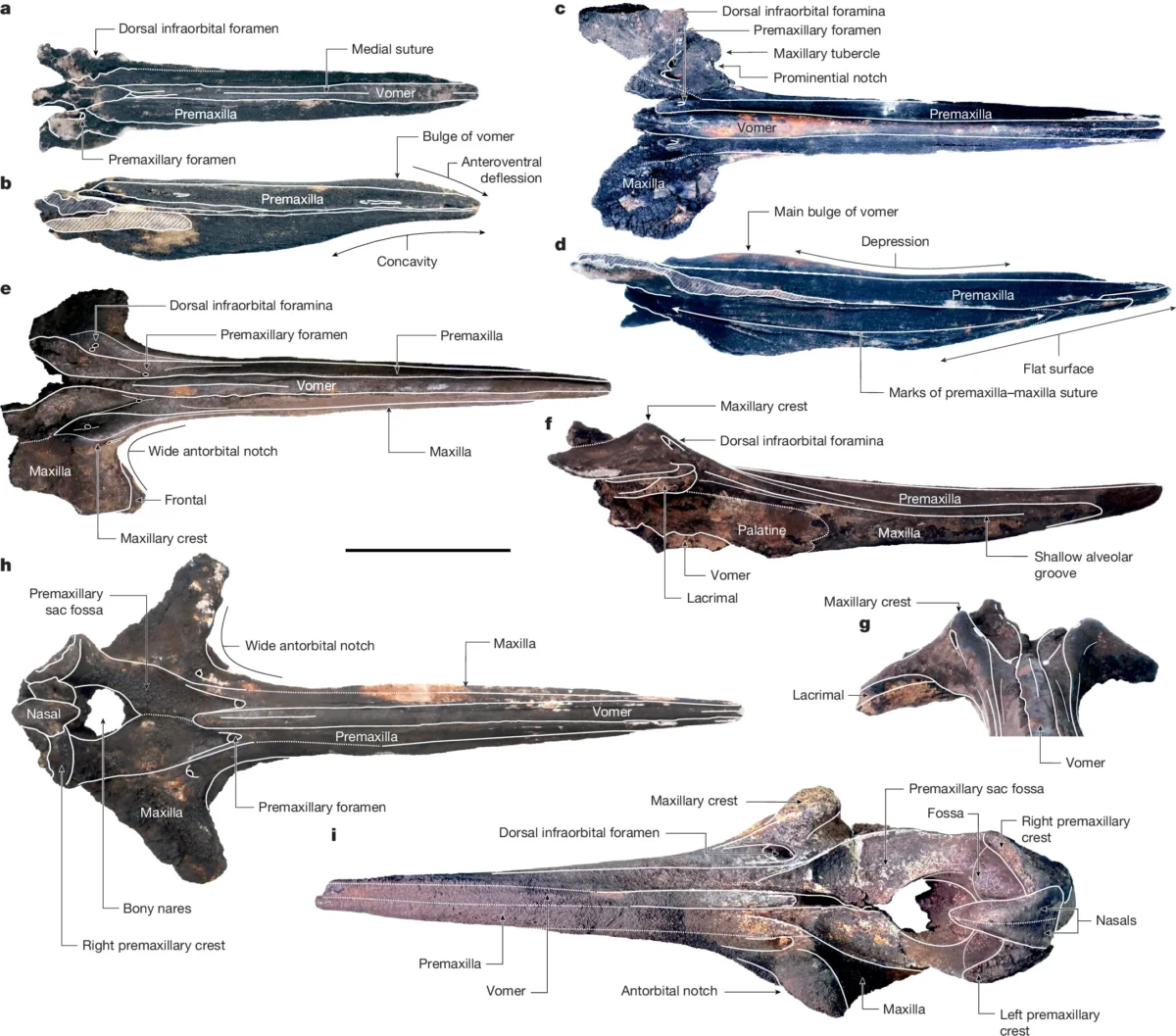
In a discovery that has fundamentally altered our understanding of deep-sea ecology and cetacean evolution, an international team of marine scientists has identified the largest and deepest whale graveyard ever recorded. Located within the Diamantina Fracture Zone in the southeastern Indian Ocean, this vast "cetacean necropolis" spans a staggering 1,200 kilometers along a submarine valley. Hundreds of whale carcasses and fossils were found resting at depths exceeding 7,000 meters, providing a rare window into over five million years of biological history. The findings, which were the result of an intensive multi-year study, were officially published on June 10, 2026, in the prestigious scientific journal Nature.
The site was first identified during an exploratory mission in early 2023, utilizing advanced manned submersibles capable of withstanding the crushing pressures of the Hadal zone. Over the course of 32 separate dives, researchers documented 476 individual whale remains, ranging from ancient mineralized fossils to five relatively fresh carcasses. While the team only surveyed a fraction of the area—approximately 0.065 square kilometers—statistical modeling suggests a density of up to 2,000 whale remains per square kilometer. This concentration is unprecedented in the annals of marine biology, far surpassing any previously known "whale fall" sites.
A Chronology of Discovery and the Pliocene Connection
The journey to this discovery began with anomalous sonar readings during deep-sea mapping expeditions in the late 2010s. However, it was not until the 2023 expedition, led by Dr. Xiaotong Peng and a consortium of deep-sea researchers, that the true nature of the Diamantina Fracture Zone was revealed. Using high-definition imaging and robotic sampling arms, the team retrieved bone fragments and skull specimens that tell a story of oceanic life dating back to the Early Pliocene epoch.
Among the most significant finds is the fossil of Pterocetus benguelae, an ancestral beaked whale that inhabited the oceans approximately 5.3 million years ago. The presence of these remains indicates that the Diamantina Fracture Zone has served as a final resting place for cetaceans for millions of years. Furthermore, the expedition led to the description of a previously unknown species, named Pterocetus diamantinae in honor of the site. This new species is expected to fill critical gaps in the evolutionary lineage of beaked whales (Ziphiidae), a family of deep-diving mammals that remains among the most mysterious of all large marine animals.
Geological and Biological Mechanisms: The "Tar Pit" of the Ocean
The sheer volume of remains in a localized area has prompted intense scientific debate regarding the cause of such a massive accumulation. Scientists have proposed three primary hypotheses to explain why the Diamantina Fracture Zone has become a terminal destination for so many whales.
First, the zone intersects known migratory corridors for several species of baleen whales. Over millennia, individuals that succumbed to old age, disease, or predation would naturally sink to the seafloor. In most areas of the ocean, these remains would be scattered, but the unique geography of the Indian Ocean seems to funnel these "falls" into the fracture zone.
Second, the physiological limits of deep-diving species may play a role. Beaked whales are the reigning champions of deep-sea diving; the Cuvier’s beaked whale (Ziphius cavirostris) was recorded in 2014 reaching depths of nearly 3,000 meters. Researchers speculate that the Diamantina Fracture Zone, with its extreme depths and complex thermal layers, may represent a high-risk foraging ground. Whales hunting for squid in these depths might occasionally exceed their physiological "point of no return," leading to exhaustion and death in the abyss.
The third, and perhaps most compelling, hypothesis involves the "topographic trap" effect. The Diamantina Fracture Zone is characterized by steep, V-shaped valleys and narrow trenches. Much like the La Brea Tar Pits on land or natural caves that act as biological traps, the underwater topography and bottom-water currents may act as a conveyor belt, carrying carcasses from a wide catchment area and depositing them into the deepest troughs of the valley. This concentration effect creates a localized record of pelagic life that would otherwise be lost to the vastness of the ocean floor.
The Science of Preservation in the Deep Abyss
One of the most striking aspects of the discovery is the pristine condition of many of the fossils. In shallower waters, whale bones are often recycled by the ecosystem within decades. However, at 7,000 meters, several factors contribute to "exceptional preservation," a field of study known as taphonomy.
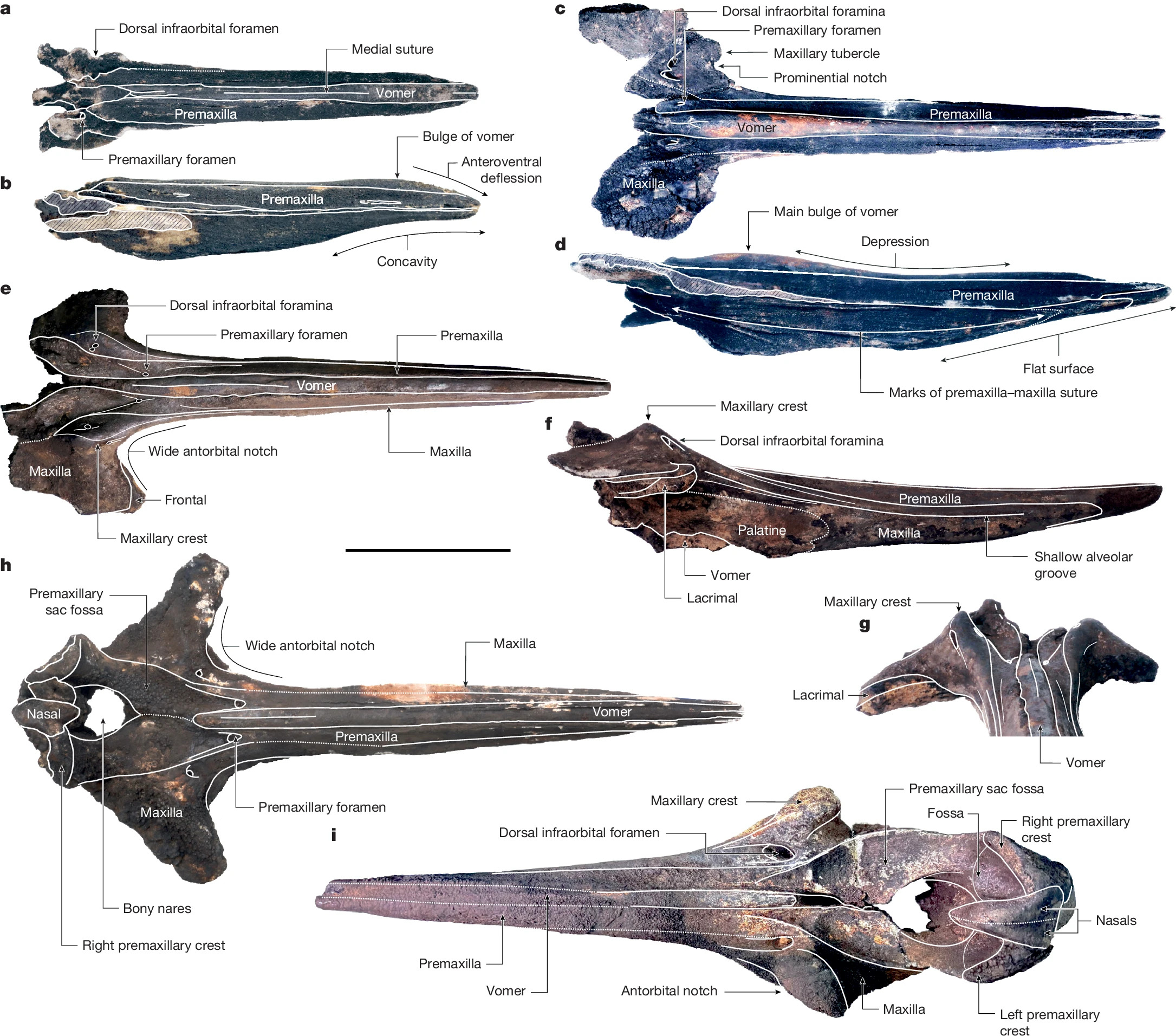
The bones most frequently recovered were the rostra (snouts) of beaked whales. These structures are incredibly dense—some of the densest biological materials known—which allows them to resist the corrosive effects of seawater and the pressure of the deep. Additionally, the environment of the Diamantina Fracture Zone is characterized by near-freezing, stable temperatures and extremely slow sedimentation rates.
Furthermore, many of the bones were found to be coated in a layer of ferromanganese oxides. This mineral crust acts as a protective shield, slowing down the chemical breakdown of the bone and preventing microbes from consuming the internal organic matrix. This unique combination of high bone density and mineral encapsulation has allowed 5-million-year-old specimens to remain identifiable on the surface of the seafloor rather than being buried or dissolved.
A Thriving Ecosystem Built on Death
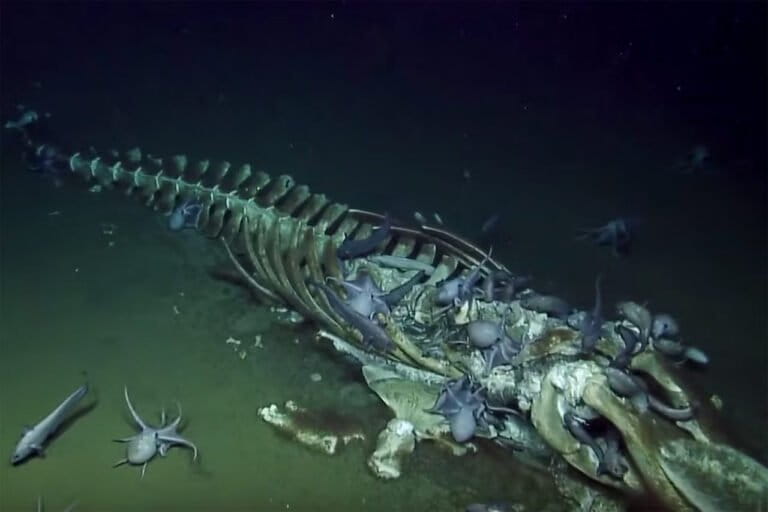
While the site is a graveyard, it is also a cradle of life. The phenomenon of a "whale fall" creates a localized surge of nutrients in the otherwise food-poor deep sea. A single whale carcass can provide as much organic carbon as would normally fall from the surface to that spot in 2,000 years.
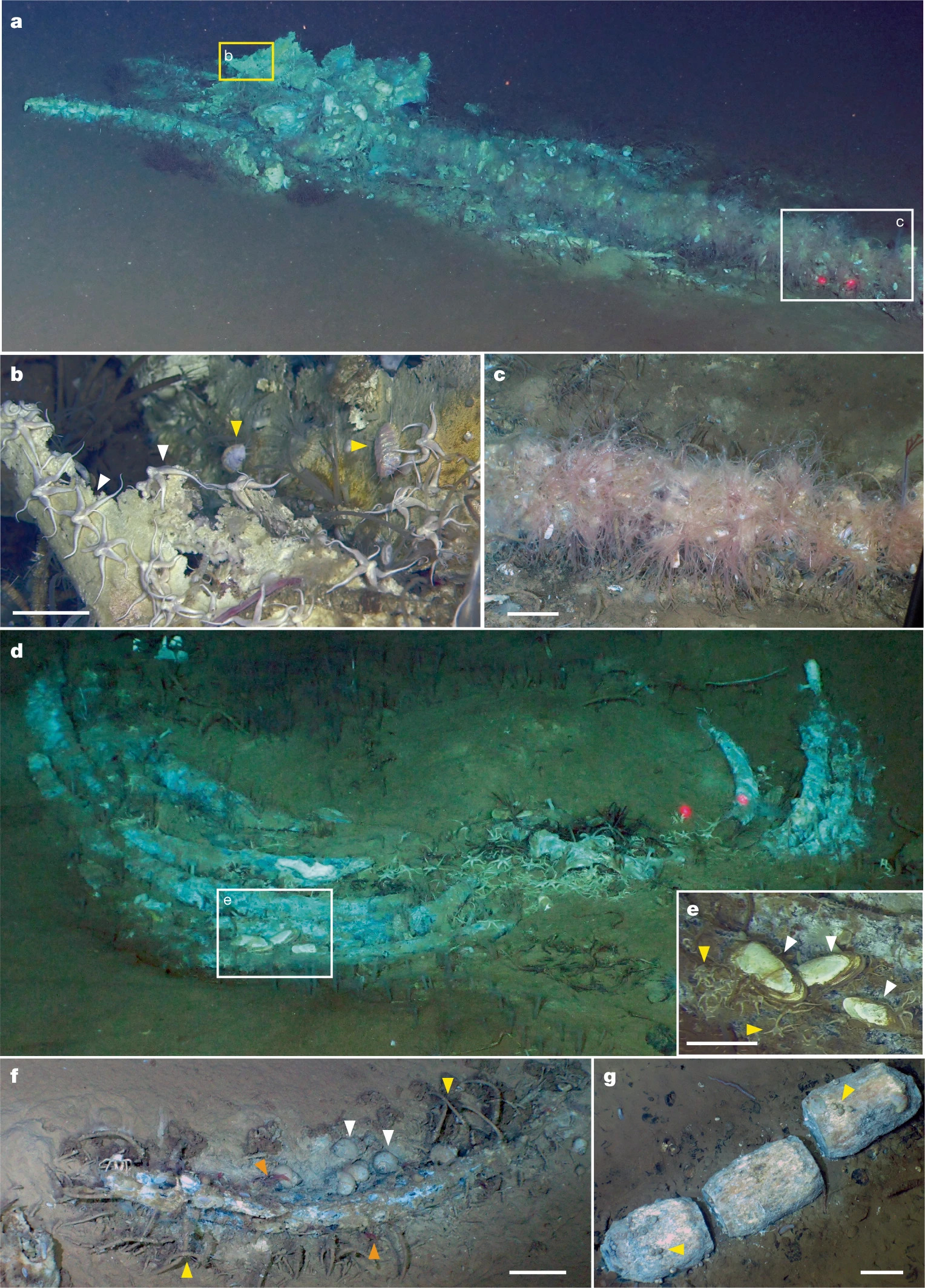
During the 32 dives, researchers observed a complex community of organisms thriving on and around the remains. These include:
- Osedax (Bone-eating worms): Specialized annelids that lack mouths and stomachs, instead using root-like structures to penetrate whale bones and extract lipids with the help of symbiotic bacteria.
- Vesicomyid clams and Gastropods: These mollusks were found clustered around carcasses in the later stages of decay, where they utilize hydrogen sulfide produced by the breakdown of bone fats.
- Brittle stars and Holothurians: These scavengers were seen picking over the debris, creating a high-biodiversity "halo" around each skeleton.
Many of the smaller organisms collected during the expedition appear to be species new to science, suggesting that these deep-sea necropolises may host endemic communities that exist nowhere else on Earth.
Broader Implications and Global Reaction
The discovery has sent ripples through the scientific and environmental communities. Dr. Elena Rossi, a marine biologist not involved in the original study, noted that the site is a "treasure trove of genomic and evolutionary data." According to Rossi, "The ability to compare the DNA—or at least the morphological structures—of a 5-million-year-old beaked whale with its modern descendants in the same geographic location is a once-in-a-century opportunity."
Beyond evolution, the site has significant implications for our understanding of the "Blue Carbon" cycle. Whales sequester massive amounts of carbon in their bodies, and when they sink to the deep ocean, that carbon is effectively removed from the atmosphere for thousands, or even millions, of years. The Diamantina site serves as a massive, natural carbon vault, highlighting the role of megafauna in global climate regulation.
From a policy perspective, the discovery has sparked calls for the Diamantina Fracture Zone to be designated as a Marine Protected Area (MPA). As interest in deep-sea mining for manganese nodules grows, environmentalists argue that sites of such immense biological and paleontological value must be shielded from industrial disturbance. "We are looking at a library of life that has been being written for five million years," said a spokesperson for the Global Ocean Alliance. "To disturb this site for minerals would be like burning a world-class museum to harvest the copper in its wiring."
The Future of Deep-Sea Exploration
The research team emphasizes that they have only "scratched the surface" of the Diamantina Fracture Zone. With over 1,100 kilometers of the valley still largely unexplored, the potential for further discoveries is immense. Plans are already underway for a 2027 follow-up mission that will utilize autonomous underwater vehicles (AUVs) equipped with artificial intelligence to map the entire length of the necropolis in high resolution.
This discovery underscores a fundamental truth about our planet: the deep ocean remains the last great frontier. Even as we look toward the stars, the depths of our own oceans continue to reveal secrets about where we came from and how the Earth’s complex biological systems sustain themselves over geological timescales. The silent sentinels of the Diamantina Fracture Zone—the hundreds of whales resting in the dark—now stand as a testament to the enduring mystery and majesty of the marine world.