Azin Asro
The Indonesian automotive landscape has reached a significant milestone with the official market entry of the VinFast VF MPV 7, an all-electric multi-purpose vehicle designed specifically to cater to the nation’s high demand for family-centric transportation. VinFast Indonesia has positioned the vehicle aggressively, announcing a promotional price of Rp 329 million for the first 2,000 customers under a battery subscription scheme. For consumers opting to purchase the vehicle inclusive of the battery unit, the price is set at Rp 420 million. This strategic pricing aims to lower the barrier to entry for electric vehicle (EV) adoption in a segment traditionally dominated by internal combustion engine (ICE) vehicles.
As the world’s fourth most populous nation continues its transition toward sustainable mobility, the introduction of the VF MPV 7 represents more than just a new product launch; it signifies the localization of advanced EV technology. VinFast has confirmed that the VF MPV 7 is being produced at its newly established manufacturing facility in Subang, West Java. This local production strategy is expected to streamline the supply chain, ensure competitive pricing through domestic component utilization, and contribute to the Indonesian government’s goal of becoming a regional hub for the electric vehicle industry.
Dimensions and Spatial Engineering for the Indonesian Family
The VF MPV 7 has been engineered with a focus on the specific spatial requirements of Indonesian consumers, who often prioritize cabin volume and seating flexibility. The vehicle measures 4,740 mm in length, 1,872 mm in width, and 1,734 mm in height, with a substantial wheelbase of 2,840 mm. These dimensions place it firmly in the medium MPV category, providing a footprint that allows for a genuine three-row seating configuration.
Engineers have paid particular attention to the third-row seating, an area that frequently serves as a pain point in smaller MPVs. Thanks to the dedicated EV platform, which allows for a flat floor and optimized component packaging, the VF MPV 7 offers generous legroom and headroom across all three rows. This spatial efficiency is a key selling point for "extended family" outings, which are a common cultural staple in Indonesia.
Practicality extends to the cargo capacity. With the third row in use, the vehicle retains functional storage, but this expands significantly to 606 liters when the third row is folded. For maximum utility, folding both the second and third rows flat creates a cavernous 1,240-liter cargo area. This flexibility is designed to accommodate everything from daily grocery runs and school equipment to the heavy luggage requirements of "Mudik"—the annual mass migration during holiday seasons.

Performance and Powertrain Specifications
Beneath the exterior, the VF MPV 7 is powered by a front-wheel-drive electric motor capable of delivering 201 horsepower (hp) and 280 Nm of instant torque. In the context of the Indonesian MPV market, these performance figures are notable. Most traditional gasoline-powered MPVs in the same price bracket offer significantly lower torque, often peaking at much higher RPMs. The instant delivery of 280 Nm ensures that the VF MPV 7 remains responsive and capable of smooth acceleration even when carrying a full load of seven passengers and their luggage.
The vehicle is equipped with a 60.2 kWh battery pack featuring a liquid-cooling system to ensure optimal performance and longevity in Indonesia’s tropical climate. Based on the New European Driving Cycle (NEDC) standard, the VF MPV 7 boasts a range of up to 450 kilometers on a single full charge. While real-world range varies based on driving conditions and AC usage, a 450-km rating suggests that the vehicle is well-suited for both urban commuting and intercity travel between major hubs like Jakarta and Bandung.
Charging infrastructure compatibility is also a priority. The VF MPV 7 supports DC fast charging at rates up to 80 kW. According to VinFast’s technical data, this allows the battery to charge from 10% to 70% in approximately 30 minutes, significantly reducing downtime during long-distance trips and addressing the "range anxiety" often cited by prospective EV buyers.
Interior Comfort and Digital Integration
The interior of the VF MPV 7 is designed to function as a mobile living space. Recognizing the importance of passenger comfort in heavy traffic conditions, VinFast has integrated an air conditioning system that specifically reaches the third row, ensuring consistent climate control throughout the cabin.
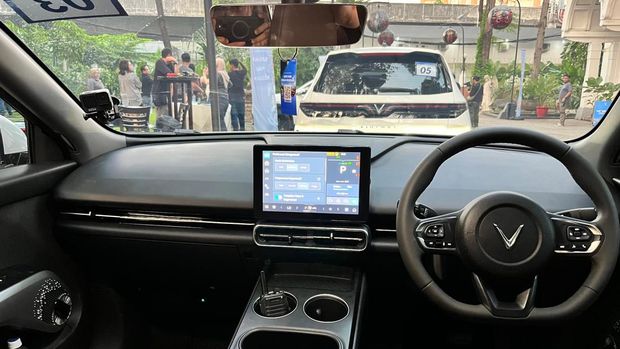
The centerpiece of the dashboard is a 10.1-inch infotainment touchscreen. This display serves as the hub for the VinFast digital ecosystem, providing navigation, vehicle settings, and connectivity features. The integration of modern software allows for over-the-air (OTA) updates, meaning the vehicle’s systems can be improved and refined over time without requiring a visit to a service center. This tech-forward approach is aimed at a younger generation of Indonesian car buyers who view their vehicles as an extension of their digital lives.
Strategic Market Positioning and CEO Insights
The decision to focus on the MPV segment is backed by robust market data. Antonio Zara, Market CEO of VinFast Indonesia, emphasized that the MPV segment continues to dominate the Indonesian automotive market. Data from the Association of Indonesia Automotive Industries (Gaikindo) consistently shows that MPVs represent the largest share of annual vehicle sales, often exceeding 40% of the total market.
"Gaikindo data shows that the MPV segment continues to maintain its dominance in the Indonesian automotive market," Zara stated. "This indicates that Indonesian consumers are not only looking for efficient vehicles but also those capable of accommodating family mobility needs comfortably. Based on this understanding, VinFast developed the VF MPV 7 as an electric MPV that combines a spacious cabin, modern technology, and a practical and comfortable driving experience. We believe this approach will further expand the choice of electric vehicles relevant to the needs of Indonesian families."
By offering a battery subscription model, VinFast is addressing the high upfront cost of EVs—the primary hurdle for many Indonesian households. This model allows customers to pay a lower initial purchase price, effectively separating the cost of the car from the cost of the battery, which VinFast continues to manage and warrant.
The Subang Manufacturing Plant and Economic Impact
A critical component of VinFast’s long-term strategy in Southeast Asia is the Subang manufacturing facility. By producing the VF MPV 7 locally, VinFast is aligning with the Indonesian government’s "Making Indonesia 4.0" initiative, which identifies the automotive sector as a priority for industrial growth.
The Subang plant is not merely an assembly line but a part of a broader investment strategy by the Vietnamese automaker, which has committed roughly $1.2 billion to its Indonesian operations. Local production allows the company to benefit from tax incentives related to the Domestic Component Level (TKDN). Vehicles that meet specific local content thresholds are eligible for Value Added Tax (VAT) incentives, which VinFast has passed on to the consumer in the form of the Rp 329 million promotional price.
Beyond pricing, local manufacturing creates a secondary ecosystem of suppliers and service providers in West Java, contributing to job creation and technological transfer within the Indonesian workforce. This move also positions Indonesia as a potential export base for VinFast to other right-hand-drive markets in the ASEAN region and beyond.
Contextual Analysis: The Shift to Electric MPVs
The launch of the VF MPV 7 comes at a time when the Indonesian government is aggressively pushing for a reduction in carbon emissions and a decrease in fossil fuel subsidies. To support this, the government has implemented various perks for EV owners, including exemption from the "odd-even" traffic rationing system in Jakarta, lower registration taxes, and a growing network of public charging stations (SPKLU) managed by the state electricity company, PLN.
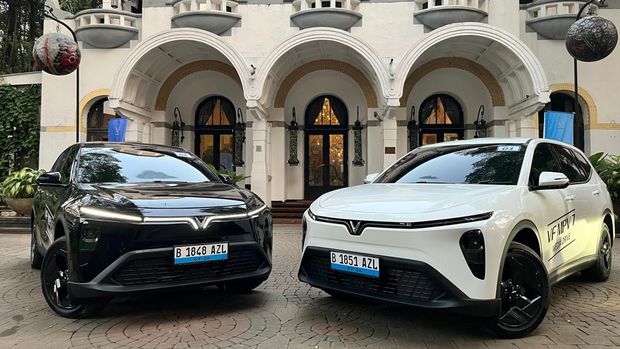
Historically, the MPV market in Indonesia was the fortress of Japanese manufacturers. However, the transition to electric power has opened a window for new entrants. Wuling and BYD have already made significant inroads, but VinFast’s specific focus on a mid-sized, high-power MPV with a battery subscription model provides a unique value proposition.
The competitive landscape is shifting. While traditional ICE MPVs still hold the majority of the market, the total cost of ownership (TCO) for EVs is becoming increasingly attractive as fuel prices fluctuate. The VF MPV 7’s 201 hp output, for instance, far exceeds the power found in most entry-level and mid-range ICE MPVs, offering a "premium" driving feel at a "mass-market" price point.
Conclusion and Future Outlook
The introduction of the VinFast VF MPV 7 marks a pivotal moment for the Indonesian automotive industry. By combining local production, family-oriented design, and an innovative pricing strategy, VinFast is making a clear bid for leadership in the emerging electric MPV segment.
The success of the VF MPV 7 will likely depend on the rapid expansion of VinFast’s dealer and service network across the archipelago, as well as the continued growth of charging infrastructure. However, with a starting promotional price that rivals many popular gasoline MPVs, VinFast has successfully moved the conversation from "why buy an electric car?" to "why not?"
As the first 2,000 units begin to hit Indonesian roads, the industry will be watching closely to see how the VF MPV 7 performs in real-world conditions. If VinFast can deliver on its promises of comfort, reliability, and low operating costs, the VF MPV 7 could very well become the catalyst that finally pushes the Indonesian family car market into the electric era. For now, the combination of a Rp 329 million price tag and the utility of a 7-seater makes it one of the most compelling options for consumers looking to future-proof their mobility.