Bambang Pamungkas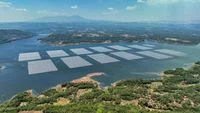
State-owned electricity company PT PLN (Persero) has unveiled an ambitious plan to leverage approximately 10,000 hectares of reservoir surface area for the development of floating solar power plants (PLTS Terapung). This monumental initiative is a cornerstone of Indonesia’s accelerated drive towards achieving President Prabowo Subianto’s directive to establish 100 Gigawatts (GW) of solar photovoltaic (PV) capacity, marking a significant leap in the nation’s energy transition strategy. The announcement, made by PLN CEO Darmawan Prasodjo during a parliamentary hearing with Commission VII of the House of Representatives (DPR RI) on Friday, July 3, 2026, underscored the innovative approach required to overcome traditional hurdles in large-scale renewable energy deployment.
Addressing the Land Scarcity Challenge through Innovation
Darmawan Prasodjo elaborated that the strategic utilization of vast reservoir surfaces for floating solar installations presents a crucial solution to the perennial challenge of land scarcity, particularly on densely populated islands like Java. This innovative approach is expected to significantly expedite the development of renewable energy projects that have historically been hampered by complex and costly land acquisition processes. By transforming existing water bodies into productive energy assets, PLN aims to circumvent one of the most significant barriers to scaling up solar power.
The projected capacity from these floating solar arrays is a substantial 10.3 Gigawatt peak (GWp), making it one of the largest planned floating solar deployments globally. To ensure the reliability and stability of this significant influx of intermittent clean energy, PLN also plans to integrate a robust Battery Energy Storage System (BESS) with a total capacity of 30 Gigawatt-hours (GWh). This combination of large-scale solar generation and advanced energy storage is critical for maintaining grid stability and ensuring a consistent power supply as Indonesia transitions away from fossil fuels.
"The development of PLTS with BESS on approximately 10,000 hectares of reservoir surfaces, exclusively in Java, is projected to add 10 Gigawatt peak to our grid," Darmawan stated during the RDP. He emphasized the necessity of strong coordination with relevant ministries to ensure the swift and efficient utilization of these state-owned assets. "Since these are reservoirs, the land is already available, and we certainly need to collaborate closely with the Ministry of Public Works and Housing (PUPR) and the Ministry of Energy and Mineral Resources (ESDM)," he added, highlighting the multi-agency effort required for such a large-scale national project.
The Economic Advantage of Floating Solar
A core argument presented by PLN for the viability of floating solar is its superior economic competitiveness, primarily driven by the elimination of land acquisition costs. Darmawan Prasodjo explicitly stated that projects combining PLTS with BESS are highly sensitive to land prices. He provided a clear illustration: an increase of Rp 200,000 per square meter in land costs can elevate the electricity selling price by approximately 1 cent per kilowatt-hour (kWh). Consequently, a land price of Rp 600,000 per square meter could push up electricity costs by 3 cents per kWh.
By utilizing government-owned reservoir surfaces, PLN significantly mitigates this cost sensitivity, making the entire program economically highly competitive. "The land is provided by the government, and using reservoirs certainly makes the PLTS program, coupled with battery energy storage systems, exceptionally competitive economically," Darmawan concluded. This cost advantage is crucial for ensuring that renewable energy can compete effectively with traditional fossil fuel sources, accelerating its adoption without placing undue financial burden on consumers or the national budget.
Broader Context: Indonesia’s Energy Transition Landscape
Indonesia, as a rapidly developing G20 nation, faces the dual challenge of meeting escalating energy demand while simultaneously transitioning towards a more sustainable and low-carbon energy future. The nation has committed to achieving Net-Zero Emissions (NZE) by 2060, a target that necessitates a radical overhaul of its energy sector, which is currently heavily reliant on coal. Renewables currently constitute a modest portion of Indonesia’s energy mix, falling short of the government’s initial target of 23% by 2025. The ambitious 100 GW solar target, therefore, signals a renewed and intensified commitment to accelerate this transition.
President Prabowo Subianto’s administration has placed a strong emphasis on developing domestic renewable energy sources, not only for environmental reasons but also for enhancing energy security and fostering economic independence. The scale of the proposed floating solar and land-based solar projects reflects this strategic imperative, positioning solar power as a central pillar of Indonesia’s future energy landscape.
Complementary Land-Based Solar Development
Beyond the floating solar initiatives, PLN is also actively preparing substantial land areas for conventional ground-mounted solar power plants. In Pulau Java alone, the government is earmarking approximately 28,000 hectares of land to support the overarching 100 GW solar power development program. Darmawan confirmed intensive and continuous coordination with the Ministry of Agrarian Affairs and Spatial Planning/National Land Agency (ATR/BPN) and the Ministry of Energy and Mineral Resources (ESDM) to finalize these locations.
"We have been coordinating intensely and continuously with the Ministry of ATR/BPN and the Ministry of ESDM. For Java, a proposal for 28,000 hectares was submitted by the Ministry of ATR/BPN, which we then overlaid with our existing transmission network and substation maps," Darmawan explained. From this extensive land bank, approximately 8,500 hectares have been identified as immediately usable for generating around 8.5 GWp of electricity. Similar to the floating solar projects, these land-based installations will also be complemented by Battery Energy Storage Systems to manage intermittency and ensure grid stability. This dual-pronged approach, combining floating and land-based solar, maximizes the utilization of available resources and accelerates the pace of solar energy deployment across the archipelago.
The Indispensable Role of Battery Energy Storage Systems (BESS)
The integration of BESS with both floating and land-based solar projects is not merely an add-on but a fundamental component of PLN’s strategy for a robust and reliable renewable energy grid. Solar power, by its nature, is intermittent; it generates electricity only when the sun shines. Large-scale deployment of solar PV without adequate storage can lead to grid instability, voltage fluctuations, and challenges in balancing supply and demand.
The planned 30 GWh BESS capacity is designed to mitigate these challenges by storing excess solar energy generated during peak sunshine hours and discharging it when solar generation drops (e.g., during cloudy periods or after sunset) or when demand peaks. This ensures a smoother power output, enhances grid reliability, and allows for a higher penetration of renewable energy into the national grid without compromising operational stability. Furthermore, BESS can provide ancillary services such as frequency regulation and voltage support, which are crucial for grid health and efficiency. This massive BESS deployment will also position Indonesia as a leader in smart grid technology and energy storage solutions in the ASEAN region.
Multi-Ministerial Synergy and Regulatory Support
The successful execution of a program of this magnitude hinges on seamless coordination among various government entities. PLN’s active engagement with the Ministry of PUPR, the Ministry of ESDM, and the Ministry of ATR/BPN is critical for navigating the regulatory landscape, securing permits, and optimizing resource allocation.
The Ministry of PUPR plays a vital role in providing access to and overseeing the sustainable use of national reservoirs, ensuring that their primary functions (water supply, irrigation, flood control) are not compromised by solar installations. The Ministry of ESDM is instrumental in formulating supportive energy policies, providing regulatory clarity, and streamlining licensing processes for renewable energy projects. Meanwhile, the Ministry of ATR/BPN is crucial for spatial planning and land use management, identifying suitable land parcels and ensuring legal frameworks for their utilization. This concerted effort signals a unified government approach towards accelerating Indonesia’s green energy transition. The government is also expected to continue refining regulations such as the Presidential Regulation on Renewable Energy to make investments more attractive and reduce project risks.
Timeline and Phased Implementation
While specific detailed timelines for each reservoir and land site were not fully disclosed, the sheer scale of the project suggests a phased implementation strategy spanning the next decade. The immediate usability of 8,500 hectares of land for 8.5 GWp indicates that initial construction phases could commence relatively soon, pending final approvals and financing. The broader 10,000-hectare floating solar development will likely involve detailed feasibility studies, environmental impact assessments, and potentially pilot projects before widespread deployment. This methodical approach will allow PLN to learn from initial installations, optimize designs, and scale up efficiently. The July 2026 announcement suggests that detailed planning and preparatory work have been ongoing, with visible implementation expected in the late 2020s and early 2030s to meet the long-term 100 GW target.
Anticipated Impact and Implications
The implications of this ambitious renewable energy program are far-reaching and transformative for Indonesia:
- Energy Security and Independence: Diversifying the energy mix reduces reliance on imported fossil fuels, bolstering national energy security and insulating the country from volatile global energy markets.
- Environmental Stewardship: The transition to solar power will significantly reduce greenhouse gas emissions, contributing directly to Indonesia’s climate change mitigation commitments and improving local air quality.
- Economic Growth and Job Creation: The construction, operation, and maintenance of these vast solar farms and BESS facilities will generate tens of thousands of jobs across various skill levels. It will also stimulate local manufacturing of solar components and related technologies, fostering domestic industrial growth.
- Technological Advancement: The large-scale deployment of cutting-edge floating solar and BESS technologies will drive innovation, research, and development within Indonesia, positioning the country as a regional leader in renewable energy solutions.
- Investment Opportunities: The sheer scale of the project will attract significant domestic and international investment, not only in the power generation sector but also in supporting industries, supply chains, and infrastructure development.
- Grid Modernization: To accommodate such a massive influx of renewable energy, PLN will need to further modernize its grid infrastructure, investing in smart grid technologies, advanced control systems, and transmission upgrades, leading to a more resilient and efficient national power system.
Expert and Stakeholder Reactions
The announcement has garnered broad attention and is expected to elicit various reactions from stakeholders. Industry analysts are likely to commend PLN’s bold vision and innovative approach to land constraint, while emphasizing the importance of a robust regulatory framework and attractive financing mechanisms to ensure project viability. Environmental groups will likely welcome the shift towards clean energy but will also call for stringent environmental impact assessments for reservoir ecosystems to prevent any adverse effects on biodiversity and water quality.
International renewable energy bodies and potential investors are expected to view Indonesia’s commitment as a strong signal for green investment, potentially opening doors for global partnerships and technology transfer. Government officials from other ministries, such as the Ministry of Finance, might highlight the fiscal benefits of reduced fuel subsidies and increased energy independence. Academics and researchers will undoubtedly focus on the technical challenges of grid integration at such a scale and the long-term performance of floating solar in tropical environments.
Challenges Ahead
Despite the significant promise, the execution of this program will not be without challenges. Securing adequate financing, particularly for the BESS components which are capital-intensive, will be crucial. Ensuring a stable supply chain for solar panels, inverters, batteries, and other components, possibly through local manufacturing, is another key consideration. Grid integration will require continuous upgrades and smart grid solutions to manage the variability of solar power across the extensive Java network. Furthermore, managing the environmental impact on the reservoir ecosystems, including potential effects on aquatic life and water quality, will necessitate careful planning and mitigation strategies. Public acceptance and community engagement around both land-based and floating installations will also be vital for smooth implementation.
In conclusion, PLN’s ambitious plan to harness 10,000 hectares of reservoir surfaces for 10.3 GWp of floating solar, complemented by 30 GWh of BESS, alongside significant land-based solar development, represents a pivotal moment in Indonesia’s energy transition. This strategic and innovative approach not only addresses critical land constraints but also leverages economic advantages and reinforces the nation’s commitment to a sustainable, secure, and independent energy future, setting a new benchmark for large-scale renewable energy deployment in the global south.