Nila Kartika Wati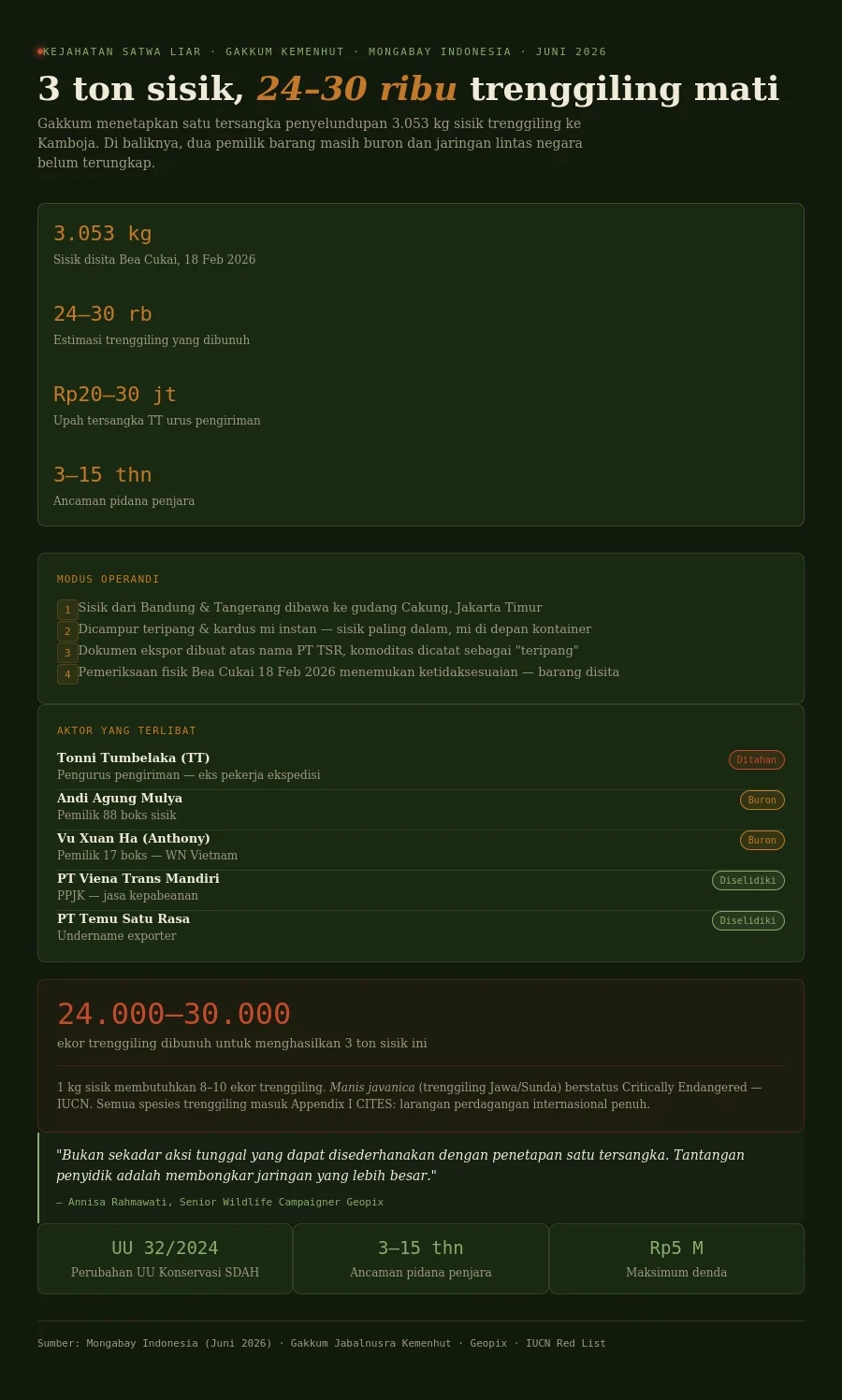
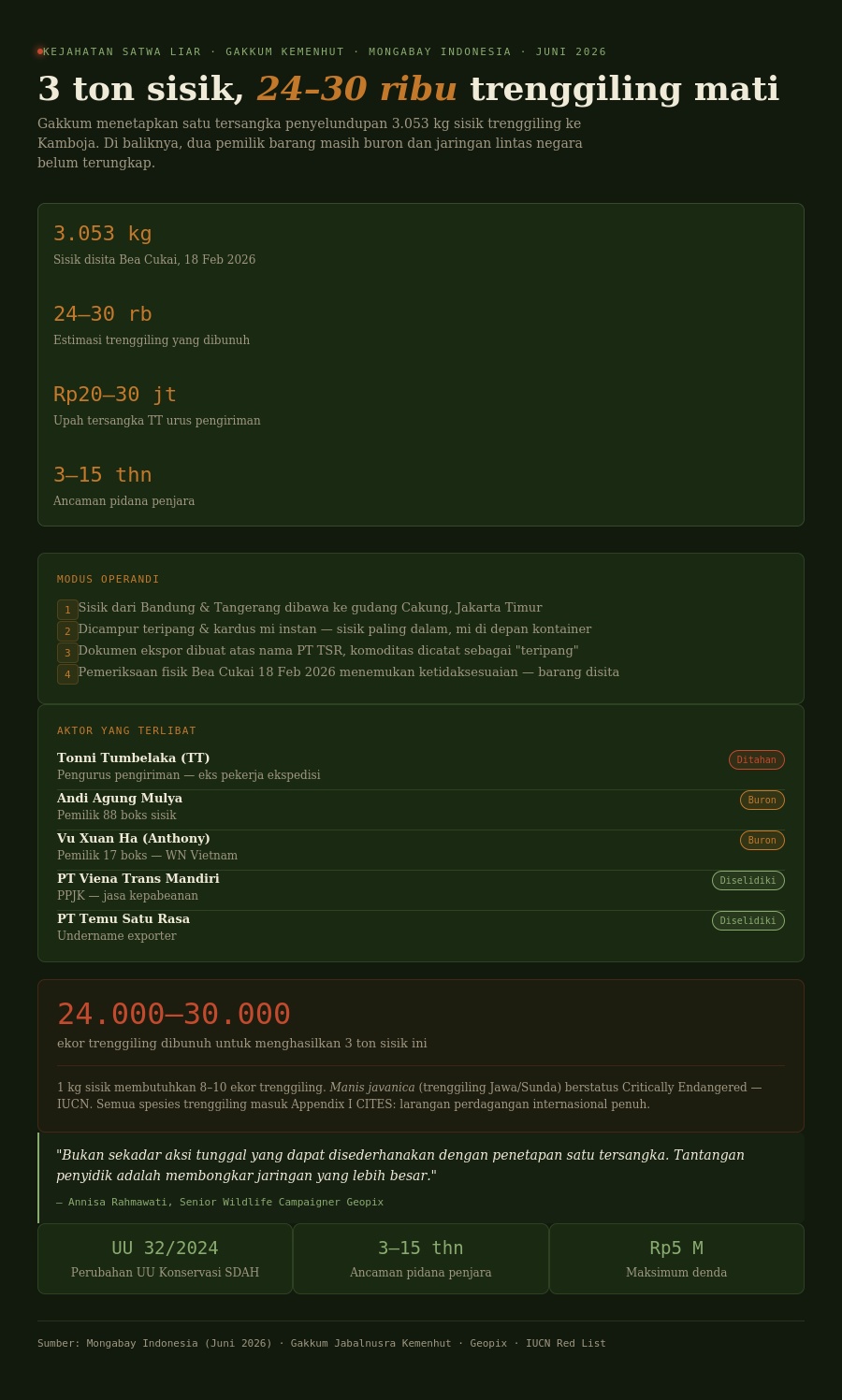
The Law Enforcement Directorate (Gakkum) of the Ministry of Forestry for the Java, Bali, and Nusa Tenggara (Jabalnusra) region has officially named a man, identified as Tonni T., as a primary suspect in a massive attempt to smuggle over three tons of pangolin scales to Cambodia. The suspect, a resident of Bandung, West Java, is currently being held at the Salemba Detention Center in Jakarta as investigators broaden their probe into what appears to be a sophisticated international wildlife trafficking syndicate.
Bambang Ari Wibowo, the Lead Investigator for Section I Jakarta at the Jabalnusra Gakkum Office, confirmed that the decision to designate Tonni as a suspect was based on a minimum of two pieces of corroborating evidence. These include the suspect’s own confession and a series of testimonies from officials at the Directorate General of Customs and Excise (Bea Cukai), representatives from customs brokerage firms, and export-import companies involved in the logistics chain.
According to the investigation, Tonni admitted to being fully aware that the cargo he was processing consisted of pangolin scales, a strictly prohibited commodity under both Indonesian law and international conservation treaties. Evidence from the Customs office and the Customs Services Management Business (PPJK) further indicates that Tonni was the primary coordinator responsible for the administrative and physical movement of the illicit goods.
The Chronology of a Failed Smuggling Operation
The investigation into this three-ton seizure has revealed a complex logistical trail that began far from the docks of Tanjung Priok. The illicit cargo originated from two primary suppliers: Andi Agung M., who allegedly provided 88 boxes of scales, and Vu Xuan Ha, also known as Anthony, a Vietnamese national who contributed 17 boxes. Both individuals are currently at large and have been declared fugitives by Indonesian authorities.
Tonni, a former employee of an expedition company with extensive knowledge of shipping routes and customs procedures, was recruited by the two owners to facilitate the export to Cambodia. To execute the plan, Tonni approached PT Viena Trans Mandiri (VTM), a firm specializing in customs clearance and logistics.
Initial communications between Tonni and the Director of VTM, identified as Ilham, suggest a calculated effort to bypass maritime security. During these early discussions, Tonni reportedly admitted that the commodity was pangolin scales. Recognizing that pangolin scales are classified as "lartas" (prohibited or restricted goods), the logistics firm allegedly advised Tonni to misdeclare the cargo to avoid detection.
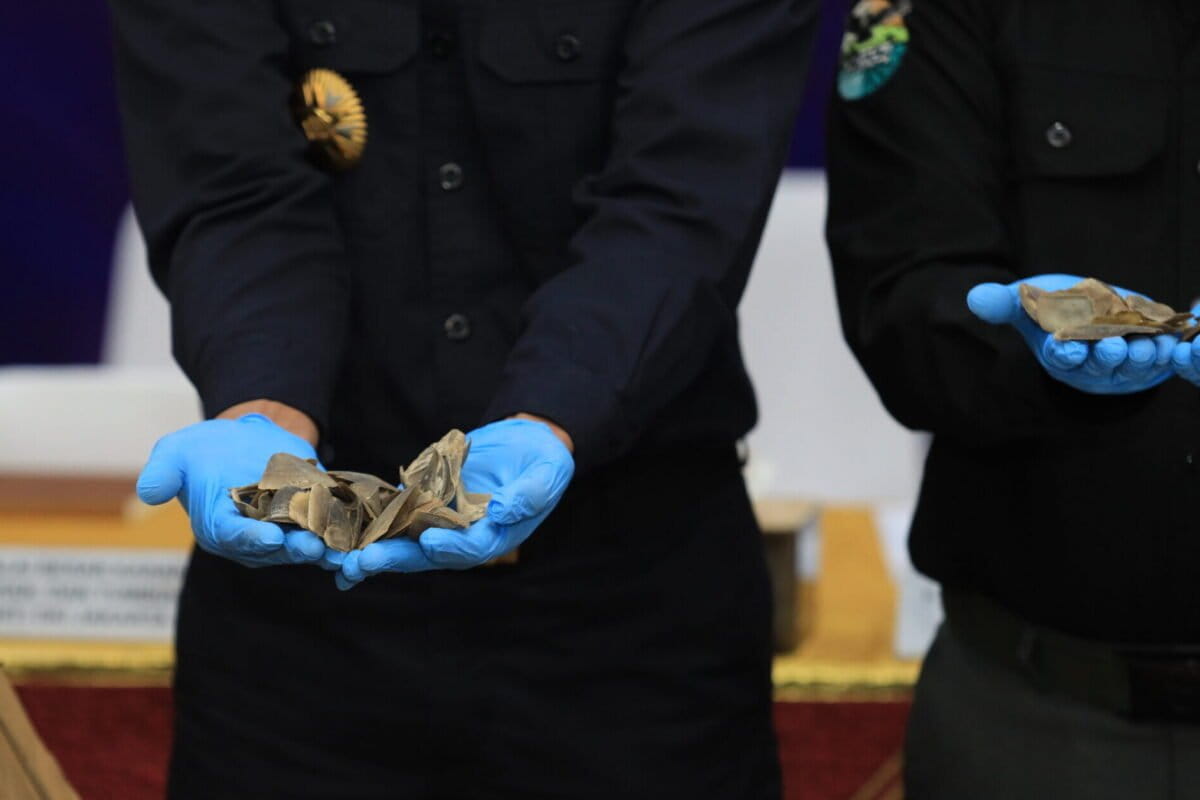
In a classic "bait-and-switch" maneuver, Tonni manipulated the shipping manifest, changing the description of the three-ton cargo from pangolin scales to "sea cucumbers" (teripang). This misdeclaration was intended to exploit the lower scrutiny typically applied to dried seafood exports.
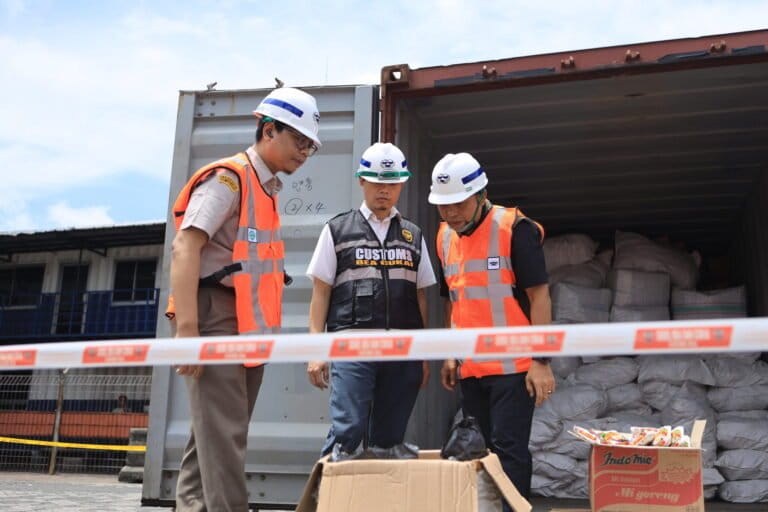
The physical preparation of the shipment took place in a warehouse in the Cakung area of East Jakarta, a facility provided by the logistics firm to consolidate the cargo. At this location, workers allegedly mixed the pangolin scales with genuine sea cucumbers and boxes of instant noodles. Under Tonni’s specific telephonic instructions, the pangolin scales were placed deep within the container, masked by layers of sea cucumber sacks, while the front of the container was packed with instant noodles to serve as a visual decoy for inspectors.
Once the container was sealed, PT Viena Trans Mandiri proceeded to file the Export Declaration (PEB) with Customs. To further distance themselves from the transaction, the group utilized PT Temu Satu Rasa (TSR) as an "undername" exporter, a common practice in the shipping industry where a licensed company lends its name to another party for a fee.
The scheme unraveled on February 18, 2026, when vigilant Customs officers at Tanjung Priok Port conducted a physical inspection of the container. Despite the documents claiming the presence of seafood and noodles, officers discovered 3,053 kilograms of pangolin scales hidden behind the decoys.
Legal Framework and Harsh Penalties
The Indonesian government is treating this case with extreme gravity, applying the newly revised conservation laws to ensure maximum deterrence. Tonni has been charged under Article 40A, Paragraph (1), Letter f, in conjunction with Article 21, Paragraph (2), Letter c of Law Number 32 of 2024. This legislation represents a significant update to the older Law Number 5 of 1990 concerning the Conservation of Living Natural Resources and Their Ecosystems.
Under this revised legal framework, individuals found guilty of trafficking protected wildlife or their parts face significantly harsher penalties. Tonni faces a potential prison sentence ranging from 3 to 15 years and a fine of between Rp200 million and Rp5 billion (approximately $12,500 to $312,000 USD).
The transition to Law Number 32 of 2024 reflects Indonesia’s commitment to modernization in its fight against environmental crime. Previous laws were often criticized by conservationists for being too lenient, with low fines and short sentences that were frequently viewed by syndicates as a mere "cost of doing business." The new law aims to dismantle the financial incentives of the trade by imposing multi-billion rupiah fines.
Investigating Corporate Liability and the "Undername" System
A critical component of the ongoing investigation is the potential criminal liability of the two companies involved: PT Viena Trans Mandiri (VTM) and PT Temu Satu Rasa (TSR). Gakkum investigators are currently scrutinizing whether these entities were complicit in the smuggling attempt or if they were victims of gross negligence.
PT Temu Satu Rasa, acting as the "undername" exporter, reportedly received a fee for allowing its corporate identity to be used for the shipment. While the company has denied involvement in the smuggling itself, claiming they were merely providing a clerical service, investigators are questioning the legality of such arrangements when they involve prohibited goods. A representative from TSR, speaking anonymously, stated that the company was only "facilitating a name-usage service" and that the primary suspect had already been identified.
Similarly, the Director of VTM, Ilham, has argued that his firm was not obligated to perform a physical inspection of the cargo provided by the client. However, investigators remain skeptical, particularly given the reports that Tonni had initially disclosed the nature of the goods.
Bambang Ari Wibowo emphasized that if evidence of "willful blindness" or active participation is found, the companies could face corporate criminal charges. "If we find elements of intent or even negligence that meet the criteria for a criminal offense, we will not hesitate to name new suspects, including corporate entities," Bambang stated.
The Global Context of Pangolin Trafficking
The seizure of three tons of scales highlights a devastating reality for the Sunda Pangolin (Manis javanica), the species native to Indonesia and Southeast Asia. Pangolins are often cited as the most trafficked mammals in the world, primarily driven by demand in East Asia, where their scales are used in traditional medicine and their meat is considered a luxury delicacy.
Environmental experts, including Annisa Rahmawati, a Senior Wildlife Campaigner at Geopix, have pointed out the staggering ecological toll of this specific shipment. It is estimated that between 8 and 10 pangolins must be killed to produce just one kilogram of scales. Therefore, a three-ton shipment represents the slaughter of approximately 24,000 to 30,000 individual pangolins.
"This is not a petty crime; it is an ecological disaster," Rahmawati said. "The fact that three tons were collected and prepared for export proves that this is a highly structured, organized operation. It is impossible for one man to collect this volume of scales alone. This requires a network of poachers, middle-men, and corrupt facilitators."
The choice of Cambodia as a destination and the involvement of a Vietnamese national (Anthony) underscore the transnational nature of the trade. Cambodia is frequently used as a transit hub for wildlife products destined for China or Vietnam, where the final market value of three tons of scales could reach millions of dollars.
Challenges in Pursuing the Masterminds
While the arrest of Tonni T. is a significant victory for Indonesian law enforcement, the "big fish" remain at large. The search for Andi Agung M. has hit several dead ends. Investigators dispatched summons to his registered address in Bandung, but he failed to appear. A subsequent raid on the property revealed that he had already vacated the premises.
The search for the Vietnamese national, Vu Xuan Ha (Anthony), is even more complex. Gakkum has requested assistance from the Indonesian National Police (Mabes Polri) and Interpol to track his movements. Investigators believe that Andi and Anthony are the keys to identifying the source of the scales—specifically, which forests in Indonesia are being targeted by poachers to supply such massive quantities.
"Tonni was the logistics manager, the man who knew how to move boxes. But Andi and Anthony are the ones who know where the scales came from," Bambang explained. For his role in the operation, Tonni was reportedly paid a fee of Rp20 million to Rp30 million ($1,250 to $1,875 USD)—a small fraction of the potential black-market value of the cargo, yet a significant sum for an individual facilitator.
Broader Implications and Future Outlook
The Tanjung Priok case serves as a litmus test for Indonesia’s new conservation laws. Success in prosecuting not just the "couriers" but also the logistics firms and the financiers will determine if the country can truly shed its reputation as a major source country for the illegal wildlife trade.
Environmental organizations are calling for the government to utilize Anti-Money Laundering (TPPU) statutes in conjunction with wildlife laws. By "following the money," investigators may be able to freeze the assets of the syndicates, effectively decapitating the leadership of these criminal organizations.
As the case moves toward the Prosecutor’s Office (JPU) and eventually to court, the eyes of the international conservation community remain on Jakarta. The outcome will signal whether the 30,000 pangolins lost in this single shipment will receive justice through a legal system that finally treats wildlife crime as the "extraordinary crime" it truly is. For now, the hunt for the remaining members of the network continues, as authorities attempt to dismantle the roots of a trade that threatens to push the pangolin to the brink of extinction.