Azin Asro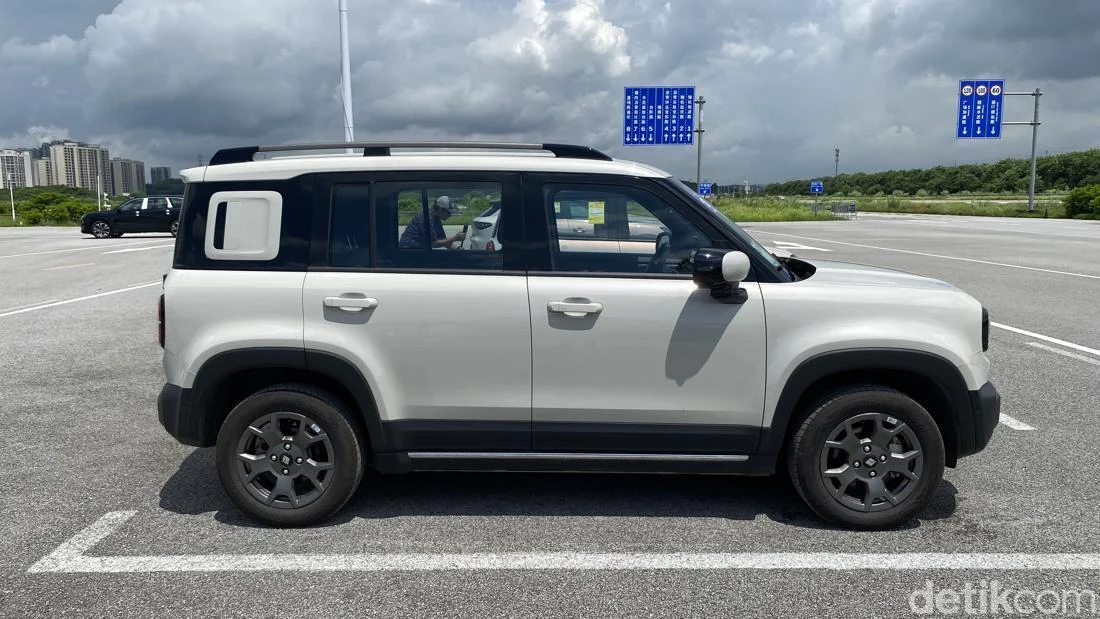
Wuling Motors, a dominant force in the Indonesian electric vehicle (EV) landscape, has officially signaled its intention to further diversify its local lineup by considering the introduction of the Baojun Yep Plus. This strategic move comes as the manufacturer seeks to capitalize on the growing demand for versatile, lifestyle-oriented electric SUVs that combine rugged aesthetics with urban practicality. During a recent media briefing in Liuzhou, Guangxi, China, Wuling Motors’ Marketing Director, Ricky Christian, confirmed that the Baojun Yep Plus has been under intensive study for the Indonesian market. The vehicle, which is a product of the SAIC-GM-Wuling (SGMW) joint venture, represents a significant evolution in the Baojun "Yep" series, transitioning from a niche three-door micro-SUV to a more functional five-door compact SUV designed to appeal to a broader demographic of drivers.
The potential arrival of the Baojun Yep Plus follows the successful Indonesian launches of the Wuling Air ev, BinguoEV, and most recently, the Cloud EV. By positioning the Yep Plus within its domestic portfolio, Wuling aims to address a specific gap in the market: consumers who desire the "boxy" and masculine silhouette of traditional off-roaders but require the efficiency and compact footprint of a modern battery electric vehicle (BEV). Ricky Christian emphasized that the design language of the Yep Plus has already garnered significant interest among Indonesian automotive enthusiasts, who have historically favored vehicles with a commanding road presence and high ground clearance.
Strategic Context and the Baojun-Wuling Relationship
To understand the significance of this potential launch, it is essential to look at the corporate structure of SGMW. In China, Baojun operates as a distinct brand under the SGMW umbrella, often focusing on a younger, tech-savvy audience with a penchant for bold styling. However, in international markets like Indonesia, SGMW frequently rebadges or integrates Baojun products into the Wuling brand to leverage Wuling’s established dealer network and brand equity. A prime example of this strategy is the Wuling Cloud EV, which is marketed as the Baojun Cloud in its home market.
The "Yep" series originally debuted as a three-door model, which gained viral attention globally for its resemblance to a miniaturized Suzuki Jimny. Recognizing that the Indonesian market prioritizes passenger capacity and rear-seat accessibility, Wuling has focused its attention on the "Plus" variant. The Baojun Yep Plus adds two additional doors and an extended wheelbase, transforming the vehicle into a legitimate family-friendly option without sacrificing the rugged, retro-futuristic aesthetic that defined the original model.
Technical Specifications and Variant Breakdown
The Baojun Yep Plus is currently available in the Chinese market in four distinct configurations, categorized primarily by their range capabilities and luxury features. These include the Flagship Edition 301 km, Flagship Edition 401 km, Flagship Edition 501 km, and the top-tier Premium Edition 501 km. Despite the variations in range and interior appointments, the physical dimensions of the vehicle remain consistent across the lineup.
Measuring 3,996 mm in length, 1,760 mm in width, and 1,726 mm in height, with a wheelbase of 2,560 mm, the Yep Plus occupies a unique space in the compact SUV segment. For context, its dimensions are remarkably similar to the popular internal combustion engine (ICE) compact SUVs in Indonesia, such as the Toyota Raize and Daihatsu Rocky. While the Yep Plus is slightly shorter than the Raize (which measures approximately 4,030 mm), it offers a wider and taller stance, providing more shoulder room and headroom for occupants—a critical factor for the Indonesian market where cabin comfort is a high priority.
The vehicle’s curb weight varies depending on the battery size. The entry-level 301 km variant is the lightest at 1,255 kg, while the mid-range 401 km model weighs 1,325 kg. The long-range 501 km variants, including the Premium Edition, reach 1,410 kg. This weight distribution is carefully managed to ensure that the vehicle remains agile in city traffic while maintaining stability at higher speeds.
Powertrain, Battery Technology, and Performance
Underpinning the Baojun Yep Plus is a sophisticated electric drivetrain designed for efficiency and reliability. All variants utilize Lithium Iron Phosphate (LFP) batteries, a chemistry favored by SGMW for its thermal stability, longevity, and cost-effectiveness compared to Nickel Manganese Cobalt (NMC) alternatives. The battery capacities are scaled to meet the advertised ranges: the 301 km variant features a 31.9 kWh pack, the 401 km variant carries 41.9 kWh, and the 501 km models are equipped with a robust 54 kWh battery.
In terms of performance, Wuling has opted for a standardized motor output across the entire range to simplify maintenance and production. The Yep Plus is powered by a front-mounted Permanent Magnet Synchronous Motor delivering 75 kW (approximately 100 horsepower) and 180 Nm of torque. This configuration allows the SUV to reach a top speed of 150 km/h, making it more than capable of handling Indonesian toll roads and intercity travel. The instant torque characteristic of electric motors ensures that the Yep Plus feels responsive during stop-and-go urban driving, which is a hallmark of the Jakarta commuting experience.
Charging Capabilities and Utility Features
Recognizing the varying levels of charging infrastructure in Southeast Asia, the Baojun Yep Plus is equipped with versatile charging options. All models support 6.6 kW AC charging, which is ideal for overnight home charging. The duration required for a full charge varies by battery size: approximately 4.5 hours for the 301 km model, 6 hours for the 401 km model, and 7.5 hours for the 501 km variants.
Furthermore, the vehicle supports DC fast charging, a necessity for long-distance travel. The system can replenish the battery from 30% to 80% in roughly 35 minutes for the lower-capacity models, while the 501 km variants can achieve this in just 30 minutes thanks to a more advanced thermal management system. A standout feature of the Yep Plus is the inclusion of Vehicle-to-Load (V2L) technology. This allows the car to act as a mobile power bank, providing 220V external power for camping equipment, electronic devices, or emergency tools, further enhancing its appeal as a lifestyle vehicle.
Safety, Suspension, and Advanced Engineering
Wuling has not compromised on the mechanical and safety foundations of the Yep Plus. The suspension system utilizes a MacPherson strut independent setup at the front and a torsion beam semi-independent configuration at the rear. This balance is designed to provide a comfortable ride over uneven urban surfaces while maintaining enough rigidity for light off-road paths. The vehicle features front-wheel drive (FWD), Electric Power Steering (EPS), and disc brakes on all four wheels.
A notable engineering distinction exists in the braking system of the top-spec model. While the 301, 401, and 501 km Flagship versions use a traditional vacuum pump assist, the Premium Edition is upgraded with an Electronic Booster (E-booster). This technology provides more precise braking feedback and integrates more seamlessly with regenerative braking systems, leading to a smoother driving experience.
The safety suite is comprehensive, featuring Electronic Stability Control (ESC), ABS with EBD, Auto Hold, and Ramp Start Assist. For parking and maneuvering in tight spaces, the vehicle includes a 360-degree camera system and a "transparent chassis" feature, which uses cameras to give the driver a virtual view of the ground beneath the vehicle. Additional safety measures include dual front and side airbags, ISOFIX anchors, a low-speed pedestrian warning system, and a digital Tire Pressure Monitoring System (TPMS).
Market Positioning and Economic Implications
In China, the Baojun Yep Plus is competitively priced between 76,800 yuan and 105,800 yuan, which translates to approximately Rp 202 million to Rp 279 million. If Wuling Motors Indonesia decides to proceed with local assembly at its Cikarang plant, the vehicle could potentially qualify for government incentives, such as the Value Added Tax (VAT/PPN) reduction for EVs with high local content (TKDN).
Market analysts suggest that the introduction of the Yep Plus would strengthen Wuling’s "ABC" (Air ev, BinguoEV, Cloud EV) strategy by adding a "D" or "E" segment contender that focuses on the SUV category. The SUV market in Indonesia is currently the fastest-growing segment, and an affordable, stylish electric SUV could disrupt the dominance of traditional ICE vehicles.
Conclusion and Future Outlook
The Baojun Yep Plus represents a pivotal moment for Wuling as it transitions from offering specialized urban mobility solutions to providing versatile, multi-purpose electric vehicles. By combining a favored aesthetic with proven LFP battery technology and a practical five-door layout, the Yep Plus is well-positioned to become a flagship for Wuling’s SUV ambitions in Indonesia. While a definitive launch date has not been set, the ongoing feasibility studies and the positive reception of the design suggest that it is not a matter of "if," but "when" this masculine compact SUV will grace Indonesian roads. As the nation continues its push toward electrification, vehicles like the Yep Plus will be instrumental in making sustainable transport both aspirational and accessible to the masses.