Nila Kartika Wati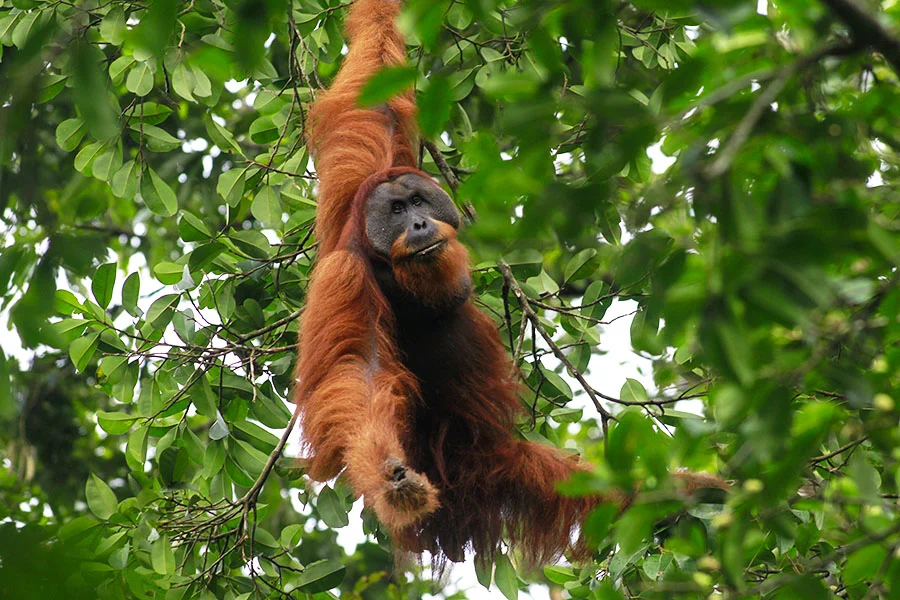
The act of laughter, often dismissed as a simple emotional outburst or a spontaneous response to humor, has emerged as a profound biological "fossil" that offers a window into the deep history of human communication. Recent research published in the journal Nature Communications Biology indicates that the rhythmic patterns of laughter shared between humans and great apes—including chimpanzees, bonobos, gorillas, and orangutans—provide critical evidence that the foundations of human speech were laid down over 15 million years of hominid evolution. By analyzing the vocal plasticity and respiratory control required to produce these rhythmic sounds, scientists have debunked the long-standing "discontinuity" theory, which suggested that human language appeared as a sudden, unique mutation. Instead, the study reveals that human vocal capabilities exist on a continuum, representing a gradual refinement of skills possessed by our common ancestors.
The Science of the Hominid Continuum
The study, titled "Rhythm and timing in laughter reveal that human vocal plasticity falls on a hominid continuum," was led by Dr. Chiara De Gregorio and Dr. Adriano Lameira from the Department of Psychology at the University of Warwick. The research team focused on the structural similarities between human laughter and the vocalizations of our closest living relatives. In both humans and great apes, laughter is produced through a series of short, repetitive respiratory cycles that trigger vocal fold vibrations. This rhythmic vocalization is not merely a byproduct of physical exertion but a sophisticated form of social signaling that requires a specific level of motor control over the vocal apparatus.
For decades, the prevailing scientific narrative suggested that humans were the only species to possess significant control over their vocalizations, a trait considered essential for the development of language. However, the Warwick study challenges this by demonstrating that the capacity for rhythmic vocal control was already present in the last common ancestor of all great apes. According to Dr. Lameira, the evolution of laughter tells a story of cumulative refinement. The capacity for vocal control did not emerge out of nowhere; it was honed over millions of years, eventually providing the biological scaffolding necessary for the complex phonetics of modern human language.
Methodology: Tracking the Evolution of Sound
To reach these conclusions, the research team conducted a meticulous comparative analysis of laughter recordings. The dataset included vocalizations from four orangutans (Pongo pygmaeus), two gorillas (Gorilla gorilla), three bonobos (Pan paniscus), four chimpanzees (Pan troglodytes), and four human children (Homo sapiens). The subjects ranged in age from six months to seven years, a developmental window during which vocal play is most prominent across all these species.
By utilizing advanced statistical modeling and acoustic analysis, the researchers identified a striking consistency in the rhythmic intervals of laughter across all five species. Regardless of the specific sounds produced—whether the "pant-like" breaths of a chimpanzee or the voiced "ha-ha" of a human—the timing between individual vocal pulses remained remarkably even. This stability suggests that the underlying neurological and physiological mechanisms for rhythmic breathing and vocalization have remained largely unchanged for approximately 15 million years.
The researchers categorized the laughter into two distinct types: "tickle laughter" and "play laughter." Tickle laughter, triggered by physical stimulation, exhibited the most stable and consistent rhythm across species. The researchers describe this as a "window into the past," representing the most primitive form of vocal-respiratory coordination. Play laughter, which occurs during social interactions like chasing or wrestling, was found to be more dynamic and variable, suggesting that even in non-human apes, vocalizations are adjusted based on the intensity and context of social engagement.
From Laughter to Language: The Path of Vocal Plasticity
One of the most significant findings of the research is the progression of speed and control as one moves along the evolutionary tree toward humans. While the basic rhythmic structure is shared, the study found that laughter becomes progressively faster in species more closely related to humans. Chimpanzees and bonobos, our closest relatives, produce laughter with a faster tempo than gorillas or orangutans. Humans, in turn, exhibit the highest degree of vocal plasticity, with the ability to vary the speed, pitch, and volume of laughter to convey different social meanings.
This "vocal plasticity" is the missing link in understanding the origins of speech. In great apes, laughter is largely spontaneous and tied to specific physical triggers. In humans, however, we have developed the ability to decouple vocalization from immediate physical stimuli. We can laugh politely, sarcastically, or hysterically, depending on the social environment. The Warwick researchers argue that this sophisticated control over the timing and rhythm of our breath is the same mechanism that allows us to string together the complex consonants and vowels that form words and sentences.
The study suggests that as our ancestors moved toward a more complex social structure, the pressure to communicate more effectively led to the gradual enhancement of these pre-existing vocal skills. Laughter, as a tool for group cohesion and bond reinforcement, likely served as the primary "training ground" for the respiratory control needed for speech.
The Social Function: Laughter as an Evolutionary Glue
Beyond the mechanics of sound, the study emphasizes the social role of laughter. In great ape communities, laughter is contagious. When one individual begins to laugh during play, it often triggers a chain reaction among the group. This "vocal mirroring" is essential for maintaining social harmony and reducing tension during high-energy interactions.
This social function is mirrored in human society. Laughter remains one of the most powerful tools for building rapport and signaling non-aggression. The fact that this behavior is deeply embedded in our biological relatives suggests that the social foundations of human language were established long before the first words were ever spoken. The ability to share an emotional state through rhythmic sound was a prerequisite for the more abstract sharing of information that defines human conversation.
A Taxonomy of Connection: Our Great Ape Relatives
The research also highlights the urgent need to understand and protect the species that provide us with these insights. The family Hominidae, which includes humans and the four other great ape genera, shares nearly 99% of its DNA with chimpanzees. Each of these species offers a unique perspective on our shared history:
- Chimpanzees and Bonobos: Our closest relatives, who exhibit complex social hierarchies and tool-using behaviors. Their laughter is the most similar to ours in terms of speed and social contagion.
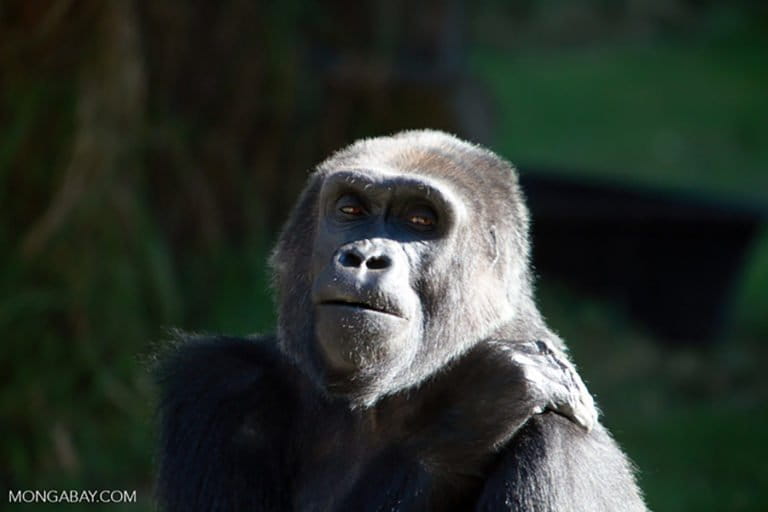
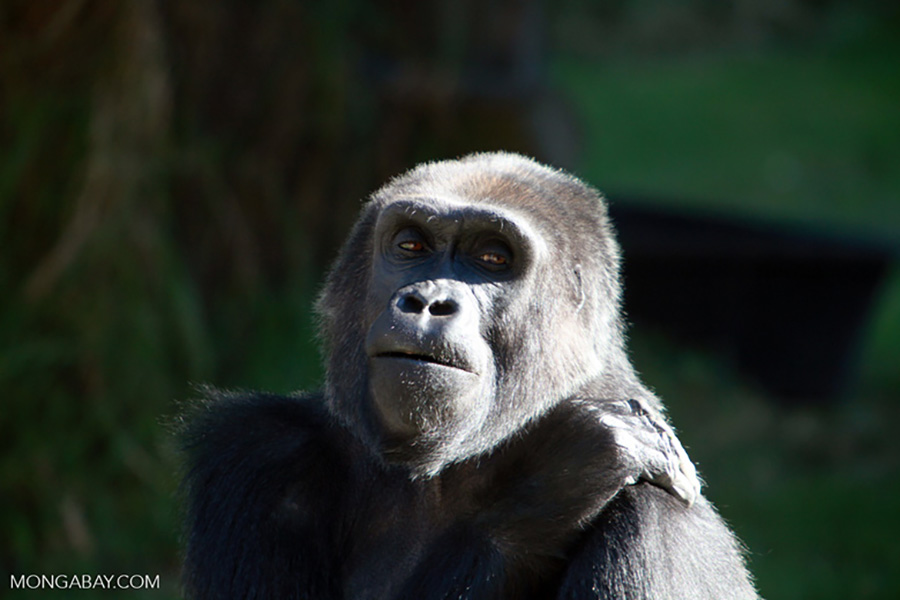
- Gorillas: These gentle giants display deep emotional bonds and, as the study shows, possess the same rhythmic vocal foundations as humans, albeit at a slower tempo.
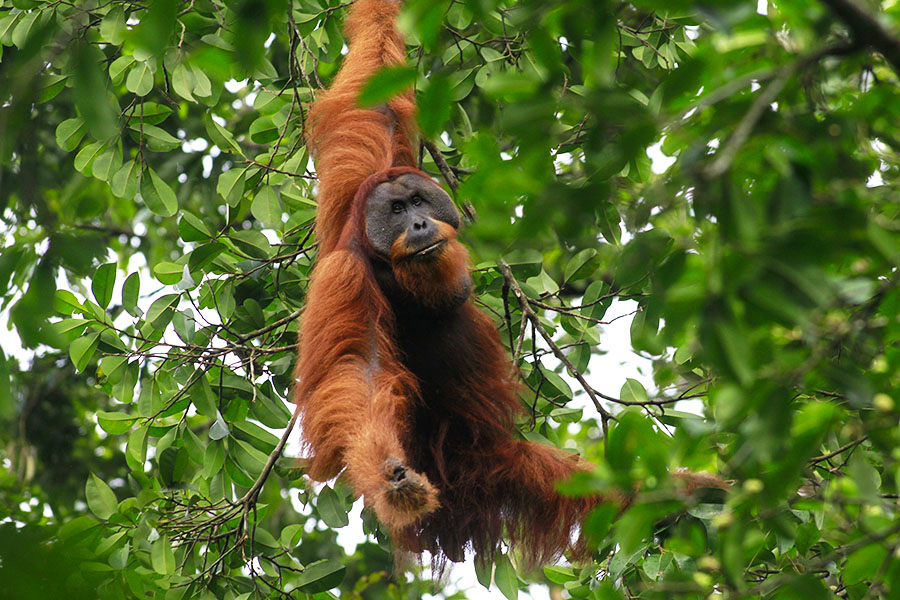
- Orangutans: The most distant of the great apes, residing exclusively in Sumatra and Borneo. As the most "primitive" branch of the family tree in this context, their laughter provides the baseline for the ancestral hominid vocal capacity.
The inclusion of orangutans in the study was particularly crucial. Because they branched off from the human lineage approximately 12 to 15 million years ago, the similarities between their laughter and ours confirm that these traits are not recent adaptations but ancient inheritances.
Conservation Implications and the Loss of Evolutionary History
While the scientific community celebrates these discoveries, there is a somber backdrop to the research. The very animals that hold the secrets to our past are facing an unprecedented threat of extinction. The orangutan, in particular, is classified as Critically Endangered by the International Union for Conservation of Nature (IUCN). Habitat destruction in Indonesia and Malaysia, driven by palm oil expansion, mining, and illegal logging, has decimated their populations.
The researchers note that every time a great ape population is lost, a chapter of our own evolutionary history is erased. "Protecting these species is not just an act of environmentalism; it is an act of self-preservation for our understanding of what it means to be human," the report suggests. If we lose the ability to observe the vocal behaviors of bonobos or orangutans in their natural social contexts, we lose the only living models of the ancestral state that led to human language.
Conclusion: A New Perspective on Human Uniqueness
The findings from the University of Warwick represent a paradigm shift in evolutionary linguistics. For a long time, humans viewed themselves as biological "orphans," possessing traits like language and complex vocal control that had no clear precursors in the animal kingdom. This study proves otherwise. By looking at something as "frivolous" as laughter, scientists have found the thread that connects us to the forest-dwelling apes of 15 million years ago.
The realization that our laughter is a "vocal fossil" suggests that many other human traits likely have similar, deep-seated roots in our primate heritage. As we continue to bridge the gap between human and non-human primate behavior, the line between "us" and "them" becomes increasingly blurred. We are not a sudden departure from nature, but a continuation of a long, rhythmic, and often joyful evolutionary journey. Understanding the origins of our voice through the laughter of apes reminds us that we are part of a grand biological continuum, one that began with a simple "ha-ha" in the trees of the Miocene epoch.