Nila Kartika Wati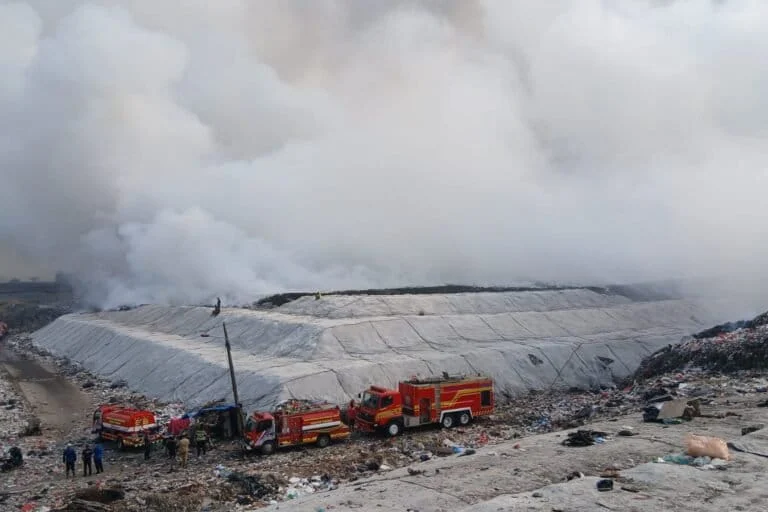
The Jatiwaringin Final Disposal Site (TPA), located in the Mauk District of Tangerang Regency, Banten, was engulfed by a massive fire on June 30, sending plumes of toxic black smoke into the atmosphere and reigniting a national debate over the sustainability of open-dumping waste management. The incident, which ravaged approximately two hectares of the facility, has prompted environmental advocacy groups like the Indonesian Forum for the Environment (Walhi) to demand a radical shift in how the nation handles its refuse, moving away from a reliance on downstream disposal toward comprehensive upstream reduction and processing.
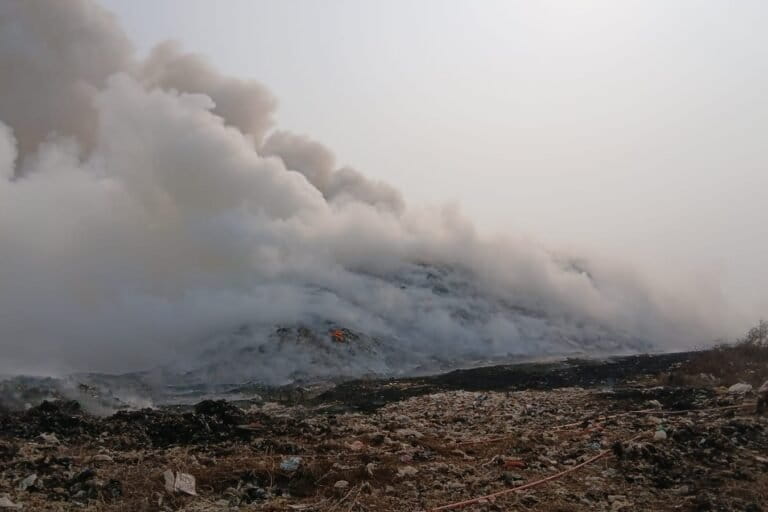
The fire broke out during a period of extreme heat, exacerbated by the ongoing El Niño weather pattern, which has left landfill sites across the Indonesian archipelago vulnerable to spontaneous combustion. At Jatiwaringin, the combination of dried organic matter, vast quantities of plastic, and trapped methane gas created a volatile environment that proved difficult for emergency services to contain. The local community, still haunted by memories of similar protracted fires at nearby landfills such as Rawa Kucing in Tangerang City, watched with growing trepidation as the flames spread rapidly across the mountainous heaps of waste.
The Chronology of the Jatiwaringin Inferno
The disaster began on the morning of June 30, with initial reports suggesting the fire originated in the northern sector of the landfill’s accumulation zone. According to Ujat Sudrajat, Head of the Tangerang Regency Environmental and Sanitation Service (DLHK), the fire was quickly intensified by external environmental factors. "The situation was made significantly worse by extreme weather conditions, characterized by high solar temperatures and strong winds that fanned the flames across the surface of the dry waste," Sudrajat explained.
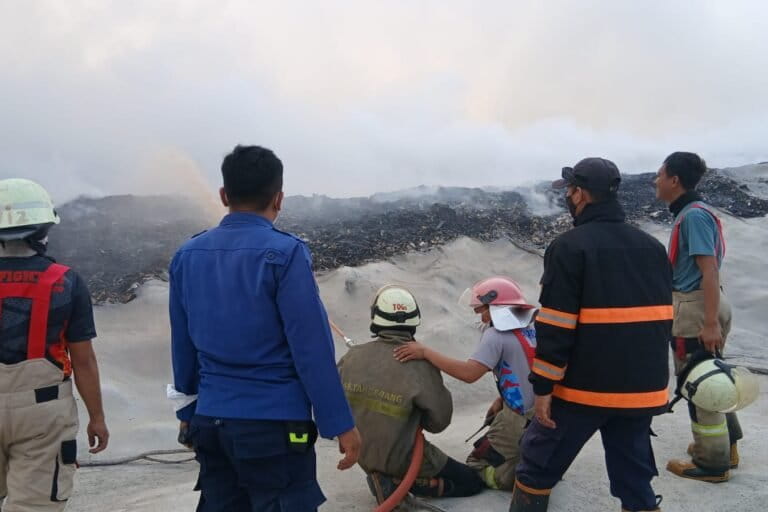
In response to the emergency, the Tangerang Regency Government mobilized 30 personnel from the Regional Disaster Management Agency (BPBD). Ahmad Ruslan, Head of the BPBD Fire and Rescue Division, noted that while six initial fire truck units were dispatched immediately, the topography and nature of the landfill presented unique challenges. The fire was not merely a surface event; it had burrowed into the deep layers of the waste piles, where methane—a byproduct of anaerobic decomposition—continued to fuel the combustion from within.
"The location’s conditions made the extinguishing process extremely difficult," Ruslan stated. Firefighters had to navigate unstable mounds of trash while battling high-velocity winds that caused burning debris to fly into unaffected areas, sparking secondary fires. The scarcity of nearby water sources further hampered the initial containment efforts, forcing teams to coordinate complex logistics to keep the water supply flowing to the front lines.
Public Health Concerns and Local Impact
For the residents of Mauk and surrounding districts, the fire is more than an environmental disaster; it is a direct threat to their physical well-being. Candra, a local resident, expressed the collective anxiety of the community when he spoke of the potential for the fire to last for weeks. "We are terrified it will be like the landfill fire in Tangerang City that burned for days on end," he said. "The smoke is thick and acrid. I have a small child, and I am seriously considering evacuating my family until the fire is completely out and the air clears."
The primary health concern cited by residents and medical professionals is Acute Respiratory Infection (ISPA). Landfill fires are particularly hazardous because they involve the combustion of heterogeneous materials, including treated woods, heavy metals, and various plastics that release dioxins and furans when burned at low temperatures. In response to these risks, the DLHK coordinated with the Mauk and Rajeg Community Health Centers (Puskesmas) to deploy medical teams to the site. These teams were tasked with monitoring the health of both the firefighting personnel and the residents living in the immediate downwind path of the smoke plume.
National Response and the El Niño Factor
The Jatiwaringin fire caught the attention of the central government, prompting a site visit from Minister of the Environment Jumhur Hidayat on July 5. During his inspection, the Minister revealed that through a multi-agency effort involving water bombing, ground-level spraying, and the injection of water into the lower layers of the waste, the burned area had been successfully reduced from 70% of the site to roughly 3.6%.
Minister Hidayat emphasized that the Jatiwaringin incident serves as a stark warning for all regional leaders. He highlighted the "Circular Letter of the Minister of Environment Number 11/2026," which outlines protocols for "Preparedness and Anticipation of Landfill Fires during Extreme Hot Weather Conditions." This document serves as a national guideline for local governments to mitigate fire risks during the dry season.
"We must ensure there are no activities that could trigger a fire near landfills. Local authorities must secure water sources, preposition firefighting equipment, and conduct early mitigation," Hidayat stated. He pointed to the El Niño phenomenon as a primary driver of increased landfill vulnerability, noting that the prolonged lack of rainfall turns landfills into tinderboxes.
The Structural Failure: Upstream vs. Downstream Management
While the immediate fire has been largely suppressed, environmental experts argue that the underlying cause remains unaddressed. Wahyu Eka Setyawan, Manager of Just Urban Affairs at Walhi’s National Executive, asserts that the fire is a symptom of a systemic failure in waste management. Setyawan points out that as long as Indonesia relies on the "open dumping" or "controlled landfill" models without significant upstream reduction, such disasters are inevitable.
"The fire is caused by the accumulation of waste itself, which contains high levels of methane," Setyawan explained. "Methane traps heat and allows fires to spread with incredible speed and persistence. If we do not address the waste problem at the source—the upstream—the burden on landfills will continue to grow until they reach a breaking point."
Walhi’s critique focuses on the implementation of Law Number 18 of 2008 concerning Waste Management. The law mandates a shift toward waste reduction, but Setyawan argues that government policy remains disproportionately focused on downstream solutions, such as the proposed Waste-to-Energy (PSEL) plants. Jatiwaringin itself is slated to become a PSEL site, a move that Walhi views with skepticism, fearing it will only encourage the continued collection of mixed waste rather than promoting circular economy practices.
Policy Gaps and the Responsibility of Producers
A significant hurdle in Indonesia’s waste management is the handling of organic waste and single-use plastics. Walhi has been pushing the Ministry of Environment to upgrade current guidelines into more robust ministerial regulations or even a Presidential Regulation. Specifically, they advocate for the strict enforcement of Ministry of Environment and Forestry Regulation (Permen LHK) No. 75 of 2019, which outlines a "Roadmap to Waste Reduction by Producers."
"Producers must be held accountable for the lifecycle of their packaging," Setyawan remarked. "The current regulation lacks strong legal consequences for companies that fail to meet their reduction targets. Without a national mandate on the elimination of single-use plastics and a requirement for producers to take back their waste, landfills like Jatiwaringin will continue to be the final, overburdened destination for materials that should never have reached them."
The Jatiwaringin landfill fire is not an isolated event; it is part of a pattern of "waste emergencies" seen across Indonesia, from the fire at the Sarimukti landfill in West Java to illegal dumping sites in Central Java. These incidents collectively highlight a gap between ambitious national targets—such as "Indonesia Bersih" (Clean Indonesia)—and the reality of local infrastructure and enforcement.
Analysis of Implications and the Path Forward
The economic and environmental cost of the Jatiwaringin fire is substantial. Beyond the immediate expense of the firefighting operation and the medical response, the release of massive amounts of CO2 and methane contributes to the very climate change that is making these fires more frequent. Furthermore, the loss of landfill capacity puts additional strain on Tangerang Regency’s ability to manage its daily waste output, which exceeds 2,500 tons.
To prevent a recurrence, experts suggest a three-pronged approach:
- Mandatory Organic Waste Sorting: Since organic waste is the primary source of methane in landfills, diverting this material to composting or biogas facilities at the household and neighborhood levels is critical.
- Infrastructure Upgrading: Transitioning from open dumping to "Sanitary Landfills" that include methane capture systems would significantly reduce fire risks and greenhouse gas emissions.
- Extended Producer Responsibility (EPR): Strengthening the legal framework to ensure that manufacturers are financially and logistically responsible for the post-consumer phase of their products.
As the smoke clears over Mauk, the charred landscape of Jatiwaringin stands as a monument to a "linear" consumption model that is no longer sustainable. The call from residents, activists, and now even central government officials is clear: Indonesia must move beyond simply hiding its trash in the ground and begin the difficult work of reducing it at the source. Failure to do so will ensure that the fires of Jatiwaringin are merely a preview of a much larger, more frequent environmental crisis.