Nila Kartika Wati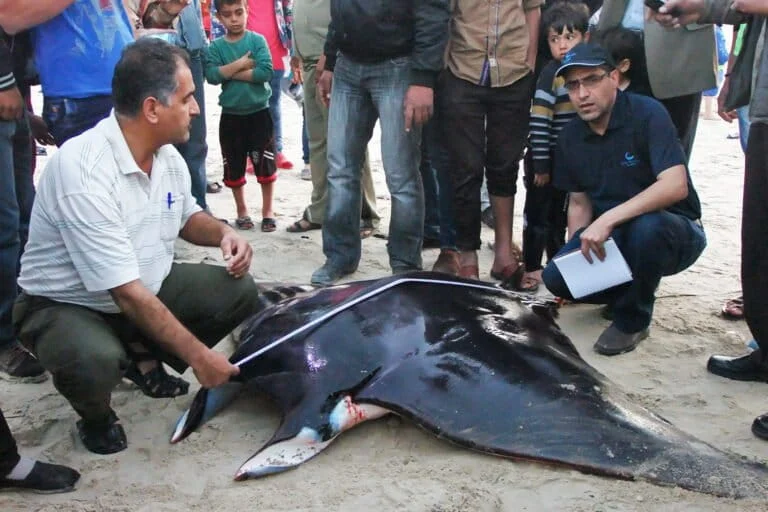
The story of Mohammed Abu Daya is not merely a tale of academic pursuit but a testament to the resilience of the human spirit and the enduring importance of environmental conservation in the face of total societal collapse. As a marine ecologist based in the Gaza Strip, Abu Daya has dedicated his career to the study of the spinetail devil ray (Mobula mobular), also known as the giant devil ray. This species is currently classified as Critically Endangered (CR) by the International Union for Conservation of Nature (IUCN), and it represents one of the most mysterious and threatened inhabitants of the Mediterranean Sea. While the world’s attention has been focused on the geopolitical and humanitarian catastrophe unfolding in the region, Abu Daya has continued to contribute to global scientific knowledge from the confines of a displacement camp, proving that the pursuit of knowledge can persist even when the infrastructure of civilization is dismantled.
The Scientific Significance of the Giant Devil Ray
The spinetail devil ray is the only member of the Mobulidae family—which includes manta rays—that is endemic to the Mediterranean and its adjacent waters. Reaching a wingspan of up to five meters, these majestic filter-feeders are characterized by their slow reproductive rates, making them exceptionally vulnerable to anthropogenic pressures. They face a myriad of threats, including habitat degradation, plastic pollution, and, most critically, incidental capture (bycatch) in industrial and artisanal fisheries.
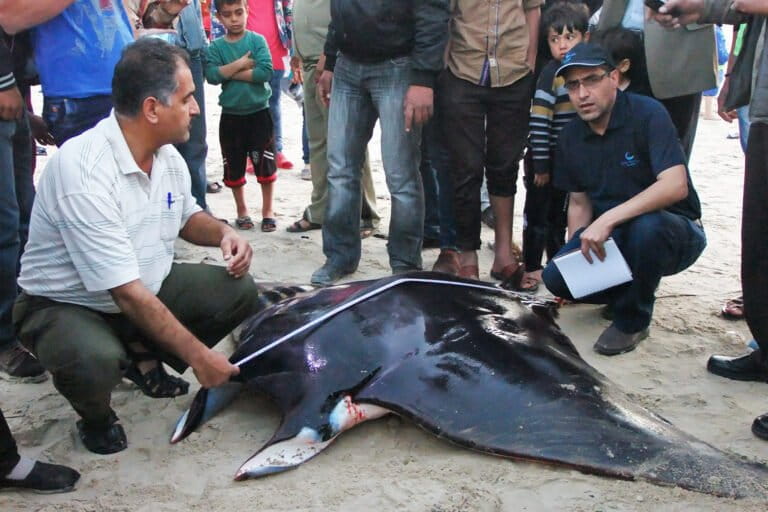
Before the current escalation of conflict, Abu Daya’s work was instrumental in filling a significant "data gap" in the Eastern Mediterranean. While the Western Mediterranean has been relatively well-studied by European institutions, the Levantine Basin—the waters off the coast of Gaza, Israel, Lebanon, and Egypt—remained a scientific frontier. Abu Daya’s research, conducted through his roles at various Palestinian universities and the Gaza National Research Center, provided the first concrete evidence that the coastal waters of Gaza serve as a vital migratory corridor and seasonal habitat for these rays. By working directly with local fishing communities, he transformed what was once a localized harvesting practice into a source of citizen science, collecting biological measurements and tissue samples that were previously unavailable to the international community.
A Legacy of Conservation Challenges in Gaza
The environmental landscape of Gaza has long been shaped by political instability and economic restriction. Even prior to the current war, Abu Daya operated under conditions that would deter most scientists. The naval blockade imposed on the Gaza Strip severely limited the range of fishing vessels, concentrating fishing efforts within a narrow band of coastal waters. This concentration increased the pressure on local fish stocks and heightened the frequency of interactions between fishermen and protected species like the giant devil ray.
A pivotal moment in Gaza’s marine conservation history occurred in 2013, when a massive school of giant devil rays approached the shoreline. Local fishermen, struggling with extreme poverty and the high cost of fuel, captured hundreds of the animals to sell for meat in local markets. While the international conservation community viewed the event as a tragedy, Abu Daya approached it with the nuance of a local expert. He recognized that the incident was a symptom of a larger systemic failure: a lack of alternative livelihoods for fishermen and a complete absence of a formal conservation framework. His work thereafter focused on bridging the gap between the survival needs of the Gazan people and the protection of the marine environment, advocating for a conservation model that included the community rather than criminalizing it.
The Impact of War on Scientific Infrastructure
The outbreak of full-scale war in late 2023 brought a catastrophic halt to formal scientific research in Gaza. The infrastructure of higher education—what some scholars have termed "scholasticide"—has been almost entirely leveled. For Abu Daya, the losses were both personal and professional. His home was destroyed, his office at the research center was reduced to rubble, and the laboratories where he processed his data ceased to exist. Furthermore, the maritime infrastructure of Gaza, including the port and the fleet of fishing boats he relied on for his field research, has been decimated.
The destruction of archives and physical data is a loss that may never be fully recovered. In Gaza, the collective memory of the coast is held by a small group of experts and the elderly fishing community. As these individuals are displaced or killed, the "ecological baseline" of the region—the knowledge of what the sea was like before the current era of degradation—begins to fade. Abu Daya himself has been forced to move multiple times, seeking safety in overcrowded displacement camps where the daily struggle for clean water, food, and electricity takes precedence over academic inquiry.
Scientific Breakthroughs from a Displacement Camp
Despite the absence of a laboratory, a stable internet connection, or even a desk, Abu Daya has refused to abandon his research. In a remarkable feat of academic perseverance, he co-authored a significant study in 2025 regarding the migration patterns of the spinetail devil ray. This research was based on data collected just before and during the early stages of the conflict, as well as long-term tracking data from satellite tags.
One of the most striking findings of the study involved a specific ray that Abu Daya and local fishermen had tagged off the coast of Gaza. The satellite data revealed that this individual traveled across the entire Mediterranean, reaching the coast of Spain before navigating back toward the Levantine Sea. This "round-trip" migration provides definitive proof that the giant devil ray is a highly mobile, transboundary species that requires international protection. It also highlights that Gaza is not an isolated ecological pocket but a critical node in a vast, interconnected Mediterranean ecosystem.
Abu Daya’s ability to coordinate with international colleagues, such as Giuseppe Notarbartolo di Sciara and other experts from the Tethys Research Institute, while living in a tent, has drawn admiration from the global scientific community. He has participated in international conferences via intermittent mobile data links, often finalizing manuscripts while surrounded by the noise and chaos of a humanitarian crisis.
Data Analysis: The Plight of the Mobula Mobular
The data synthesized by Abu Daya and his peers paints a sobering picture for the giant devil ray. Supporting data from the Mediterranean indicates that:
- Population Decline: Some estimates suggest a population reduction of over 50% over the last three generations of the species.
- Bycatch Rates: In the Mediterranean, bycatch in pelagic trawls and longlines remains the primary cause of mortality.
- Connectivity: The discovery that rays move from Gaza to Spain suggests that local depletion in the Eastern Mediterranean could have ripple effects on the genetic diversity and population stability of the species in the West.
This data underscores the fact that conservation cannot be successful if it is geographically fragmented. If the giant devil ray is protected in European waters but remains vulnerable in the Levantine Basin due to a lack of resources or political instability, the species as a whole remains at risk.
Broader Implications for Global Conservation
The case of Mohammed Abu Daya raises profound questions about the "right to science" and the role of environmentalists in conflict zones. It highlights a growing phenomenon where local scientists are the only ones capable of maintaining long-term monitoring in volatile regions, yet they are often the ones with the least access to funding and protection.
The implications of his work extend beyond marine biology:
- The Human Element of Conservation: Abu Daya’s research proves that conservation is as much about sociology as it is about biology. Without addressing the economic realities of the people who share the environment with endangered species, protection efforts are destined to fail.
- Resilience of Data: The fact that a tagged ray’s data could be retrieved and analyzed despite the destruction of the scientist’s home base emphasizes the importance of cloud-based data storage and international collaboration.
- Post-War Recovery: When the conflict eventually ends, the recovery of Gaza’s environment will depend on individuals like Abu Daya. The loss of scientific expertise is a "brain drain" that can delay environmental restoration for decades.
Conclusion: The Future of Gaza’s Marine Ecology
As of 2025, the situation in Gaza remains dire, yet Mohammed Abu Daya continues to monitor the sea from the shore, whenever safety permits. His work serves as a reminder that the environment does not recognize borders or ceasefires; the giant devil rays continue their ancient migrations regardless of the tragedies unfolding on land.
The international scientific community has called for greater support for "at-risk" scholars like Abu Daya, arguing that the protection of scientific knowledge is a humanitarian necessity. For now, Abu Daya remains a lone sentinel for the giant devil ray in the Eastern Mediterranean. His story is a powerful indictment of the waste of war, but also a shining example of the dedication that defines the modern scientist. In the face of a scorched-earth reality, he continues to look toward the horizon, ensuring that when the smoke clears, there will still be a record of the life that exists beneath the waves of Gaza.