Nila Kartika Wati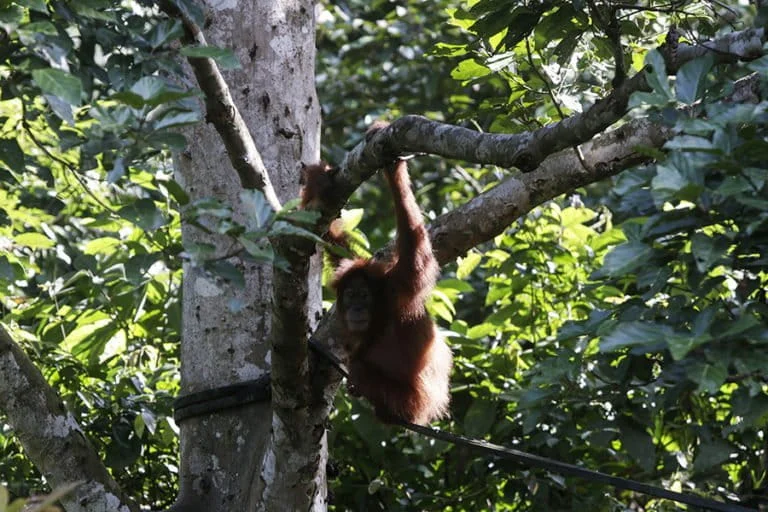
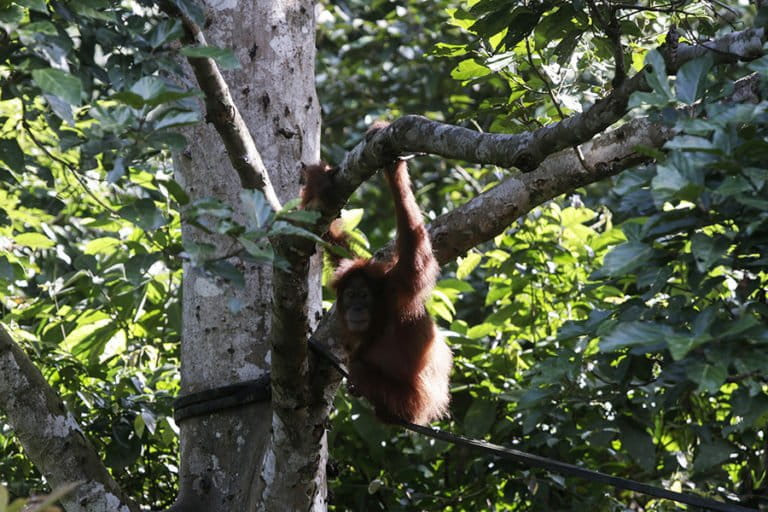
The discovery of a newborn male Sumatran orangutan (Pongo abelii) in the lush canopy of the Jantho Nature Reserve in Aceh marks a profound milestone for Indonesian wildlife conservation. The infant, named Badar by the Indonesian Minister of Forestry, Raja Juli Antoni, was first spotted in late May by a field monitoring team from the Sumatran Orangutan Conservation Programme (SOCP). Badar is the offspring of Bulan, a female orangutan whose life story serves as a poignant testament to the resilience of the species and the efficacy of long-term rehabilitation efforts. Bulan, once a victim of the illegal wildlife trade, was rescued, rehabilitated, and eventually released back into the wild in 2018. Her transition from a captive juvenile to a successful mother in her natural habitat is being hailed by experts as a definitive indicator that reintroduction programs can produce self-sustaining populations.
The name Badar, derived from local vocabulary referring to the phenomenon of a full moon, mirrors his mother’s name, Bulan, which means "moon" in Indonesian. This symbolic naming underscores the hope that this new generation represents a "full circle" for orangutans that were once stripped from the forest. However, while the birth of Badar is a cause for celebration, conservationists warn that the survival of the species remains precariously balanced against the backdrop of habitat loss, climate change, and the persistent threat of human encroachment outside protected areas.
A Journey of Resilience: The Chronology of Bulan
The history of Bulan reflects the harrowing reality faced by many Sumatran orangutans. In 2014, Bulan was rescued by authorities from illegal traders in Kutacane, Southeast Aceh Regency. At the time of her rescue, she was merely two years old—an age when orangutans in the wild are still entirely dependent on their mothers for survival and social learning. Having been severed from her natural environment, Bulan was transported to the SOCP Sibolangit Quarantine and Rehabilitation Center in North Sumatra.
For the next four years, Bulan underwent an intensive rehabilitation process. This journey involved "forest school," where orphaned and rescued orangutans are taught the essential survival skills their mothers would have otherwise provided, such as identifying edible fruits, building night nests, and navigating the complex arboreal highways of the rainforest. In 2018, having demonstrated the necessary physical and behavioral competence, Bulan was moved to the Jantho Nature Reserve for release.
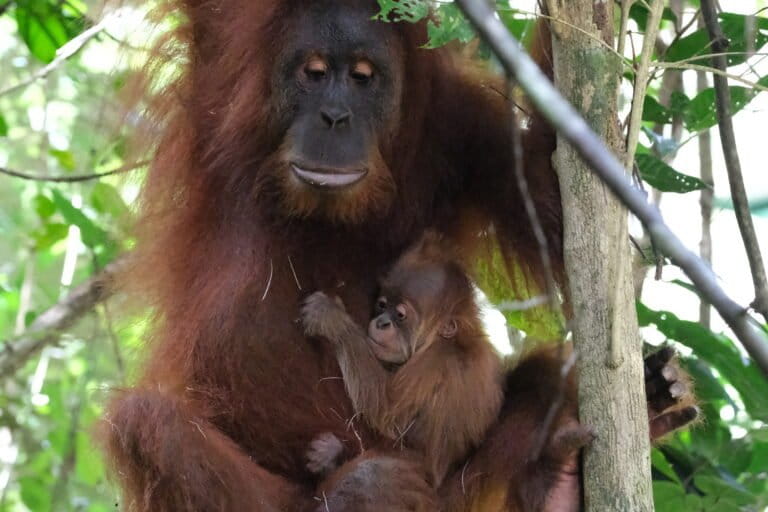
Six years after her return to the wild, the sighting of Bulan with a healthy infant confirms that she has not only survived the transition but has successfully integrated into the wild social structure. The ability of a reintroduced female to conceive, carry, and birth an infant in the wild is considered the "gold standard" of conservation success, proving that the years of investment in her rehabilitation have yielded the ultimate biological result: the continuation of the lineage.
The Jantho Nature Reserve: A Decade of Conservation Impact
The birth of Badar is not an isolated event but rather the 10th confirmed birth within the Jantho Nature Reserve since the reintroduction program commenced there in 2011. Castri Delfi Saragih, Head of Communication for YEL-SOCP, noted that these births are vital signs of a growing, stable population. The Jantho site was specifically selected for its rich biodiversity and its status as a protected area, providing a safe haven for orangutans that have survived human-wildlife conflict, trafficking, or illegal domestic ownership.
According to the latest data, the Jantho facility alone has facilitated the release of nearly 200 individual orangutans. When combined with the SOCP’s other major release site in Jambi, the program has successfully returned over 400 individuals to the wild. These efforts are critical given the current status of the Sumatran orangutan. With an estimated total population of only 14,000 individuals remaining in the wild, the addition of even a single healthy male like Badar is statistically significant for the genetic diversity and long-term viability of the species.
Historical precedents in the Jantho reserve further bolster the program’s credibility. Saragih pointed to the case of Ayu, another female orangutan rescued in 2012. After her release, Ayu was monitored and eventually found to have successfully reproduced in the wild, with her offspring recently observed thriving in the forest. These cumulative successes suggest that the SOCP’s methodology—combining rigorous quarantine, behavioral training, and post-release monitoring—is a viable model for preventing the extinction of great apes.
Official Responses and the Validation of Rehabilitation Protocols
The Ministry of Forestry has viewed the birth of Badar as a validation of state-supported conservation strategies. Ristianto Pribadi, Head of the Bureau of Public Relations and International Cooperation at the Ministry of Forestry, stated that the event serves as a "valid indicator" of the success of wildlife rehabilitation programs. He emphasized that the ability of a reintroduced animal to adapt and reproduce naturally is the clearest sign that the ecosystem is healthy and that the animal has regained its wild instincts.
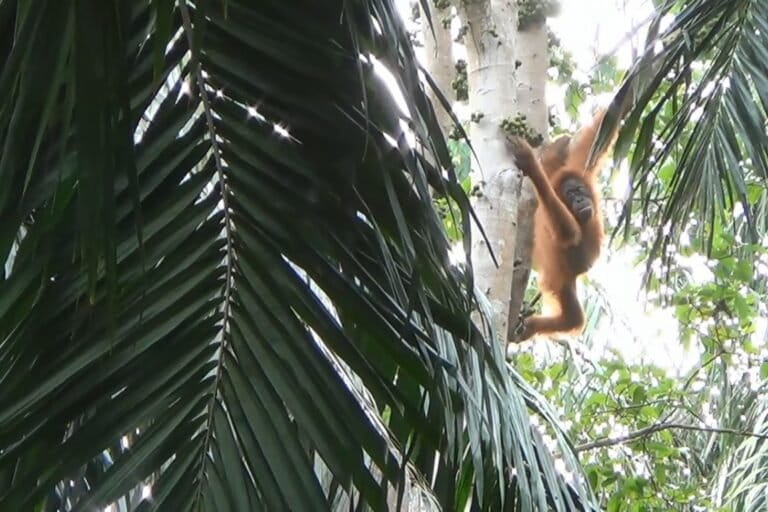
"This is an encouraging development and serves as a positive indicator that rescue, rehabilitation, and release efforts can contribute directly to the recovery of species populations in the wild," Pribadi remarked. He further explained that the Ministry employs a sophisticated post-release monitoring (PRM) system to track the independence and health of key species. This scientific approach allows conservationists to gather data on range use, foraging habits, and social interactions, which in turn informs future release strategies.
However, the Ministry also acknowledged that the work does not end with a successful release. Pribadi highlighted the necessity of ongoing security operations, law enforcement patrols to deter poaching, and cross-sector coordination with local governments to ensure that the boundaries of nature reserves are respected. The challenge, he noted, is often most acute in the "buffer zones" and areas outside formal conservation status where orangutans may still roam.
The Fragile Reality: Anthropogenic Pressures and Climate Change
Despite the optimism surrounding Badar’s birth, M. Yakob Ishadamy, Director of Conservation at the Yayasan Ekosistem Lestari (YEL), offered a sobering analysis of the challenges ahead. He argued that the success of reintroduction is only one half of the equation; the other half is the permanent protection of the habitat.
"From a victim of illegal animal trade to a mother in the wild, Bulan’s journey shows the long-term value of orangutan rehabilitation and reintroduction," Ishadamy said. "However, such success can only continue if the forests on which orangutans depend remain protected."
Ishadamy identified several escalating threats that could undermine a decade of conservation gains:
- Habitat Fragmentation: Over the last decade, anthropogenic pressures—human-driven activities such as road construction, logging, and agricultural expansion—have increased drastically. This has led to the "islandization" of orangutan populations. When forests are fragmented, orangutans are trapped in isolated pockets, unable to migrate for food or mates.
- Genetic Bottlenecks: Fragmentation inevitably leads to inbreeding. Without "ecological corridors" that allow different groups to meet and mate, the genetic health of the population declines, making them more susceptible to disease and less adaptable to environmental changes.
- Climate Change: The climate crisis is disrupting the phenology of the rainforest. Orangutans are highly dependent on the seasonal cycles of fruiting and flowering trees. Changes in rainfall patterns and temperature are altering these cycles, potentially leading to food shortages for these large, arboreal primates.
- Buffer Zone Conflicts: While the Jantho Nature Reserve is protected, the surrounding areas often face pressure from palm oil plantations and smallholder farming. When orangutans stray outside the reserve in search of food, they often come into conflict with humans, leading to further rescues or, tragically, fatalities.
A Holistic Vision for the Future
To ensure that Badar and his peers have a future, Ishadamy and other experts call for a "holistic approach" to conservation. This goes beyond the rescue of individual animals and moves toward landscape-level management. Key components of this strategy include the restoration of ecological corridors to reconnect fragmented forest patches and the implementation of intelligence-based anti-poaching patrols.
Furthermore, there is an increasing focus on inclusive environmental education. By engaging indigenous communities and those living in buffer zones, conservationists hope to transform local residents into guardians of the forest. The goal is to create an economic and social framework where the presence of orangutans is seen as an asset—perhaps through sustainable eco-tourism or carbon credit programs—rather than a hindrance to development.
The birth of Badar in the Jantho Nature Reserve is a rare "good news" story in the often-grim field of conservation biology. It proves that the damage done by the illegal wildlife trade is not always irreversible. However, it also serves as a call to action. As Bulan and Badar move through the canopy of Aceh, their survival remains a reflection of human will. The success of the SOCP and the Ministry of Forestry in Jantho provides a blueprint, but the long-term survival of the Sumatran orangutan will require a global commitment to preserving the tropical forests of Southeast Asia before they vanish entirely.