Nila Kartika Wati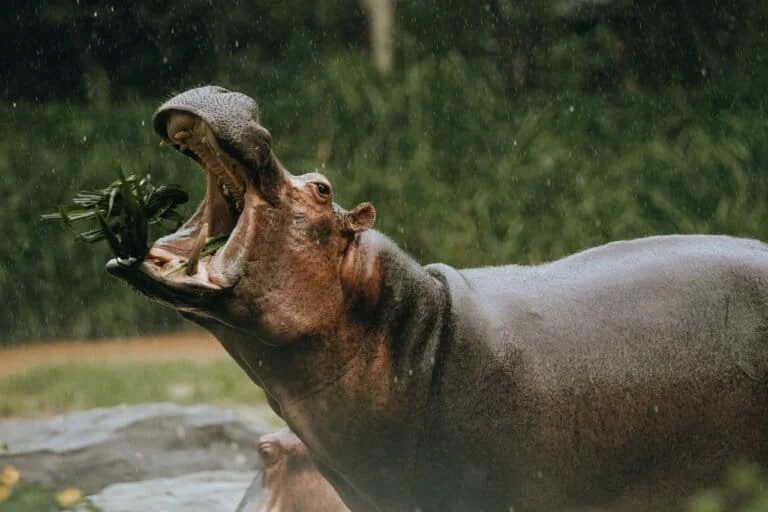
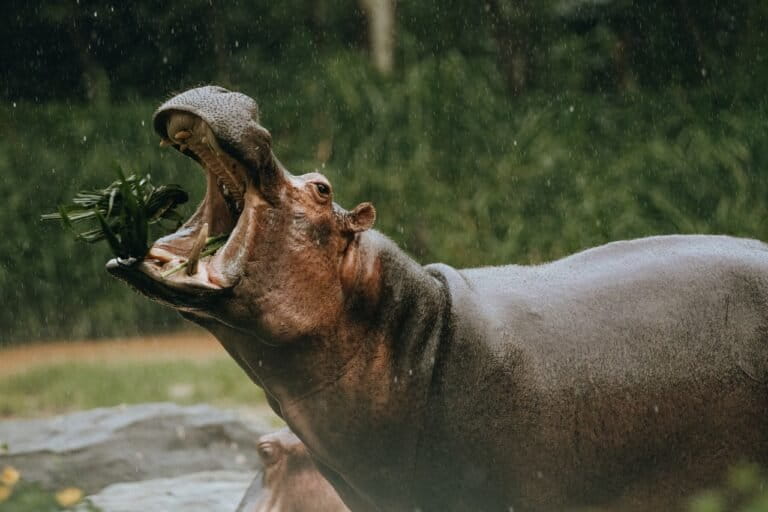
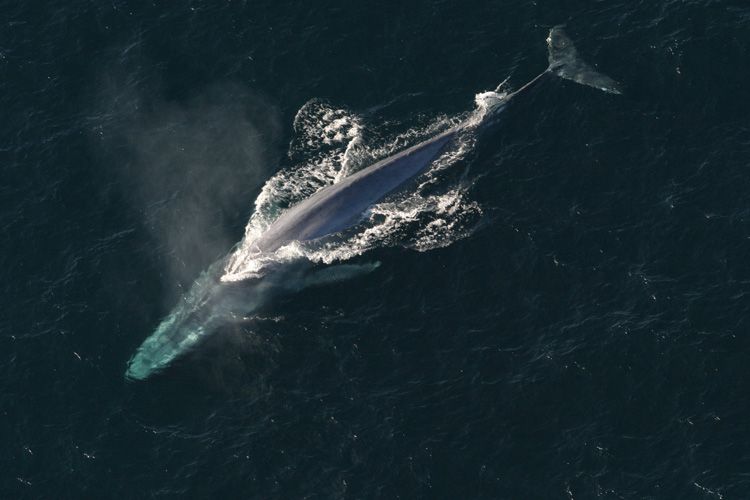
The blue whale, a titan of the deep reaching lengths of 30 meters, and the common hippopotamus, a mud-dwelling mammal of the African riverbanks, appear to share nothing in common at a glance. However, the last three decades of intensive genetic sequencing and paleontological discovery have fundamentally rewritten the history of life on Earth, confirming that these two disparate creatures are each other’s closest living relatives. This biological revelation has dismantled long-standing theories about mammalian evolution, placing the cetaceans—a group including whales, dolphins, and porpoises—firmly within the order of even-toed ungulates, or artiodactyls.
For over a century, the scientific consensus, based primarily on dental morphology, suggested that whales descended from the Mesonychia, an extinct order of carnivorous, hoofed land mammals. These creatures possessed teeth similar to early whales, leading paleontologists to believe they were the terrestrial precursors to the giants of the sea. Yet, as molecular biology advanced in the late 20th century, a different story began to emerge from the very blueprint of life: DNA. This discrepancy between physical appearance (phenotype) and genetic reality (genotype) sparked one of the most significant debates in modern biology, eventually leading to the identification of the clade Whippomorpha, or Cetancodonta, which unites hippos and whales in a single evolutionary branch.
The Molecular Revolution and the Whippomorpha Clade
The first cracks in the traditional "Mesonychid" theory appeared in the 1990s. Molecular biologists, including researchers such as Ursing and Arnason, began comparing the mitochondrial genomes of various mammals. Their findings, published in journals such as Royal Society Open Science, were startling. The data consistently showed that cetaceans did not sit outside the ungulate group as a distant cousin; rather, they were deeply nested within it.
The genetic evidence indicated that whales were more closely related to hippopotamuses than hippos were to other even-toed ungulates like pigs, camels, or deer. This was a radical departure from established thought. If the DNA was correct, it meant that whales were essentially "highly specialized artiodactyls" that had traded their hooves for flippers. This genetic proximity led to the coining of the term Whippomorpha, a portmanteau of "Whale" and "Hippopotamus," representing the suborder that contains both the Cetacea and the Hippopotamidae.
Critics initially argued that the genetic data must be flawed because the fossil record at the time did not seem to support such a connection. There was a "ghost lineage"—a gap of tens of millions of years between the estimated divergence of whales and hippos and the appearance of the first recognizable hippopotamus fossils. However, the dawn of the 21st century brought new fossil evidence from the mountains of Pakistan and India that would bridge this gap.
The Smoking Gun in the Ankle: The Astragalus Bone
The turning point for the paleontological community came in 2001 with the discovery of well-preserved limb bones from early whale ancestors, specifically Pakicetus and Rodhocetus. These animals lived approximately 47 to 50 million years ago and were clearly transitional forms. While they possessed features indicative of an aquatic lifestyle, such as specialized ear bones, they still possessed four functional legs.
The "smoking gun" was the astragalus, or ankle bone. In almost all land mammals, the astragalus has a single pulley-like surface. However, artiodactyls (even-toed ungulates like cows and hippos) possess a unique "double-pulley" astragalus, which provides their ankles with greater flexibility and spring. When researchers unearthed the ankles of Pakicetus, they found the unmistakable double-pulley shape. This anatomical signature provided the physical proof that matched the genetic data: whales were, beyond a shadow of a doubt, descended from artiodactyl ancestors.
This discovery effectively ended the Mesonychid hypothesis. It proved that the dental similarities between whales and mesonychids were a result of convergent evolution—where different species evolve similar traits independently—rather than a direct ancestral link.
Indohyus and the Raoellid Connection
In 2007, a landmark study published in Nature by Hans Thewissen and his team introduced Indohyus, a small, deer-like mammal from the extinct Raoellidae family. Found in the 48-million-year-old rocks of Kashmir, India, Indohyus provided the most compelling look yet at the "missing link" between land and sea.
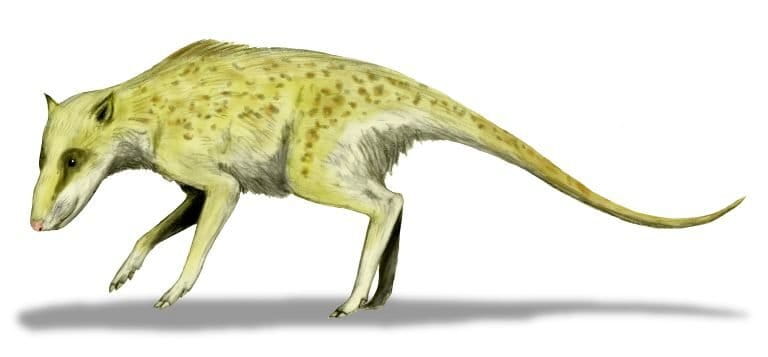
Though Indohyus looked like a tiny chevrotain (mouse deer), its bones told a different story. The most significant feature was the involucrum, a thickened bone structure in the middle ear. Until the discovery of Indohyus, the involucrum was a trait found exclusively in cetaceans, helping them hear underwater. Its presence in a four-legged land mammal was a revelation.
Furthermore, the chemical analysis of the teeth and bones of Indohyus revealed high levels of heavy oxygen isotopes, a characteristic of animals that spend significant time in freshwater environments. Thewissen hypothesized that Indohyus took to the water not to find food—as its teeth suggested a herbivorous diet—but to escape predators. This behavioral shift toward the water created the selective pressure that eventually led to the fully aquatic lifestyle of later cetaceans.
A Chronology of Transition: From Pakicetus to the Blue Whale
The evolution of whales is often cited by biologists as one of the most complete examples of macroevolution in the fossil record. The transition occurred over roughly 10 to 15 million years during the Eocene epoch, a period of global warmth.
- The Common Ancestor (approx. 55 Million Years Ago): A terrestrial artiodactyl ancestor lived in the lush forests of what is now the Indian subcontinent. This ancestor eventually split into two lineages: one leading to the anthracotheres (extinct hippo-like relatives) and eventually modern hippos, and the other leading to the raoellids and cetaceans.
- Pakicetus (50 Million Years Ago): A wolf-sized terrestrial mammal that lived near riverbanks. While it had a long snout and carnivore-like teeth, its ear bones were already adapting for underwater sound conduction.
- Ambulocetus (49 Million Years Ago): Known as the "walking whale," this creature was truly amphibious. It had shortened limbs and large, paddle-like feet, resembling a mammalian version of a crocodile. It likely hunted by ambush in shallow waters.
- Rodhocetus (47 Million Years Ago): This genus showed further specialization for swimming, with a more flexible spine and a tail that was beginning to develop the powerful musculature needed for propulsion, though it still retained small hind limbs.
- Basilosaurus and Dorudon (40–34 Million Years Ago): These were fully aquatic whales. Basilosaurus grew to 18 meters in length. While they still possessed vestigial hind legs, these limbs were no longer attached to the vertebral column and could not support the animal’s weight on land.
- Modern Cetaceans (34 Million Years Ago to Present): As the Earth cooled and ocean currents shifted, whales diversified into the two modern groups: Mysticeti (baleen whales) and Odontoceti (toothed whales).
Physiological Parallels Between Hippos and Whales
Beyond the bones and DNA, several physiological traits link hippos and whales, further supporting their shared heritage. Both groups have lost most of their body hair, a common adaptation for mammals that spend significant time in the water to reduce drag and prevent skin saturation.
Furthermore, both hippos and whales lack traditional sebaceous glands. Instead of sweating, hippos secrete a red fluid known as "blood sweat" that acts as a sunscreen and antibiotic. Whales have also lost the ability to sweat, as it is unnecessary in an aquatic environment.
Reproductive similarities also exist. Both hippos and whales nurse their young underwater. Hippo calves are born capable of swimming and must suckle while submerged, a behavior mirrored by all modern cetaceans. Additionally, both groups possess internal testicles, a trait that differs from most other ungulates but is common among many aquatic or semi-aquatic mammals for streamlining and thermoregulation.
Scientific Implications and Future Research
The realization that whales are "deep-sea hippos" has profound implications for how we understand biodiversity and evolutionary flexibility. It demonstrates that the transition from a terrestrial, hoofed herbivore to a 200-ton marine filter-feeder is not only possible but occurred with remarkable speed in geological terms.
This relationship also highlights the importance of protecting modern hippopotamuses. As the closest living relatives to the great whales, hippos are a vital link to understanding the early behaviors and physiological shifts that allowed mammals to reclaim the oceans. Currently, the common hippopotamus is listed as "Vulnerable" by the IUCN due to habitat loss and poaching. The loss of the hippopotamus would mean the loss of the only living "window" we have into the semi-aquatic phase of cetacean history.
Ongoing research continues to refine the timeline. Scientists are now looking into the specific genetic mutations that allowed whales to lose their legs and develop baleen. Comparative studies between hippo and whale genomes are also helping researchers understand how these animals evolved to hold their breath for extended periods and resist the cellular damage associated with deep diving.
The story of the whale and the hippo is a testament to the power of modern science to uncover truths that are hidden beneath millions of years of adaptation. It serves as a reminder that in the tree of life, appearances are often secondary to the deep, indelible marks left by ancestry in the marrow and the gene. Through the combination of dusty fossils from the foothills of the Himalayas and high-tech genetic sequencing in modern labs, humanity has finally traced the long, watery path of the whale back to its humble, four-legged beginnings on land.