Nila Kartika Wati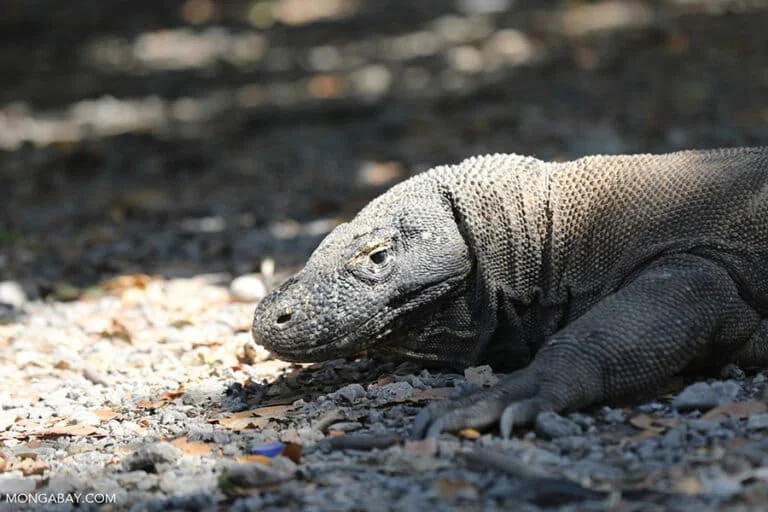
The recurring reports of Komodo dragons (Varanus komodoensis) attacking local villagers or international tourists in the East Nusa Tenggara province frequently spark a singular, urgent question: why does this ancient apex predator, which has coexisted with humans for centuries, turn its lethal attention toward people? While public perception often paints the Komodo dragon as a mindless, aggressive monster reminiscent of a mythological beast, biological researchers and conservationists argue that such a characterization is fundamentally flawed. Instead, a closer examination of recent incidents suggests that these attacks are rarely premeditated hunts; rather, they are the result of complex ecological interactions, territorial disruptions, and the narrowing gap between human activity and the natural habitat of the world’s largest lizard.
For millions of years, the Komodo dragon has reigned as the undisputed ruler of its limited range, which includes the islands of Komodo, Rinca, Gili Motang, and Gili Dasami, as well as coastal pockets of the larger island of Flores. As an apex predator, its natural diet is comprised of large ungulates—specifically Timor deer, wild boar, and water buffalo—as well as smaller prey like monkeys and birds. Humans are notably absent from the dragon’s evolutionary menu. Yet, the friction between the two species has intensified as the islands transition from remote outposts to global tourism hubs. To understand the root causes of these conflicts, one must look beyond the sensationalist headlines and into the behavioral ecology of the species and the physiological mechanics that make their defensive strikes so devastating.
The Behavioral Ethology of Conflict
Contrary to the "man-eater" trope, researchers from the Komodo Survival Program and international herpetologists emphasize that Komodo dragons are generally wary of humans. They are ectotherms that prioritize energy conservation, meaning they do not expend the massive physical effort required for a high-speed chase unless the reward is substantial and the success rate is high. When a Komodo dragon bites a human, it is typically a reactive strike rather than a proactive hunt.
Data gathered from field observations indicate three primary triggers for these attacks. The first is the element of surprise. Like many reptiles, a Komodo dragon’s first instinct when startled is either flight or a rapid, defensive snap. In the dense undergrowth of Rinca or the rugged hills of Komodo National Park, a human walking quietly can easily stumble upon a resting dragon. The second trigger is the obstruction of resources. Komodo dragons are highly sensitive to the scent of carrion. If a human inadvertently stands between a dragon and its food source—or, as seen in documented cases, unknowingly sits near a carcass hidden in the brush—the dragon perceives the human as a competitor or a physical barrier to its survival.
The third trigger involves the blurring of boundaries in areas with high human traffic. In villages like Kampung Komodo or near tourist jetties, some dragons have become "habituated"—less fearful of humans but not "tamed." This lack of fear, combined with the presence of livestock or food scraps, creates a high-risk environment where a dragon’s predatory instincts can be triggered by sudden movements or the presence of perceived easy prey.
A Chronology of Notable Incidents
A review of the chronology of human-Komodo conflicts reveals a pattern of situational misfortune rather than targeted predation. In one significant case on Rinca Island, a local resident was bitten while searching for wild honey in a remote forested area. This region is far from the regulated tourist trails, and the dragons there retain a much higher level of "wildness" and reactivity compared to those near the park headquarters. The victim in this instance likely encroached upon the dragon’s immediate personal space, triggering a defensive lunge.
Another illustrative event occurred when an individual stopped to rest on a large rock, unaware that the crevice beneath held the remains of a deer. To the person, it was a scenic resting spot; to the approaching Komodo dragon, it was a biological signal of a meal. When the dragon approached and the human reacted with sudden movement, the dragon struck to clear the path to its "property."
Perhaps the most telling type of incident involves "opportunistic redirection." In one recorded event, a dragon was actively pursuing a goat. When the goat managed to escape through a narrow gap, the dragon, already in a state of high physiological arousal and "hunting mode," struck the nearest moving object—a human standing nearby. These cases underscore that while humans are not the target, they can easily become "collateral damage" in the dragon’s pursuit of its natural prey or defense of its territory.
The Lethal Mechanics: Teeth and Venom
The severity of a Komodo dragon bite is not merely a product of brute force, but of a sophisticated biological arsenal. A landmark study published in 2023 provided new insights into the specialized dental anatomy of the species. The Komodo dragon possesses approximately 60 heavily serrated teeth that are frequently replaced throughout its life. These teeth are shaped like curved, double-edged saws, designed specifically to pull and tear through tough hide and muscle. Unlike the crushing grip of a crocodile, a Komodo’s bite is a "grip and rip" mechanism that creates extensive, jagged lacerations.
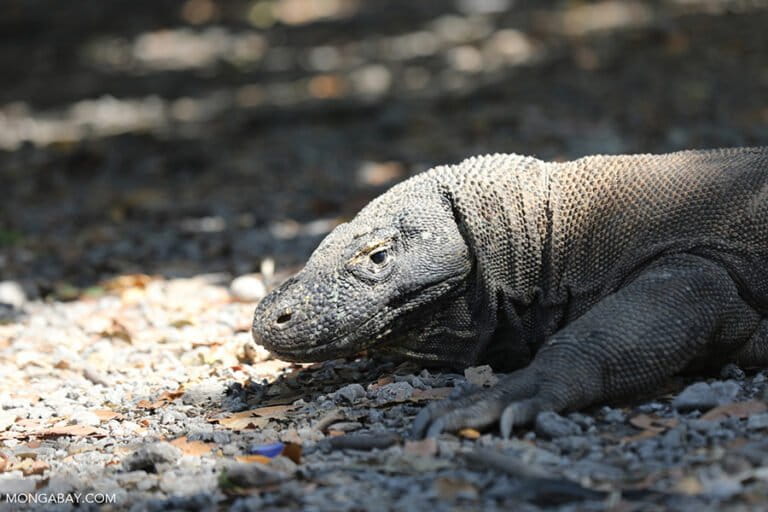
However, the mechanical damage is only half of the threat. For decades, it was erroneously believed that Komodo dragons killed via "sepsis" caused by "dirty bacteria" in their mouths. Modern research, pioneered by Dr. Bryan Fry and his team, has debunked this myth, revealing that Komodo dragons possess complex venom glands in their lower jaws.
When a dragon bites, the venom is squeezed from these glands into the wound. The venom contains a cocktail of proteins that act as anticoagulants and vasodilators. This prevents the victim’s blood from clotting and causes a rapid drop in blood pressure, sending the prey into shock. For a human victim, this means that even a single "nip" can lead to life-threatening hemorrhaging and systemic collapse. The combination of deep tissue trauma from the serrated teeth and the chemical interference of the venom necessitates immediate, specialized medical intervention, which is often difficult to access in the remote reaches of the archipelago.
The Impact of Tourism and Habitat Encroachment
The rising frequency of encounters is inextricably linked to the success of Komodo National Park as a global destination. Since being named one of the "New Seven Wonders of Nature," the park has seen a surge in visitors. While this brings much-needed revenue for conservation and local economies, it also increases the "human footprint" within a fragile ecosystem.
Official responses from the Indonesian Ministry of Environment and Forestry (KLHK) have emphasized the need for strict zoning and the "ranger-led" model of tourism. Rangers, often recruited from local communities, act as the primary line of defense, using forked wooden sticks to maintain a safe distance between dragons and visitors. However, as infrastructure projects—such as new jetties and "premium" tourism facilities—continue to expand, the natural corridors used by the dragons are increasingly intersected by human paths.
Conservationists argue that the "urbanization" of certain park areas changes dragon behavior. When dragons congregate near kitchens or tourist areas, they stop being active hunters and become "scavengers of opportunity." This shift not only impacts their health but also makes their interactions with humans more frequent and less predictable.
Safety Protocols and Conservation Implications
To mitigate the risk of conflict, the park authority has implemented a series of non-negotiable safety protocols. Visitors are prohibited from exploring the islands without a certified ranger. There are strict warnings against visiting during the dragon’s mating season (July to August) or nesting season (September to November), when males are particularly territorial and females are protective of their mounds. Furthermore, the scent of blood—even from minor scratches—is known to attract dragons from great distances, leading to strict guidelines for visitors with open wounds.
The broader implication of these attacks touches on the philosophy of conservation. The Komodo dragon is a "vulnerable" species on the IUCN Red List, with a total population estimated at around 3,300 individuals. Every negative interaction with humans risks a backlash that could undermine support for the dragon’s protection. Therefore, the goal of park management is not to "tame" the dragons, but to "manage" the humans.
The coexistence of humans and Komodo dragons depends on the preservation of the "fear factor." It is essential that the dragons remain wary of humans and that humans maintain a healthy, respectful distance from the dragons. Understanding that the Komodo dragon is a product of millions of years of evolution—a predator designed for a world that no longer exists elsewhere—is the first step in ensuring that both the species and the people who live alongside it can thrive.
In conclusion, the Komodo dragon is neither a malicious monster nor a docile attraction. It is a highly specialized predator reacting to its environment with the tools evolution has provided. As human activity continues to press into the final strongholds of these ancient giants, the responsibility lies with humanity to adapt its behavior. By respecting the biological triggers and the lethal capabilities of the Varanus komodoensis, Indonesia can continue to protect its most famous natural treasure while ensuring the safety of those who come to marvel at this living link to the prehistoric past. The "dragon’s bite" is a reminder that in the wild corners of the world, nature still operates by its own ancient and uncompromising rules.