Nila Kartika Wati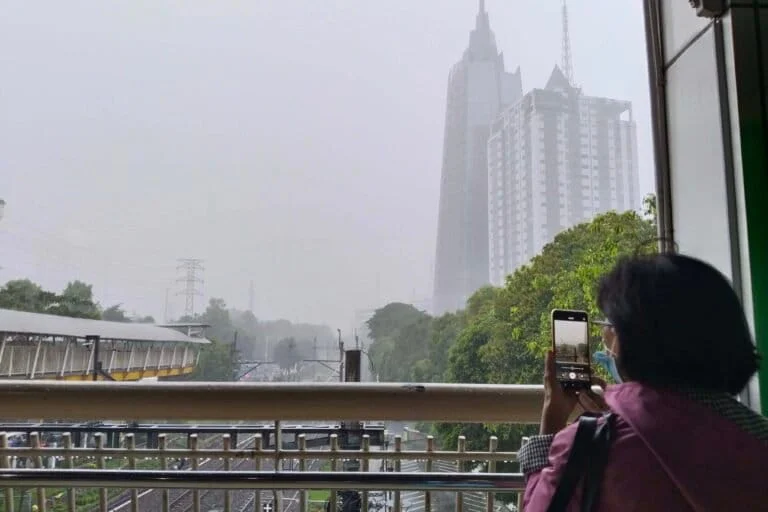
The National Research and Innovation Agency (BRIN) has released a comprehensive study detailing a concerning environmental phenomenon in Indonesia’s capital: the presence of microplastics in Jakarta’s rainwater. This revelation shifts the narrative of plastic pollution from a terrestrial and marine issue to an atmospheric crisis, suggesting that the very air residents breathe and the rain that cools the tropical heat are now carriers of synthetic polymers. According to the research, every drop of rain falling over the metropolis is potentially contaminated with microplastics—minuscule plastic fragments ranging from 5 millimeters down to 1 micrometer in size. This atmospheric deposition represents a new frontier in environmental science, highlighting the pervasive and inescapable nature of plastic waste in a modern megacity.
The Scientific Discovery and Atmospheric Deposition
The study was spearheaded by Muhammad Reza Cordova, a Research Professor at BRIN’s Oceanography Research Center, who has been leading a dedicated team to track these pollutants since 2022. The research focused on various sectors of the Greater Jakarta area, with particularly striking data emerging from the coastal regions. The findings indicate that in Jakarta’s coastal zones, an average of 15 microplastic particles fall on every square meter of land daily. This process, scientifically categorized as atmospheric microplastic deposition, occurs when airborne plastic particles are washed out of the sky by precipitation or settle due to gravity.
Professor Cordova’s team utilized advanced filtration and spectroscopic techniques to identify the chemical signatures of these particles. The results confirm that the "rain" is not merely water but a cocktail of degraded polymers. The significance of this finding lies in the sheer volume of the deposition. When extrapolated across the massive land area of the Jakarta Special Capital Region, the total amount of plastic falling from the sky daily amounts to billions of particles, creating a continuous cycle of contamination that affects soil, surface water, and eventually, the human food chain.
The Lifecycle of Airborne Plastic: From Ground to Sky
The presence of plastic in the atmosphere is a direct consequence of the physical properties of synthetic polymers. Unlike organic matter, plastic does not biodegrade; instead, it undergoes a process of fragmentation. Through exposure to ultraviolet (UV) radiation from the sun, mechanical wear, and fluctuating temperatures, larger plastic items break down into increasingly smaller pieces. In a hyper-active urban environment like Jakarta, which generates approximately 7,500 to 8,000 tons of waste per day, the opportunities for plastic degradation are endless.
Several primary sources contribute to this atmospheric load. First is the massive volume of unmanaged plastic waste in open-air landfills and illegal dumping sites, where sun exposure accelerates brittleness and fragmentation. Second, the heavy traffic congestion of Jakarta plays a significant role; the friction between vehicle tires and asphalt releases "tire wear particles," which are essentially synthetic rubber microplastics. Third, the domestic habits of millions of residents contribute through the washing and drying of synthetic textiles. When polyester or nylon clothing is hung to dry, wind strips away micro-fibers that are light enough to be lofted into the air. Finally, the incineration of waste—a common though often unregulated practice in suburban Jakarta—releases charred plastic fragments into the thermal updrafts. These particles are swept into the atmosphere by wind and rising warm air currents, where they integrate with cloud formations before returning to earth during heavy rainfall.
The Toxicological Threat: Microplastics as Chemical Sponges
The danger of microplastics extends far beyond their physical presence. Environmental scientists describe these particles as "toxic sponges." Due to their chemical structure and high surface-area-to-volume ratio, microplastics readily adsorb persistent organic pollutants (POPs) and heavy metals from the surrounding environment. Furthermore, the manufacturing process of plastics involves the addition of various chemicals to improve flexibility, durability, or color.
The BRIN study highlights two particularly hazardous groups of chemicals associated with Jakarta’s atmospheric microplastics: Bisphenol A (BPA) and phthalates. BPA is a known endocrine disruptor that can interfere with the body’s hormonal systems, while phthalates are linked to reproductive issues and developmental abnormalities. When these particles fall with the rain, they do not remain inert. They infiltrate the city’s complex network of canals and rivers, such as the Ciliwung, and seep into the groundwater. For a city where many residents still rely on well water or inadequately filtered municipal supplies, the bypass of standard filtration systems by these microscopic particles poses a direct threat to public health.

Human Health Implications and Biological Infiltration
The most alarming aspect of the BRIN findings is the potential for these particles to enter the human biological system. Because microplastics are now airborne, inhalation has become a primary route of exposure alongside ingestion. Once inhaled or swallowed, particles smaller than 10 micrometers can cross biological membranes.
Recent international medical studies, which provide context to BRIN’s local findings, have successfully detected microplastics in human lungs, bloodstreams, and even the placenta. Most recently, research has identified the presence of these particles in human brain tissue, suggesting that the blood-brain barrier may not be an absolute defense against the smallest nanoplastics. The long-term health implications for Jakarta’s population are profound. Chronic exposure to the chemical additives in microplastics is linked to an increased risk of various cancers, metabolic disorders, and autoimmune diseases. In children, the disruption of hormonal pathways by BPA and phthalates can lead to stunted growth or neurological developmental delays, making the "plastic rain" a generational health crisis.
Jakarta as a Hub of Plastic Emissions
Jakarta, a megacity with a population exceeding 10 million (and significantly more in the greater metropolitan area), serves as a massive "emission center" for microplastics. The city’s geography, characterized by high humidity and frequent convective rainstorms, facilitates the rapid cycling of these pollutants. The BRIN research emphasizes that the city’s plastic problem is no longer contained within its borders. Wind patterns can carry these lightweight atmospheric microplastics far into the hinterlands of West Java and across the Java Sea, making Jakarta a source of transboundary pollution.
The chronology of this crisis tracks closely with Indonesia’s rapid urbanization and the proliferation of single-use plastics. Over the last two decades, the shift toward "sachet culture"—where consumer goods are sold in small, multi-layered plastic laminates—has overwhelmed waste management infrastructure. While the provincial government of Jakarta has implemented bans on plastic bags in modern markets, the sheer volume of legacy plastic in the environment continues to fragment and enter the atmosphere.
Policy Responses and the Need for Systematic Change
The findings from BRIN have sparked a call for more robust environmental policies. While the Indonesian government has set ambitious goals to reduce marine plastic debris by 70% by 2025, the atmospheric component of plastic pollution has largely been absent from the legislative framework. Experts argue that current waste management strategies, which focus primarily on collection and landfilling, are insufficient to address the "invisible" pollution of microplastics.
Logically inferred reactions from environmental advocacy groups suggest a push for "upstream" interventions. This includes stricter regulations on the textile industry regarding fiber shedding, the development of tire compositions that produce less wear, and a total phase-out of non-recyclable multi-layer plastics. Furthermore, there is a growing demand for the integration of microplastic monitoring into the National Air Quality Index. Currently, air quality monitoring focuses on PM2.5 and PM10 (particulate matter), but does not specifically categorize the plastic component of those particles.
Conclusion: A Harsh Reminder from the Natural World
The BRIN study serves as a stark reminder that environmental pollution is a closed loop. The plastic waste discarded in Jakarta’s streets and waterways does not disappear; it evolves. By transforming into atmospheric particles, plastic has found a way to bypass traditional waste barriers and return to the human population in the most intimate way possible: through the air and the rain.
Jakarta’s "plastic rain" is a symptom of a global "Plasticene" era, but it is felt most acutely in densely populated, tropical urban centers. The research by Professor Muhammad Reza Cordova and his team underscores the urgency of a paradigm shift in how society produces, consumes, and disposes of synthetic materials. Without drastic intervention in waste management and a reduction in plastic production, the citizens of Jakarta will continue to live under a sky that literally rains the remnants of their own consumption. The challenge now lies in turning this scientific data into actionable policy before the "toxic sponge" effect leads to an irreversible public health catastrophe.