Nila Kartika Wati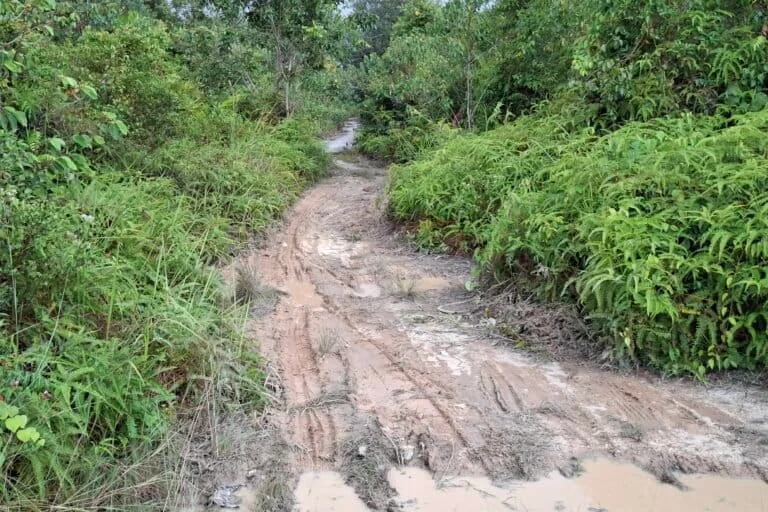
The Wahana Lingkungan Hidup Indonesia (Walhi) Riau and the Yayasan Indonesia Cerah have formally proposed that the Koto Ringin coal-fired power plant (PLTU) in Siak Regency, Riau—a project that has remained stalled and non-functional for nearly two decades—be repurposed as a center for clean, renewable energy. This ambitious proposal, presented to Siak government officials in late May 2024, suggests a strategic pivot from fossil fuels to solar and hybrid energy systems to salvage what has become a massive stranded asset. By leveraging the existing site and regional natural resources, the environmental organizations aim to assist the Siak Regency Government (Pemkab Siak) in navigating a "just energy transition" that could serve as a national model for rehabilitating failed infrastructure.
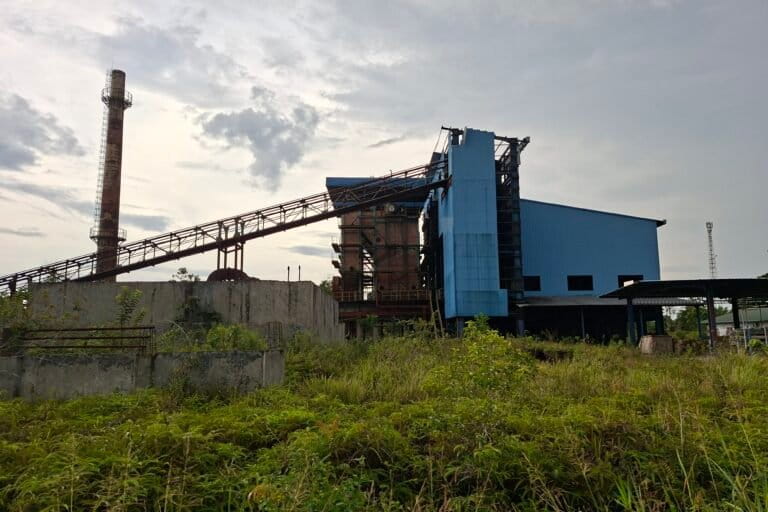
The Koto Ringin project, originally intended to provide 7.2 megawatts (MW) of power, has become a symbol of industrial stagnation in the region. Ahlul Fadli, Manager of Advocacy and Campaigns for Walhi Riau, emphasized that the proposal is designed to help the local government find viable alternatives for an asset that has effectively been frozen in time. The advocacy group argues that the local government must play a proactive role in the national energy transition policy, ensuring that the shift toward greener power is both equitable and economically sound.
Technical Feasibility of Solar and Hybrid Alternatives
The proposal outlines two primary pathways for the site: a pure solar power plant (PLTS) or a hybrid system combining solar energy with mini-hydroelectric power. According to data from Global Horizontal Irradiation (GHI), Siak Regency possesses significant solar potential, with figures ranging between 1,580 and 1,657 kWh/m² per year. This level of irradiation is considered highly favorable for large-scale solar development. Researchers estimate that a solar capacity of approximately 23.3 MWp (Megawatt peak) would be required to generate an annual electrical output of 36,792 MWh—equivalent to the projected output of the original 2×3.5 MW coal plant.
Spatial efficiency is a major selling point for the solar transition. While the original coal plant occupies a 30-hectare plot, a 23.3 MWp solar installation would only require approximately 24.2 hectares. Sartika Nur Shalati, a researcher at Yayasan Indonesia Cerah, noted that this smaller footprint would leave significant space for further development or supporting facilities, making solar a more efficient use of the land compared to its coal predecessor.
However, the transition involves significant capital considerations. A solar-only project of this scale is estimated to require a capital expenditure (capex) of between US$16.31 million and US$20.97 million. At an exchange rate of Rp16,500, this translates to an investment of roughly Rp269 billion to Rp346 billion. A critical challenge for solar energy is its intermittent nature; unlike coal, which can provide a steady "baseload" of power, solar generation peaks during the day. To achieve the consistency of a coal plant, the system would require a Battery Energy Storage System (BESS). To meet a nighttime demand of 6 MW over 12 hours, a BESS with a capacity of approximately 90 MWh would be necessary. This addition would nearly double the total investment, bringing the price tag to between Rp714 billion and Rp791 billion.
The Hybrid Model: A More Affordable Path
To mitigate the high costs of large-scale battery storage, the organizations have proposed a hybrid system that integrates solar power with Pembangkit Listrik Tenaga Minihidro (PLTM), or mini-hydro power. Riau is a province defined by its vast river networks, and the Siak River offers untapped potential for sustainable energy. Unlike massive hydroelectric dams, mini-hydro plants utilize the natural flow and water level of the river, requiring no large reservoirs and causing minimal environmental disruption.
The Siak River maintains an average monthly flow of 575 cubic meters per second during the wet season and 123 cubic meters per second during the dry season. Additionally, the Mandau River, which originates in peatland domes, serves as another potential source. Estimates suggest that the Siak River could support a 2 MW mini-hydro plant even under conservative scenarios, producing roughly 6,000 MWh of electricity annually. By integrating this stable baseload, the required solar capacity would drop to 19.5 MWp, and the need for expensive battery storage would be significantly reduced. The total investment for such a hybrid system is estimated at Rp383.7 billion to Rp448.1 billion—nearly half the cost of a solar-plus-battery setup.
A History of Stagnation: Two Decades of "Mangkrak"
The Koto Ringin PLTU project began in 2007, funded by the Siak Regency Regional Budget (APBD) with an initial investment of Rp91.6 billion. The contractor, PT Modaco Enersys, ceased work after two years, having completed approximately 80% of the project. The halt was attributed to various factors, including currency fluctuations that saw the US dollar rise against the rupiah, making the original contract values untenable for the contractor.
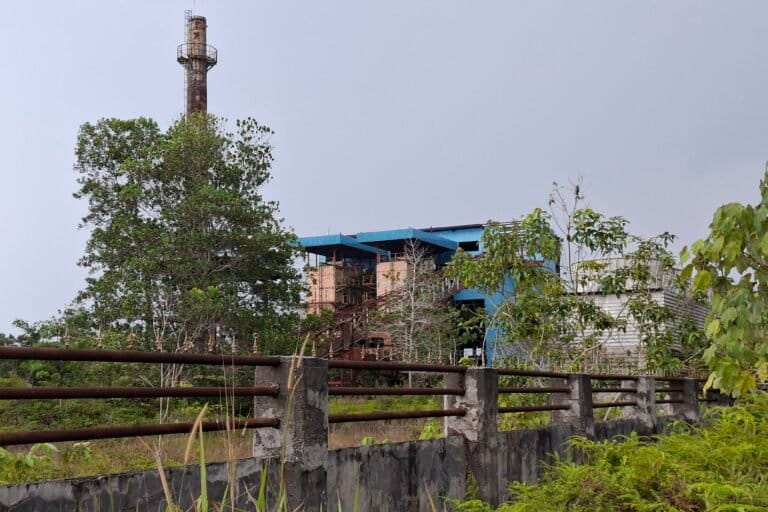
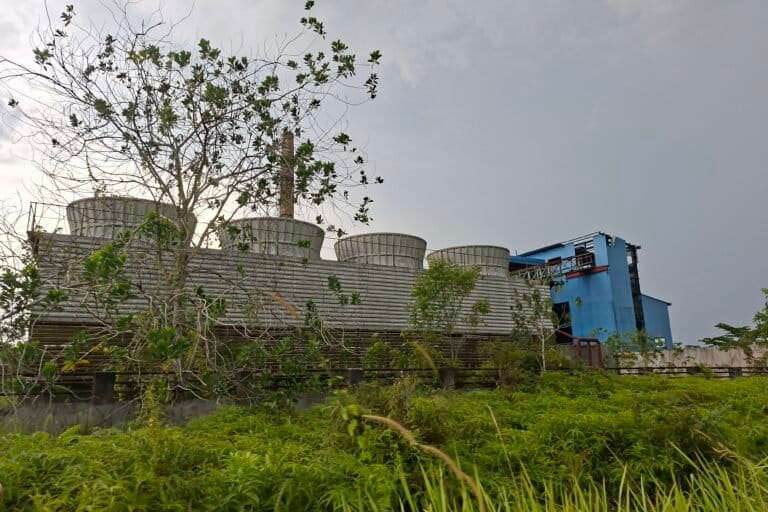
The project subsequently spiraled into a decade-long legal battle. Between 2010 and 2013, Pemkab Siak and PT Modaco faced off in court. The conflict reached the Supreme Court, which ultimately ruled in 2013 (Decision No. 1272/K/Pdt/2013) that the contractor was not proven to have been negligent in its duties. Despite this, the project remained in limbo. By 2024, the site had become a graveyard of rusting iron and overgrown shrubbery. Local residents, such as Amril, recall that the plant never generated a single watt of electricity for the community. Ironically, while the plant sat idle, the village was eventually electrified through the national grid ten years ago, leaving the Koto Ringin site as a redundant and decaying monument to poor planning.
Shifts in Ownership and Continued Failure
In 2011, a new attempt was made to revive the site when the Siak Regency Government transferred the assets—valued at Rp67.6 billion—to the regional state-owned enterprise (BUMD), PT Pengembangan Investasi Riau (PIR). This transfer served as Siak’s capital injection into the company. PT PIR then partnered with PT Zug Industry Indonesia to form a joint venture, PT Riau Power Dua (RPD), with the goal of finishing the plant within ten months.
However, the revival attempt faced immediate hurdles. Land certification issues for the 30-hectare plot prevented the issuance of stock certificates. Furthermore, the state electricity company, PLN, determined that the 7.2 MW plant did not meet the criteria for an Independent Power Producer (IPP) arrangement. Financial issues also plagued the venture; Bank Muamalat Indonesia, which had provided some funding, withheld further disbursements due to unmet requirements and lack of progress. By mid-2014, construction stopped again.

Muhammad Suhandi, the current Director of PT PIR, has expressed a lack of interest in continuing the coal project. Experts have advised him that the technology at Koto Ringin is now obsolete and inefficient. The project has also drawn the attention of the Riau High Prosecutor’s Office (Kejati Riau), which is currently gathering information regarding the history of the project and potential legal violations. Suhandi has even suggested that Pemkab Siak might need to be removed as a shareholder if the non-productive assets continue to drain the company’s dividends without providing any utility.
The Broader Context: Indonesia’s Stalled Coal Projects
The failure of the Koto Ringin plant is not an isolated incident. Research by the Center of Economic and Law Studies (Celios) indicates that as of 2021, at least 34 coal-fired power plants across Indonesia were classified as "mangkrak" (stalled). Many of these are located in Sulawesi and Kalimantan, regions where electricity supply often exceeds demand. Atina Rizqiana, a researcher at Celios, argues that these failures stem from a flawed development priority that favors heavy industry over public access.
The "take or pay" schemes often found in these projects tend to protect developers while placing the financial burden on the state and taxpayers. Umi Ma’rufah, Manager of Program Development at Walhi Riau, noted that the Koto Ringin case is a textbook example of immature planning and potential systemic corruption at the local level. She argues that the greatest loss is felt by the public, whose tax money was diverted into a project that yielded no benefits while potentially damaging the local environment.
Seeking a Just Transition
Despite the grim history, Siak officials have responded positively to the green conversion proposal. Mahadar, the Regional Secretary of Siak, stated that the plan aligns with the "Green Siak" (Siak Hijau) initiative, which prioritizes inclusive and sustainable development. He emphasized that any transition must be "just," meaning it must protect vulnerable groups and ensure that the local workforce is trained for new roles in the green energy sector.
The proposed conversion of Koto Ringin represents more than just a technical fix; it is a test case for how Indonesia can handle its legacy of failed fossil fuel infrastructure. If successful, the transformation of a rusted coal plant into a solar-hydro hybrid hub could provide a blueprint for other regions struggling with stranded assets. As Indonesia moves toward its goal of Net Zero Emissions by 2060, the lessons learned from the "iron graveyard" of Siak will be vital in ensuring that the next generation of energy infrastructure is built on a foundation of transparency, environmental integrity, and community benefit.