Nila Kartika Wati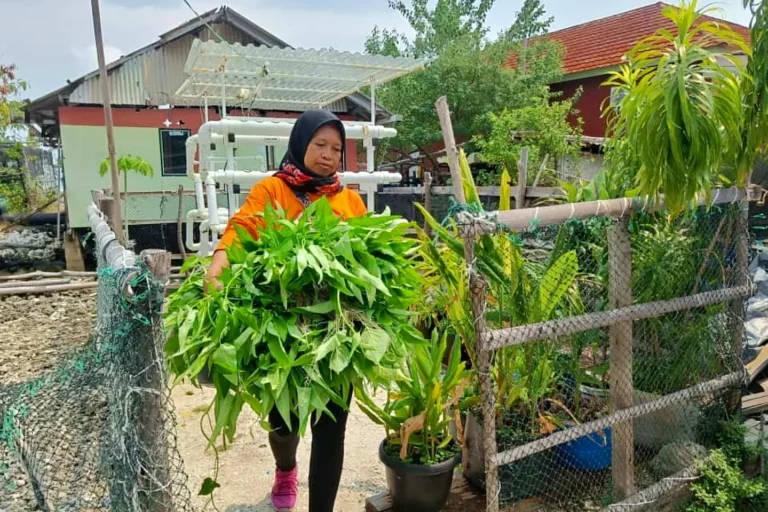
For Julian Puput Lendri, a resident of Kelapa Island in the North Thousand Islands of Jakarta since 2019, the daily ritual of securing fresh produce is a high-stakes endeavor that borders on a scramble. In the bustling heart of mainland Jakarta, a few miles across the water, vegetables are a commodity of convenience; on Kelapa Island, they are a hard-won prize. Every afternoon around 2:00 PM, a familiar tension grips the air near the Kelapa Island Pier. Women begin to congregate, their eyes fixed on the horizon for the silhouette of the "vegetable boat." What begins as a disciplined queue often dissolves into a chaotic flurry the moment the vessel moors. The struggle is not merely for the best quality, but for any quantity at all.
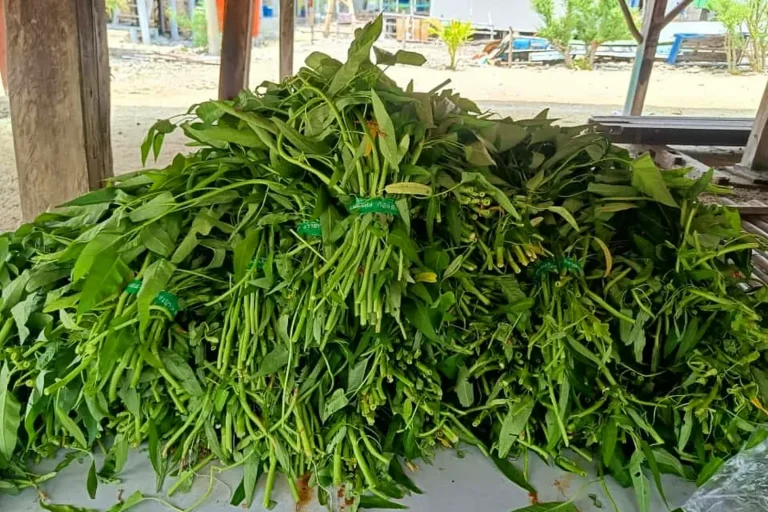
This daily reality highlights a profound irony: while these islands are administratively part of Indonesia’s most developed metropolis, they face a chronic food security crisis. Residents remain almost entirely dependent on the mainland for their nutritional needs. When the vegetable boat finally arrives after a two-hour journey from Jakarta, the cargo is often compromised. Exposed to the sweltering heat of the engine and the crushing weight of stacked crates, the greens that reach the pier are frequently wilted, yellowed, or bruised. Yet, Julian and her neighbors have little choice. Even at prices that are often double or triple the mainland rate—where a bunch of water spinach (kangkung) jumps from Rp2,500 to as much as Rp7,500—the demand remains insatiable.
The vulnerability of this supply chain is further exacerbated by the volatility of the Java Sea. During the monsoon season or periods of high swells, the boats simply do not come. In extreme weather, heavy cargo like rice may even be jettisoned into the sea to save the vessel and its crew, leaving the islanders to survive on whatever reserves they have. It was this persistent anxiety over food availability and quality that catalyzed a grassroots movement among the island’s women, leading to the birth of a new agricultural identity in a community traditionally defined by the sea.
The Rise of KWT Hijau Daun and the Hydroponic Shift
The turning point for Kelapa Island began in 2018 with the formation of the Kelompok Wanita Tani (KWT) Hijau Daun, or the "Green Leaf" Women Farmers Group. Supported by the Thousand Islands Sub-department of Food Security, Marine Affairs, and Fisheries (Sudin KPKP), these women sought a way to break their absolute dependence on maritime logistics. The challenge, however, was the environment itself. The geography of Kelapa Island is characterized by sandy, saline soil and a lack of fresh groundwater, making traditional ground-based agriculture nearly impossible. Furthermore, the constant threat of tidal flooding (rob) meant that any investment in soil-based gardens could be wiped out in a single high tide.
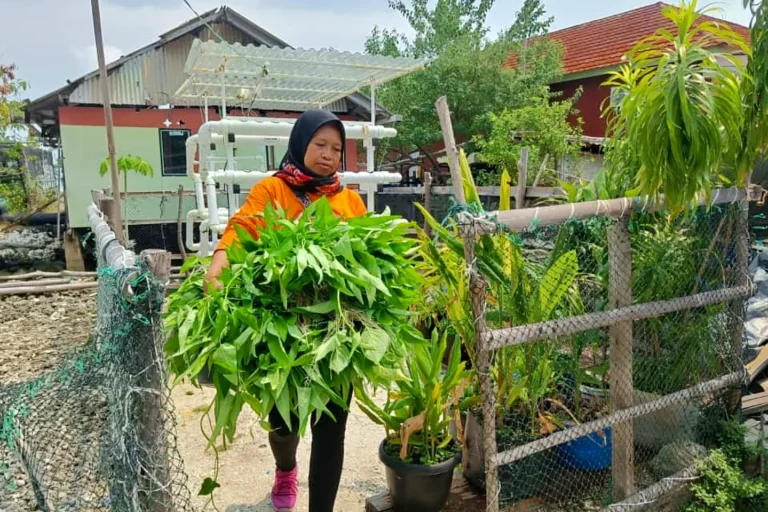
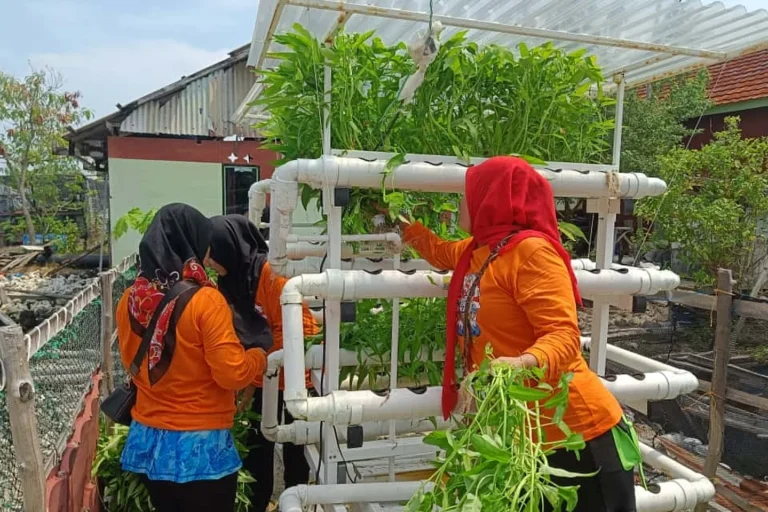
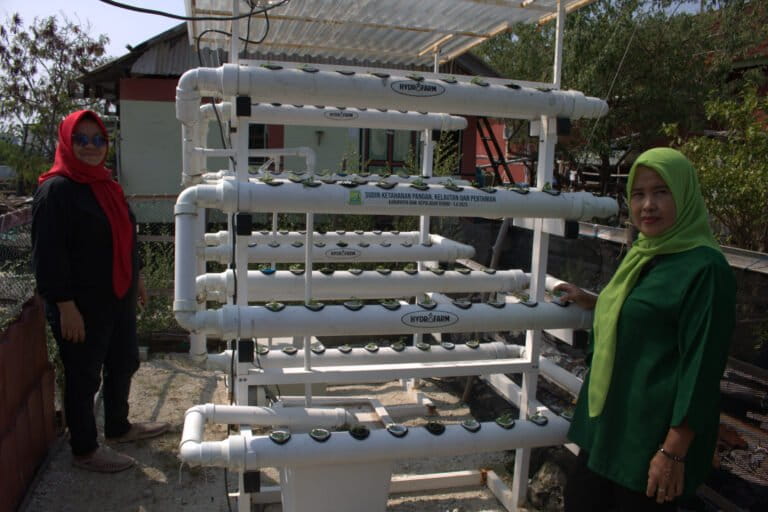
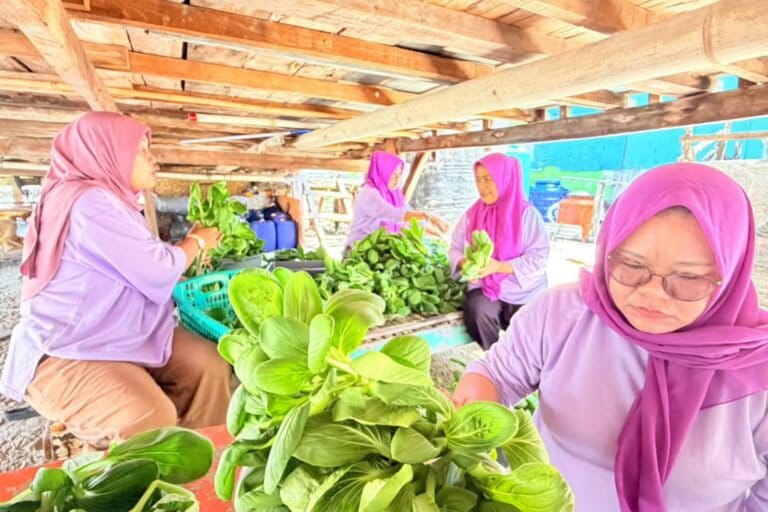
The group pivoted to hydroponics as a strategic solution. By using vertical racks and nutrient-rich water solutions, they bypassed the limitations of the island’s soil. Today, on a modest plot of land measuring 30 by 10 meters, KWT Hijau Daun manages a series of hydroponic systems that produce kangkung, mustard greens, spinach, and chili peppers. Rosda, the chairperson of KWT Hijau Daun, emphasizes that the initiative is about more than just food; it is about health and self-sufficiency. By growing their own vegetables naturally, the women ensure that their families have access to fresh, pesticide-free produce that has not been "trampled" on a boat deck.
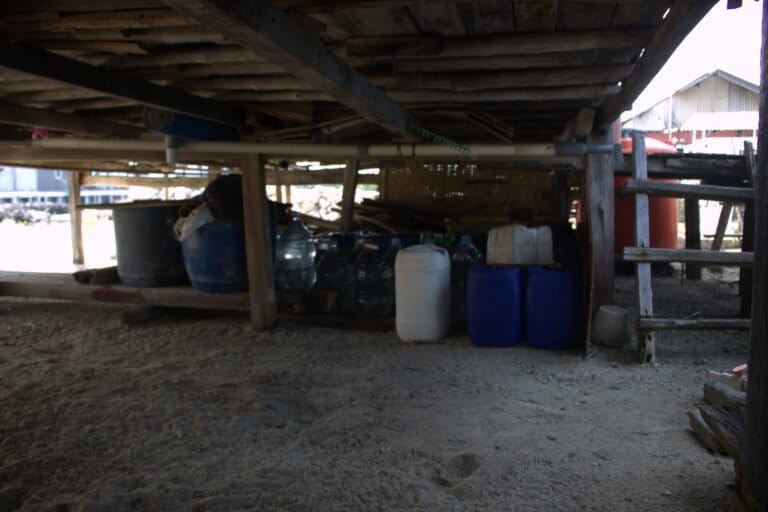
To overcome the island’s lack of fresh water, the group developed ingenious reclamation methods. They harvest rainwater, storing it in tanks beneath traditional stilt houses. During the prolonged dry season, when rainwater is scarce, they have organized a collective effort to harvest condensation from air conditioning units—a creative use of "waste" water that has become a lifeline for their crops. Remarkably, the group discovered that the rainwater on the island, with a near-ideal pH level of 0.5, is actually more conducive to certain hydroponic crops than the water found in many mainland areas.
Institutional Recognition and the Barriers to Scalability
The success of KWT Hijau Daun has not gone unnoticed. On October 20, 2025, the group was recognized as the best urban farming program in the Special Capital Region (DKI) Jakarta. The award celebrated their innovation in rainwater utilization and their ability to harvest 21 kilograms of kangkung from a highly restricted space. By April 2026, the group reported successful harvests of pakcoy and chilies, with the produce being sold out to local residents almost immediately after being picked.
However, despite these accolades, the road to total food sovereignty remains long. Ardian, the Secretary of the Kelapa Island Urban Village, notes that while the program is a success in terms of education and community engagement, it has not yet reached the scale of true commercial cultivation. Currently, there are only six active hydroponic racks across the entire island. With a population of over 7,700 people, the current output is a drop in the ocean.
"This is still largely a learning medium," Ardian explained during an interview in June 2026. "The planting cycle takes about a month and a half. Once the harvest is over, the supply is gone. It is not yet enough to meet the daily needs of all residents."
A significant bottleneck is the dependency on government-provided seeds and supplies. The community has yet to achieve the capacity for independent seed production. There is a prevailing fear that if government support were to be withdrawn, the hydroponic racks would fall silent. Furthermore, the physical constraints of the island are severe. Most houses lack second floors or flat rooftops that could be used for expanded farming, and public land is virtually non-existent.
The Cultural Gap: From Harvesters to Planters
Beyond the physical and logistical hurdles lies a deeper sociological challenge. The majority of Kelapa Island residents are hereditary fishermen. The culture of the sea is one of "harvesting"—going out to catch what is already there and receiving immediate payment for the day’s work. Agriculture, by contrast, requires "planting"—a process of patience, investment, and deferred gratification.
Ardian points out that many residents remain hesitant to join the urban farming movement because the economic returns are not as immediate or as clear as fishing. "A fisherman can bring home money or food by the end of the day. A farmer must wait weeks and hope the weather and the water supply hold out," he said. Bridging this cultural gap requires intensive assistance and a shift in how the community perceives its relationship with the land.
Nurliati, the Head of the Thousand Islands Sudin KPKP, acknowledges these difficulties. She stresses that the government’s role is not just to provide physical aid like seeds or racks, but to provide technical mentorship. This includes training in media selection, fertilization, and pest control using organic methods, such as garlic extract, to ensure that the practice becomes a habit rather than a one-off project.
Reviving Taka: The "Forgotten" Superfood of the Coast
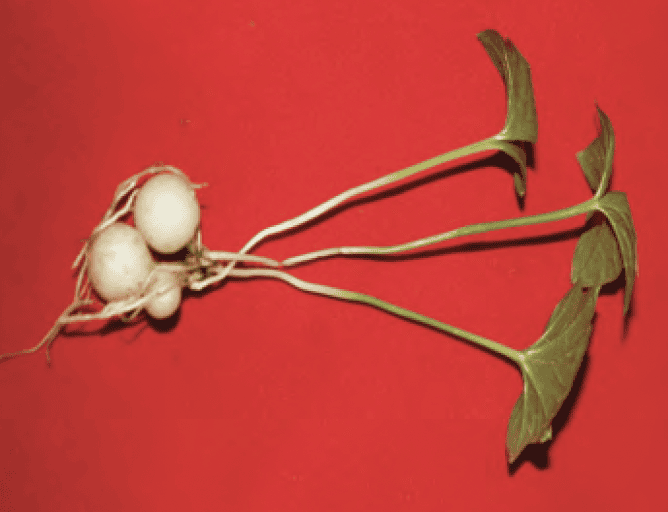
As the community looks for sustainable long-term solutions, attention is turning back to the island’s botanical heritage. One plant, in particular, holds the potential to revolutionize island food security: Taka, or Tacca leontopetaloides, known locally as Kecundang.
For decades, Taka has been dismissed as a weed or a "ghost plant" because it often grows wild in cemeteries. Julian Puput Lendri recalls that for the generation born in the 1980s and later, the plant was something to be cleared away or ignored. However, the older generation and researchers from the National Research and Innovation Agency (BRIN, formerly LIPI) recognize Taka as a potent alternative carbohydrate source.
Taka is a tuber that thrives in sandy, coastal environments and is highly resistant to salt spray and drought. While it cannot be eaten raw due to the presence of bitter taccalin compounds, once processed into flour, it is highly nutritious, high in fiber, and has a low glycemic index, making it ideal for diabetics. In 2021, LIPI published a study titled "Taka for Food Independence," highlighting the plant’s potential as a "paceklik" (famine) food that can be relied upon when sea conditions prevent the delivery of rice and mainland vegetables.
The revival of Taka faces its own set of challenges. Julian attempted to bring Taka plants from the distant Sabira Island to Kelapa Island, but the plants perished during a tidal flood. "The knowledge of how to cultivate this is almost extinct," Julian lamented. "It wasn’t destroyed by force; it was simply forgotten and misunderstood as a weed."
The Sudin KPKP now plans to integrate Taka cultivation into its broader urban farming strategy. By working with universities and the Jakpreneur network, the government hopes to create a value-added chain for Taka, turning it from a forgotten tuber into a processed product that can provide both food security and economic income for the women of Kelapa Island.
Expert Analysis: Toward a Resilient Island Model
Said Abdullah, the Coordinator of the People’s Coalition for Food Sovereignty (KRKP), views the initiatives on Kelapa Island as a realistic and necessary response to the unique vulnerabilities of small islands. He argues that the orientation of island farming should not be on mass production for export, but on "nutrition sovereignty"—the ability to provide the vitamins and minerals that the sea does not offer.
"The sea provides the protein. Hydroponics and local tubers must provide the rest," Abdullah stated. He warns, however, that many such programs fail after a few harvests because they lack a "distribution network" and "market access." For the women of KWT Hijau Daun to remain motivated, they need to see that their efforts can either save them significant money or generate a small profit.
The future of food on Kelapa Island depends on a multi-pronged approach: the technical efficiency of hydroponics, the revival of climate-resilient local crops like Taka, and a fundamental shift in the community’s agricultural mindset. As the effects of climate change make maritime logistics more unpredictable, the "chaos at the pier" serves as a stark reminder that for the people of the Thousand Islands, the most important harvest might soon be the one they grow themselves. Through the grit of KWT Hijau Daun and the strategic support of urban farming initiatives, the residents of Kelapa Island are slowly turning their sandy shores into a laboratory for resilience, proving that even in the middle of the sea, the future is green.