Nila Kartika Wati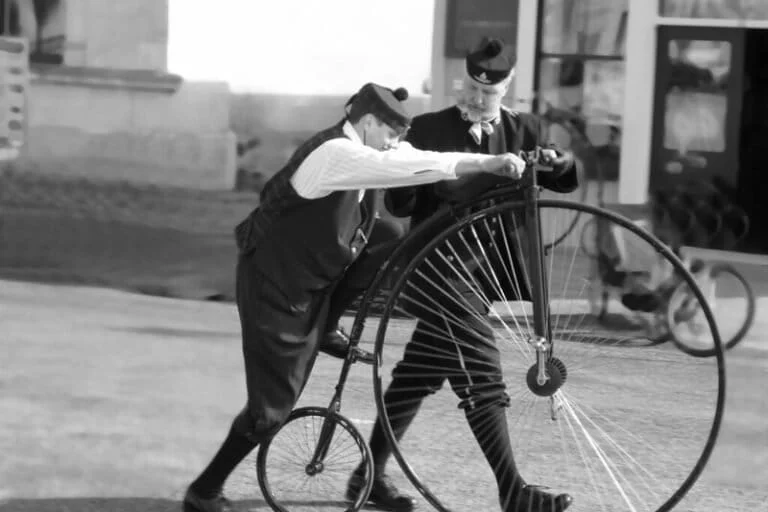
The history of the modern bicycle, a vehicle now utilized by billions for recreation, sport, and essential commuting, finds its unlikely origins not in a laboratory of urban engineering, but in the cataclysmic plumes of a volcanic eruption in the Indonesian archipelago. While the connection between a geological disaster in Southeast Asia and a two-wheeled wooden contraption in Western Europe may seem tenuous, historians and climatologists have long identified the 1815 eruption of Mount Tambora as the primary catalyst for an era of desperate innovation. This catastrophic event triggered a global climate crisis that crippled traditional animal-based transportation, forcing inventors like Baron Karl von Drais to seek mechanical alternatives that would eventually evolve into the bicycle we recognize today.
The Cataclysm of 1815 and the Global Atmospheric Shift
In April 1815, Mount Tambora, located on the island of Sumbawa in what was then the Dutch East Indies, unleashed the most powerful volcanic eruption in recorded human history. Rated a Level 7 on the Volcanic Explosivity Index (VEI), the blast was so massive that it reduced the mountain’s height by approximately 1,200 meters, ejecting an estimated 160 cubic kilometers of debris into the atmosphere. The immediate human cost was staggering, with an estimated 71,000 to 100,000 people dying from the blast, tsunamis, and subsequent famine in the immediate region.
However, the eruption’s most profound impact was global. The massive injection of sulfur dioxide into the stratosphere created a persistent sulfate aerosol veil. This atmospheric shroud reflected incoming solar radiation, leading to a significant drop in global temperatures. By 1816, the world entered what would famously become known as the "Year Without a Summer." In the Northern Hemisphere, particularly across Western Europe and North America, the weather became erratic and dangerously cold. Frosts were reported in New England during June and July, and incessant, cold rains plagued the European continent throughout the growing season.
The Agricultural Collapse and the Fodder Crisis
The cooling of the Earth’s surface led to a systematic failure of global agriculture. In 1816 and 1817, harvests across Europe failed repeatedly. This period is often cited by historians as the last great subsistence crisis in the Western world. As grain supplies dwindled, prices skyrocketed, leading to widespread famine and civil unrest.
The crisis extended beyond human consumption to the animal kingdom. During the early 19th century, horses were the backbone of the global economy, serving as the primary mode of transportation, agricultural labor, and postal delivery. As the price of oats—the primary fuel for horses—surged beyond the reach of the average citizen, a secondary crisis emerged. Farmers and urban dwellers, unable to afford the cost of feeding their livestock, were forced to slaughter their horses for meat or simply allow them to starve. This massive reduction in the equine population created a critical vacuum in the transportation sector, leaving society immobile at a time when efficiency was desperately needed to manage the famine.
Karl Drais and the Invention of the Laufmaschine
It was within this atmosphere of desperation and scarcity that Baron Karl von Drais, a German inventor and forest official in the Grand Duchy of Baden, sought a solution. Drais was acutely aware of the logistical nightmare caused by the lack of horses. He envisioned a "mechanical horse" that did not require expensive fodder to operate, relying instead on the muscular power of the human rider.
In 1817, Drais introduced his invention: the Laufmaschine, or "running machine." In English-speaking regions, it was often referred to as the "Dandy Horse" or the "Draisienne." This device was a significant departure from any previous transport concepts. It consisted of two wooden wheels arranged in a line, joined by a wooden frame. The rider sat on a leather saddle and propelled the machine by pushing their feet against the ground in a running motion. A rudimentary steering mechanism allowed the rider to balance and navigate.
While the Laufmaschine lacked pedals and a chain drive, it proved remarkably efficient for the time. On its maiden voyage in June 1817, Drais covered a distance of approximately 13 kilometers (about 8 miles) from Mannheim to a suburban coaching inn and back in less than an hour—a feat that outpaced the walking speed of a healthy adult and rivaled the speed of a horse-drawn carriage on muddy roads.
A Chronology of Technical Evolution
The transition from Drais’s wooden "running machine" to the high-tech bicycles of the 21st century was marked by several decades of iterative engineering. Each advancement was driven by the need for greater efficiency, safety, and comfort.
- 1817–1818: The Laufmaschine gains brief popularity among the aristocracy in London and Paris but is eventually banned from sidewalks due to safety concerns for pedestrians.
- 1860s: Pierre Michaux and Pierre Lallement in France develop the "Velocipede" or "Boneshaker." This model introduced pedals attached directly to the axle of the front wheel. The frame was made of iron, and the wheels were wooden with iron tires, making for a very jarring ride.
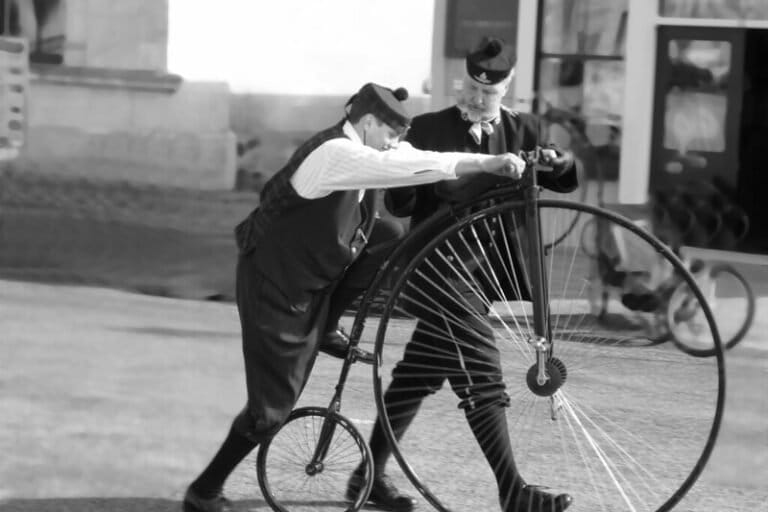
- 1870s: The "High-Wheeler" or "Penny Farthing" emerges. To achieve higher speeds, the front wheel was made significantly larger. While fast, these machines were notoriously dangerous, as the rider sat high above the center of gravity, making "headers" (forward falls) a frequent and often fatal occurrence.
- 1885: John Kemp Starley introduces the "Rover Safety Bicycle." This was the definitive turning point. It featured two wheels of equal size, a rear-wheel chain drive, and a diamond-shaped frame. This design shifted the focus from daredevil athletics to practical, everyday transportation.
- 1888: John Boyd Dunlop patents the pneumatic (air-filled) rubber tire, significantly improving comfort and traction, and finalizing the basic blueprint of the modern bicycle.
The Socio-Economic Impact and Gender Liberation
The proliferation of the bicycle in the late 19th century did more than just move people from point A to point B; it acted as a catalyst for profound social change. Perhaps the most significant impact was on the lives of women. Before the bicycle, women’s mobility was often restricted by social norms and the logistical difficulty of managing horse-drawn transport independently.
The bicycle provided women with an unprecedented degree of freedom and autonomy. Susan B. Anthony, the famous American civil rights leader, once remarked in 1896 that the bicycle had "done more to emancipate women than anything else in the world." The vehicle necessitated a change in women’s fashion, leading to the decline of restrictive corsets and heavy skirts in favor of "bloomers" and more practical, athletic attire. This shift in dress was a physical manifestation of a broader movement toward gender equality and the right to public space.
Furthermore, the bicycle democratized travel. While horses were expensive to maintain and carriages were a mark of the wealthy, the bicycle was relatively affordable. It allowed the working class to live further from their places of employment, leading to the early development of suburban areas and expanding the labor market.
The Modern Context: From Volcanic Crisis to Climate Solution
Today, more than two centuries after the Tambora eruption, the bicycle has come full circle. Just as it emerged as a response to an atmospheric crisis in 1815, it is now being championed as a primary tool to combat the modern climate crisis. The global transportation sector is currently responsible for approximately 16% of global greenhouse gas emissions. In contrast, the bicycle remains the most energy-efficient form of transport ever devised.
Modern urban planning is increasingly centered around "active transport." Cities like Amsterdam, Copenhagen, and Paris have invested billions in cycling infrastructure to reduce carbon footprints, alleviate traffic congestion, and improve public health. The rise of the electric bicycle (e-bike) has further expanded this potential, allowing older populations and those with longer commutes to replace cars with two-wheeled alternatives.
Statistical data supports this shift. Research indicates that if the average person replaced one short car trip a day with a bicycle ride, they could reduce their individual carbon footprint by about 0.5 tons of CO2 per year. In densely populated urban centers, bicycles move more people per hour through a single lane of traffic than cars, making them an essential component of sustainable city living.
Conclusion: A Legacy of Resilience and Innovation
The history of the bicycle is a testament to human ingenuity in the face of environmental catastrophe. The 1815 eruption of Mount Tambora was a tragedy of immense proportions, yet the resulting "Year Without a Summer" forced a radical rethinking of how humans move across the Earth. From Karl Drais’s wooden frame to the carbon-fiber racing machines and urban e-bikes of today, the bicycle represents a continuous line of evolution triggered by a volcanic plume two centuries ago.
As the world faces new challenges—ranging from urban density to the urgent need for decarbonization—the bicycle remains a uniquely elegant solution. It is a machine born of a crisis that now serves as a guardian of the future, proving that even the most devastating events in Earth’s history can plant the seeds for innovations that eventually change the world for the better. The legacy of Tambora is not just one of ash and cold, but of the silent, efficient wheels that continue to turn in every corner of the globe.