Nila Kartika Wati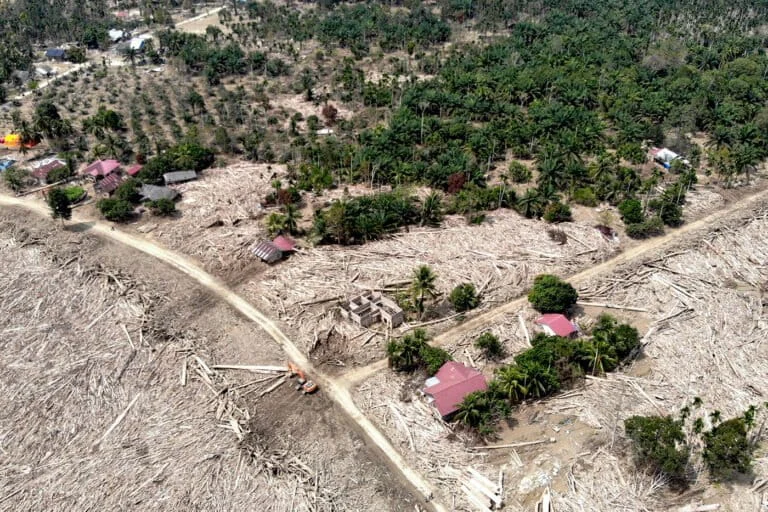
The catastrophic floods and landslides that struck the provinces of Aceh, North Sumatra, and West Sumatra in November have left a trail of destruction that continues to paralyze local economies and agricultural output. Months after the initial disaster, the region’s vital coffee sector, particularly in the highlands of Central Aceh, remains in a state of deep crisis. Beyond the immediate destruction of residential infrastructure, the disaster has decimated thousands of hectares of fertile farmland and plantations, threatening the livelihoods of tens of thousands of farmers and the stability of Indonesia’s coffee exports.
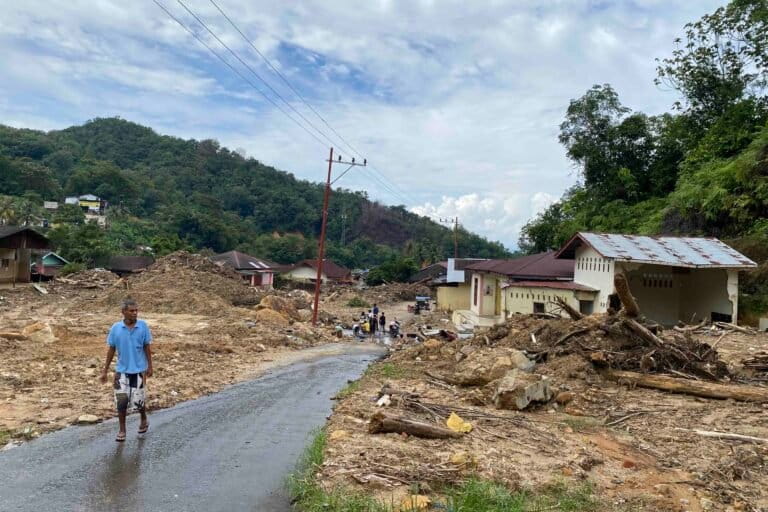
In the heart of the Gayo highlands, coffee farmers are grappling with a multi-layered emergency. Salman Pedemun, a Master Trainer for the Sustainable Coffee Platform Indonesia (SCOPI) in Central Aceh, reports that the community is currently navigating a period of acute instability. While internet connectivity has seen gradual improvement, the physical movement of goods remains severely restricted. The collapse of national bridges and the erosion of mountain roads have created a logistical bottleneck that prevents farmers from transporting their harvests.
The timing of the disaster has proven particularly cruel. As the coffee harvest season approached in March, many farmers found themselves unable to access their own plots. Roads once used for production are now buried under tons of mud and debris. According to Pedemun, some production routes are still entirely impassable, leaving coffee cherries to rot or forcing farmers to undertake dangerous journeys on foot to reach collection points in their villages. The priority for the immediate future, he emphasizes, must be the restoration of basic motor vehicle access to allow for the transport of the current and upcoming harvests.
The Scale of Agricultural Devastation in Central Aceh
The statistical reality of the disaster is staggering. Anshary, a Staff Expert for Development, Economy, and Finance in Central Aceh, revealed that out of the 52,074 hectares of coffee plantations in the district, approximately 12,637 hectares have sustained significant damage. This represents nearly a quarter of the region’s total coffee-producing land. The Gayo Arabica coffee produced here is a globally recognized commodity, prized by international roasters and specialty coffee chains, making this a disaster of international economic significance.
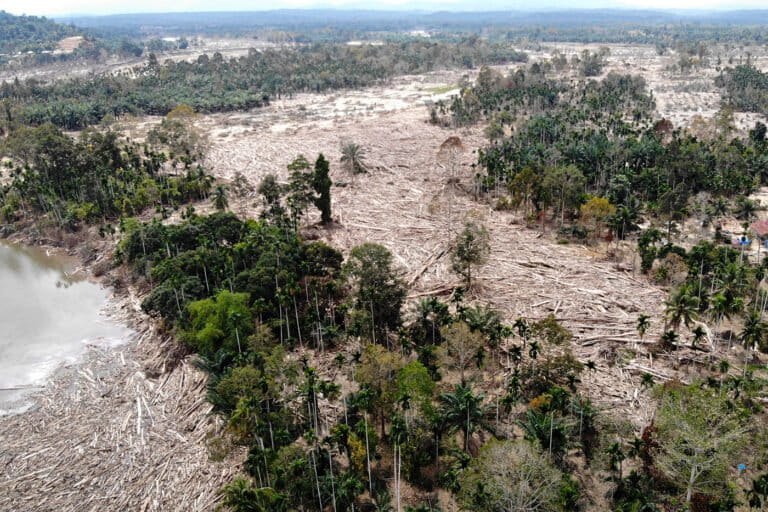
Since the landslides began in November, agricultural activity has come to a near-complete standstill in the affected areas. Farmers are not only mourning the loss of their crops but are physically barred from their land by 175 documented points of road damage. The majority of these disruptions are the result of landslides that have sheared off entire sections of hillside paths.
The local government has initiated emergency infrastructure recovery and garden restoration projects. However, Anshary notes that these measures are currently "emergency-grade," intended primarily to restore basic connectivity for people and essential services. The goal is to ensure that aid can reach isolated hamlets and that farmers can at least begin the arduous process of clearing their land. To truly restore the sector to its former productivity, the regional administration acknowledges that farmers will require an extensive support package, including high-quality seedlings, modern agricultural tools, hulling machinery, and a steady supply of organic fertilizers.
National Coffee Production and the 2026 Recovery Roadmap
The impact on Aceh is a significant blow to Indonesia’s standing as a global coffee powerhouse. Christieni Maria, Head of the Coffee and Tea Commodity Division at the Ministry of Agriculture, notes that Indonesia maintained its position as the world’s third-largest coffee producer throughout the 2022-2023 period. With national production targets for 2025 set at 832,600 tons—a 2% increase from previous years—the disruption in Sumatra poses a challenge to these growth ambitions.
The Ministry of Agriculture has outlined a massive rejuvenation and expansion plan for 2026, targeting 86,000 hectares across the archipelago. Specifically for Aceh, the ministry is processing a proposal to develop 18,000 hectares of coffee plantations post-disaster. This plan is based on data provided by the Aceh Agriculture and Plantation Office, which indicates that 17,000 hectares of Arabica coffee and 60 hectares of Robusta were impacted by the recent weather events.
The breakdown of the affected land highlights the vulnerability of specific districts:
- Bireuen: 10,500 hectares
- Central Aceh: 4,000 hectares
- Gayo Lues: 2,500 hectares
The government’s intervention strategy for 2026 includes the provision of high-yield seeds and subsidies for labor costs. However, Christieni Maria acknowledges that while Indonesia’s equatorial climate generally provides a stable environment for coffee, ecological challenges are becoming increasingly frequent. To combat this, the Ministry is pivoting toward "climate-adaptive" agriculture, promoting the adoption of agroforestry and resilient cultivation technologies.
A Multi-Phase Response: The Role of SCOPI
In the absence of immediate large-scale government funding, non-profit organizations like the Sustainable Coffee Platform Indonesia (SCOPI) have stepped in to bridge the gap. SCOPI has implemented a structured three-phase recovery plan to support the farmers.
The first phase, the Emergency Response (December 8, 2025 – January 8, 2026), focused on immediate survival. Irvan Helmi, Chairman of the SCOPI Board, reported that the organization raised Rp341 million through fundraising efforts. Of this, Rp160 million was immediately distributed through 15 Master Trainers to 951 families across 71 villages. The aid included essential food supplies such as rice, cooking oil, and milk, as well as trauma healing programs for children in the hardest-hit areas like Blang Merah.
The second phase, currently underway, involves a comprehensive damage verification and needs analysis, scheduled to conclude in July 2026. This data will inform the third and most critical phase: long-term restoration and rehabilitation. This phase aims to not only replant the lost gardens but to redesign them using sustainable principles that can better withstand future climate shocks.
Shifting Paradigms: Agroforestry and Food Security
As the recovery continues, there is a growing consensus among experts that the "old way" of coffee farming must change. Salman Pedemun has been actively advocating for agroforestry—a land management system where trees or shrubs are grown around or among crops. By integrating coffee with other plants, farmers can create a more stable ecosystem that reduces soil erosion and provides secondary sources of income.
In the Kute Panang sub-district, Pedemun is experimenting with "padi gugu" (upland rice) cultivation within coffee plantations. This approach addresses the immediate food security concerns of farmers who can no longer rely solely on their coffee income. "Currently, residents are still focused on their basic food needs," Pedemun explained. "By planting rice alongside coffee, we provide a safety net while the coffee trees take the years necessary to reach maturity."
Analysis: The Economic and Environmental Implications
The disaster in Sumatra serves as a stark reminder of the fragility of global supply chains. The Gayo highlands produce some of the most sought-after beans in the world; a 25% reduction in land productivity in Central Aceh will likely lead to tighter supplies and higher prices for premium Arabica in the coming years.
Furthermore, the "extractive" nature of historical land use in Sumatra has been identified by some observers as a contributing factor to the severity of these disasters. Deforestation for expansion, when not managed with proper terracing or drainage, leaves the steep mountain slopes of Aceh highly susceptible to the torrential rains brought by shifting weather patterns. The push for "agroforestry" and "climate-adaptive" farming by the Ministry of Agriculture and SCOPI is not just an environmental preference but an economic necessity to ensure the long-term viability of the industry.
For the recovery to be successful, Anshary of the Central Aceh administration argues that the transition from disaster to restoration must be seamless and involve all stakeholders. "The community needs to move past the trauma of the disaster," he said. This requires more than just seeds; it requires a sustained presence of agricultural extension workers, investment from the private sector—including international coffee buyers—and a commitment to rebuilding infrastructure that is resilient to the next rainy season.
As the 2026 rejuvenation plans take shape, the eyes of the coffee world remain on Sumatra. The ability of these highland communities to rebuild will determine whether the Gayo coffee legacy continues to thrive or becomes another casualty of an increasingly volatile environment. For now, the focus remains on the ground: clearing the mud, opening the roads, and planting the seeds of a more resilient future.