Nila Kartika Wati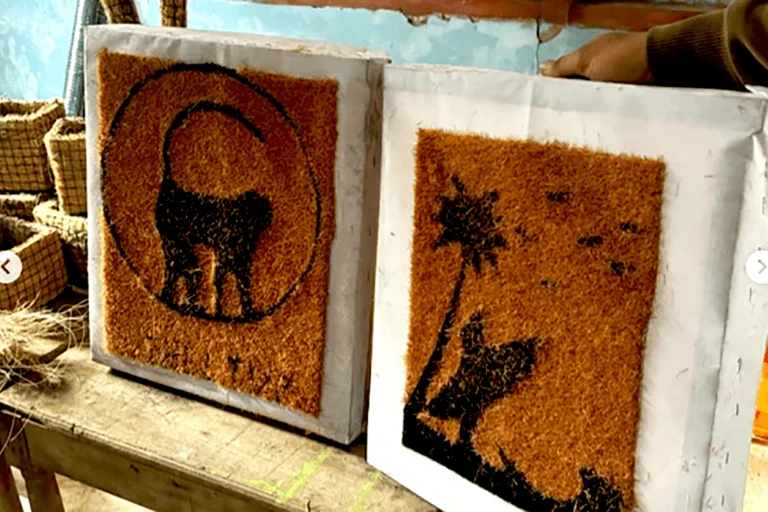
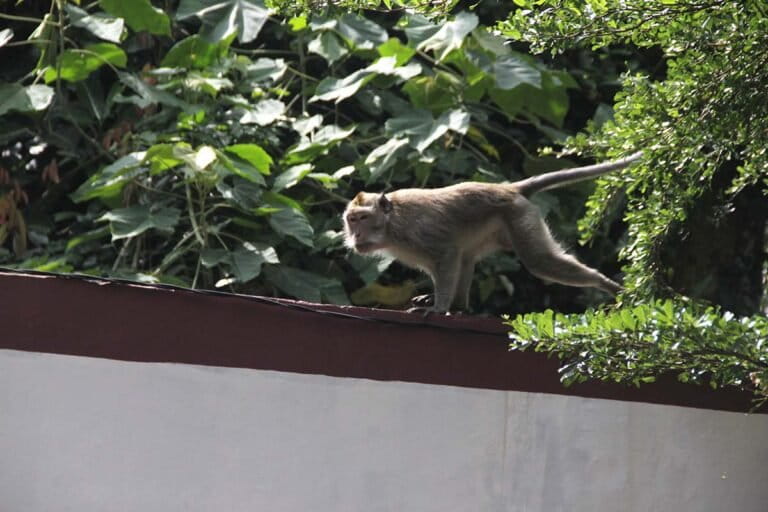
In the remote coastal reaches of Batu Ralang Village, located within the Teupah Selatan District of Simeulue Regency, Aceh, a quiet revolution is taking place that redefines the traditional boundaries between human agriculture and wildlife conservation. For generations, the long-tailed macaque (Macaca fascicularis fusca) was viewed through a lens of animosity by local farmers. These primates, native to the lush archipelago, were frequently branded as "pests" or "enemies" due to their penchant for raiding coconut plantations—the primary source of livelihood for the island’s inhabitants. However, a groundbreaking initiative is now shifting this narrative, proving that economic innovation can be the most effective tool for environmental harmony.
The transformation began when local communities, supported by conservationists, stopped viewing the damaged coconuts as a total loss. Instead of engaging in violent cycles of conflict to protect their crops, farmers in Batu Ralang have begun to utilize the discarded husks of coconuts partially consumed by macaques, turning them into high-value commodities such as cocopeat, cocofiber, and cocobristle. This shift has not only mitigated financial losses but has also fostered a newfound tolerance for the primates, which are an integral part of the local ecosystem.
The Economic Toll of Human-Macaque Conflict
The conflict between humans and long-tailed macaques is a widespread issue across Indonesia, but in the island regency of Simeulue, the stakes are particularly high. Coconuts are more than just a crop; they are the backbone of the local economy. When a troop of macaques descends upon a plantation, the resulting damage can be devastating.
Mitra Rofendi, a 31-year-old farmer and the head of the SIMCO Farmer Group, has experienced these challenges firsthand. Before the implementation of the current waste-utilization project in early 2024, the presence of macaques represented a significant financial drain. "The losses caused by coconuts eaten or damaged by macaques could reach approximately 4.1 million IDR (around $260 USD) every month for a single plantation area," Rofendi explained. In a region where profit margins are often thin, such a deficit can be the difference between a family’s stability and poverty.
Historically, this economic pressure led to desperate measures. Some farmers would clear-cut the surrounding brush to eliminate the monkeys’ nesting grounds, while others resorted to more extreme methods of deterrence. "There were those who chased them away with violence," Rofendi admitted. "But we realized that was not a sustainable solution. These animals are part of our ecosystem, and killing them does not solve the underlying issue of habitat sharing."
A New Model: Turning Waste into Wealth
The turning point for Batu Ralang came through a collaboration with "The Long-Tailed Macaque Project," an initiative aimed at finding non-lethal solutions to human-wildlife friction. Ilham Kurnia, the Program Manager for the project, noted that the idea emerged from deep discussions with the villagers about the anatomy of their losses.
"For a long time, every coconut touched by a monkey was considered a 100% loss," Kurnia said. "But when we looked closer, we realized that while the meat or water might be gone, the husk—the outer shell—remained perfectly intact. In the past, these husks were either burned, creating air pollution, or thrown into the sea, where they became waste. We saw an opportunity to recapture that lost value."
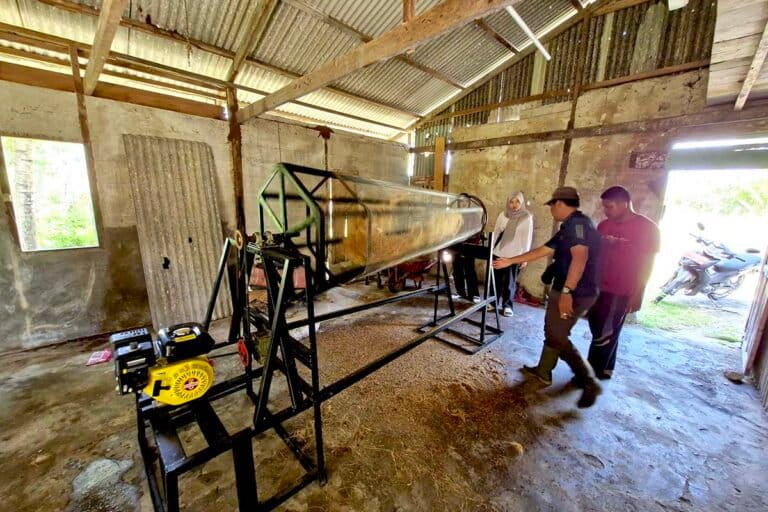
Under this new model, the project began purchasing the husks of macaque-damaged coconuts from farmers for 1,500 IDR per piece. This immediate cash injection helps offset the loss of the edible portion of the fruit. The husks are then transported to a local production house, managed by the SIMCO Farmer Group, where they undergo a process of "decortication" to separate the fibers from the dust.
The results are three primary industrial raw materials:
- Cocopeat: A soil substitute and plant growth medium highly sought after in the hydroponics and horticultural industries.
- Cocofiber: A resilient fiber used in the manufacturing of car seats, mattresses, and erosion control blankets.
- Cocobristle: Thicker, stronger fibers used for high-end brushes and brooms.
By processing these materials locally, the village has moved up the value chain, transforming a "pest problem" into a raw material supply chain.
Empowering the Community through Craftsmanship
Beyond industrial raw materials, the initiative has sparked a creative boom in Simeulue. The production house has become a hub for local women, who have been trained to turn the refined fibers into finished artisanal goods. This has provided a secondary stream of income for households that were previously entirely dependent on the volatile price of raw coconuts.
In the workshops of Batu Ralang, groups of women now produce a variety of handicrafts, including:
- Woven bags and fashionable accessories.
- Eco-friendly flower pots (coconets).
- Unique sandals made from compressed fiber.
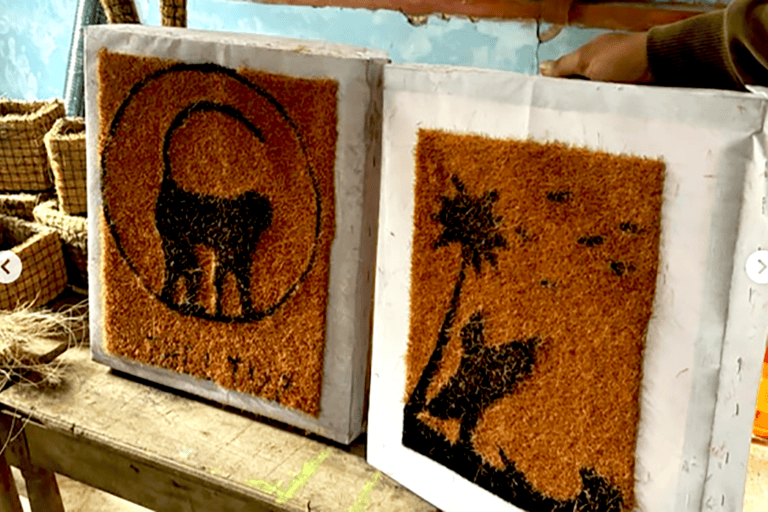
- Intricate paintings and Islamic calligraphy created using coconut dust and fibers.
"The mothers and young women in the village are now making various creations that are sold as souvenirs," Rofendi said. "This is particularly important because Simeulue, as an island destination, has long lacked a signature handicraft or ‘identity’ product for tourists. Now, our ‘macaque-friendly’ crafts are filling that gap."
This diversification of income is a crucial component of modern conservation. When the economic burden of living near wildlife is reduced, the community’s willingness to protect those animals increases. Currently, 15 core members of the farmer group have signed a formal commitment to practice "coexistence," promising not to harm the macaques and to maintain their plantations in a way that respects the animals’ presence.
Scientific Context: The National Landscape of Conflict
The success in Simeulue stands in stark contrast to the broader trends observed across Indonesia. According to a 2024 study published in the Journal of Asia-Pacific Biodiversity titled "Spatial patterns of human–long-tailed macaque (Macaca fascicularis) conflicts in Java Island," conflict incidents are on the rise due to rapid land-use changes. The study highlights that as natural forests are converted into agricultural land or residential areas, macaques are forced to adapt by foraging in human-dominated landscapes.
The long-tailed macaque is a highly intelligent and adaptable species. However, their status was recently uplisted to "Endangered" by the IUCN Red List due to threats from habitat loss, the illegal pet trade, and widespread culling in conflict zones. The Simeulue model provides a rare "win-win" scenario that addresses the economic drivers of these conflicts.
Ilham Kurnia emphasizes that conservation programs often fail because they ignore the human element. "If we come to a village and only talk about saving the monkeys, the people will naturally ask, ‘Why do you care about the animals but not about our empty stomachs?’" he explained. "By focusing on the coconut husk, we answer the economic question first. Once the stomach is full and the wallet is stable, the heart has room for conservation."
Navigating Challenges: Logistics and Capital
Despite the early success, the path to long-term sustainability is not without hurdles. The primary challenge currently facing the SIMCO Farmer Group is the geographical isolation of Simeulue. As an archipelago off the western coast of Sumatra, the costs of shipping finished products to major markets in Medan or Jakarta are significantly higher than for producers on the mainland.
Furthermore, the scale of the operation is currently limited by available capital. "We want to buy every single husk from every farmer in the district," Rofendi stated. "But our budget for raw materials is limited. We need more efficient machinery and better access to markets to ensure that we can keep up with the volume of husks the macaques leave behind."
There is also a need for greater government involvement. While the project has received support from international conservation groups, local infrastructure—such as reliable electricity for processing machines and subsidized shipping routes—would drastically improve the competitiveness of Simeulue’s cocofiber products.
The Future of Coexistence in Aceh
The story of Batu Ralang Village serves as a beacon of hope for other regions in Aceh and across Indonesia struggling with wildlife conflict. Whether it is elephants in Central Aceh or macaques in Simeulue, the principle remains the same: the key to conservation lies in the intersection of ecology and economy.
As the program enters its third year, the goal is to expand the "Macaque-Friendly" branding. By marketing their products as "Conflict-Free" or "Conservation-Linked," the farmers of Simeulue hope to tap into the growing global market for ethical and sustainable goods. This would allow them to command a premium price, further insulating them from the losses caused by the primates.
In the end, the long-tailed macaques of Simeulue are no longer just seen as thieves in the night. They have become, in a strange twist of fate, the unintentional suppliers of a new local industry. The sound of monkeys in the trees, once a signal for farmers to grab their stones and sticks, is now met with a different reaction—a calculated understanding that in the cycle of nature, even a broken coconut holds the seeds of opportunity. Through innovation and empathy, the people of Batu Ralang are proving that humans and wildlife do not have to live in competition; they can thrive in a shared, productive landscape.