Tata Titiana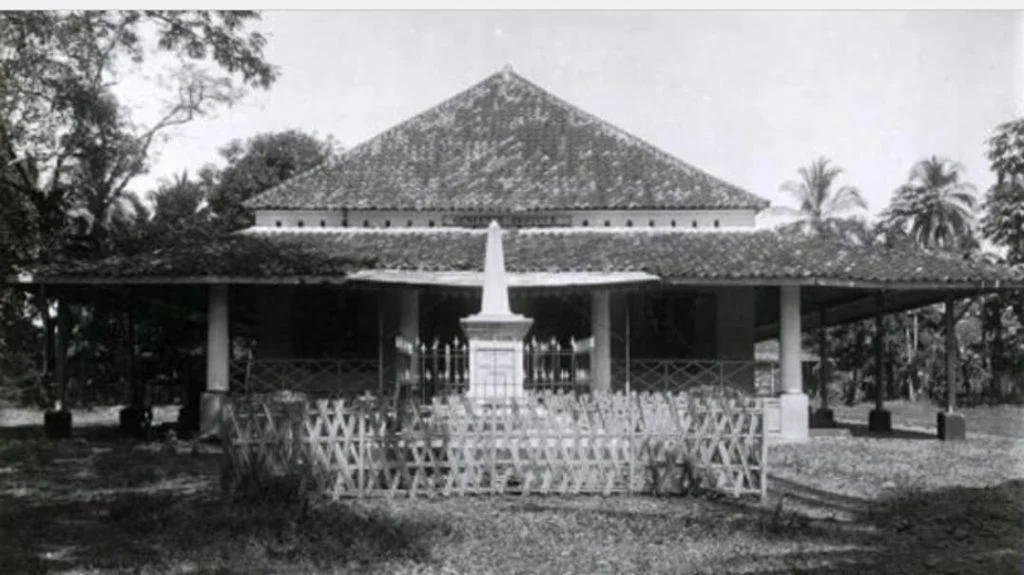
Depok, a municipality in West Java, Indonesia, holds a fascinating and largely unknown history that predates its official establishment as an administrative region on April 27, 1999. Before it was a district within Bogor Regency, Depok was, for a significant period, an independent entity with its own elected president and governance. This historical anomaly, stemming from the legacy of a wealthy Dutch merchant, offers a unique perspective on land ownership, self-governance, and the evolving political landscape of the Dutch East Indies.
The origins of this independent Depok can be traced back to the late 17th century. Cornelis Chastelein, a prosperous Dutch merchant, acquired a vast tract of land in Depok, spanning approximately 12.44 square kilometers, for a sum equivalent to 2.4 million Dutch guilders. Crucially, this land was classified as "partikelir" – private property – thus placing it outside the direct administrative control of the Dutch East Indies government. By the 18th century, Depok had evolved into a distinct administrative territory governed by its own "gemeente bestuur," or civil government. Chastelein, as the proprietor, effectively became its first ruler and founder.
Initially, the Depok territory was a dense wilderness. Chastelein, with the labor of his enslaved people, who hailed from various ethnic backgrounds across the archipelago, began the arduous task of clearing the land for cultivation. The extent of Chastelein’s holdings was substantial, encompassing not only the present-day Depok region but also extending to Pasar Minggu in South Jakarta and even Gambir in Central Jakarta. The very first inhabitants of Depok were the enslaved individuals who served Chastelein.
A pivotal moment in Depok’s history arrived with Chastelein’s will. A devout Catholic, Chastelein demonstrated remarkable generosity towards his enslaved people. Prior to his death on June 28, 1714, he bequeathed his land, homes, livestock, and agricultural tools to them, along with their freedom upon his passing. To prevent potential disputes and ensure an orderly transition, he appointed Jarong van Bali to oversee and manage the community.
The newly freed populace, however, harbored anxieties about future power struggles after Jarong van Bali’s eventual demise. To preempt such conflicts, they collectively agreed to institute a democratic system for electing a leader, referred to as a president, every three years. This nascent republic did not have a vice president; instead, the president was assisted by a secretary in carrying out governmental duties. The framework for this unique governance system was meticulously drafted by a Batavian lawyer and was formally implemented in 1913, marking the establishment of "Het Gemeente Bestuur van Het Particuliere Land Depok" – The Municipal Government of the Private Land of Depok.

The presidential terms were brief, lasting only three years. The first president of this independent Depok was Gerrit Jonathans, who assumed office in 1913. He was succeeded by three other presidents who led the community through various stages of its existence: Martinus Laurens (1921), Leonardus Leander (1930), and Johannes Matjis Jonathans (1952). Regrettably, detailed records of the specific accomplishments or challenges faced by each president during their tenures are scarce, leaving many aspects of their leadership shrouded in historical ambiguity.
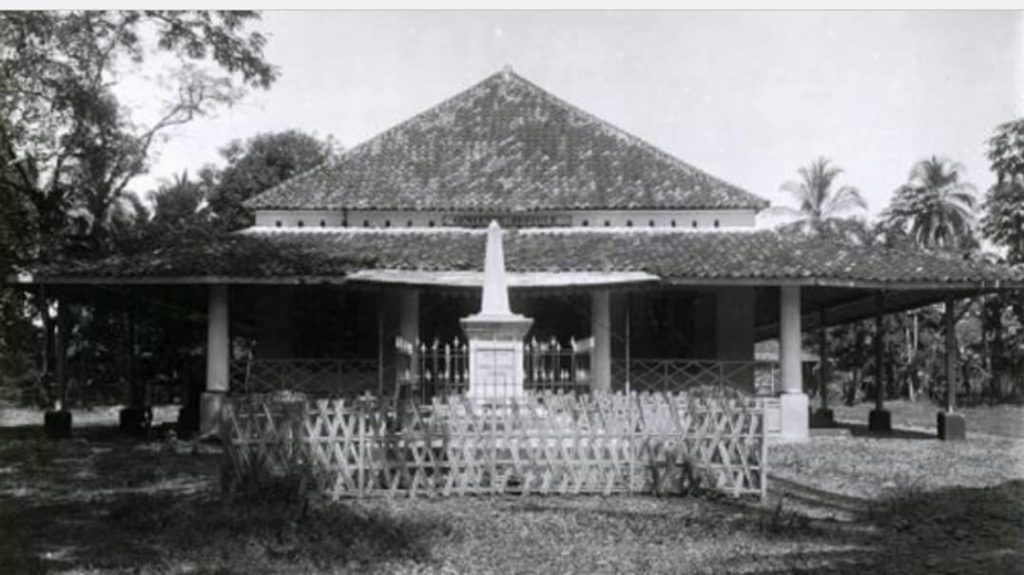
The administrative center of this unique republic was situated at the Kilometer 0 point, symbolically marked by the Depok Monument. Nearby stood the government building, which has since been repurposed as the Harapan Hospital. The very existence of a democratically elected president and a functioning municipal government within a privately owned estate, operating independently of the broader colonial administration, is a remarkable chapter in Indonesian history.
The socio-economic structure of Depok under Chastelein was built upon a foundation of land ownership and the labor of enslaved people. While Chastelein’s actions were undeniably rooted in the colonial system of slavery, his will stands as a testament to a form of emancipation and self-determination that was ahead of its time in the context of the Dutch East Indies. The establishment of a self-governing entity by former enslaved people, with a democratically elected leader, challenges conventional narratives of the period.
The broad territorial claims of Chastelein’s estate highlight the vastness of private landholdings during the colonial era and the often-blurry lines between private enterprise and governmental authority. The fact that Depok’s jurisdiction extended into areas that are now significant parts of the Indonesian capital, Jakarta, underscores the historical complexity of land ownership and territorial demarcation in the region.
The transition from a privately owned estate to an independent republic was a gradual process, culminating in the formal establishment of the "Gemeente Bestuur" in 1913. This period saw the development of a local political structure that mirrored, in some ways, the governance systems of larger nations, albeit on a much smaller scale and within a unique private land context. The emphasis on democratic elections for the presidency suggests a conscious effort by the community to establish a system of accountability and representation.
The eventual handover of Depok to the Indonesian government occurred in 1952, when the last president, Matijs Jonathans, formally ceded the private land through an act of surrender. This marked the end of Depok’s existence as an independent republic and its integration into the national administrative framework of Indonesia.
While Depok as a municipality officially celebrated its 22nd anniversary in 2021, its historical lineage stretches back over three centuries. This remarkable history as a self-governing entity, a republic with its own president, predates Indonesia’s own declaration of independence. This "freedom before Indonesia" narrative is a significant, yet often overlooked, aspect of the nation’s rich and layered past.
The implications of Depok’s history are manifold. It offers a unique case study in the evolution of governance in a colonial context, demonstrating how localized communities could forge their own paths towards self-determination. The story of Chastelein’s will and the subsequent establishment of the Depok republic challenges simplistic interpretations of colonial history, revealing instances of agency and autonomy among marginalized populations.
Furthermore, the territorial extent of Chastelein’s landholdings raises questions about land rights and historical claims in contemporary Indonesia. The fact that areas now considered prime real estate in Jakarta were once part of a private estate governed by an independent republic is a historical footnote that could have implications for understanding the complex land ownership landscape in the archipelago.
The legacy of Depok’s presidential system, though short-lived and lacking detailed records, provides a fascinating glimpse into early democratic experiments in Indonesia. The community’s deliberate choice to implement a democratic electoral process for their leader reflects a desire for a just and representative form of governance.
In conclusion, the history of Depok as an independent republic, led by an elected president, is a compelling narrative that adds depth and complexity to the understanding of Indonesian history. From its origins as a vast private estate acquired by a Dutch merchant to its eventual integration into the modern Indonesian state, Depok’s journey is a testament to the enduring human spirit of self-governance and the intricate tapestry of historical events that have shaped the nation. This little-known chapter serves as a reminder that the past often holds surprising revelations, waiting to be unearthed and understood. The story of Depok is not just about land and governance; it is about the persistent quest for freedom and self-determination in the face of historical power structures.