Nila Kartika Wati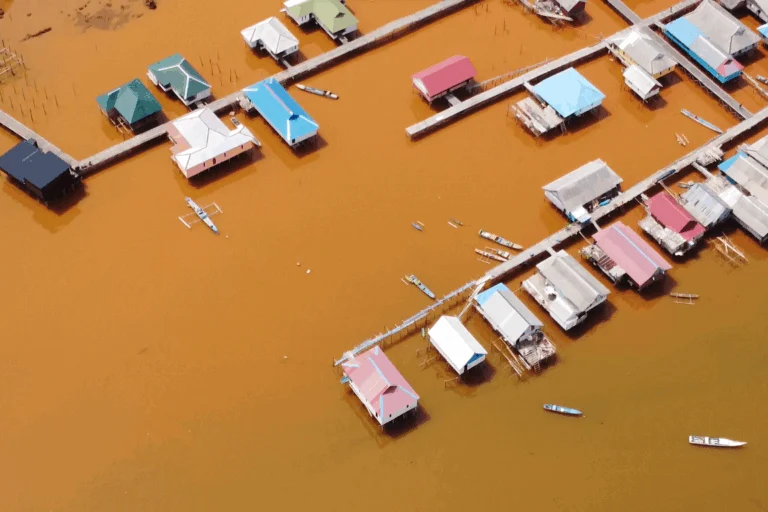
The Indonesian government, through the recently established Forest Area Orderly Task Force (Satgas Penertiban Kawasan Hutan or Satgas PKH), has intensified its crackdown on illegal mining operations and corporate entities operating outside their permitted boundaries within the nation’s vast forest estates. While the administration frames these actions as a necessary step toward upholding the rule of law and securing state assets, a growing chorus of environmental advocates, legal scholars, and civil society organizations expresses deep skepticism. Critics argue that the current approach prioritizes the collection of administrative fines and the "whitewashing" of illegal activities for economic gain over genuine environmental restoration and criminal accountability.
This policy shift follows a direct mandate from President Prabowo Subianto, who in April 2024 issued a stern warning against the persistence of hundreds of illegal mining operations. During a plenary cabinet meeting of the "Red and White Cabinet" in Jakarta, the President emphasized that the era of providing "protection" to specific groups or family-linked interests—often referred to locally as the practice of "titip-menitip"—has come to an end. President Prabowo asserted that the government would no longer tolerate mining practices with ambiguous legal status that continue to degrade the nation’s forests, stating that the national interest and the welfare of the people must take precedence over the interests of cronies or specific groups.
Following this directive, Minister of Energy and Mineral Resources (ESDM) Bahlil Lahadalia reported that the enforcement focus would be centered on mining activities lacking proper permits, particularly those encroaching upon protected forests, conservation areas, and nature reserves. Bahlil confirmed that technical instructions for execution had been received, signaling a more aggressive phase of field operations.
The Mandate and Fiscal Achievements of Satgas PKH
The Satgas PKH was officially formed on February 4, 2025, operating under the mandate of Presidential Regulation (Perpres) No. 5 of 2025. Since its inception, the task force has claimed significant success in what it terms the "salvage of state assets." According to official data, the task force has recovered more than Rp371 trillion in assets, a figure equivalent to approximately 10% of Indonesia’s national budget (APBN), which stands at Rp3,700 trillion.
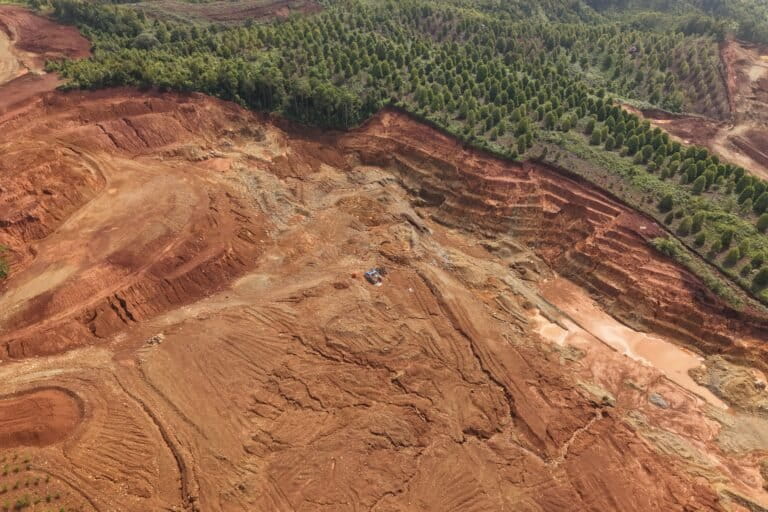
As of April 2025, the task force reported that it had successfully reclaimed 5,888,260.07 hectares of forest area previously occupied by illegal palm oil plantations and 10,257.22 hectares utilized for illegal mining. A significant portion of these reclaimed lands—totaling over 1.7 million hectares—has been transferred to state-linked entities, including Agrinas Palma Nusantara, BPI Danantara, and various State-Owned Enterprises (BUMN).
Furthermore, approximately 254,780 hectares have been returned to the Ministry of Forestry. This includes conversion production forests in Ketapang, West Kalimantan (149,198 hectares), the Lae Kombih Grand Forest Park in Subulussalam, Aceh (510 hectares), and conservation forest areas within the Gunung Halimun Salak National Park in West Java (105,072 hectares). In addition to land reclamation, the Satgas PKH has collected Rp7.2 trillion in administrative fines from companies that operated within forest areas without valid permits.
Allegations of "Whitewashing" Environmental Crimes
Despite the impressive fiscal figures, the Jaringan Advokasi Tambang (Jatam), a leading mining advocacy network, has raised alarms regarding the nature of these enforcement actions. Muhammad Jamil, Head of the Legal Division at Jatam National, characterizes the task force’s operations as a form of "sin-cleansing" for corporations that have violated the law. By allowing companies to continue their operations after paying administrative fines, Jamil argues that the government is essentially legalizing illegal acts.
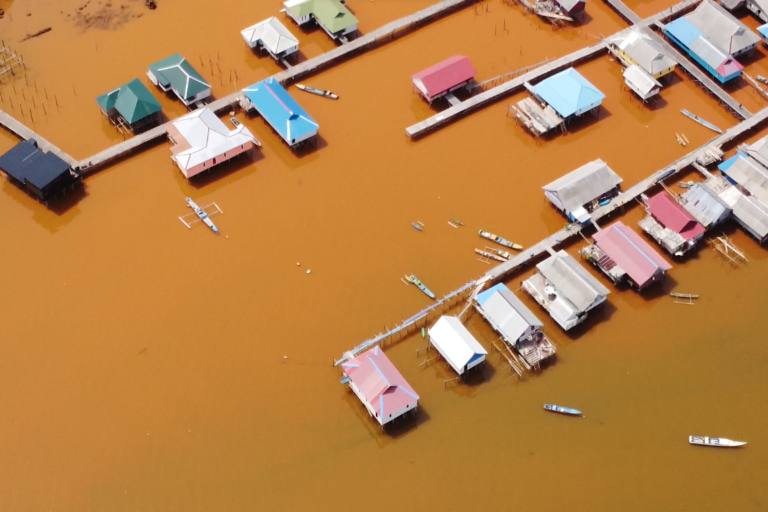
Jatam contends that the ultimatum issued by the President loses its meaning if ministries continue to facilitate the administrative legalization of activities that clearly breach statutory laws. Jamil specifically pointed to the issuance of Work Plans and Budgets (RKAB) by the Ministry of Energy and Mineral Resources as a site of legal "acrobatics." He noted that mining activities in coastal areas and on small islands—such as Wawonii, Sangihe, and Kabaena—continue to receive administrative approval despite existing legal prohibitions.
Under Law No. 1 of 2014 concerning the Management of Coastal Areas and Small Islands (PWP3K), and reinforced by the Constitutional Court (MK) Decision No. 35/PUU-XXI/2023, mining is strictly prohibited on small islands with a total area of less than 2,000 square kilometers. Furthermore, Ministry of Energy and Mineral Resources regulations stipulate that an RKAB should only be issued if all permits are complete, including the Forest Area Utilization Permit (PPKH). In practice, however, many mines without forestry permits continue to operate and sell their products because they possess a valid RKAB.
Five Patterns of Systemic Illegality
In its analysis, Jatam identified five persistent patterns of illegal mining that often escape meaningful prosecution or are intentionally overlooked by law enforcement:
- Encroachment beyond Concession Boundaries: Companies holding legal permits frequently expand their excavations into adjacent protected or production forest areas that are not covered by their original licenses.
- The "Corridor" Mining Modus: Illegal mining activities are often conducted in the gaps or "corridors" between two legal concessions, frequently with the tacit approval or involvement of the neighboring permit holders.
- Operation without Forestry Permits: Many entities possess mining business licenses (IUP) but fail to obtain the mandatory PPKH from the Ministry of Forestry, yet they are permitted to proceed with production.
- Small-Island Exploitation: Mining operations continue to target ecologically vulnerable small islands by exploiting legal loopholes or administrative delays in spatial planning updates.
- Illegal Ore Laundering: Ore extracted from illegal sites is often mixed with legally mined minerals and sold through companies with valid documents, effectively "laundering" the illegal product into the global supply chain.
Jamil argues that the Satgas PKH’s tendency to simply transfer illegal mining sites to other parties without pursuing criminal charges fails to create a deterrent effect. He emphasizes that true law enforcement should begin at the policy level, ensuring that no new permits are issued in areas of high social conflict or environmental sensitivity.
Economic Pragmatism vs. Ecological Sustainability
The focus on revenue over restoration has also drawn criticism from academia. I Gusti Agung Made Wardana, an environmental law expert from Gadjah Mada University (UGM), observes that the government’s rhetoric rarely touches upon the rehabilitation of destroyed ecosystems. In presidential addresses regarding the task force’s progress, the emphasis is almost exclusively on the "potential economic loss" and "financial recovery."
Wardana suggests that the government is more interested in shifting "gray" economic activities into the legal sphere to secure royalties and taxes than in healing the environment. This approach, he argues, treats environmental destruction as a tradable commodity. "The state is essentially saying that destroying the environment is permissible as long as you pay for it," Wardana stated. He views this as a short-term strategy to drive GDP growth within a limited political term, leaving the long-term consequences—such as the collapse of water catchment systems and the loss of biodiversity—for future administrations to handle.
This administrative-heavy approach is also linked to international market pressures. With the implementation of the European Union Deforestation Regulation (EUDR), global markets now demand that commodities, including minerals and agricultural products, be sourced from legal and traceable origins. By "cleaning up" the administrative status of illegal mines and plantations, the Indonesian government ensures these products remain exportable to Europe and other strictly regulated markets. However, Wardana warns that while the "paperwork" might become clean, the ecological scars on the ground remain unaddressed.
The Shadow of "Backing" and the Need for Criminal Reform
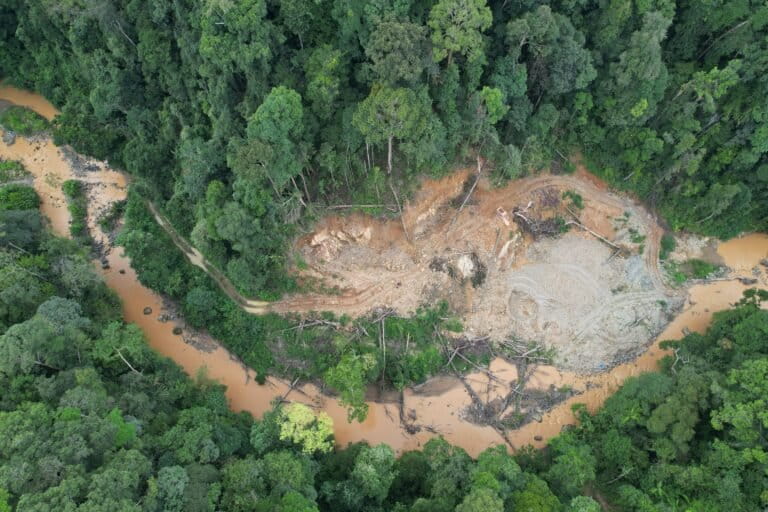
A significant barrier to the effective eradication of illegal mining remains the involvement of influential "backers" or protectors within the security forces and the bureaucracy. Jatam asserts that without targeting the high-level actors who provide protection to illegal miners, enforcement will only ever reach the small-scale operators on the ground.
The current reliance on administrative sanctions over criminal prosecution is seen as a betrayal of the constitutional mandate to manage land, water, and natural resources for the maximum prosperity of the people. Critics argue that if the goal were truly to uphold the law, the government would prioritize criminal charges and spatial planning violations, which carry much heavier penalties and mandate environmental restoration.
The broader implication of this policy is a potential erosion of public trust in environmental governance. If illegal actors can simply pay a fine to continue their operations, there is little incentive for future compliance. Furthermore, the transfer of reclaimed lands to state-owned enterprises or entities close to the center of power raises questions about whether the "penertiban" (ordering) process is simply a redistribution of resources among the elite rather than a return of assets to the public.
As the Satgas PKH continues its work throughout 2025, the balance between economic recovery and environmental justice remains precarious. While the recovery of hundreds of trillions of rupiah is a significant fiscal achievement, the true measure of the task force’s success will be whether it can stop the expansion of the "extractive frontier" into Indonesia’s remaining primary forests and whether it can hold environmental criminals accountable beyond the mere payment of a fee. For the communities in Wawonii, Kabaena, and other mining-impacted regions, the hope remains that the government will eventually prioritize the health of their ecosystems over the demands of the state treasury.