Nila Kartika Wati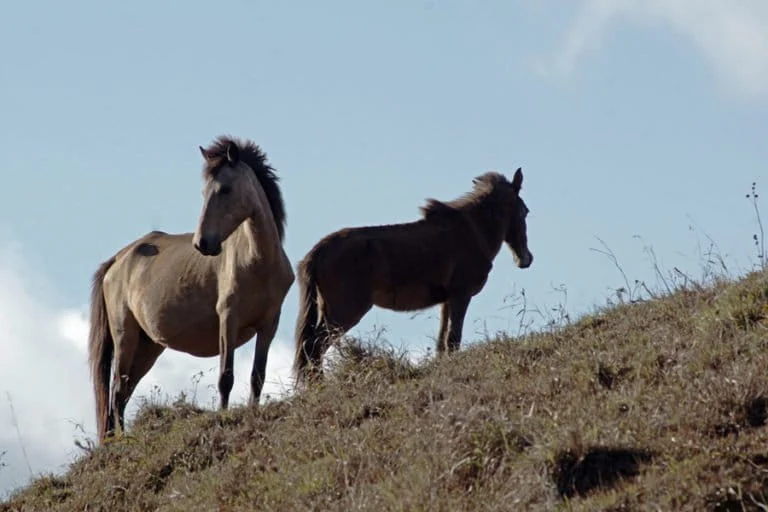
The vast savannas of Sumba, characterized by their undulating limestone hills and herds of free-roaming horses, have long served as the quintessential image of East Nusa Tenggara. However, for the indigenous people of Sumba, the horse—locally known as "ndara"—is far more than a scenic addition to the landscape or a mere livestock asset. It is a cornerstone of a complex cultural identity that has been meticulously woven into the fabric of daily life and spiritual belief for centuries. In the "Tanah Marapu" (Land of the Ancestors), the horse occupies a social and spiritual status nearly equivalent to that of the ancestors themselves, creating a relationship between human and animal that is unique in the Indonesian archipelago.
Unlike other domesticated animals, horses in Sumba are traditionally not given individual names. This practice stems from a deep-seated belief that the horse possesses a nobility and spiritual dignity so high that to personalize it with a name would be to diminish its standing. The horse is present in every critical juncture of a Sumbanese person’s life: as a primary mode of transportation across rugged terrain, a definitive symbol of social prestige, a vital component of the "belis" (marriage dowry), a sacrificial medium in sacred rituals, and eventually, the perceived spiritual mount that carries the soul of the deceased into the afterlife. Among the three pillars of Sumbanese livestock—pigs, buffalo, and horses—it is the horse that is regarded as possessing the most comprehensive role in both the physical and metaphysical realms.
The Biological and Historical Genesis of the Sandalwood Pony
The specific breed indigenous to this region is the Sandalwood Pony, one of Indonesia’s most storied equine lineages. The name "Sandalwood" is a historical relic of the era when Sumba and the surrounding islands of Nusa Tenggara were the global epicenter for the export of fragrant sandalwood (Santalum album). During the 18th and 19th centuries, as merchant ships from the Dutch East India Company and various Asian sultanates arrived to trade for the precious timber, they also encountered these hardy ponies, which soon became a secondary export commodity of high value.
Physically, the Sandalwood Pony is categorized as a small horse, typically standing between 110 and 130 centimeters at the withers. Despite its modest stature, the breed is a marvel of evolutionary adaptation. It possesses a compact, muscular frame, a broad chest, small alert ears, and a characteristically thick mane and tail. Its primary advantage lies not in raw speed, but in extraordinary endurance. Having evolved in the harsh, semi-arid environment of the Sumba savannas, where temperatures can soar and water sources are often seasonal, the Sandalwood Pony has developed the ability to travel vast distances over rocky, hilly terrain with minimal forage. This physiological resilience made them the ultimate "all-terrain vehicle" for the Sumbanese people long before the introduction of motorized transport.
Pasola: The Ultimate Test of Equine and Human Synergy
The cultural prominence of the horse is most visibly demonstrated in the Pasola, an ancient war ritual that remains one of Indonesia’s most spectacular cultural events. Held annually in the Regency of West Sumba and Southwest Sumba during the months of February and March, the Pasola is a spear-throwing tournament conducted on horseback. It is timed to coincide with the arrival of "nyale," a species of multi-colored sea worms whose appearance signals the beginning of the planting season according to the lunar calendar.
In the Pasola, two opposing "clans" of horsemen charge at each other across an open field, hurling blunt wooden spears (hola) with precision while galloping at full speed. This is not merely a display of martial prowess; it is a sacred ritual intended to appease the spirits and ensure a bountiful harvest. Tradition dictates that any blood spilled on the ground during the combat serves as a fertilizer for the earth. The success of a participant is heavily dependent on the quality of his horse. A horse that is agile, responsive to the slightest pressure from the rider’s legs, and unafraid of the chaos of battle can significantly elevate the social standing of its owner. The bond between the rider and the Sandalwood Pony during Pasola is the culmination of years of training and mutual trust.
The Genetic Crisis: The Price of Modern Racing
Despite the reverence accorded to the horse in Sumba, the purebred Sandalwood Pony is facing an existential threat. Ironically, this threat arises from the community’s own passion for the animal, specifically in the context of modern horse racing. In recent decades, horse racing has evolved from a local pastime into a high-stakes sport and a primary driver of social status.
Because the traditional Sandalwood Pony is relatively small, it often lacks the explosive speed required to compete at the highest levels of modern turf racing. To remedy this, local breeders have increasingly turned to crossbreeding. By mating indigenous Sandalwood mares with imported stallions—primarily Australian Thoroughbreds—breeders aim to produce offspring that are taller, faster, and more "athletic" in the Western sense. These crossbred horses, often referred to as "G" (Generation) horses (G1, G2, etc.), now dominate the racing circuits of Sumba and neighboring islands like Sumbawa.
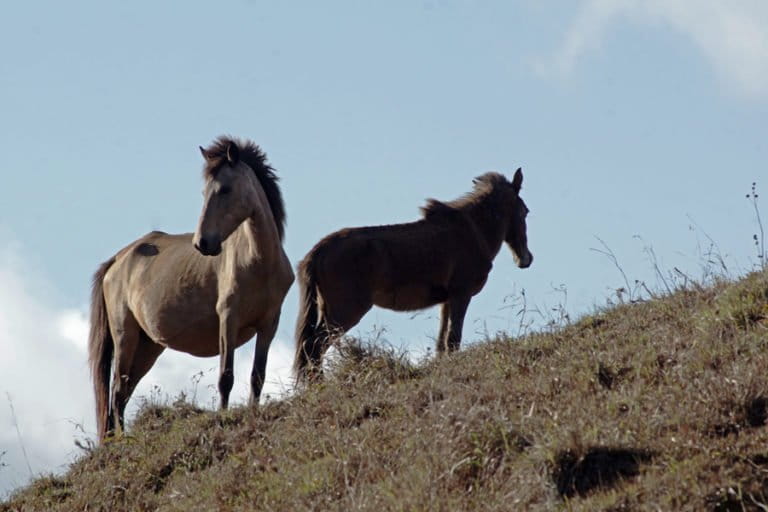
This practice of genetic hybridization is not a new phenomenon. Historical records indicate that during the Dutch colonial administration in the 19th century, the colonial government introduced Arabian and Persian stallions to Sumba to "improve" the local stock for military use. However, the current scale of crossbreeding is unprecedented. Experts and conservationists warn that the relentless pursuit of racing speed is leading to the "genetic erosion" of the pure Sandalwood lineage. As the population of purebreds shrinks, the unique traits of the breed—its specific heat tolerance, disease resistance, and legendary endurance—are being diluted or lost entirely.
Regional Comparisons and Environmental Implications
The situation in Sumba mirrors trends observed in Dompu, West Nusa Tenggara (NTB), where the local horse culture is equally strong. In Dompu, the "Pacoa Jara" (traditional horse racing) has also shifted toward the use of crossbred animals. While these larger horses are faster on a flat track, they often lack the hardiness of the original stock. Veterinarians and livestock experts in the region have noted that while the Sandalwood-Thoroughbred crosses are superior in speed, they require significantly more intensive care, including specialized feed, vitamins, and protection from the tropical sun—resources that the original Sandalwood Pony never required.
From a biological standpoint, the Sandalwood Pony represents a unique genetic reservoir. Having adapted to the Indonesian climate over centuries, the breed possesses a natural immunity to many local parasites and illnesses that can be fatal to imported breeds. The loss of the purebred Sandalwood would mean the loss of an animal perfectly calibrated to the Indonesian savanna ecosystem, leaving the local agricultural and cultural sectors more vulnerable to environmental changes and the high costs of maintaining sensitive foreign breeds.
Analyzing the Socio-Economic Impact
The transition from the traditional Sandalwood Pony to crossbred racing horses has profound socio-economic implications. On one hand, the racing industry generates significant economic activity, with prize purses and betting pools reaching hundreds of millions of rupiah. On the other hand, it creates a divide in Sumbanese society. The cost of owning and maintaining a high-performance crossbred horse is prohibitive for many traditional farmers, potentially alienating them from a cultural practice that was once accessible to all.
Furthermore, the "belis" system is also being affected. In traditional Sumbanese marriage negotiations, the number and quality of horses provided by the groom’s family are a point of intense discussion. As purebred Sandalwood horses become rarer, their value in these traditional exchanges is being recalibrated, sometimes being replaced by the more expensive, but less "culturally authentic," crossbred varieties.
Conservation and the Path Forward
The preservation of the Sandalwood Pony requires a multi-faceted approach that balances cultural tradition with modern economic realities. Several cultural observers and local leaders have called for the establishment of "purebred zones" or protected breeding programs where the genetic integrity of the Sandalwood Pony can be maintained without the pressure of the racing industry.
There is also a growing argument for the promotion of the Sandalwood Pony in the eco-tourism sector. As Sumba becomes an increasingly popular destination for international travelers, the demand for authentic cultural experiences—such as trekking through the savannas on traditional mounts—could provide a new economic incentive for farmers to maintain purebred stock. Unlike racing, which prizes speed, tourism prizes the temperament and historical narrative of the horse, qualities where the original Sandalwood Pony excels.
In conclusion, the Sandalwood Pony is much more than a relic of Sumba’s past; it is a living bridge between the history of the "Land of Marapu" and its future. While the allure of the racetrack continues to drive the demand for larger and faster horses, the disappearance of the purebred Sandalwood would represent an irreparable loss of biological and cultural heritage. Protecting this "noble ancestor" is not just a matter of livestock management, but a vital effort to ensure that the soul of Sumba remains intact for generations to come. The challenge for Sumba in the 21st century will be to ensure that in the race toward modernity, it does not leave its most faithful companion behind.