Bambang Pamungkas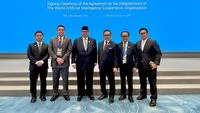
Jakarta, Indonesia – In a landmark move poised to significantly shape the future of artificial intelligence (AI) on the global stage, Indonesia has cemented its position as a founding member of the World Artificial Intelligence Cooperation Organization (WAICO). The strategic decision, announced by Coordinating Minister for Economic Affairs Airlangga Hartarto following the signing ceremony on Friday, July 17, 2026, underscores Indonesia’s commitment to active participation in global AI governance, aiming to ensure equitable and human-centric development of the technology while simultaneously leveraging it to propel the nation’s burgeoning digital economy to unprecedented heights. This initiative positions Indonesia not merely as a consumer of AI but as a proactive architect of its global framework, fostering an inclusive environment for AI’s societal and economic benefits, particularly for developing nations.
Indonesia’s Strategic Vision for Global AI Governance
Coordinating Minister Airlangga Hartarto articulated Indonesia’s profound strategic advantage in co-founding WAICO. As a pivotal architect of this new inter-governmental body, Indonesia gains a golden opportunity to contribute substantively to policy formulation, shape the development of global governance frameworks for AI, and actively engage within WAICO’s institutional mechanisms. This proactive stance is crucial for ensuring that the trajectory of AI development aligns seamlessly with global aspirations, particularly those outlined in the United Nations Sustainable Development Goals (SDGs). By integrating its national interests with international cooperation, Indonesia aims to champion a shared understanding and collaborative approach to AI, ensuring its benefits are widely distributed and its challenges are collectively addressed.
The Minister emphasized that Indonesia’s involvement is not just about compliance but about influence. "This naturally ensures that AI development progresses in line with global advancements, and Indonesia will leverage this to continuously promote shared knowledge and collaborative efforts. This becomes an integral part of the UN’s SDGs targets," Airlangga stated during a press conference. This perspective highlights a broader ambition to align technological progress with sustainable development, a critical imperative for emerging economies. The focus on a "human-centric approach," as later reiterated by Minister Airlangga, is central to Indonesia’s advocacy within WAICO, advocating for AI systems that prioritize human well-being, ethical considerations, and societal impact over purely technological advancements. This approach is particularly resonant in a diverse nation like Indonesia, where the equitable distribution of technological benefits and the mitigation of potential harms are paramount.
Boosting Indonesia’s Digital Economy Through AI Innovation
A cornerstone of Indonesia’s WAICO strategy is the projected acceleration of its digital economy through advanced AI integration. Minister Airlangga presented ambitious figures, forecasting Indonesia’s digital economy to reach a staggering US$366 billion by 2030, a significant leap from the current estimated US$130 billion. Crucially, this potential could be further amplified to US$600 billion through robust regional and global cooperation facilitated by platforms like WAICO and initiatives such as the ASEAN Digital Economic Framework Agreement (DEFA).
The ASEAN DEFA, expected to be signed under the Philippines’ chairmanship this year, is anticipated to elevate the entire ASEAN digital economy from US$1 trillion to US$2 trillion. Within this burgeoning regional landscape, Indonesia’s contribution and benefit are projected to increase from US$400 billion to US$600 billion. These projections underscore the transformative power of AI as a catalyst for economic growth, innovation, and digital transformation across various sectors, including e-commerce, fintech, logistics, and healthcare. The government envisions AI not just as a tool for efficiency but as an engine for creating new industries, generating high-value jobs, and enhancing public services. By fostering an environment conducive to AI adoption and innovation, Indonesia seeks to unlock new avenues for economic diversification and enhance its competitiveness in the global digital arena.
Beyond a Market: Indonesia as a Global AI Shaper
Echoing the sentiment of active participation, Deputy Minister of Communication and Digital RI, Angga Raka Prabowo, asserted that Indonesia’s role transcends merely being a market for AI products and services. "What is clear is that we take advantage of the fact that Indonesia is not just a spectator; we play an active role here. We seize the positive aspects, how we can play a role in the global governance framework for AI," Prabowo emphasized. This statement encapsulates Indonesia’s ambition to be a norm-setter and a thought leader in the evolving discourse on AI ethics, regulation, and societal integration.
For a nation of Indonesia’s size and demographic profile, merely consuming technology risks exacerbating digital divides or importing biased systems. By actively participating in WAICO, Indonesia aims to ensure that global AI standards are inclusive, culturally sensitive, and reflective of the diverse needs and values of its population and other developing countries. This involves advocating for frameworks that promote data privacy, algorithmic transparency, accountability, and the responsible deployment of AI across critical sectors. The goal is to co-create a global AI ecosystem that benefits all nations, preventing the concentration of power and technological advantage in a few hands and ensuring that AI serves as a tool for empowerment rather than disenfranchisement.
The Genesis of WAICO: A New Era of International Cooperation
Indonesia’s involvement in the declaration and establishment of WAICO signifies a profound commitment to fortifying international collaboration in AI development and governance. The signing ceremony, led by Minister Airlangga alongside representatives from approximately 30 other nations, marks a collective step towards harmonizing global efforts in an area of technology that transcends national borders. WAICO is envisioned as an independent, inter-governmental international organization, specifically dedicated to AI cooperation within the civilian domain. Its core principles are inclusivity and non-discrimination, ensuring that its framework and benefits are accessible to all member states, regardless of their current level of AI development.
The diverse roster of founding members highlights WAICO’s broad appeal and the global recognition of the need for a unified approach to AI. These nations include Algeria, Belarus, Brazil, Cambodia, Cameroon, Congo, Cuba, Ethiopia, Indonesia, Kazakhstan, Kenya, Kyrgyzstan, Laos, Lesotho, Malaysia, Mozambique, Myanmar, Nicaragua, Oman, Pakistan, Russia, Senegal, Serbia, South Africa, Tajikistan, Uzbekistan, Venezuela, Zambia, and the People’s Republic of China. This varied membership, spanning multiple continents and political systems, underscores a shared understanding of AI’s transformative potential and the imperative for collective governance to harness its benefits responsibly. The civilian domain focus ensures that WAICO’s work is primarily directed towards ethical, economic, and societal applications of AI, steering clear of military or contentious security aspects, which are often governed by other international bodies.
Chronology of Engagement and Founding Members
The formal establishment of WAICO on July 17, 2026, represents the culmination of extensive diplomatic efforts and international dialogues aimed at creating a dedicated platform for AI cooperation. While the immediate lead-up to the signing involved intensive negotiations among prospective founding states, the broader context stretches back several years, with increasing calls from various international forums, including the United Nations, for multilateral cooperation on AI governance. Discussions often revolved around fragmented regulatory landscapes, ethical dilemmas posed by rapid AI advancements, and the need to bridge the "AI divide" between technologically advanced nations and emerging economies.
Indonesia’s participation in these preliminary discussions and its eventual co-founding role underscores its proactive engagement in shaping emerging global norms. The list of 30 founding countries represents a significant bloc of nations committed to a collaborative and inclusive model of AI governance. This geographical and geopolitical diversity is a key strength of WAICO, allowing for a broader range of perspectives and experiences to inform its policy recommendations and operational frameworks. The presence of nations from Africa, Asia, Latin America, and Eastern Europe signals a commitment to ensuring that AI development is not solely dictated by a few dominant players but is a truly global endeavor.
Supporting Data and Economic Projections
The economic projections shared by Minister Airlangga are underpinned by robust growth trends observed in Indonesia’s digital sector. In recent years, Indonesia has consistently been a leader in Southeast Asia’s digital economy, driven by a young, digitally-savvy population, widespread smartphone penetration, and a thriving startup ecosystem. Reports from industry giants like Google, Temasek, and Bain & Company have frequently highlighted Indonesia’s immense potential, often projecting it to be the largest digital economy in ASEAN. For instance, prior to 2026, these reports consistently indicated that Indonesia accounted for a significant portion, often exceeding 40%, of the total Gross Merchandise Value (GMV) of Southeast Asia’s digital economy.
The projected growth from US$130 billion to US$366 billion by 2030, and potentially US$600 billion with enhanced cooperation, aligns with expert consensus on the exponential impact of AI on various economic sectors. AI is expected to revolutionize productivity across industries such as manufacturing, agriculture, healthcare, and financial services. By automating processes, optimizing resource allocation, and enabling predictive analytics, AI can unlock efficiencies that translate into significant economic gains. Furthermore, the development of an AI-driven digital economy is expected to foster innovation in areas like smart cities, precision agriculture, and personalized education, directly contributing to several UN SDGs, including SDG 8 (Decent Work and Economic Growth), SDG 9 (Industry, Innovation, and Infrastructure), and SDG 11 (Sustainable Cities and Communities). Indonesia’s commitment to the ASEAN DEFA is also critical, as regional economic integration and harmonized digital policies are crucial for maximizing the benefits of AI across borders, creating a larger, more attractive market for digital businesses and investors.
Implications for Regional and Global AI Landscape
WAICO’s establishment and Indonesia’s leadership role carry significant implications for the global AI landscape. In an era marked by diverse approaches to AI regulation – from the European Union’s stringent AI Act focusing on risk-based frameworks to the United States’ emphasis on innovation and industry-led standards, and China’s comprehensive national strategy – WAICO offers a multilateral platform for dialogue and potential convergence. Its inclusive and non-discriminatory nature contrasts with more exclusive groupings, potentially allowing for a more representative voice in global AI discourse.
For developing nations, WAICO presents a vital opportunity to influence global norms, ensure access to AI technologies, and build domestic AI capabilities without being dictated by the standards of a few dominant tech powers. Indonesia, as a prominent voice in the Global South, can champion the specific needs and concerns of developing economies, such as infrastructure development, capacity building, data sovereignty, and the mitigation of socio-economic disparities that AI might exacerbate if left unregulated. Furthermore, WAICO’s focus on the civilian domain could help de-escalate potential geopolitical tensions surrounding AI, fostering an environment of trust and shared progress. The organization’s success will largely depend on its ability to translate its principles into actionable policies and to effectively bridge the technological and regulatory gaps among its diverse membership.
Challenges and Opportunities Ahead
While the opportunities presented by WAICO are immense, significant challenges lie ahead. Ethical considerations, such as bias in algorithms, data privacy breaches, and job displacement due to automation, require careful navigation. Ensuring equitable access to AI technologies and preventing a widening of the digital divide, both within nations and globally, will be a continuous effort. Furthermore, establishing universally accepted standards for AI safety, security, and accountability across diverse legal and cultural contexts will be a complex undertaking.
However, the opportunities far outweigh the challenges. WAICO offers a unique forum for fostering collaborative research and development, facilitating knowledge transfer, and harmonizing best practices. For Indonesia, active participation means enhanced capacity building, attracting foreign direct investment in its tech sector, and positioning itself as a regional hub for AI innovation. The ability to shape global AI governance ensures that the technology’s development remains aligned with human values and serves as a powerful tool for sustainable development, improving public services, driving economic growth, and ultimately enhancing the quality of life for its citizens.
In conclusion, Indonesia’s proactive stance as a founding member of WAICO is a forward-looking strategy that recognizes the profound impact of AI on the 21st century. By advocating for a human-centric, inclusive, and globally collaborative approach to AI governance, Indonesia is not only securing its future digital economic prosperity but also playing a critical role in shaping a more equitable and sustainable global technological landscape. The journey ahead will undoubtedly be complex, but with a clear vision and strong international partnerships, Indonesia is well-positioned to leverage AI for national advancement and global good.