Chalifah Fatihah
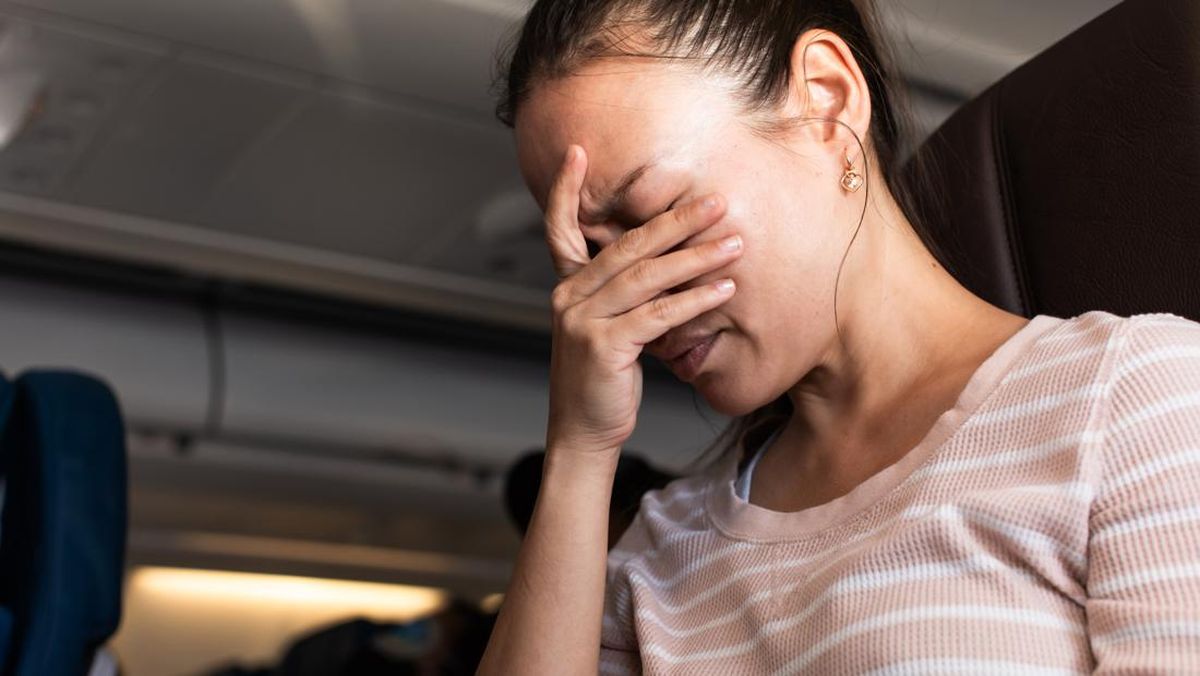
For many travelers, airplanes represent the pinnacle of modern transportation, offering speed and convenience for journeys spanning continents. However, the swift transit across time zones often brings an unwelcome companion: jet lag. This disruption to the body’s natural rhythms can manifest as fatigue, sleep disturbances, and mood changes, significantly impacting the travel experience. While the discomfort of jet lag is a common ailment, a growing body of scientific evidence suggests that the direction of travel plays a crucial role in its severity, with eastbound journeys often proving more challenging than westbound ones.
The fundamental reason behind this disparity lies in the human body’s internal clock, known as the circadian rhythm. This intricate biological system, regulated by the suprachiasmatic nucleus (SCN) in the brain, governs essential functions such as sleep-wake cycles, alertness levels, and the body’s response to light and darkness. Sunlight acts as a primary cue, signaling the body to wake up in the morning and prepare for sleep as darkness falls. When this rhythm is disrupted by crossing multiple time zones, the body struggles to synchronize with the new local time, leading to the disorienting effects of jet lag.
Understanding the Circadian Rhythm and Its Response to Travel
The human circadian system is not a perfectly adaptable mechanism. Research, including studies from the University of Maryland School of Medicine, indicates that our internal clocks are inherently biased towards a longer day. This means that our bodies find it easier to delay their internal clocks (as happens when traveling west) than to advance them (as is necessary when traveling east).
When traveling west, individuals effectively gain time. The day appears longer, allowing for a more gradual adjustment of the sleep-wake cycle. The body can more readily extend its waking hours and delay sleep, aligning more smoothly with the new time zone. This process is akin to slowly stretching the day, which our biological systems are more predisposed to do.
Conversely, traveling east forces the body to "lose" time. The day effectively becomes shorter, requiring the circadian rhythm to advance more rapidly. This is where the inherent asymmetry of our biological clocks becomes apparent. The SCN, responsible for maintaining these rhythms, appears to adjust more slowly when tasked with advancing the internal clock. This accelerated shift, or the attempt to cram a day’s worth of biological activity into a shorter perceived timeframe, leads to a more pronounced disruption and a greater struggle for the body to recalibrate.
A mathematical model developed by scientists at the University of Maryland aimed to replicate the basic functioning of circadian clocks. Their findings supported the observation that SCN cells adjust more sluggishly during eastbound travel, making the transition more arduous. This slower adjustment means that the body’s internal signals for sleep and wakefulness remain out of sync with the external environment for a longer period, exacerbating the symptoms of jet lag.
Quantifying the Impact: Duration of Jet Lag
The difference in jet lag severity between eastbound and westbound travel is not merely anecdotal; it can be quantified in terms of recovery time. According to resources like Timeshifter, a popular jet lag planning app, the duration of jet lag typically correlates with the number of time zones crossed, but with a significant difference based on direction.
For westbound travel, it is generally estimated that the body requires approximately one day to recover for each time zone crossed. This means a journey across six time zones to the west might result in about six days of adjustment.
However, for eastbound travel, the recovery period is considerably longer. The same source suggests that for each time zone crossed heading east, the body may need around 1.5 days to fully adjust, or even more. Therefore, a six-hour flight to the east could necessitate eight to ten days for complete acclimatization. This extended recovery period explains why many travelers report feeling significantly more "out of sorts" after returning from destinations located to their east.
Historical Context and Evolution of Circadian Rhythms
To understand this biological predisposition, it’s helpful to consider our evolutionary history. For much of human existence, our ancestors lived in environments where days were dictated by natural light cycles. Migratory patterns, while significant, likely involved more gradual shifts in time zones over extended periods, allowing for natural adaptation. The advent of rapid long-distance travel is a relatively recent phenomenon in human history, and our biological systems have not had the evolutionary time to fully adapt to such abrupt changes.
The circadian rhythm is deeply rooted in our genetic makeup, honed over millennia to align with the Earth’s rotation. While our modern lifestyles have introduced artificial light cycles and the ability to traverse the globe in hours, our fundamental biological clock remains largely unchanged. This disconnect between our engineered travel capabilities and our innate biological programming is at the heart of the jet lag phenomenon.
Mitigating the Effects: Strategies for Faster Recovery
While the inherent asymmetry of our circadian rhythms presents a challenge, several strategies can help travelers mitigate the effects of jet lag and facilitate a quicker recovery, regardless of the direction of travel. The most potent tool for resetting the body’s biological clock is light exposure, but its effectiveness hinges on precise timing.
For eastbound travel, where the goal is to advance the circadian rhythm, strategically exposing oneself to bright light in the morning and minimizing exposure to bright light in the evening is crucial. This helps signal to the body that it is time to wake up and be active earlier, effectively shifting the internal clock forward. Conversely, avoiding screens and bright artificial lights in the hours before bedtime can promote earlier sleep onset.
When traveling west, the objective is to delay the circadian rhythm. This can be achieved by seeking out bright light exposure in the late afternoon or evening, which encourages the body to stay awake longer and adjust to a later sleep schedule. Limiting morning light exposure can also be beneficial, as it prevents the body from waking up too early in the new time zone.
Beyond light management, other practices can support the body’s adjustment:
- Gradual Adjustment Before Travel: For long-haul flights, some experts recommend gradually shifting sleep and wake times in the days leading up to departure to better align with the destination time.
- Hydration: Dehydration can exacerbate jet lag symptoms. Maintaining good hydration levels throughout the flight and upon arrival is essential.
- Strategic Napping: Short, well-timed naps can help combat daytime sleepiness without disrupting nighttime sleep. Avoid long or late-afternoon naps.
- Healthy Diet: Consuming balanced meals and avoiding heavy, processed foods can support overall well-being and aid in acclimatization.
- Melatonin Supplements: In some cases, melatonin supplements, taken at the appropriate time, can help signal to the body that it is time to sleep. However, it’s advisable to consult a healthcare professional before using supplements.
- Minimizing Alcohol and Caffeine: While tempting, excessive consumption of alcohol and caffeine can interfere with sleep patterns and dehydrate the body, worsening jet lag.
Broader Implications and Future Research
The implications of eastbound jet lag extend beyond mere traveler inconvenience. For business travelers, the extended recovery period can mean lost productivity and missed opportunities. For athletes competing in international events, the impact on performance can be significant. The cumulative effects of frequent travel across time zones, particularly eastbound, may also warrant further investigation into potential long-term health consequences.
Future research could explore more personalized approaches to jet lag management, leveraging wearable technology to track individual circadian rhythms and provide tailored light exposure and activity recommendations. Advances in understanding the genetic factors that influence circadian rhythm adaptability could also lead to more effective interventions.
In conclusion, while jet lag is an unavoidable consequence of long-distance air travel, understanding the directional bias towards eastbound journeys being more disruptive is a crucial piece of information for travelers. By acknowledging this biological reality and implementing strategic light management and other supportive measures, individuals can significantly improve their ability to adapt to new time zones, making their travel experiences more comfortable and productive. The seemingly simple act of choosing a flight path can have a profound impact on how quickly one recovers from the physiological jolt of crossing continents, underscoring the intricate connection between our biology and the modern world we inhabit.