Nila Kartika Wati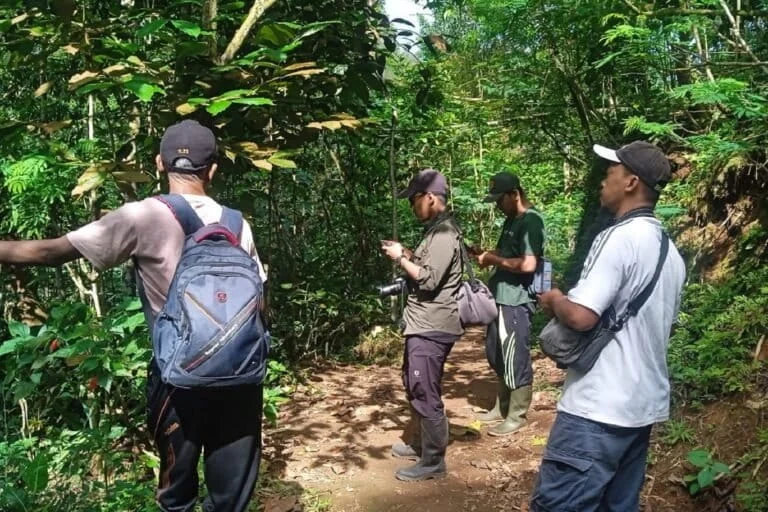
In the dense, verdant landscapes of the Menoreh Hills, a transformation is taking place that bridges the gap between traditional livelihoods and modern conservation. For decades, the melodies of the Hill Blue Flycatcher (Cyornis banyumas), known locally as sikatan cacing, were a constant backdrop to life in Donorejo Village, Purworejo, Central Java. However, as the demand for songbirds surged across the Indonesian archipelago, these melodies began to fade. Parman, a lifelong resident of Donorejo, was once part of the problem. As a professional bird hunter, he spent years tracking nests and capturing fledglings to supply a voracious market. Today, his perspective has shifted entirely. Faced with the near-extinction of the species in his own backyard, Parman has "repented," evolving from a predator of the forest into one of its most dedicated guardians by spearheading a grassroots conservation movement.
The Decline of the Hill Blue Flycatcher and the Songbird Trade
The Hill Blue Flycatcher is a small, vibrant passerine bird celebrated for its complex and melodious song. This acoustic beauty has unfortunately made it a prime target for the "kicau mania" culture—a widespread hobby in Indonesia where enthusiasts compete in bird-singing competitions. In regions like Yogyakarta and Magelang, the demand for sikatan cacing remains high, driving prices up and incentivizing local villagers to exploit the forest’s avian populations.
Globally, the Cyornis banyumas is recognized as an endangered species by the International Union for Conservation of Nature (IUCN). Despite its protected status on paper, the reality on the ground in the Menoreh Hills was one of rapid decline. Parman recalls a time when the birds were easy to find, but approximately five years ago, the forest went silent. "It became incredibly difficult to find even a single bird," Parman explains. The difficulty of the hunt, combined with a growing sense of loss, prompted him to quit hunting and pivot to goat farming. However, he soon realized that his individual withdrawal from the trade was not enough to save the species. While he had stopped, hunters from outside the village continued to infiltrate the hills, further depleting the remaining population.
A Chronology of Conservation: From Individual Action to Village Policy
The movement to save the Menoreh Hills’ avian biodiversity did not happen overnight. It began with the realization that the ecosystem was fracturing. After observing that the bird populations failed to recover even after he stopped hunting, Parman and other concerned residents realized that a systemic approach was required.
Two years ago, Donorejo Village took a decisive step by implementing a formal ban on all forms of bird hunting. This local regulation was a response to the increasing influx of outside poachers. While the ban provided a legal framework, enforcement required active community participation. This led to the formation of Kelompok Girimukti (the Girimukti Group), a collective of over a dozen villagers dedicated to the preservation of the forest.
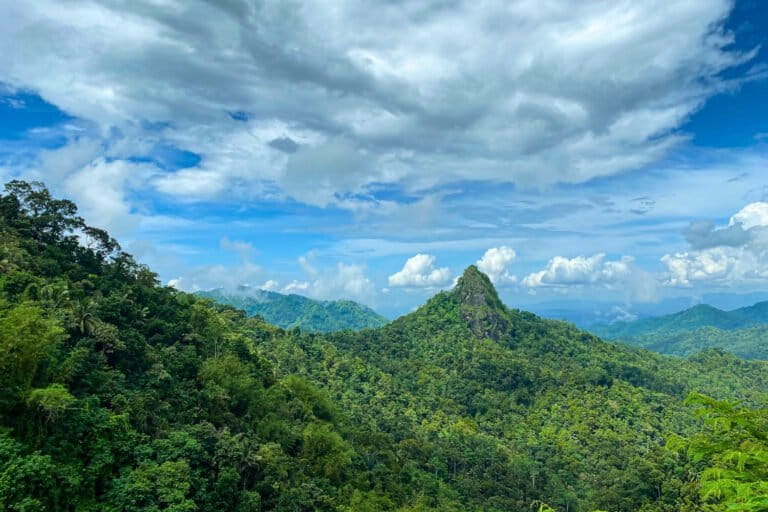
The group’s first task was scientific in nature: mapping and recording the avian species within the Menoreh Hills. By identifying the specific corridors used by the birds for breeding and migration, the group began to understand the "bird corridors"—vital pathways that connect Donorejo to neighboring regions like Jatimulyo in Kulonprogo. This mapping revealed that the birds do not exist in isolation; they rely on a continuous, healthy landscape that transcends administrative village boundaries.
The Critical Link: Water Springs and Avian Habitats
One of the most significant findings of the Girimukti Group’s mapping efforts was the correlation between bird populations and water sources. In the Menoreh Hills, these natural springs, known as sendang, serve as the lifeblood of the ecosystem. However, the data collected by the group showed that the habitats most critical to the birds were also the most threatened.
Of the identified sites, five major water springs were found to be in critical condition, with water debits dropping significantly or drying up entirely during the dry season. "We realized that the crisis facing the birds was the same crisis facing the humans," Parman notes. "Without the springs, the birds have nowhere to drink or bathe, and the villagers lose their primary water source."
This realization shifted the conservation strategy toward "Spring-Based Conservation." By restoring the vegetation around the sendang and preventing erosion, the community is simultaneously securing their water future and providing a sanctuary for birds like the kingfisher (raja udang), egret (kuntul), and the Javan sunbird (madu jawa). In the neighboring village of Pandanrejo, youth activists like Adhita Virya Akmilius Lala have joined this effort, recognizing that habitat restoration is just as vital as anti-poaching patrols.
Supporting Data: Agroforestry and the UGM-FAO Research
The success of the conservation efforts in the Menoreh Hills is backed by academic research that highlights the unique relationship between local agriculture and biodiversity. A study conducted by Universitas Gadjah Mada (UGM) found that the traditional farming patterns in the Menoreh Hills are instrumental in supporting bird communities.
Specifically, the research identified three planting patterns used by local farmers. The most beneficial for birds is the "sub-canopy vegetation" model, typically found in coffee plantations. These trees, ranging from 4.1 to 8 meters in height, provide a complex architecture of branches and twigs. This environment offers the necessary substrate for birds to perch, communicate, forage, and hide from predators.
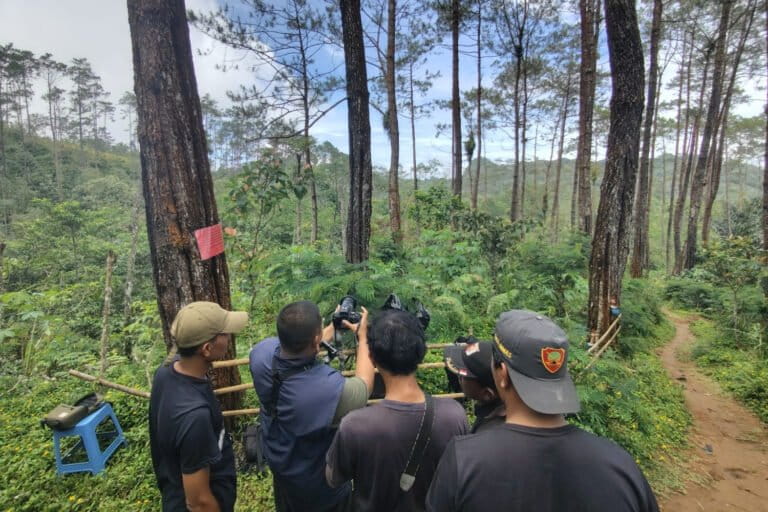
Furthermore, a study by the Food and Agriculture Organization (FAO) emphasized that the future of avian biodiversity in the Menoreh Hills does not depend solely on the size of protected state forests. Instead, it relies on the "connectivity" of the landscape. This includes community-managed forests, agroforestry plots, and riverbanks. Because the local farmers avoid monoculture and instead practice tumpangsari (intercropping), they have inadvertently created a high-functioning biological corridor.
Economic Synergy: The Return of Sustainable Coffee
The transition toward conservation has also yielded unexpected economic benefits. In Purwosari Village, Kulonprogo, the Kelompok Lestari Purwosari has been working on bird corridor preservation since 2020. Tegar Cahaya Putra, the group’s initiator, points out that the return of the birds has revitalized the local coffee industry.
"Previously, many coffee plantations were neglected," Tegar says. "But through bird conservation, we’ve seen a resurgence in the health of the crops." Birds play a crucial role in the agricultural cycle as natural pest controllers and pollinators. The community has moved away from viewing birds as "crop raiders" and instead sees them as essential partners. By planting fruit trees like papaya, cherry (kersen), and mango alongside their coffee, farmers provide food for frugivorous birds, while flowering plants like butterfly pea (telang) and gardenia (kaca piring) support nectar-feeders. This balanced ecosystem reduces the need for chemical pesticides and increases the yield and quality of the coffee beans, creating a profitable and sustainable "bird-friendly" coffee brand.
Official Responses and Institutional Coordination
The grassroots movement has caught the attention of both non-governmental organizations and local government bodies. The Yayasan Kanopi Indonesia has been a long-term partner for the Menoreh communities, providing technical expertise in habitat mapping and community education. Arif Rudiyanto, an implementation associate for the foundation, emphasizes that the key to success is tapping into "local wisdom."
"The residents of Menoreh have an ancestral understanding of their land," Arif explains. "For example, landowners with steep cliffs know that if a Hill Blue Flycatcher nests there, they should not cut into the hillside. They understand that the bird’s presence is a sign of a stable ecosystem."
However, Arif warns that local efforts must be supported by higher-level government policy. While individual villages have integrated conservation into their Village Development Plans (Musrenbang), there is a need for provincial and regency-level synchronization. This is particularly crucial to ensure that large-scale infrastructure or development projects do not bisect established bird corridors or destroy critical nesting sites.
Broader Impact and Disaster Mitigation
The implications of the Menoreh Hills conservation movement extend far beyond bird watching. The region is topographically prone to landslides, especially during the intense tropical rainy seasons. The efforts to maintain "sub-canopy" vegetation and protect water springs serve as a natural form of disaster mitigation. Deep-rooted trees planted to provide bird habitats also act as anchors for the soil, preventing the catastrophic erosion that has historically plagued the region.
The transformation of the Menoreh Hills serves as a global model for community-led conservation in human-dominated landscapes. It proves that the protection of endangered species like the Hill Blue Flycatcher does not require the exclusion of humans from the forest. Instead, it requires a realignment of human activity with ecological rhythms.
For Parman and his fellow villagers, the return of the sikatan cacing is more than just a success story for biodiversity; it is a restoration of their cultural heritage. The melodies that once faded are returning to the hills, signaling a future where the people of Donorejo no longer live off the forest, but with it. As the community continues to monitor their "flying corridors," they are not just saving a bird—they are securing the water, the soil, and the economic future of the Menoreh Hills for generations to come.