Nila Kartika Wati
The integrity of the Jantho Pine Forest Nature Reserve in Aceh Besar, Aceh, is facing an unprecedented crisis as illegal gold mining activities, locally known as PETI (Pertambangan Emas Tanpa Izin), continue to expand deep into protected territories. Investigations conducted by the Indonesian Forum for the Environment (Walhi) Aceh have revealed that approximately 14.36 hectares of the strictly protected Jantho Nature Reserve have been severely degraded by illegal operations between early 2023 and May 2026. This encroachment represents a significant failure in the protection of one of Sumatra’s most vital ecological corridors, which serves as a sanctuary for the critically endangered Sumatran orangutan and a primary water catchment area for hundreds of thousands of residents in the region.
The scale of the environmental destruction is staggering when viewed through the lens of longitudinal satellite data. According to Afifuddin, the Head of Advocacy and Campaign Division at Walhi Aceh, the total area impacted by illegal mining within Jantho District has skyrocketed from a mere 4.87 hectares in early 2023 to a massive 102.69 hectares by May 2026. This rapid expansion highlights the industrial scale of the operations, which are no longer limited to traditional panning but involve heavy machinery and sophisticated logistics. The current footprint of destruction includes 58.85 hectares of protected forest, 14.36 hectares of the Jantho Nature Reserve, 19.12 hectares of production forest, and 10.35 hectares of critical water bodies.
Industrial-Scale Encroachment and Logistical Networks
The shift from artisanal mining to industrial-scale extraction is evidenced by the presence of heavy equipment deep within the forest. Walhi Aceh’s monitoring efforts have identified dozens of excavators operating within the Jantho forest complex. The presence of such machinery in a rugged, supposedly protected landscape suggests a well-organized logistical network. Reports from the local community and the "Aliansi Jantho Bergerak" (Jantho Moves Alliance) indicate that the primary access route for these excavators and mining supplies is believed to originate from the Tangse region in Pidie Regency. From the border of Pidie, the mining trail has reportedly penetrated approximately 12 kilometers into the heart of the Jantho territory in Aceh Besar.
Hanif, the spokesperson for the Aliansi Jantho Bergerak, noted that while the mining has been active for approximately three years, the intensity and resulting damage have accelerated sharply in the last 12 months. The fact that a designated Nature Reserve—the highest tier of land protection in Indonesian law—has been breached suggests that illegal actors operate with a high degree of perceived impunity. "If even a nature reserve can be systematically pillaged, the condition of other forest categories is likely far worse," Hanif stated during a press briefing on June 29, 2026.
The Ecological Toll on the Krueng Aceh Watershed
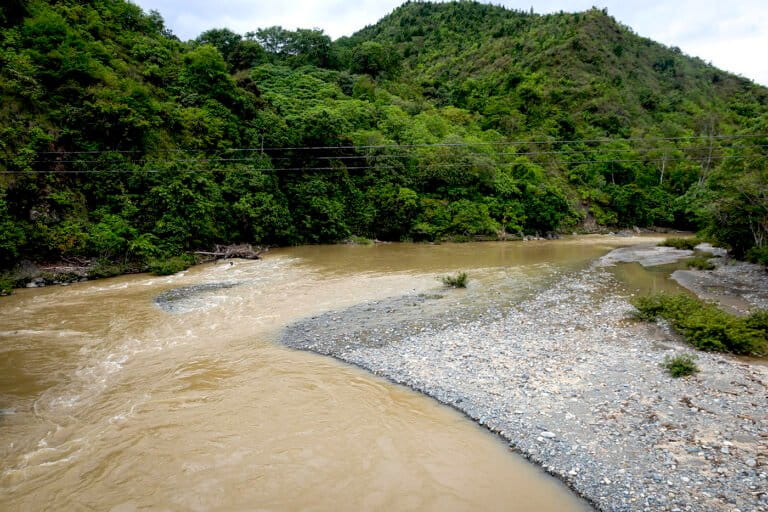
The most immediate and life-threatening consequence of the illegal mining is the degradation of the Krueng Aceh Watershed (DAS Krueng Aceh). This river system is the primary source of clean water for the residents of Jantho, the wider Aceh Besar Regency, and the provincial capital, Banda Aceh. The mining process involves the massive pengerukan (dredging) of riverbanks and forest floors to reach gold-bearing deposits. This activity releases vast quantities of sediment into the river system, leading to extreme turbidity.
Beyond physical sedimentation, the potential use of mercury in the gold separation process poses a catastrophic long-term health risk. Mercury, a heavy metal, does not dissipate; it bioaccumulates in the aquatic food chain and persists in the environment for decades. For the communities downstream who rely on the river for drinking water, agricultural irrigation, and freshwater fisheries, the contamination of the Krueng Aceh is a direct threat to public health and food security.
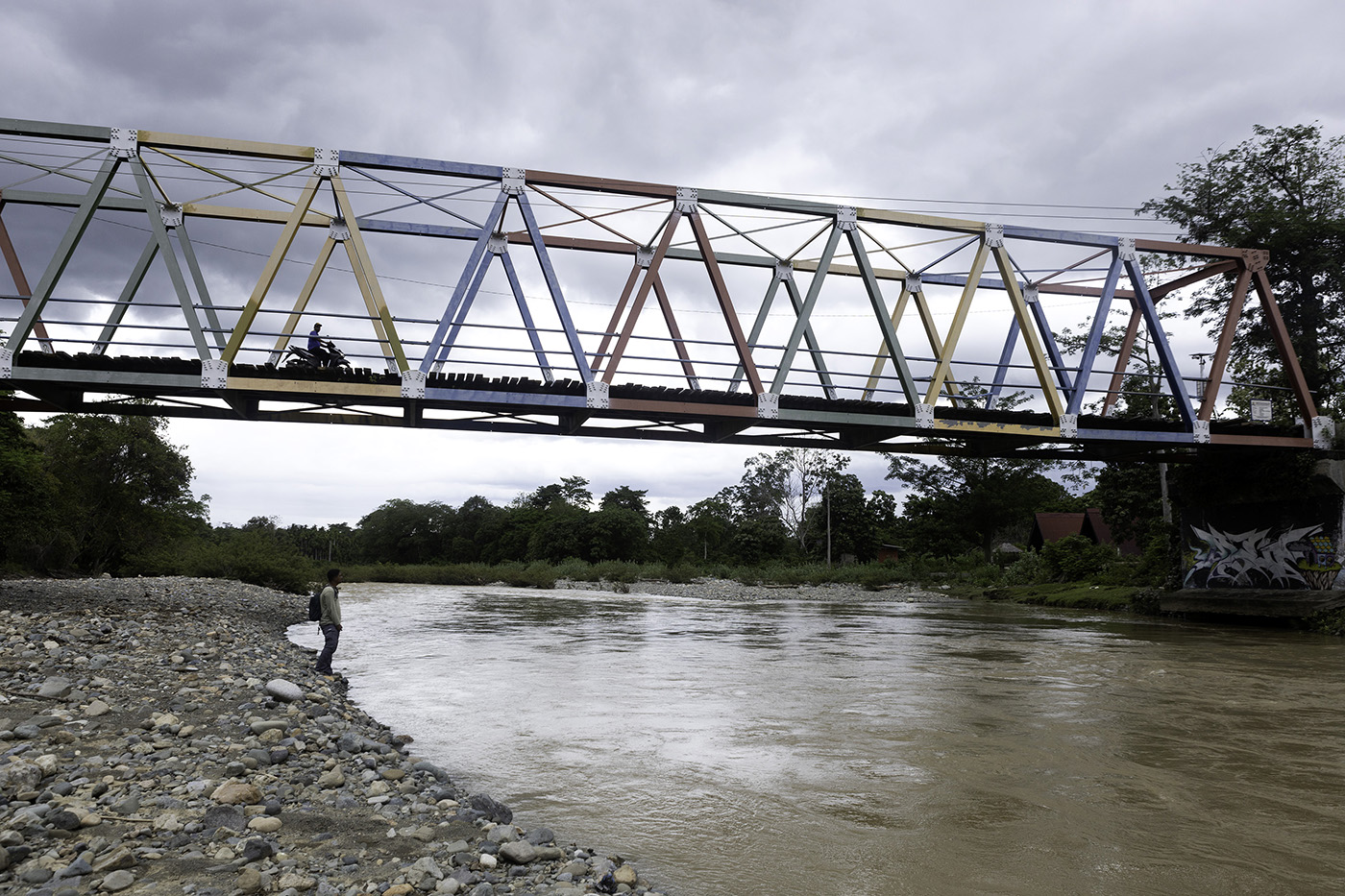
The socio-economic impact is already being felt in the tourism sector. The village of Jalin, famous for its "Jembatan Warna-Warni" (Colorful Bridge) and its crystal-clear river tourism, has seen a total collapse in visitor numbers. Historically, the river water would clear up on Fridays when miners traditionally paused operations. However, residents report that the water is now perpetually murky, seven days a week, indicating that mining activities have become a 24-hour industrial endeavor.

A Sanctuary Under Siege: The Threat to the Sumatran Orangutan
The Jantho Pine Forest Nature Reserve is not merely a collection of trees; it is a globally significant biodiversity hotspot. Established as a conservation area in 1984 and later refined in 2015 to cover 15,356 hectares, Jantho was specifically selected in 2011 as a primary site for the reintroduction of the Sumatran orangutan (Pongo abelii).
The site was chosen because its lowland forest habitat offers an abundant supply of natural food and, crucially, lacked a pre-existing wild orangutan population. This made it the ideal "soft release" environment for individuals rescued from the illegal wildlife trade or domestic captivity. Over the last decade, Jantho has become a success story for primate conservation, with several reintroduced orangutans successfully breeding in the wild.
The current mining activities threaten to undo fifteen years of conservation progress. The noise from heavy machinery, the destruction of canopy cover, and the presence of hundreds of illegal workers disrupt the delicate behavioral patterns of these primates. Furthermore, the Jantho reserve is home to other vulnerable species, including the siamang (Symphalangus syndactylus), the sun bear, the sambar deer, and various endemic bird species. The fragmentation of this habitat by mining roads and pits creates barriers to wildlife movement and increases the risk of human-wildlife conflict.
Community Resistance and the Demand for Law Enforcement
The local population of Jantho has taken a courageous stand against the illegal mining operations. The rejection of PETI is not the sentiment of a few individuals but a collective decision made through the traditional "Mukim" and "Gampong" (village) governance structures. Darwin, the Imum Mukim of Jantho, confirmed that 13 villages within the Jantho district have officially reached a consensus to ban all illegal mining activities in the upper reaches of the Krueng Aceh.
"We have held deliberations with the Keuchiks (village heads), traditional leaders, and youth groups. The result is a unanimous rejection. we do not want to be complicit in the destruction of our own environment," Darwin said. The community’s resistance is rooted in practical survival; they have observed the decline in fish stocks and the loss of clean water access for those who do not have private wells.
Since April 2026, the community has been proactive in reporting these crimes to the Aceh Besar District Police and the Aceh Natural Resources Conservation Agency (BKSDA). In an unusual display of community-led enforcement, local residents accompanied officials from BKSDA and the Ministry of Environment and Forestry’s Law Enforcement Unit (Gakkum) on a field inspection to the mining sites. During these visits, they discovered established mining camps and heavy machinery, providing undeniable proof of the ongoing crimes.
Official Response and Enforcement Challenges
Ujang Wisnu Barata, the Head of BKSDA Aceh, acknowledged the severity of the situation, confirming that at least 14 hectares of the Nature Reserve have been compromised across three primary clusters. In response to the growing public outcry, a joint task force consisting of BKSDA, the Gakkum Forestry Unit, and the Aceh Besar Police conducted an operation from June 16 to June 20, 2026.
However, the results of the operation highlight the challenges of policing such remote areas. While the team successfully dismantled worker camps and confiscated various mining tools, they did not find any excavators actively operating during the raid. This suggests that the mining networks may have sophisticated intelligence systems, allowing them to move or hide heavy equipment before authorities arrive.

"We have installed warning signs and destroyed the infrastructure used by the miners. Moving forward, we will intensify routine patrols and strengthen coordination with local government and law enforcement to ensure these activities do not resume," Barata stated.
Analysis of Implications and the Path Forward
The situation in Jantho is a microcosm of a larger crisis facing Indonesia’s protected forests. The transition of illegal mining from a poverty-driven activity to a capital-intensive industry indicates that high-level actors are likely financing these operations. The logistical feat of moving excavators through 12 kilometers of mountainous forest requires significant capital and planning.
If the government fails to halt the encroachment in Jantho, the ecological consequences will be irreversible. The loss of the Jantho Nature Reserve as a viable orangutan reintroduction site would be a major blow to international conservation efforts. More critically, the permanent degradation of the Krueng Aceh watershed would force the government to spend billions of rupiah on water purification and flood mitigation for Banda Aceh and its surroundings in the coming decades.
To effectively protect Jantho, experts argue that law enforcement must move beyond dismantling camps and focus on the "heads" of the operation—those who provide the heavy machinery and the capital. Furthermore, there is a pressing need for the provincial government of Aceh to address the "Tangse route" in Pidie, which serves as the logistical artery for the destruction of Jantho. Without a coordinated, cross-regency crackdown on the supply chains of illegal mining, the Jantho Pine Forest Nature Reserve remains a sanctuary on the brink of extinction. The commitment of the 13 villages in Jantho provides a foundation for community-based forest management, but they cannot stand alone against the industrial forces currently stripping the land of its gold and its future.