Nila Kartika Wati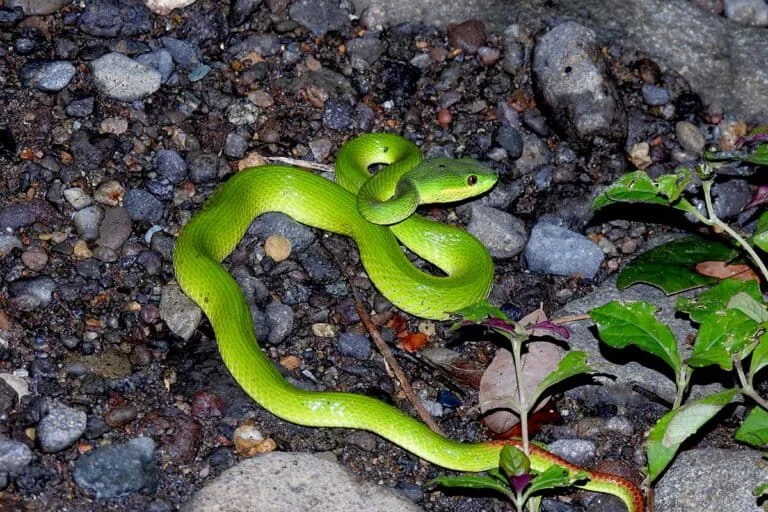
The dense foliage and rugged terrain of the Tatar Sepang conservation area in West Sumbawa, West Nusa Tenggara, recently became the stage for a significant herpetological encounter that underscores the rich, yet fragile, biodiversity of the Indonesian archipelago. Annisa Ramdani, a 29-year-old biodiversity surveyor and Master of Biology graduate from the Universitas Nasional (UNAS), successfully documented the presence of the Trimeresurus insularis, commonly known as the White-lipped Island Pit Viper. This sighting, while not the first for the region, provides critical contemporary data on the species’ health, habitat preferences, and the ongoing stability of the local ecosystem in one of Indonesia’s most ecologically diverse provinces.
The documentation occurred during a specialized herpetofauna survey aimed at mapping the reptilian and amphibian populations within the Tatar Sepang forest. This region is characterized by its seasonal tropical forests and proximity to river systems, which provide the high humidity levels required by many pit viper species. The successful identification of the Trimeresurus insularis in its natural habitat serves as a testament to the importance of field-based research in validating the success of conservation areas in maintaining apex and mid-level predators.
A Chronology of the Night Encounter
The discovery took place under the cover of darkness, at approximately 21:00 local time, shortly after a tropical downpour had subsided. Such conditions are optimal for herpetological surveys, as many nocturnal reptiles emerge to hunt when the air is humid and the ground is damp. Annisa Ramdani and her team were navigating a section of the forest near a calm, slow-moving river, a classic microhabitat for the Trimeresurus genus.
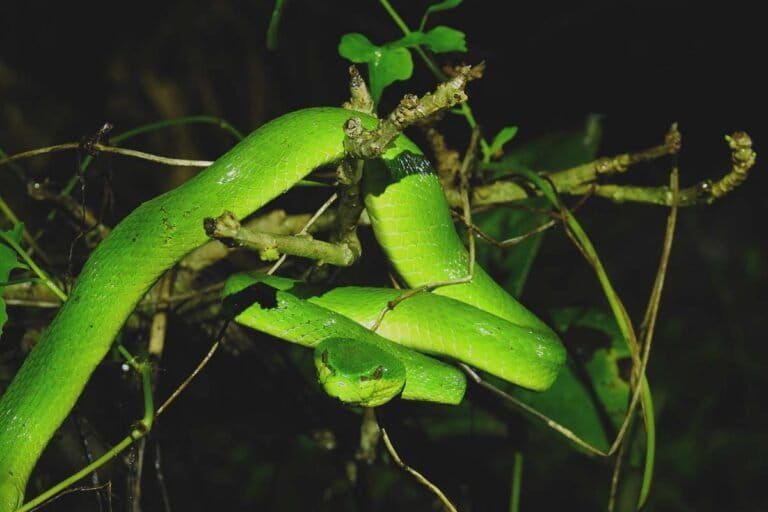
The first individual was spotted perched atop a stone, roughly 100 to 200 meters from the riverbank. Despite its bright coloration, the snake was initially difficult to detect. Annisa noted that the snake’s ability to remain perfectly still, combined with the way light filtered through the canopy, allowed it to blend seamlessly into the mossy textures of the rocks and the surrounding shadows. It was only through the keen eyes of the trained researchers that the viper’s presence was confirmed.
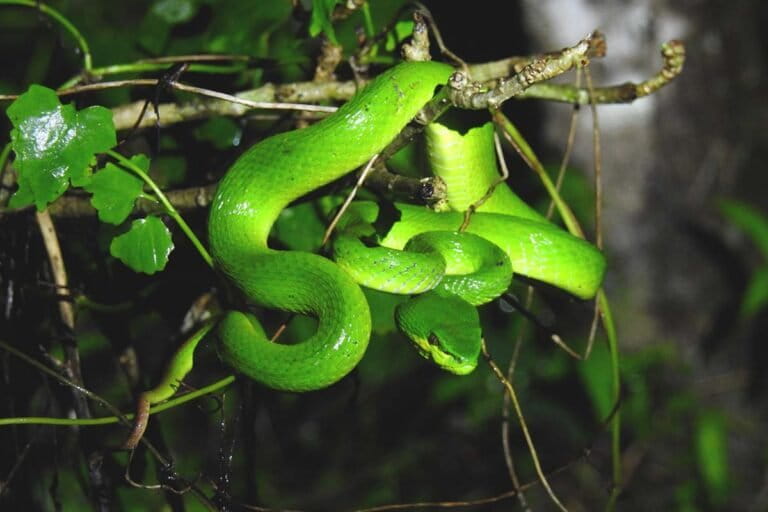
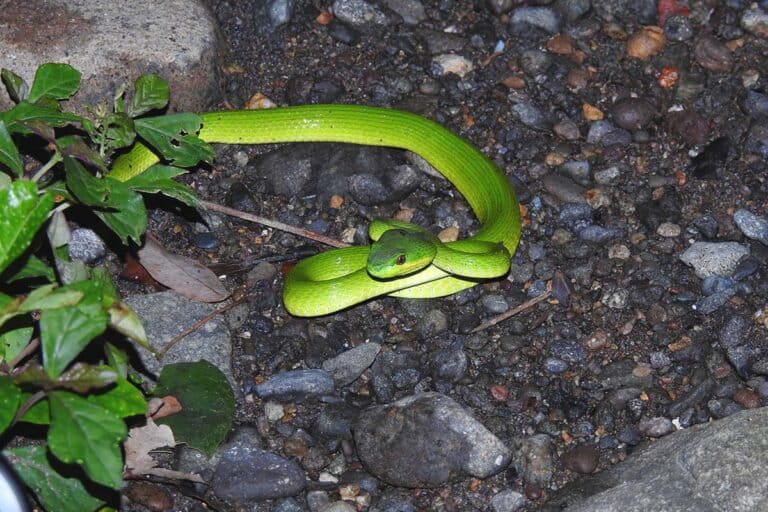
Thirty minutes later, the team encountered a second specimen of the same species along the river’s edge. This proximity of two individuals within a short timeframe and distance suggests a healthy population density in the Tatar Sepang area. While Annisa is an experienced surveyor, she admitted to the inherent tension that comes with documenting venomous species in the wild. To ensure safety, she maintained a respectful distance to capture high-quality photographs, while her colleagues, trained in professional snake handling and safety protocols, monitored the perimeter to ensure the documentation process did not disturb the animal or put the team at risk.
The Biological Profile of the White-lipped Island Pit Viper
The Trimeresurus insularis is a member of the Viperidae family and is part of a complex group of pit vipers found throughout Southeast Asia. What distinguishes this species from its relatives is its specific geographic range and its striking morphological variations. Physically, the individuals found in West Sumbawa displayed the classic vivid green coloration that defines many populations in the Lesser Sunda Islands.
A defining feature of the pit viper is the presence of heat-sensing loreal pits located between the eyes and the nostrils. These organs allow the snake to "see" heat signatures, enabling it to hunt warm-blooded prey such as small mammals and birds even in total darkness. The Trimeresurus insularis also possesses a prehensile tail, often reddish or orange at the tip, which it uses to anchor itself to branches while waiting in ambush for prey.
The name insularis is derived from the Latin word for "island," reflecting the species’ distribution across the fragmented geography of eastern Indonesia. Unlike many other Indonesian pit vipers that are confined to the larger landmasses of Sumatra or Kalimantan, the Trimeresurus insularis has adapted specifically to the unique climates of the islands east of the Wallace Line, including East Java, Bali, Lombok, Sumbawa, Komodo, Flores, and as far east as Alor and Wetar.
The Mystery of Color Polymorphism
One of the most fascinating aspects of Trimeresurus insularis is its color polymorphism. While the green variety documented by Annisa Ramdani is the most common, this species is famous among biologists and reptile enthusiasts for its rare color phases. In certain isolated populations, such as those on Komodo Island, the snakes exhibit a stunning turquoise or bright blue hue. In other regions like Alor and Wetar, individuals have been found with a brilliant yellow coloration.
Maulana Hakul Dafa, a researcher and trainer at the Sioux Ular Indonesia Foundation (Yayasan Sioux Ular Indonesia), explains that these color variations are a subject of ongoing scientific inquiry. While camouflage is the primary driver of coloration in most reptiles—green being an obvious advantage in leafy canopies—the blue and yellow variations pose interesting evolutionary questions. Some theories suggest that these colors may be a form of aposematism (warning coloration) or perhaps a result of genetic drift in isolated island populations where specific predators are absent or possess different visual spectrums.
Regardless of the evolutionary cause, these variations make the species a high-value target for the illegal wildlife trade. The blue "Komodo" variant, in particular, is highly sought after by international collectors, highlighting the need for strict protection of the habitats where these unique color phases occur.
Ecological Significance and the Food Web
In the ecosystem of West Sumbawa, the Trimeresurus insularis occupies a vital niche as a mid-level predator. By preying on rodents, small birds, frogs, and lizards, the viper helps regulate the populations of these species, preventing overgrazing of vegetation or the spread of diseases often carried by rodents.
Conversely, the pit viper is also a source of food for higher-order predators. In the wild, they are preyed upon by larger snakes like the King Cobra (Ophiophagus hannah), monitor lizards (Varanus spp.), and birds of prey such as the Crested Serpent Eagle. "Their position in the middle of the food chain means that the presence of these vipers is a strong indicator of a balanced and functioning ecosystem," Dafa noted. A decline in the viper population would likely lead to an explosion in the rodent population, which could, in turn, negatively impact the forest’s ability to regenerate.
Venom Toxicity and Public Safety
Public perception of snakes in Indonesia is often governed by fear, yet researchers emphasize the need for a nuanced understanding of venomous species. The Trimeresurus insularis possesses a hemotoxic venom, which primarily affects the circulatory system, causing tissue damage, swelling, and pain.
However, Maulana Hakul Dafa points out that the fatality rate from Trimeresurus insularis bites is significantly lower than that of the King Cobra or the Malayan Krait (Bungarus candidus). "The fatality rate is relatively low, often cited as being below 10 percent with proper medical intervention," Dafa explained. "However, ‘low fatality’ does not mean ‘harmless.’ A bite can still cause severe permanent damage or secondary infections if not treated by medical professionals using the correct anti-venom protocols."
In Indonesia, the challenge remains that specific anti-venom for many Trimeresurus species is not always readily available in remote rural clinics. This makes the documentation and mapping of these species even more critical, as it allows health officials to better understand which regions are at risk for specific types of envenomation.
Conservation Challenges and the Threat of Habitat Loss
During her time in the Tatar Sepang conservation area, Annisa Ramdani observed that the forest cover remained relatively intact. The presence of the Trimeresurus insularis is a positive sign, as the species relies on humid, undisturbed natural vegetation to thrive. However, the shadow of habitat loss looms over the region.
"If the forest is lost or its function is changed, the population of these vipers will almost certainly decline," Annisa warned. The primary threats in West Sumbawa include illegal logging, the conversion of forest land for agriculture, and the potential for mining activities. When forests are fragmented, the microclimates that these snakes depend on—specifically the cool, damp areas near rivers—are the first to disappear.
Furthermore, the team encountered evidence of hunting during their survey. While it was unclear whether the hunters were targeting reptiles or other wildlife, any human encroachment for hunting purposes disturbs the delicate balance of the conservation area. The poaching of snakes for the exotic pet trade remains a persistent concern, especially for species with such high aesthetic appeal as the Island Pit Viper.
Implications for Future Research and Policy
The successful documentation by Annisa Ramdani’s team is more than just a series of photographs; it is a data point that contributes to the broader understanding of Indonesian herpetology. The data collected—including species type, number of individuals, exact coordinates, and weather conditions—will be integrated into biodiversity databases used by both academic researchers and government bodies responsible for forest management.
To ensure the long-term survival of the Trimeresurus insularis and the myriad of other species in West Sumbawa, experts suggest several key policy directions:
- Enhanced Monitoring: Regular biodiversity surveys, like the one conducted by Annisa, must be funded and supported to track population trends over time.
- Community Education: Engaging local communities in West Sumbawa to understand the ecological role of snakes can reduce "kill-on-sight" incidents and foster a sense of pride in local biodiversity.
- Habitat Protection: Strengthening the legal protections for areas like Tatar Sepang and ensuring that "conservation" status is backed by active patrolling and enforcement against illegal land conversion.
- Wildlife Trade Regulation: Stricter oversight of the export of Indonesian reptiles is necessary to ensure that wild populations are not being depleted to satisfy the global pet market.
The encounter in the rainy woods of West Sumbawa serves as a reminder that Indonesia’s wilderness still holds many wonders. As researchers like Annisa Ramdani continue to shine a light on these elusive creatures, the responsibility falls on the collective to ensure that the vibrant green of the Trimeresurus insularis continues to be a part of the Indonesian landscape for generations to come.