Eko Sulistyo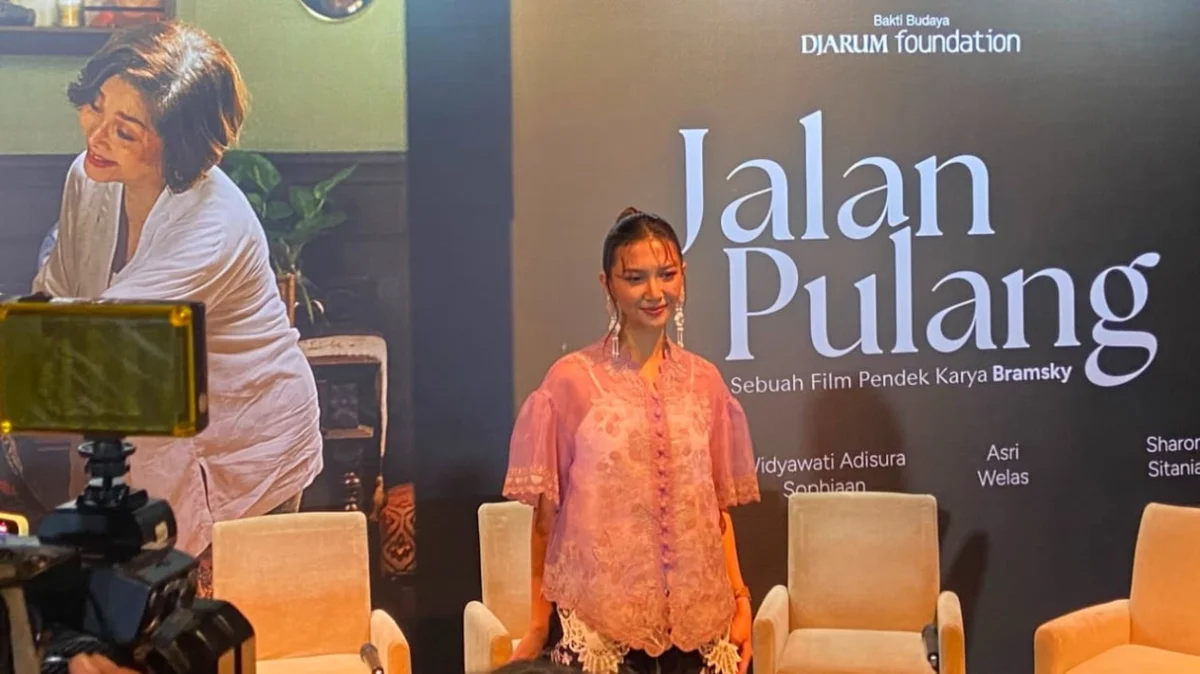
A Narrative of Heritage and Modernity
The plot of "Jalan Pulang" centers on Dara, portrayed by the talented Sheila Dara, a high-achieving young creative director tasked with the high-stakes rebranding of a legendary kebaya fashion house owned by the venerable Madame Yati. Dara represents the modern Indonesian professional—fast-paced, results-oriented, and initially disconnected from the traditional nuances of the craft she is meant to market. When her contemporary, data-driven ideas are met with resistance and ultimately rejected by the house, Dara finds herself at a professional and personal crossroads. This conflict serves as the catalyst for her journey back to her childhood home, where the narrative shifts from the cold world of corporate branding to the warmth of domestic history.
In her mother’s house, Dara discovers a collection of old kebayas that were destined to be given away. As she sifts through the intricate lace and aged fabrics, the film utilizes a non-linear storytelling approach to reveal how each garment is tied to a specific milestone in her family’s life. Through these textiles, Dara reconnects with the stories of her mother and grandmother, realizing that a kebaya is not merely a piece of clothing to be updated for modern consumption, but a living record of survival, love, and cultural continuity. This realization fundamentally alters her approach to her work, leading her to understand that true innovation in cultural branding requires a deep respect for the "soul" of the heritage.
The Significance of National Kebaya Day
The timing of the film’s release is strategically aligned with National Kebaya Day, an observance established to honor the kebaya as a national costume that embodies the spirit of Indonesian women. While the kebaya has been worn for centuries, its formal recognition through Presidential Decree (Keppres) No. 19 of 2024 solidified its status as a primary cultural asset. The decree designates July 24 as National Kebaya Day, commemorating the 1964 National Women’s Congress where President Sukarno declared the kebaya as the national dress of Indonesia.
Bakti Budaya Djarum Foundation has been at the forefront of this movement, recognizing that legal recognition is only the first step. To ensure the kebaya remains relevant to younger generations, the foundation has shifted its strategy toward digital storytelling. "Jalan Pulang" is the third installment in a series of short films produced by the foundation, following the success of previous projects that aimed to "socialize" the kebaya in urban and contemporary settings. By utilizing high production values and casting well-known actors like Sheila Dara, Widyawati, and Asri Welas, the foundation ensures that the message reaches a broad demographic, from Gen Z fashion enthusiasts to the older generation who lived through the eras depicted in the film.
Artistic Vision and Directorial Approach
Directed by Bramsky, "Jalan Pulang" eschews the traditional documentary format in favor of an emotional, character-driven drama. Bramsky’s vision was to move beyond the "how-to" of wearing a kebaya and instead focus on the "why." In his directorial statement, Bramsky emphasized that the film aims to make the audience feel the weight of the fabric’s history. "I wanted to invite the audience to see the kebaya not as an object worn only for special occasions, but as a witness to life’s journey," Bramsky noted. He highlighted that behind every fold and stitch lies a memory of a mother, a home, and an identity that is often only appreciated when one looks back.
The inclusion of Widyawati, a legendary figure in Indonesian cinema, adds a layer of authenticity and gravitas to the production. Her presence represents the "roots" of the story, providing a counterpoint to Sheila Dara’s "branches." The chemistry between the cast members helps illustrate the film’s central theme: that cultural heritage is not a static museum piece but a baton passed from one hand to another. The cinematography further enhances this, using warm tones for home-based scenes to evoke nostalgia, contrasted with the sharp, cool aesthetics of Dara’s corporate environment.
The Broader Context: Kebaya and Global Recognition
The release of "Jalan Pulang" also occurs against the backdrop of Indonesia’s efforts to gain international recognition for the kebaya. In 2023, Indonesia joined a multi-national nomination with Malaysia, Singapore, Thailand, and Brunei to propose the kebaya for the UNESCO Representative List of the Intangible Cultural Heritage of Humanity. This joint effort underscores the kebaya’s significance as a shared cultural element across Southeast Asia, while also highlighting the unique regional variations, such as the Kebaya Labuh, Kebaya Kerancang, and the iconic Kebaya Kutubaru.
Supporting data from the Ministry of Education, Culture, Research, and Technology suggests that interest in traditional textiles has seen a resurgence among Indonesian youth. Market analysis indicates a 25% increase in the purchase of locally made kebayas and batik-related products among consumers aged 18-30 over the last two years. This trend, often referred to as the "Berkain" movement (the practice of wearing traditional cloths in daily life), has been fueled by social media influencers and cultural campaigns similar to those produced by the Bakti Budaya Djarum Foundation. "Jalan Pulang" capitalizes on this momentum, providing a narrative framework for why this trend matters beyond mere aesthetics.
Economic and Social Implications
The preservation of the kebaya has significant economic implications for Indonesia’s creative economy. The industry is largely driven by Micro, Small, and Medium Enterprises (MSMEs), ranging from traditional lace makers in Tasikmalaya to high-end designers in Jakarta. By fostering a cultural environment where the kebaya is valued, the Bakti Budaya Djarum Foundation is indirectly supporting thousands of artisans whose livelihoods depend on the continued demand for traditional craftsmanship.
Renitasari Adrian, Program Director of Bakti Budaya Djarum Foundation, expressed her hope that the film would serve as a catalyst for deeper cultural engagement. She noted that understanding the "philosophy" of the kebaya is essential for its survival. "We hope this film helps the community understand the deeper meaning of our cultural heritage. It is not just about the clothes; it is about the values of resilience, grace, and family that these clothes represent," she stated. The foundation’s long-term goal is to integrate these cultural narratives into the mainstream consciousness, ensuring that the kebaya is seen as a versatile garment suitable for both the boardroom and the living room.
Analyzing the Generational Shift
The conflict depicted in "Jalan Pulang"—between Dara’s modern marketing strategies and Madame Yati’s traditionalist views—reflects a real-world tension in the Indonesian fashion industry. As the country moves toward a more globalized economy, there is a constant struggle to balance international trends with local wisdom. The film suggests that the solution is not to choose one over the other, but to find a "way home" (Jalan Pulang) where modern techniques are used to amplify, rather than replace, traditional stories.
From a sociological perspective, the film addresses the "identity crisis" often felt by urban youth in rapidly developing nations. By framing the kebaya as a link to one’s "roots," the story provides a sense of grounding. In an era of fast fashion and disposable trends, "Jalan Pulang" advocates for "slow culture," where the value of an item is measured by the years it has survived and the stories it tells.
Future Outlook for Cultural Storytelling
As "Jalan Pulang" begins its screening cycle across various digital platforms and cultural hubs, it sets a high bar for cultural advocacy. The use of cinema as a tool for preservation is proving to be more effective than traditional lectures or exhibitions in reaching a digital-native audience. The success of this film is likely to inspire other foundations and government bodies to invest in narrative-driven content to promote Indonesian heritage.
In conclusion, "Jalan Pulang" is more than just a short film released for a national holiday; it is a strategic intervention in the cultural discourse of Indonesia. By humanizing the kebaya and placing it at the center of a relatable family drama, the Bakti Budaya Djarum Foundation has ensured that the conversation surrounding National Kebaya Day remains vibrant, emotional, and forward-looking. As Dara finds her way back to her roots in the film, the audience is likewise invited to rediscover their own connections to the traditions that shape the Indonesian identity. Through the lens of Bramsky and the performances of its stellar cast, the kebaya is reaffirmed as a timeless symbol of the Indonesian spirit—a garment that, much like the nation itself, is woven from the threads of the past but tailored for the future.