Tyo Susilo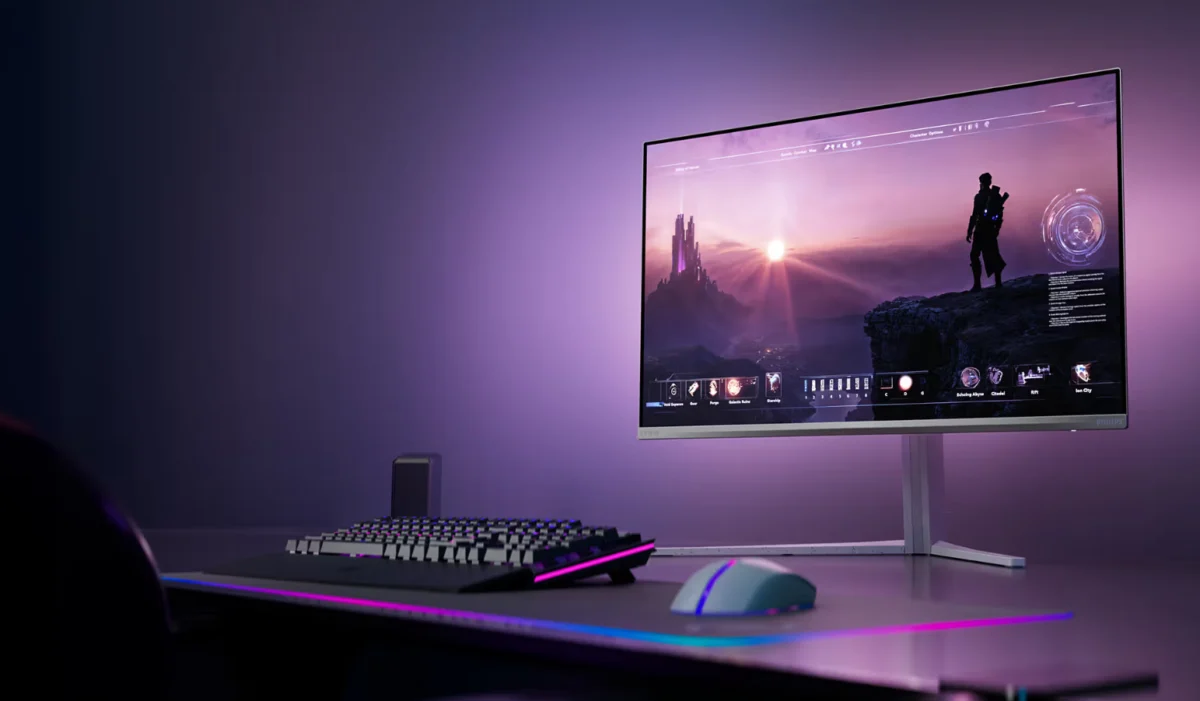
The gaming monitor market is witnessing a significant evolution as display technology matures, moving beyond purely extreme specifications to offer a more balanced and accessible premium experience. Philips, through its Evnia gaming brand, has officially launched the 32M2N6901A, a 32-inch monitor that embodies this shift. This new offering features a 4K QD-OLED panel, a 165Hz refresh rate, and innovative AI Ambiglow technology, all positioned at a price point intended to appeal to a broader segment of high-fidelity gamers. Priced at £649.99 (approximately $868 USD), the Evnia 32M2N6901A is slated for availability starting in August, signaling Philips’ strategic move to capture a growing demand for high-quality visuals without the stratospheric cost often associated with cutting-edge OLED displays.
A New Paradigm in Gaming Displays: The Evnia 32M2N6901A
For years, OLED technology in gaming monitors has been synonymous with the bleeding edge of performance, often featuring ultra-high refresh rates of 240Hz and above. While these specifications deliver unparalleled smoothness for competitive esports titles, they have historically come with a substantial price tag, limiting their adoption to a niche market of professional gamers and affluent enthusiasts. The Philips Evnia 32M2N6901A appears to represent a deliberate departure from this trend, prioritizing a compelling combination of visual fidelity and performance that aligns better with the demands of modern AAA gaming.
The core of the 32M2N6901A is its 32-inch QD-OLED panel. This technology is renowned for its ability to produce perfect blacks, vibrant colors, and exceptional contrast ratios, thanks to its self-emissive pixel structure. The 4K resolution (3840 x 2160) ensures razor-sharp detail, making it ideal for visually rich titles that benefit from high pixel density. While a 165Hz refresh rate might not reach the dizzying heights of some other premium OLED monitors, it represents a significant upgrade over standard gaming displays and offers a fluid experience for most gaming scenarios. Crucially, this refresh rate, when combined with the inherent speed of OLED, results in a rapid 0.03ms GtG (Gray-to-Gray) response time. This near-instantaneous pixel transition virtually eliminates motion blur and ghosting, a critical factor for maintaining clarity and immersion in fast-paced gameplay.
Strategic Positioning: Performance Meets Value
Philips’ decision to offer a 4K QD-OLED panel with a 165Hz refresh rate at this price point suggests a calculated market strategy. The company is likely acknowledging that for the majority of gamers, especially those playing graphically demanding titles, the bottleneck for achieving extremely high frame rates at 4K resolution lies with the PC hardware itself. A 165Hz refresh rate, therefore, strikes a pragmatic balance, providing a substantial improvement in motion clarity over 60Hz or 120Hz displays, while remaining achievable for a wider range of high-end gaming rigs.
The Evnia 32M2N6901A also carries the DisplayHDR True Black 400 certification. This standard signifies that the monitor can achieve a minimum peak brightness of 400 nits for HDR content while maintaining deep blacks, ensuring a more impactful and dynamic visual experience. For gamers who immerse themselves in titles with striking visual effects, realistic lighting, and atmospheric environments, this HDR capability is a significant draw. The QD-OLED technology inherently excels in delivering the perfect blacks and wide color gamuts required for a truly compelling HDR presentation, further enhancing the visual appeal of the monitor.
Beyond the Panel: Immersive Features and Connectivity
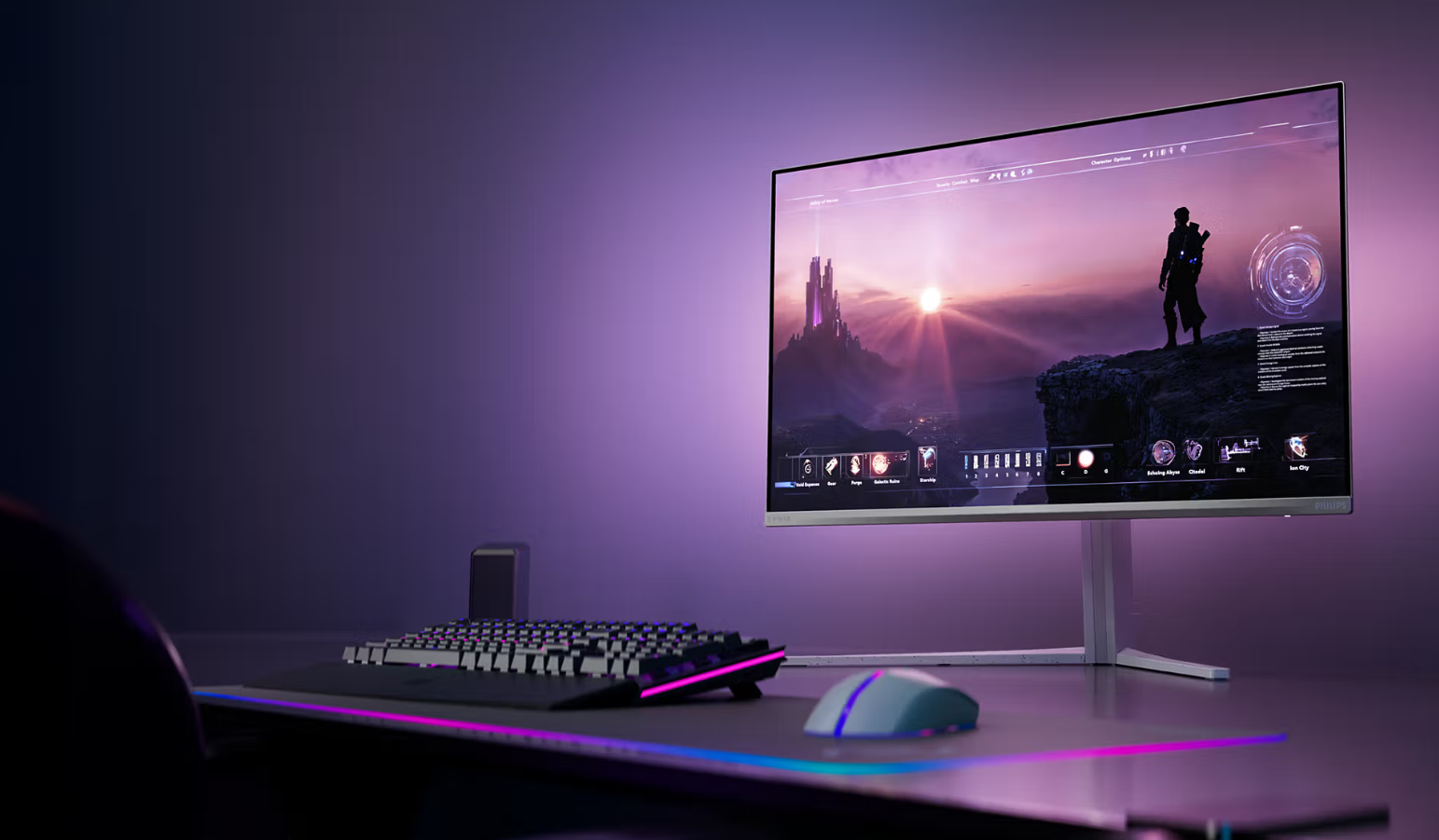
Philips has not skimped on features that enhance the overall gaming and multimedia experience. A standout inclusion is the AI Ambiglow technology. This proprietary system dynamically adjusts the RGB lighting at the rear of the monitor to match the dominant colors on the screen. The intention is to extend the visual experience beyond the confines of the display, creating a more immersive environment that can reduce eye strain and draw the user deeper into the game. This ambient lighting can be customized and controlled, allowing users to tailor the effect to their preferences.
Connectivity is another area where the Evnia 32M2N6901A demonstrates its versatility. The monitor is equipped with two HDMI 2.1 ports, which are essential for modern gaming consoles like the PlayStation 5 and Xbox Series X, enabling 4K gaming at higher frame rates. A DisplayPort 1.4 port provides a high-bandwidth connection for PC users. Furthermore, the inclusion of a USB Type-C port with 90W Power Delivery is a significant convenience for laptop users, allowing them to connect their device and charge it simultaneously through a single cable. A built-in USB hub and KVM (Keyboard, Video, Mouse) switch further enhance the monitor’s utility, making it an efficient command center for users who juggle multiple devices, such as a gaming PC and a work laptop, eliminating the need for constant cable swapping.
The integrated 5W stereo speakers offer a convenient audio solution for users who may not have dedicated speakers or headphones readily available, though for the ultimate audio immersion, external solutions are generally recommended for a monitor of this caliber.
Market Context and Future Implications
The launch of the Philips Evnia 32M2N6901A arrives at a pivotal moment for the gaming monitor industry. The rapid advancements in OLED technology, coupled with the drive for greater market penetration, are leading manufacturers to explore pricing strategies that make these premium displays more attainable. This trend suggests a potential democratization of high-end visual experiences, moving them from the realm of ultra-enthusiasts to a more mainstream audience of serious gamers.
Historically, the adoption curve for new display technologies is often steep in terms of price. However, as manufacturing processes mature and economies of scale are achieved, prices tend to decrease, making advanced features accessible to a wider consumer base. The Evnia 32M2N6901A appears to be a prime example of this phenomenon. By strategically balancing a sought-after panel technology (QD-OLED) with a highly capable, yet not necessarily bleeding-edge, refresh rate (165Hz), Philips has managed to create a product that offers significant visual and performance benefits at a price that is more palatable than many previous 4K OLED gaming monitor offerings.
Industry analysts have noted a growing segment of gamers who prioritize visual fidelity and immersive experiences over solely chasing the highest possible frame rates. These gamers often play single-player, story-driven titles or visually stunning open-world games where the quality of graphics and the richness of the color palette are paramount. For this demographic, a 4K QD-OLED monitor like the 32M2N6901A, with its perfect blacks, vibrant colors, and excellent contrast, represents a far more compelling upgrade than a higher refresh rate IPS or VA panel. The inclusion of features like AI Ambiglow and robust connectivity further bolsters its appeal to users who seek a comprehensive and premium setup.

Broader Impact on the Gaming Ecosystem
The success of monitors like the Philips Evnia 32M2N6901A could have several implications for the broader gaming ecosystem. Firstly, it may accelerate the adoption of 4K gaming as a standard for PC and console gamers. As more visually impressive monitors become available at more accessible price points, the incentive for developers to optimize their games for higher resolutions and graphical fidelity will likely increase.
Secondly, it could influence the development of future graphics cards and gaming hardware. Manufacturers of GPUs might be encouraged to focus on delivering stronger performance at 4K, knowing that there is a growing market of displays capable of showcasing these capabilities. Similarly, console manufacturers might continue to prioritize 4K output in their future hardware iterations.
Finally, the trend towards balanced specifications in premium monitors could foster greater innovation across the board. Instead of a relentless pursuit of single, extreme metrics, manufacturers may be encouraged to develop more holistic approaches, integrating advanced display technologies with smart features, enhanced connectivity, and user-centric design to create products that offer genuine value and an exceptional user experience.
The Philips Evnia 32M2N6901A stands as a testament to this evolving market dynamic. It signifies that the future of high-end gaming monitors may not solely be defined by GHz and FPS numbers, but also by the breathtaking quality of the visuals they render and the immersive experiences they enable, all while striving for a more inclusive price point. As August approaches, gamers looking to elevate their visual experience will undoubtedly be scrutinizing this new offering from Philips, a monitor that promises to deliver a significant leap in visual fidelity without demanding an equally significant leap in expenditure.