Nila Kartika Wati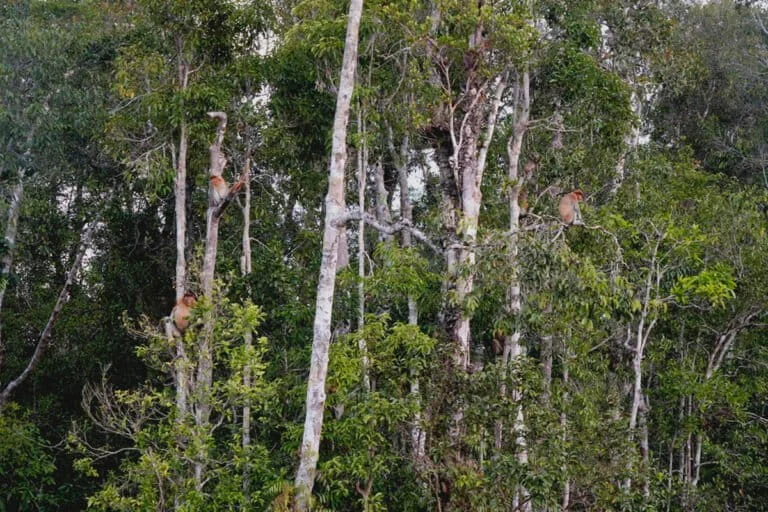
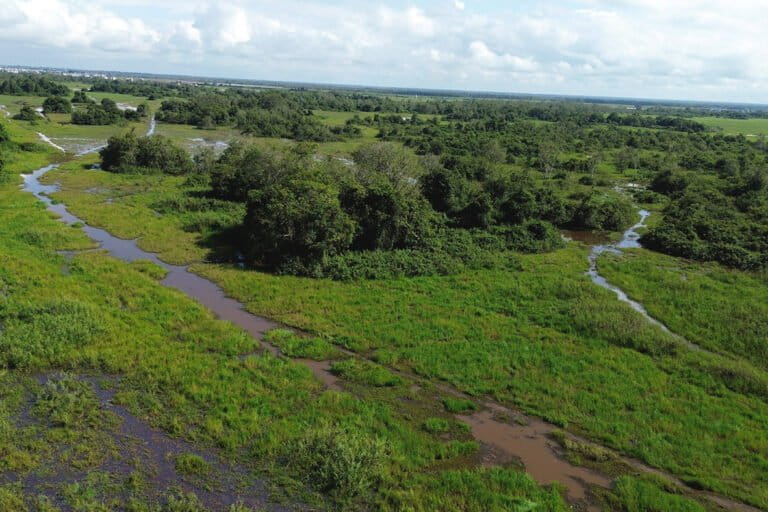
The quest to locate the elusive proboscis monkey, known locally as the bekantan (Nasalis larvatus), has become a barometer for the ecological health of South Kalimantan’s vast peat swamp ecosystems. For residents of Bararawa Village in the Paminggir district of Hulu Sungai Utara, the presence of this iconic primate is more than just a matter of biodiversity; it is an indicator of the stability of their ancestral wetlands. Recently, local fishers, including Rafa’i, have undertaken multiple expeditions into the Pulau Jingah area, hoping to document the charismatic, long-nosed primate. Despite the anecdotal evidence provided by fellow villagers—who frequently spot the monkeys amidst the dense canopy during their daily fishing routines—encounters remain frustratingly sporadic. This disconnect between the known presence of the species and the difficulty in sighting them highlights a growing concern among conservationists: the silent, creeping threat of habitat fragmentation.
A Fragmented Landscape and the Myth of Protection
The bekantan is a flagship species for the island of Borneo, possessing unique physiological adaptations that allow it to thrive in mangrove forests and riparian zones. However, their survival is inextricably linked to the integrity of their immediate surroundings. As of late August 2026, observations from the field confirm that while the monkeys still roam the Paminggir region, their distribution is becoming increasingly patchy.

The history of bekantan study in this region is well-documented. Academic research conducted in 2013 by experts from Lambung Mangkurat University (ULM)—specifically Mochamad Arief Soendjoto and his team—identified 55 individuals across 18 distinct sites in the neighboring Hulu Sungai Tengah district. That study underscored a critical reality: these primates do not exist in isolation. They are highly dependent on the "tata air" or water management of the peatlands. When these systems are disrupted by land conversion or illegal logging, the cascading effects are felt immediately by the fauna.
Miftahul Pauji, Chairman of the Indonesian Social Forestry Management Association (AP2SI) in South Kalimantan, posits that the survival of the bekantan in Paminggir is fundamentally a question of land-use policy. "When the swamp and its surrounding forests are degraded, it is not only the local community that loses its source of livelihood; the bekantan loses its habitat," Pauji stated during a recent briefing. The Paminggir peatlands serve as essential carbon sinks and water regulators, mitigating flood risks during the monsoon and maintaining hydration during the dry season.
The Role of Social Forestry in Conservation
To address the tension between economic development and habitat preservation, the Indonesian government has increasingly relied on the "Perhutanan Sosial" (Social Forestry) scheme. Under this program, local communities are granted legal access to manage forest areas, provided they adhere to sustainable practices. In villages like Bararawa and Sapala, this approach has gained traction. Bararawa currently oversees roughly 4,872 hectares, while Sapala manages approximately 3,237 hectares of forest.
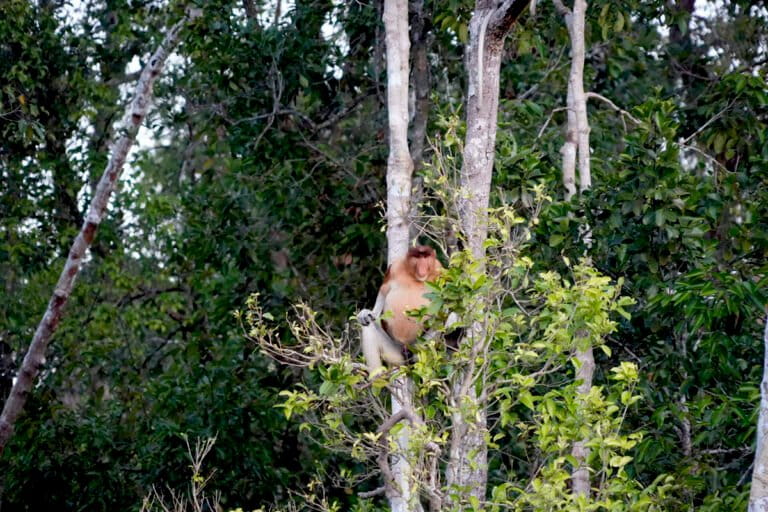
The logic behind this strategy is that local communities are the most effective stewards of their land when given the incentive to maintain the ecosystem. By integrating sustainable aquaculture, such as "wanamina" (silvofishery)—a practice that combines fish farming with mangrove preservation—communities can secure economic stability without destroying the very trees that provide food and shelter for the bekantan. This model, if scaled effectively, could bridge the gap between the needs of the rural population and the strict requirements of wildlife conservation.
Data Trends: A Measured Optimism
According to the 2025 census data provided by the Natural Resources Conservation Agency (BKSDA) of South Kalimantan, the provincial population of bekantan stands at 3,757 individuals. This figure represents a localized recovery in certain areas. Agus Ngurah Krisna, Head of the BKSDA, noted a 3.15 percent average annual increase in population over the last five years.
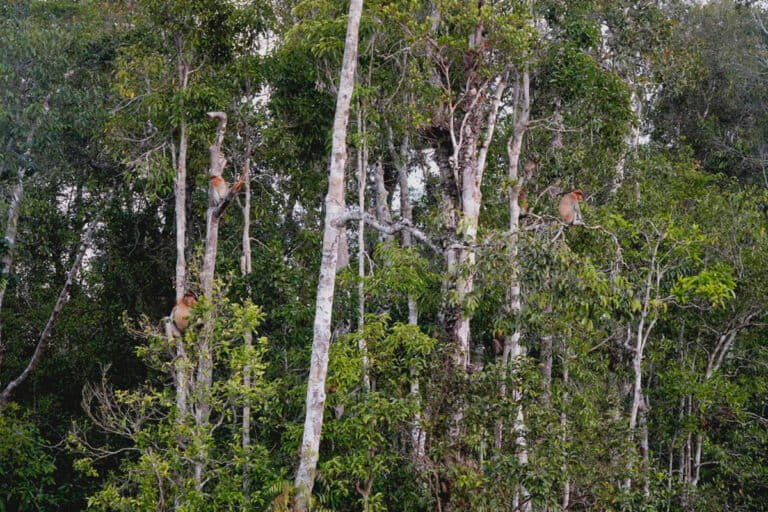
This growth is primarily concentrated in the regencies of Barito Kuala, Tanah Laut, and Tanah Bumbu. The success in these areas is largely attributed to the robust protection of formal conservation zones, which include six nature reserves, three wildlife sanctuaries, and three nature tourism parks. In these protected enclaves, 1,281 bekantan individuals find sanctuary. However, this success masks a deeper, more systemic problem: approximately two-thirds of the total population currently reside outside of officially protected zones. These "unprotected" populations are the most vulnerable, forced to navigate human-dominated landscapes, palm oil plantations, and agricultural clearings.
The Challenges of Living on the Edge
The biological nature of the bekantan makes them particularly susceptible to habitat loss. As an arboreal species, they are highly specialized to live in the canopy. Their diet consists almost exclusively of specific leaves, fruits, and flowers, which limits their ability to migrate if their home range is destroyed.
"The increase in population is a testament to the success of conservation efforts within protected zones," says Krisna. "However, the real challenge lies in the fragmentation of habitats outside these zones."
The BKSDA is currently advocating for a transition from passive observation to active "preservation pockets." This involves establishing corridors that allow for the movement of primate groups between isolated patches of forest. Without these bridges, populations become genetically isolated, increasing the risk of inbreeding and long-term decline. Furthermore, the agency is prioritizing "habitat enrichment," which involves planting indigenous tree species that provide a high density of the nutrients required for the bekantan’s specialized diet.
Strategic Roadmap: 2026–2030
The BKSDA has laid out an ambitious roadmap for the next five years, aiming to map the entire distribution of the species across the province. The strategy is built on four pillars:
- Periodic Monitoring: Standardizing data collection across all 11 regencies to identify population trends in real-time.
- Community-Based Management: Expanding the Social Forestry initiative to ensure that communities living near primate habitats are active participants in anti-poaching and habitat restoration efforts.
- Legal Enforcement: Intensifying the crackdown on the illegal wildlife trade. Despite legal protections, the bekantan remains a target for the black market.
- Landscape Connectivity: Coordinating with local governments to create "preservation areas" that link fragmented patches of peat forest, ensuring the primates can roam freely without traversing high-risk agricultural zones.
Broader Implications: The Global Context
The fate of the bekantan in South Kalimantan is a microcosm of a larger global struggle to balance development with the survival of endemic species. As Indonesia positions itself as a global leader in forest conservation and climate action, the success of the bekantan program serves as a critical test.
If the government can successfully integrate social forestry with rigorous habitat protection, the bekantan may serve as a model for how a species can thrive in a working landscape. However, the current reality—where the majority of the population lives in a state of uncertainty outside protected borders—remains a sobering reminder of the fragility of the ecosystem.
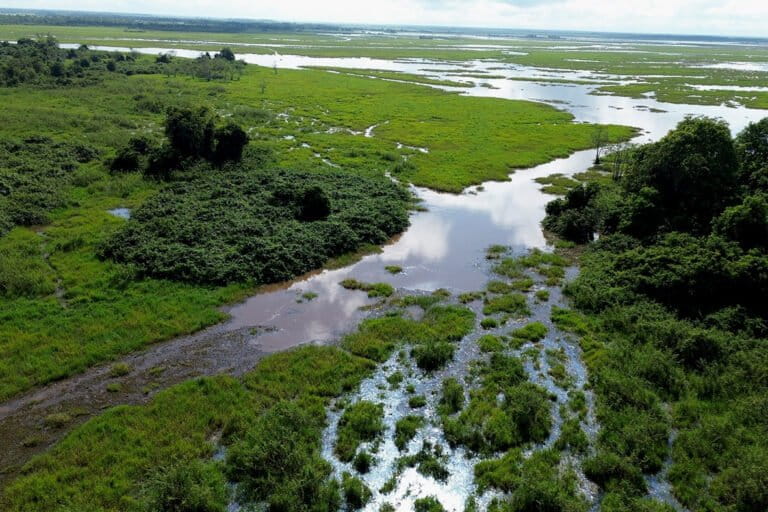
For people like Rafa’i in Bararawa, the search for the bekantan continues. Every trip into the swamp is a reminder that these animals are not just statistics in a BKSDA report, but neighbors who share a delicate, interconnected future. The effort to save the bekantan is not merely about preserving a unique primate; it is about protecting the water, the carbon, and the biodiversity that sustain the entire region. As the 2026 data collection phase concludes, the hope remains that the data will reflect a thriving, connected, and secure population, rather than a species retreating into the deepest, most inaccessible corners of its dwindling home.
The path forward requires more than just administrative willpower; it demands a fundamental shift in how human development interacts with the natural world. As long as the peat stays wet and the trees remain standing, there is a chance for the bekantan to persist. But the window of opportunity is narrowing, and the stakes for the ecological future of Kalimantan have never been higher. The coming decade will determine whether the proboscis monkey remains a vibrant symbol of Borneo’s wild heart or becomes a memory of a landscape lost to progress.