Lusiana Hamidun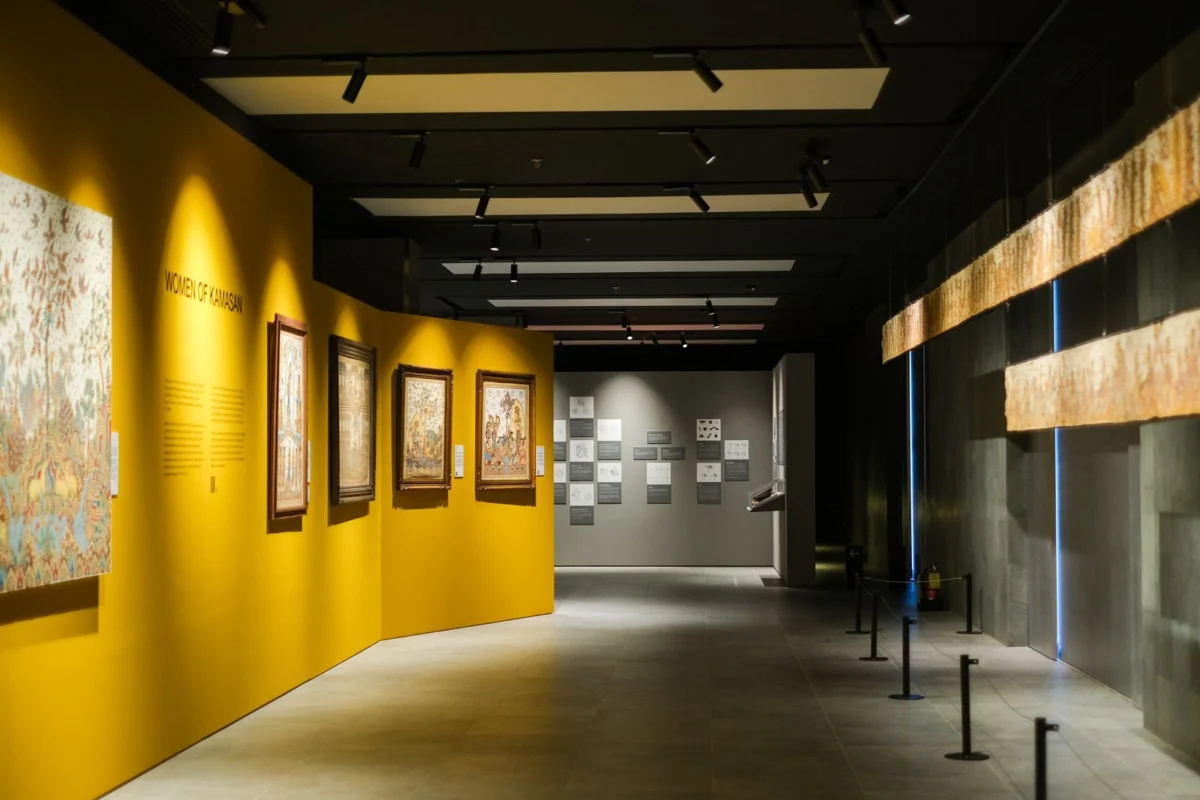
Bali stands as a global beacon of artistic preservation, where the spiritual and the aesthetic are inextricably linked. Among its most profound cultural treasures is Kamasan, a painting tradition that serves as both a historical record and a living repository of Balinese identity. Originating in the 16th century within the orbit of the Gelgel Kingdom—the predecessor to the Klungkung court—Kamasan has transcended its royal origins to become a vital symbol of Indonesia’s cultural heritage. Recognized as a National Intangible Cultural Heritage by the Indonesian government in 2015, this art form is currently the focal point of a landmark exhibition, Kamasan: The Noble Tradition of Balinese Painting, hosted at the Saka Museum in Ayana Bali.
This exhibition marks a significant milestone for the museum, serving as its inaugural temporary display. It offers an expansive retrospective, featuring over 30 works spanning from the late 19th century to the present day, meticulously curated to highlight the evolution of the Kamasan style through its ritualistic roots, cross-generational knowledge transfer, the often-overlooked contributions of female artists, and its modern-day manifestations in contemporary art.
The Genesis and Evolution of Kamasan Art
To understand the weight of the exhibition, one must first look at the history of the Kamasan village, situated in the Klungkung Regency of East Bali. The village functions as an artistic guild, where techniques have been passed down through familial lineages for centuries. The traditional Kamasan painting style is visually distinct; it is deeply rooted in the narratives of the Ramayana and the Mahabharata, alongside indigenous Balinese and Javanese folklore, cosmology, and myth.

The aesthetic framework is rigid yet expressive. Figures—whether deities, humans, or animals—are rendered with a specific visual language: elongated body shapes and almond-shaped eyes that draw direct inspiration from the iconography of wayang kulit (shadow puppetry). The use of line, gesture, and natural pigments creates a texture that is simultaneously archaic and timeless. By the 16th century, this style was not merely decorative; it was a form of spiritual communication, adorning the walls of sacred temples and the pavilions of the Klungkung palaces.
A Curatorial Vision: Bridging the Classic and the Contemporary
The exhibition, co-curated by Farah Wardani and Made Chandra, attempts to deconstruct the traditional boundaries between "classic" and "contemporary" art. By placing historical masterpieces alongside modern interpretations, the curators provide a narrative arc that treats Kamasan as a living, breathing tradition rather than a stagnant relic.
The contemporary section of the exhibition is particularly striking. It documents how a new generation of Balinese artists is reclaiming the Kamasan idiom to address modern anxieties. These works grapple with complex themes such as the preservation of identity in a globalized world, ecological degradation, the rapid advancement of technology, and the collective memory of the COVID-19 pandemic. By applying the visual grammar of their ancestors to these contemporary subjects, these artists demonstrate that Kamasan is a versatile medium, capable of evolving to meet the demands of the 21st century.
The Significance of Mangku Muriati
A pivotal segment of the exhibition is dedicated to the work and legacy of Mangku Muriati. Her presence in the exhibition is more than a mere showcase of talent; it is a commentary on gender roles within traditional Balinese art. As the first woman in her lineage to assume the dual role of a pemangku (temple priest) and a master painter of the Kamasan tradition, Muriati breaks the historical glass ceiling of this male-dominated craft.

Her international acclaim—having had her works featured in the Sharjah Biennial 2025 and held in prestigious collections such as the Australian Museum in Sydney and the Ibsen Museum in Oslo—validates the global relevance of Kamasan. Her career trajectory serves as an empirical case study for the sustainability of traditional arts. By balancing the rigors of religious leadership with the demands of high-level fine art, she embodies the intersection of the sacred and the creative, ensuring that the next generation of women in Bali sees a viable path for their own artistic expression.
Historical Chronology of the Tradition
- 16th Century: Emergence of the Kamasan painting style in the Gelgel Kingdom, Klungkung, Bali.
- 17th–19th Century: Refinement of the style under the patronage of the Klungkung royal courts.
- Late 19th Century: The period from which the oldest pieces in the current exhibition originate, showcasing the traditional use of natural pigments.
- 2015: Official designation of Kamasan painting as an Intangible Cultural Heritage by the Government of the Republic of Indonesia.
- August 28, 2026: Grand opening of Kamasan: The Noble Tradition of Balinese Painting at the Saka Museum.
- May 30, 2027: Scheduled closing date for the exhibition.
Implications for Cultural Preservation and Tourism
The decision by the Saka Museum to host such an intensive academic and aesthetic study of Kamasan has broader implications for both the local community and the global art market. In an era where cultural tourism is often accused of commodifying tradition, this exhibition provides a counter-narrative. By focusing on the "noble tradition" through a scholarly lens, the museum positions Balinese art within the discourse of global art history.
For the village of Kamasan itself, such institutional validation is critical. It provides a platform for local artisans to engage with the global art community, potentially influencing the economic viability of traditional painting as a career. The exhibition serves as a model for how museums in Indonesia can act as custodians of heritage while simultaneously fostering innovation.
Critical Analysis: A New Standard for Exhibition Design
Historically, many exhibitions featuring traditional Balinese art have adopted an ethnographic tone, presenting objects as artifacts of a "past" culture. The Saka Museum’s approach differs by prioritizing the continuity of the craft. By integrating the works of contemporary artists who use the traditional wayang style, the exhibition creates a dialogue between eras.

The inclusion of the pandemic as a thematic subject for traditional painters is perhaps the most radical aspect of the exhibition. It signals that Kamasan is not merely a method of recounting ancient epics but a language capable of processing current trauma and change. When a painter uses the ancient style to depict a masked figure or a lonely street during a lockdown, the viewer is forced to reconsider the boundaries of "tradition." This hybridization ensures that the art form remains relevant to younger generations, preventing it from becoming a museum piece in the literal, static sense.
Conclusion
Kamasan: The Noble Tradition of Balinese Painting is an essential visit for those seeking to understand the deep-seated cultural complexities of Bali. Through its curated blend of historical rigor and contemporary interpretation, the exhibition at the Saka Museum highlights the resilience of the Balinese creative spirit.
As the exhibition continues its run through May 2027, it stands as a testament to the fact that tradition is not about the preservation of ashes, but the passing of the flame. By honoring the masters of the past and the innovators of the present, the Saka Museum has succeeded in creating a space where the legacy of Klungkung continues to resonate. Whether one is an art historian, a tourist, or a member of the local community, the exhibition offers a profound reflection on the power of visual storytelling and the enduring, noble tradition that continues to define the artistic landscape of Indonesia.