Nila Kartika Wati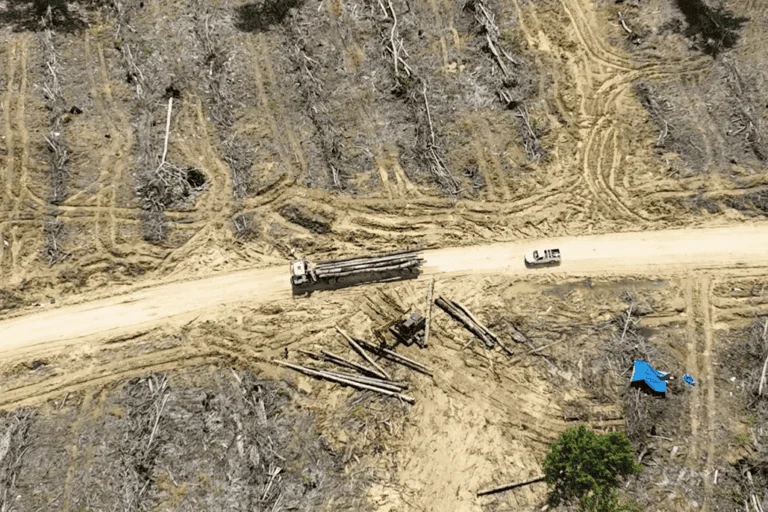
The Republic of Indonesia currently finds itself at a critical crossroads, grappling with a stark dichotomy between its active participation in global climate diplomacy and its domestic economic trajectory. While the Indonesian government has formally committed to the obligations outlined in the July 2025 Advisory Opinion issued by the International Court of Justice (ICJ) regarding state responsibilities toward the climate system, environmental advocacy groups argue that the state’s internal policy framework remains fundamentally incompatible with these international mandates. This friction highlights a broader global challenge: how nations, particularly those with resource-dependent economies, can pivot from traditional extractive models toward sustainable climate resilience without compromising economic development.
The ICJ’s Advisory Opinion, delivered on July 23, 2025, serves as a landmark interpretative guide for international law. It unequivocally asserts that states possess a legal obligation to protect the climate system from anthropogenic interference. Crucially, the court clarified that states may be held responsible not only for active environmental destruction but also for "omissions"—the failure to act—that lead to significant climate degradation. For Indonesia, a nation that has historically leaned on its vast natural resource reserves, this opinion provides a new, authoritative legal benchmark that is already beginning to influence domestic litigation and regulatory debates.
The Anatomy of a Policy Contradiction
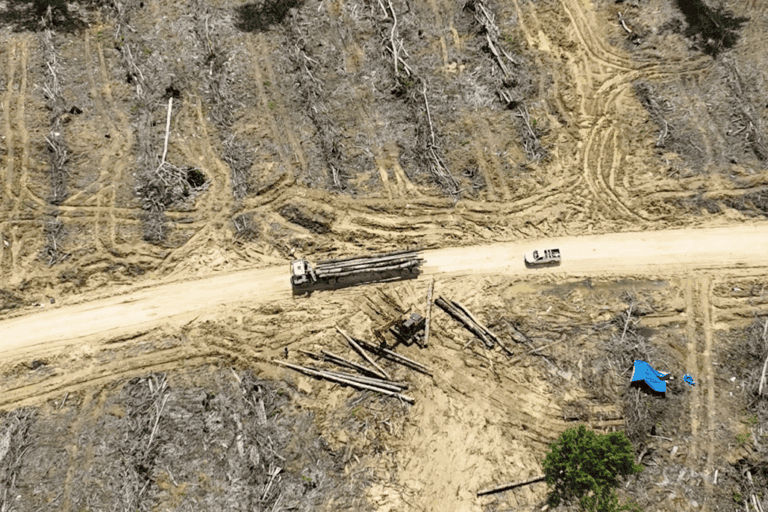
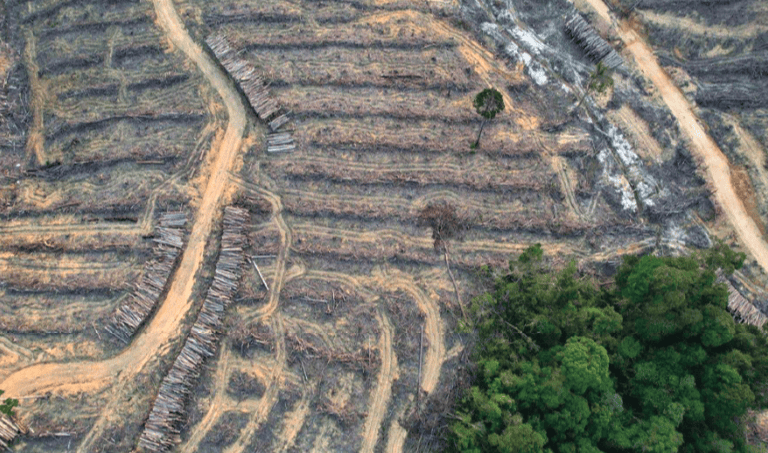
The central tension identified by the Indonesian Forum for the Environment (Walhi) lies in the state’s licensing regimes. According to recent data, approximately 26.5 million hectares of Indonesia’s 103-million-hectare forest cover are currently encumbered by extractive and plantation concessions. This includes 21.1 million hectares under Forest Utilization Business Permits (PBPH), 4.7 million hectares under Mining Business Permits (WIUP), and 717,000 hectares allocated for palm oil plantations (HGU).
From a climate perspective, these figures represent more than mere land-use statistics; they represent a significant carbon liability. Analysts estimate that the 23 million hectares currently under active development hold approximately 2.46 billion tons of carbon stocks. Should these forests be fully cleared, the resulting emissions are projected to reach 9.03 billion tons of carbon dioxide equivalent (CO2e). This trajectory poses a direct challenge to the government’s climate commitments under its Nationally Determined Contributions (NDCs), which rely heavily on the forestry sector (FOLU Net Sink 2030) to offset national emissions.
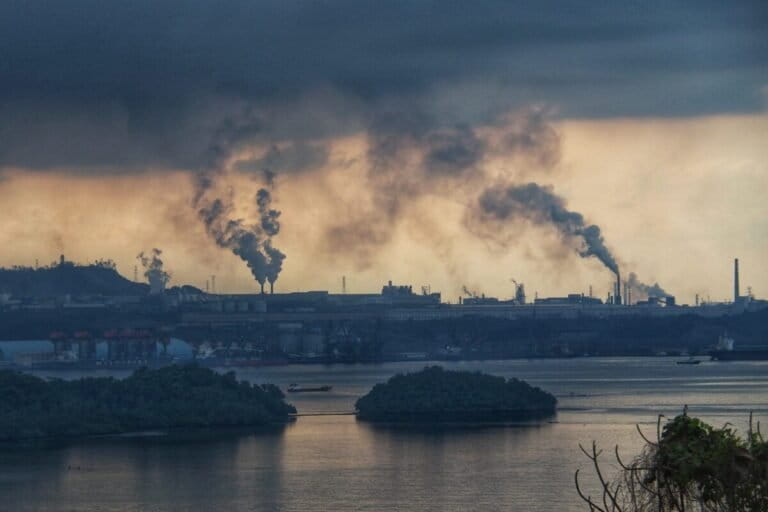
Furthermore, the reliance on coal remains a persistent hurdle. Data from the Ministry of Energy and Mineral Resources (KESDM) indicates that as of November 2025, there were 4,252 active mining operations in the country. While this represents a marginal reduction from the 4,634 permits recorded in 2024, the slow pace of phase-out indicates that the extractive sector remains the backbone of the national energy strategy. The government’s continued promotion of "co-firing" biomass in 52 existing coal-fired power plants (PLTU) adds another layer of complexity, as this strategy mandates the development of 23 million hectares of energy plantations, further threatening primary forest ecosystems.
Legal Precedents and the Judiciary’s Role
Despite the legislative and executive reliance on extractive industries, the Indonesian judiciary has shown signs of adopting the spirit of the ICJ’s advisory. Syamsul Arif, head of the Supreme Court’s legal research and training body, contends that the Indonesian court system has already been applying the principles of climate accountability, even before the 2025 ICJ ruling.
A notable success in this arena is the decision in Case Number 52/G/LH/2022/PTUN.Bdg, which successfully challenged the environmental permit for the Tanjung Jati A coal-fired power plant in West Java. The court’s decision to revoke the permit was predicated on the finding that the Environmental Impact Assessment (Amdal) failed to adequately account for greenhouse gas emissions. Similarly, the landmark Jakarta air pollution lawsuit, which found the President and multiple cabinet ministers liable for failing to protect citizens’ right to clean air, has been cited as a blueprint for future climate litigation. These rulings signify a transition toward a more rigorous, rights-based approach to environmental law, one that aligns with the "due diligence" standards emphasized by the ICJ.
The Quest for ‘Due Diligence’ in Governance
The ICJ’s emphasis on "due diligence" requires states to adopt a proactive, risk-based approach to environmental management. In the Indonesian context, this entails three critical shifts. First, regulatory due diligence, which involves a comprehensive review of existing laws to ensure they facilitate, rather than hinder, climate mitigation. Second, NDC due diligence, which demands that the state’s stated climate commitments are backed by concrete, enforceable actions on the ground. Third, Environmental and Social Due Diligence (PPLH), which necessitates that tools like the Amdal and Strategic Environmental Assessments (KLHS) incorporate rigorous climate risk modeling.
The government’s response to these requirements remains in flux. Irawan Assad of the Ministry of Environment and Forestry (KLH) has indicated that the government is exploring ways to integrate the ICJ’s guidance into the second iteration of its NDC and its future KLHS. However, critics argue that such integration must move beyond bureaucratic exercises and manifest as a fundamental change in the state’s licensing and enforcement culture.
Legislative Challenges: The RUU PPI
The proposed Bill on Climate Change Management (RUU PPI), currently in the 2026 National Legislation Program (Prolegnas), is being positioned by the DPR (House of Representatives) as the primary legislative vehicle for implementing climate mandates. Sri Nurhayati Qordiyatun of the DPR Secretariat General asserts that the bill will define the roles of business actors in emissions reduction and establish mechanisms for handling "loss and damage."
However, environmental groups remain skeptical. The draft bill has been criticized for framing climate change as a technical management issue rather than a systemic crisis. Specifically, critics point to the bill’s lack of explicit targets for the drastic reduction of greenhouse gas emissions and its failure to address the historical responsibility of corporations in the fossil fuel and extractive sectors. By focusing on "management" rather than "mitigation and justice," the bill risks maintaining the status quo under the guise of progress.
Broader Implications for Indonesian Climate Justice
The challenge for Indonesia is to harmonize its economic growth objectives—often tied to industrialization and infrastructure development—with the global imperative for decarbonization. The "food estate" projects and the development of the new capital city (IKN) are frequently cited by environmentalists as examples of national strategic projects that, while intended to stimulate the economy, often come at a significant cost to biodiversity and carbon sequestration capacity.
As the legal landscape shifts, the ICJ’s Advisory Opinion provides a critical tool for civil society. It transforms the concept of climate change from a policy preference into a legal mandate. For citizens, this creates a new avenue for advocacy, enabling them to challenge policies that result in environmental damage by framing them as violations of international due diligence standards. Whether through the Ombudsman, the National Commission on Human Rights (Komnas HAM), or the courts, the use of international legal benchmarks is likely to become a defining feature of Indonesian environmental activism.
Ultimately, the path forward for Indonesia requires a transition from the "legality of deforestation"—where environmental damage is sanctioned through government permits—to a framework where state actions are judged by their net impact on the climate and the rights of future generations. The government’s willingness to subject its own extractive policies to the rigorous tests defined by the ICJ will determine whether Indonesia becomes a global leader in climate action or remains a case study in the contradictions of the energy transition.
The coming year will be pivotal. As the RUU PPI moves through the legislative process and as new climate litigation reaches the courts, the pressure to reconcile national policy with global climate standards will only intensify. For a country at the frontlines of the climate crisis, the stakes are not merely economic; they concern the long-term viability of its ecosystems and the fundamental safety of its population. The transition from policy rhetoric to substantive, systemic change remains the most significant hurdle in the nation’s quest for climate justice.