Bambang Pamungkas
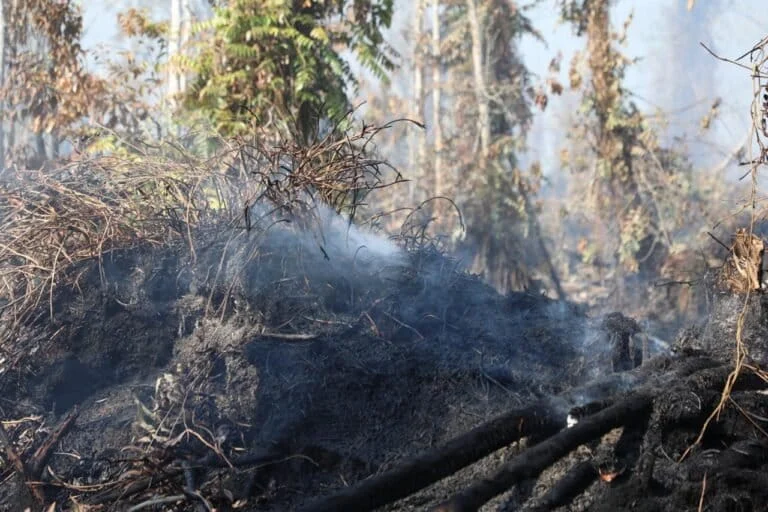
Jakarta, CNBC Indonesia – The Meteorology, Climatology, and Geophysics Agency (BMKG) has issued an urgent public advisory urging citizens and local authorities across Indonesia to drastically heighten their vigilance against the escalating threat of forest and land fires, commonly known in the region as karhutla. The agency has placed primary focus on the provinces of West Kalimantan and Central Kalimantan, which have emerged as the current epicenters of the crisis.
This grave warning comes at a time when vast swathes of the Indonesian archipelago are grappling with prolonged dry spells, exacerbated by compounding climatic phenomena. According to official announcements disseminated through BMKG’s verified communication channels, the atmospheric landscape across the region is currently dominated by exceptionally dry weather conditions. These conditions are primarily driven by a very strong El Nino phase, a positive Indian Ocean Dipole (IOD) index, and the natural peak of the dry season. Together, these meteorological factors have created a tinderbox environment, triggering a severe and rapid escalation in the potential for widespread and uncontrollable forest and land fires.
The environmental crisis is not expected to dissipate rapidly. Meteorological projections indicate that the conditions conducive to these fires will persist for an extended period. "The potential for forest and land fires remains high and could continue through September to October 2026. BMKG, in close coordination with various relevant stakeholders, continues to execute Weather Modification Operations (OMC) to support ongoing firefighting and suppression efforts on the ground," the agency stated.
As an immediate mitigation measure to protect public health and safety, BMKG has strongly advised residents residing in areas severely impacted by thick haze to restrict outdoor activities to absolute necessities. Furthermore, the agency has mandated the disciplined use of protective respiratory masks, such as N95 respirators, and urged heightened caution for motorists navigating through regions crippled by drastically reduced visibility on roadways and highways.
Air Quality in Pontianak Collapses to Hazardous Levels
The concerns raised by meteorological authorities are grounded in a grim reality. The catastrophic haze generated by ongoing forest and land fires has engulfed numerous regions throughout the island of Kalimantan, precipitating a catastrophic decline in ambient air quality to levels that pose severe, immediate risks to public health.
Data compiled from global air quality monitoring networks on Sunday, September 13, 2026, confirmed that West Kalimantan has deteriorated into one of the most heavily polluted zones globally, even as emergency suppression teams engage in round-the-clock firefighting operations.
The provincial capital of Pontianak has borne the brunt of the toxic onslaught, registering record-breaking pollution levels. Real-time monitoring data from the IQAir platform at 09:13 Western Indonesia Time (WIB) revealed an Air Quality Index Plus (AQI+) reading of an astronomical 483 in Pontianak. This figure places the city at the absolute pinnacle of poor air quality rankings nationwide, far exceeding safety thresholds established by the World Health Organization (WHO), which classify any reading above 300 as hazardous.
The suffocating blanket of toxic air has rapidly expanded beyond the city limits, blanketing surrounding buffer zones and secondary districts. Terentang recorded an alarming AQI+ level of 420, followed closely by Mempawah at 214, Sintang at 191, Manismata at 173, and Bengkayang at 154. Amidst this sweeping environmental emergency, Sambas Regency stood out as the sole administrative district in the province maintaining relatively cleaner air, though its AQI+ reading of 80 still falls into the moderate category, indicating potential sensitivity for unusually vulnerable populations.
Parallel satellite and ground-based tracking platforms confirm that active fire hotspots continue to burn fiercely across multiple landscapes, presenting an immense and ongoing logistical challenge for emergency responders stationed in Melawi Regency, West Kalimantan.
Chronology of the 2026 Dry Season and Escalating Karhutla Crisis
The unfolding environmental disaster in Kalimantan is the culmination of months of compounding meteorological anomalies that began taking shape in early 2026. The transition from the rainy season to the dry season occurred much earlier than historical averages, setting the stage for accelerated moisture evaporation across peatland and forest ecosystems.
By June 2026, satellite thermal anomalies detected by BMKG and the Ministry of Environment and Forestry began showing a steady upward trend in hotspot distribution across Sumatra and Kalimantan. The early appearance of these thermal signatures prompted initial inter-agency coordination meetings, but the sheer velocity of the dry weather progression outpaced preventive containment measures.
In July 2026, the convergence of a dominant El Nino cycle and a positive Indian Ocean Dipole severely suppressed cloud formation across the western and central regions of the Indonesian maritime continent. Rainfall totals plummeted to historic lows in West and Central Kalimantan, drying out vulnerable subterranean peat soils—which are notorious for retaining subterranean fire embers that are exceptionally difficult to extinguish.
By August 2026, localized flare-ups transformed into expansive landscape fires. The inability to secure consistent rainfall due to the delayed onset of inter-monsoonal transitions left firefighting brigades heavily reliant on artificial intervention. In response, the National Disaster Management Agency (BNPB), alongside BMKG and the Agency for Meteorology, Climatology, and Geophysics, ramped up Weather Modification Operations (OMC), utilizing aircraft to seed clouds with salt compounds in an effort to induce artificial precipitation over high-risk zones. Despite these persistent efforts, the extreme dryness of the lower atmosphere frequently caused moisture to evaporate before reaching the surface, rendering several cloud-seeding sorties ineffective.
By mid-September 2026, the accumulation of smoke from thousands of scattered hectares of burning brush and forest culminated in the unprecedented air quality collapse observed in Pontianak and surrounding districts, turning the regional crisis into a matter of national emergency concern.
Socio-Economic and Public Health Implications
The severe air quality degradation in West Kalimantan carries profound and far-reaching implications for public health, local economies, and regional stability. Medical professionals in Pontianak and surrounding areas have reported surges in outpatient visits related to acute respiratory infections (ARIs), asthma exacerbations, and severe eye irritations. Vulnerable demographics, including young children, the elderly, and individuals with pre-existing cardiovascular and respiratory conditions, face the highest risk of acute complications from prolonged exposure to PM2.5 particulate matter—microscopic pollutants capable of penetrating deep into the human bloodstream.
Education sectors have also been disrupted. Local governments face mounting pressure to implement emergency protocols, such as transitioning schools to remote online learning formats, to prevent children from being exposed to the hazardous outdoor air during transit and school hours.
Economically, the thick haze has severely disrupted transportation networks. Reduced visibility has forced regional airports to delay or cancel commercial flights, isolating certain districts and complicating the rapid deployment of firefighting personnel and heavy equipment. Furthermore, agricultural productivity faces headwinds as outdoor manual labor is curtailed during peak pollution hours, threatening the livelihoods of smallholder farmers and plantation workers across the affected provinces.
Mitigation Strategies and Multi-Agency Response
In the face of mounting public anxiety and worsening environmental metrics, federal and regional authorities have intensified their multi-agency response framework. The National Disaster Management Agency (BNPB), working alongside the Indonesian National Armed Forces (TNI), the Indonesian National Police (Polri), regional disaster mitigation agencies (BPBD), and local civil society volunteer groups, has mobilized ground forces into the most inaccessible terrain.
Firefighting teams are employing a two-pronged strategy: aggressive direct water-bombing using specialized helicopters in remote peatland areas, and the establishment of firebreaks and canal blocking to raise the water table in vulnerable peat ecosystems. Raising the moisture content of peatlands is widely recognized by soil scientists as the most effective method to prevent subterranean fires from reigniting after surface flames are beaten back.
Simultaneously, law enforcement agencies have initiated rigorous investigations into the root causes of the fires. Authorities have reiterated warnings directed at both corporate agricultural concession holders and small-scale land clearers regarding strict legal penalties for the use of slash-and-burn clearing methods. Environmental prosecutors have pledged zero tolerance for negligence or deliberate arson, signaling that legal accountability will be enforced rigorously to deter future violations.
As Indonesia navigates the critical peak months of the dry season, the ultimate trajectory of the karhutla crisis will depend heavily on the efficacy of ongoing Weather Modification Operations, the swiftness of ground suppression teams, and the anticipated transition toward wetter weather patterns expected later in the final quarter of the year. In the interim, public compliance with health advisories remains the frontline defense against a crisis that continues to test the nation’s environmental resilience.