Tyo Susilo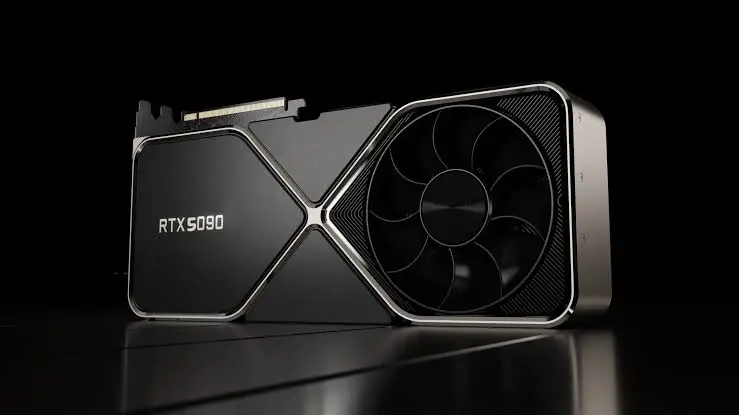
The landscape of consumer-grade high-performance computing and artificial intelligence development has witnessed an unprecedented engineering feat emerging from the vibrant hardware modification ecosystem in China. Shenzhen Suqiao Intelligent Technology, a well-established Original Equipment Manufacturer (OEM) and Original Design Manufacturer (ODM) with over ten years of industry experience specializing in graphics processing units, motherboards, and server infrastructure, has introduced a radically customized iteration of the flagship NVIDIA GeForce RTX 5090. This specialized consumer card has been retrofitted to feature an astonishing 96 gigabytes of Video Random Access Memory (VRAM), tripling the native 32-gigabyte capacity built into standard retail models. Listed commercially through the global wholesale marketplace Alibaba, the modified hardware carries a price tag of USD 3,888, translating to approximately Rp 68.43 million. This aggressive pricing strategy positions the modified hardware at a significantly lower cost threshold than standard stock units currently commanding high premiums in international markets, while offering a cost-effective alternative to enterprise-grade workstation solutions designed for large-scale machine learning tasks.
The technical implications of expanding a consumer GPU’s memory pool to such extremes stem from the inherent architectural capabilities of NVIDIA’s cutting-edge Blackwell silicon. At the heart of the standard GeForce RTX 5090 lies the GB202 graphics processor, a formidable monolithic die that also serves as the computational foundation for enterprise-tier offerings like the NVIDIA RTX Pro 6000 Blackwell workstation card, which natively supports a 96GB memory configuration. Because the underlying architecture is intrinsically capable of addressing this immense memory footprint, third-party hardware engineers have found a viable pathway to bridge the gap between consumer accessibility and enterprise memory demands. Achieving this hardware overhaul requires sophisticated engineering, most notably the implementation of a custom-designed Printed Circuit Board (PCB) utilizing a clamshell configuration. This advanced layout permits memory chips to be densely populated on both the front and reverse sides of the board, maximizing physical space constraints to accommodate the tripling of memory modules without destabilizing the core processing unit.
Despite the ambitious engineering displayed in the listing, technical discrepancies within the Alibaba product documentation have drawn scrutiny from hardware analysts and industry experts. The initial specification sheet provided by the vendor indicated that the modified graphics card relies on GDDR6X memory operating at a conservative speed of 14 Gbps. However, standard GDDR6X modules manufactured by industry leaders such as Micron typically operate within a much higher velocity range of 19 to 24 Gbps, whereas a transmission speed of 14 Gbps is historically characteristic of standard GDDR6 memory standards. Furthermore, calculations based on the reported use of 16Gb (gigabit), or 2GB, memory chips in a clamshell arrangement suggest a physical maximum ceiling of approximately 48GB of total memory rather than the advertised 96GB capacity. These conflicting hardware specifications imply that either the listing contains clerical data entry errors or the physical engineering relies on a non-standard memory module integration that deviates from conventional commercial specifications.

Beyond physical soldering and board layout redesigns, the successful deployment of a heavily modified graphics card carrying triple its intended memory capacity relies heavily on proprietary firmware customization. Standard retail drivers and system BIOS iterations are pre-programmed to recognize, allocate, and manage specific memory parameters established by the manufacturer during initial product development. Consequently, when physical hardware modifications expand the memory architecture beyond official parameters, specialized low-level firmware patches must be developed to trick the operating system and CUDA runtime environments into accurately addressing the expanded VRAM pool. This practice is not entirely unprecedented within the advanced hardware modification community; historical precedents include successful enthusiast projects where previous-generation flagship cards, such as the NVIDIA GeForce RTX 4090 featuring 24GB of VRAM, were successfully upgraded to 48GB to serve as budget-friendly inference nodes for localized artificial intelligence deployment.
The emergence of the Shenzhen Suqiao modified GPU occurs against a backdrop of escalating hardware costs for enterprise-grade artificial intelligence infrastructure. For machine learning researchers, data scientists, and independent developers operating outside massive corporate budgets, acquiring enterprise-level accelerators with large memory capacities represents a severe financial barrier. For instance, the official NVIDIA RTX Pro 6000 Blackwell equipped with 96GB of VRAM has recently experienced significant corporate price adjustments, with official channels pricing the enterprise solution starting at approximately USD 16,000, or roughly Rp 281.6 million. In stark contrast, the USD 3,888 price point established for the modified RTX 5090 96GB represents approximately 25 percent of the cost of its official enterprise counterpart, while undercutting even standard retail pricing observed for unmodified RTX 5090 cards in various overseas markets where scalping and high demand have driven prices past the USD 5,900 threshold.
While the cost-to-performance and cost-to-capacity ratios presented by the Suqiao offering appear exceptionally attractive on paper, industry analysts emphasize the speculative nature of purchasing non-certified, heavily modified hardware. Unlike official enterprise accelerators backed by comprehensive corporate warranties, enterprise-level thermal validation, and certified driver support, these custom-built solutions occupy a gray market sector. Questions regarding long-term thermal dissipation, power delivery stability under sustained enterprise workloads, and software compatibility with rapidly evolving AI frameworks remain entirely unanswered pending comprehensive, independent third-party benchmarking. The structural integrity of the cooling assemblies required to cool both sides of a densely populated clamshell PCB under continuous heavy compute loads represents another critical engineering hurdle that requires rigorous empirical testing.
The broader implications of this market development highlight the relentless global demand for accessible high-capacity VRAM solutions driven by the explosive growth of generative artificial intelligence, large language model (LLM) fine-tuning, and local deep learning execution. As consumer GPUs continue to push boundaries, the ingenuity of regional hardware modification firms demonstrates an ongoing effort to democratize access to high-end computing resources. Whether Shenzhen Suqiao Intelligent Technology’s 96GB modified GeForce RTX 5090 will establish a reliable alternative for budget-conscious AI developers or remain an isolated novelty depends entirely on the verifiable performance, stability, and longevity of the units once they undergo rigorous real-world validation in professional development environments.