Chalifah Fatihah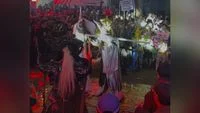
The cultural landscape of Pekalongan Regency in Central Java is deeply intertwined with a rich tapestry of community traditions, religious observances, and grassroots creative expressions. Among the most anticipated annual spectacles in the region is the Simbang Kulon Night Carnival (SKNC), a nocturnal celebration held in Simbang Kulon Village within the Buaran District. What began decades ago as a localized neighborhood gathering has steadily evolved into a massive cultural anchor for the community, drawing thousands of spectators from both within and outside the regency. However, the 61st edition of the carnival in 2026 achieved unprecedented widespread attention, transitioning from a localized celebration of faith and artistry into a subject of intense national digital scrutiny following a controversial performance that quickly went viral across various social media platforms.
Organized under the auspices of the Simbang Kulon branch of the Nahdlatul Ulama Youth and Community Organization (PRNU), the night carnival historically serves as a vital component of a larger community undertaking: a mass circumcision initiative for local youths. Furthermore, the timing of the event invariably coincides with the grand commemoration of the birth of the Prophet Muhammad SAW (Maulid Nabi). By fusing charitable religious obligations with public artistic displays, the event has successfully maintained its relevance across generations. For over sixty years, the festival has provided an open platform for residents to demonstrate their collective artistic capabilities, transforming the neighborhood streets into a dynamic, open-air gallery of lights, sounds, and theatrical presentations.
Chronology and Execution of the 2026 Festivities
The preparations for the Simbang Kulon Night Carnival are notoriously exhaustive, often commencing months prior to the official launch date. Local groups, neighborhood associations, and creative collectives spend weeks designing elaborate costumes, building towering props, and choreographing intricate routines. The overarching objective for each participating contingent is to captivate the judges and the massive crowds lining the designated parade route through sheer scale and imaginative execution.
The 2026 iteration of the carnival officially took place on Thursday night, September 10, bringing together a total of 25 distinct creative teams. The procession featured an eclectic mix of traditional and modern entertainment forms. Spectators lined the thoroughfares hours in advance to secure optimal viewing spots, greeted by a sensory-heavy barrage of displays. The lineup included colossal ogoh-ogoh statues, traditional and contemporary dance troupes, synchronized marching bands, pulsing mobile sound systems known locally as "sound horeg," and elaborately decorated bicycles embellished with vibrant lights and thematic structures. The atmosphere was celebratory, characterized by the communal joy typical of major Javanese cultural festivals.
However, the trajectory of the event shifted dramatically after the conclusion of the physical parade. As video fragments recorded by spectators began circulating online, a specific segment of the performances drew heavy criticism. The footage in question captured a theatrical presentation orchestrated by one of the participating groups—identified as Tim Simone, or Simbang Gang One. The performance featured performers clad in ominous, horror-themed costumes, accompanied by props including a symbolic coffin and a simulated animal slaughter sequence. Additionally, background iconography and staging elements within the performance were perceived by online observers to bear resemblances to imagery associated with occultism or satanic symbolism.
The Digital Backlash and Viral Controversy
In the contemporary era of hyper-connectivity, local community events are subjected to immediate, unfiltered global scrutiny. Within hours of the video’s upload, the performance became a trending topic across multiple social media platforms, sparking intense debates among netizens, cultural observers, and religious commentators. Critics expressed concern over the appropriateness of incorporating dark, morbid, or potentially blasphemous iconography into an event fundamentally tied to Islamic celebrations and community charitable works.
The rapid dissemination of the video created a public relations challenge for both the local organizers and the municipal authorities. In a region where cultural preservation and religious sensitivities are closely guarded, the appearance of occult-adjacent imagery within an official Maulid Nabi and mass circumcision celebration was treated with significant gravity. The viral nature of the content threatened to overshadow six decades of positive community building, compelling the organizers to issue formal clarifications to mitigate public outcry and address the concerns raised by the digital community.
Official Responses and Accountability
Recognizing the gravity of the public reaction, the organizing committee of the Simbang Kulon Night Carnival acted swiftly to address the controversy. On Monday, September 14, representatives from the PRNU and the operational planning committee held a press briefing in Simbang Kulon Village, Buaran District, to issue an unconditional public apology.
"We from the committee apologize profusely for our oversight or shortcomings," stated Ziyad Azizi, a representative of the SKNC organizing committee, during the press conference. Ziyad acknowledged that the committee bore responsibility for failing to thoroughly vet every aspect of the artistic presentations prior to the commencement of the parade, conceding that the conceptual execution of the controversial performance slipped past standard pre-screening protocols.
Simultaneously, the creative unit responsible for the controversial display, Tim Simone, came forward to address the situation. Representatives of the team issued their own formal apology, admitting that they lacked a comprehensive understanding of the historical and cultural references embedded in the symbols they utilized. The group clarified that their primary intent was purely theatrical and centered on shock-value entertainment typical of modern Halloween-style spectacles, explicitly denying any malicious intent or ideological alignment with occultism or satanic worship. They expressed deep regret that their artistic exploration had caused widespread misunderstanding and offense within the community.
Broader Cultural Implications and Future Outlook
Despite the controversy that dominated the post-event discourse, sociological and cultural analysts emphasize that the core identity of the Simbang Kulon Night Carnival remains deeply rooted in community resilience and grassroots participation. The incident has triggered important conversations regarding the boundaries of creative freedom within traditional religious celebrations, highlighting the necessity for tighter curation and clearer guidelines for community-led art projects.
Local government officials in Pekalongan Regency have also weighed in on the situation, noting that cultural festivals of this scale possess immense economic and tourism potential. While acknowledging the misstep of the 2026 edition, municipal authorities expressed a strong desire to see the tradition continue. Moving forward, the local administration has recommended closer collaboration between event organizers, traditional elders, and regional cultural offices to ensure that future iterations of the carnival maintain a balance between vibrant artistic expression, community entertainment, and respect for local religious sensitivities.
Ultimately, the 2026 Simbang Kulon Night Carnival will be remembered as a pivotal inflection point in the event’s history. It underscored both the unifying power of traditional community festivals and the modern vulnerabilities of localized cultural events in the digital age. By addressing the controversy through transparent apologies, open dialogue, and a commitment to better operational oversight, the community of Simbang Kulon aims to preserve a cherished 61-year legacy while adapting to the heightened expectations of a rapidly evolving public sphere.