Nila Kartika Wati
The discovery of five infant orangutans in India on Tuesday, September 8, 2026, has sent shockwaves through the global conservation community, shedding light on a sophisticated, multi-national wildlife trafficking network that appears to link the dense rainforests of Sumatra to the black markets of South Asia. The infants, currently under the care of authorities at the Nandankan Zoological Park in Bhubaneswar, India, are suspected to be critically endangered Sumatran orangutans (Pongo abelii). While official DNA analysis is pending to confirm their exact subspecies and origin, their presence in India underscores a persistent and dangerous trend in the illicit trade of protected primates.
A Complex Logistics Web
Wildlife crime experts, including Dwi Nugroho Adhiasto, a senior advisor at Scents, indicate that the logistics required to move such vulnerable animals across international borders are extensive. The illicit route, which has been monitored by intelligence agencies for several years, typically begins in the coastal regions of Aceh, Indonesia. From there, the animals are transported via high-speed boats across the Andaman Sea, landing in Thailand. Once on the mainland, the trafficking chain enters a land-based phase, transiting through Myanmar and Bangladesh before reaching the eastern states of India, specifically Odisha and Mizoram.
These regions in India act as primary transit hubs where the animals are held in clandestine locations until they reach their final destination, which may be private collectors or exotic pet markets across Asia and the Middle East. The coordination required to maintain these animals alive during such long and arduous journeys—involving speedboats, hidden transit facilities, and a network of handlers—suggests that this is not a sporadic act by individuals, but the work of organized transnational crime syndicates.
Timeline and Chronology of Discovery
The detection of these five infants follows a series of regional enforcement efforts aimed at curbing the illegal wildlife trade. In recent months, intensified patrols in the waters off Aceh have yielded intelligence regarding the movement of "live cargo."
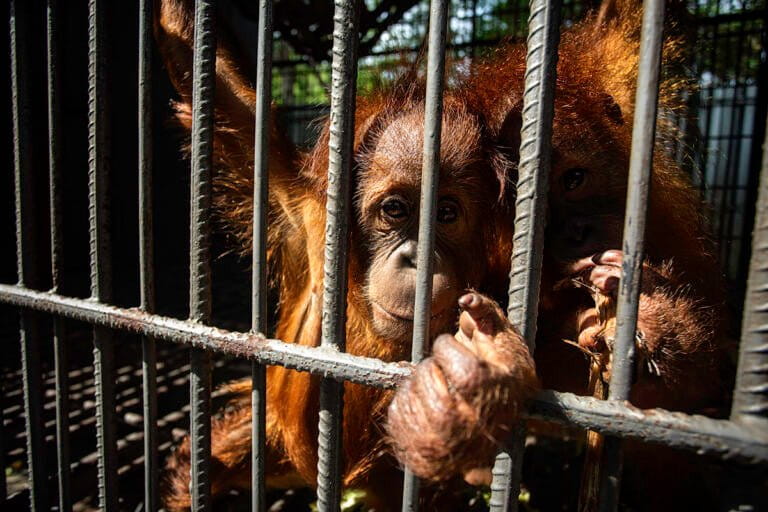
- October 2025: Investigative reporting uncovered the testimonies of former traffickers who detailed the mechanics of the trade. Insiders revealed that shipments from the eastern coast of Aceh to Satun, Thailand, frequently include not only orangutans but also gibbons, siamangs, and various protected bird species.
- September 8, 2026: The five infants were intercepted in India, triggering an immediate diplomatic and law enforcement response.
- September 10, 2026: Official statements from the Indonesian Ministry of Forestry confirmed that coordination with the Indian authorities and the CITES Secretariat had commenced to facilitate an investigation and potential repatriation.
The Human Toll on Wildlife
The recovery of these five individuals brings to the forefront the brutal reality of how infant orangutans enter the illegal market. Syafrizaldi Jpang, Director of the Sumatran Orangutan Lestari Foundation (YOSL-OIC), notes that infants under the age of two are in a critical phase of development, completely reliant on their mothers for sustenance, protection, and social development.
In the wild, a female orangutan typically spends between six to nine years raising her offspring. During this period, the infant learns essential survival skills: how to build nests, identify seasonal fruits, navigate the canopy, and use simple tools. The loss of a mother is not merely a tragedy for the infant; it is a profound disruption to the social fabric of the population. Traffickers often kill the mother to secure the infant, as the maternal bond is so strong that the female will fight to the death to protect her young.
This creates a devastating cycle: one infant in the illegal trade represents the death of at least one adult female, further pushing the species toward the brink of extinction. Experts estimate that for every infant that reaches a market, several others may have perished during the traumatic transit period due to stress, dehydration, or poor nutrition.
Official Response and Legal Implications
The Indonesian government, through the Ministry of Forestry, has pledged a comprehensive investigation. Ristianto Pribadi, Head of the Bureau of Public Relations and Foreign Cooperation, emphasized that the scope of the inquiry will extend beyond the immediate traffickers to include the entire chain of custody, from the poachers in the Sumatran jungles to the financiers and the ultimate recipients.
"The government will coordinate with Indian authorities, the CITES Secretariat, and international law enforcement agencies," Pribadi stated. "If Indonesian citizens are found to be involved, they will be prosecuted to the full extent of the law."
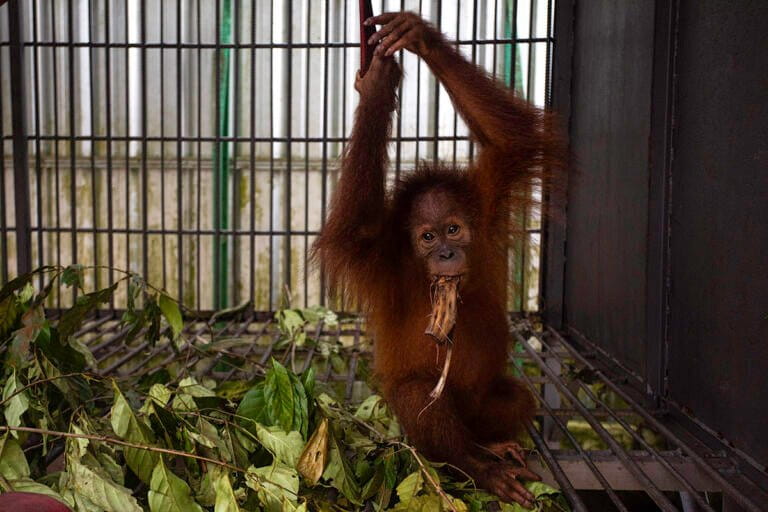
The process of returning these animals—repatriation—is a complex legal and biological undertaking. Before they can be considered for return to their natural habitat, they must undergo rigorous medical screening, quarantine, and eventually, a long-term rehabilitation process. According to conservationists, this rehabilitation can take anywhere from seven to ten years, mirroring the time they would have naturally spent learning from their mothers.
Broader Impact and Global Security
The case of the five orangutans is symptomatic of a larger issue: the intersection of wildlife crime and national security. Transnational wildlife trafficking networks often overlap with other illicit activities, including the smuggling of narcotics, weapons, and human trafficking. The porous nature of maritime borders in Southeast Asia makes the monitoring of these networks particularly challenging.
For Indonesia, protecting the Sumatran orangutan is a matter of both biodiversity conservation and national reputation. The Leuser Ecosystem, the primary habitat for these animals, is one of the most critical carbon sinks in the world. When traffickers penetrate these areas, they not only threaten the species but also disrupt the integrity of an ecosystem that provides essential services to millions of people.
Furthermore, the involvement of "tokes" or local kingpins who coordinate between Indonesian and Thai traffickers highlights the need for a more integrated regional enforcement strategy. The ASEAN Wildlife Enforcement Network (ASEAN-WEN) and similar bodies are under increased pressure to synchronize their data sharing and surveillance capabilities to prevent these transit hubs from continuing to operate with impunity.
The Path Forward: Advocacy and Enforcement
As the investigation continues, the immediate fate of the five infants in Odisha remains a focal point for international pressure. While they are currently housed at the Nandankan Zoological Park, their long-term welfare remains uncertain. Their survival depends on high-quality veterinary care and social support, which is difficult to replicate in captivity.

Conservation groups are calling for:
- Enhanced Intelligence: Moving from reactive rescues to proactive intelligence-led operations that target the leaders of the trafficking rings rather than just the transporters.
- Transboundary Cooperation: Strengthening the legal framework between Indonesia, Thailand, Myanmar, Bangladesh, and India to ensure that evidence can be shared seamlessly across jurisdictions.
- Community-Based Conservation: Addressing the root causes of poaching by providing sustainable economic alternatives to local communities living near protected habitats, thereby reducing the financial incentive to engage with traffickers.
The discovery in India serves as a stark reminder that the fight against the illegal wildlife trade is not confined to the borders of the country of origin. It is a global struggle that requires coordinated international action, rigorous enforcement of CITES protocols, and a deeper public understanding of the irreparable harm caused by the exotic pet trade.
For the five rescued infants, the damage is already done. They have been stripped of their natural lives and their potential to contribute to the wild population. However, their case may provide the breakthrough needed to dismantle the very networks that forced them into this life of captivity. As global eyes remain fixed on the investigation in India, the urgency of safeguarding the remaining Sumatran orangutans in the wild has never been more apparent. The question remains whether international authorities can move fast enough to break the chain before another generation of primates is lost to the shadows of the illicit trade.