Nila Kartika Wati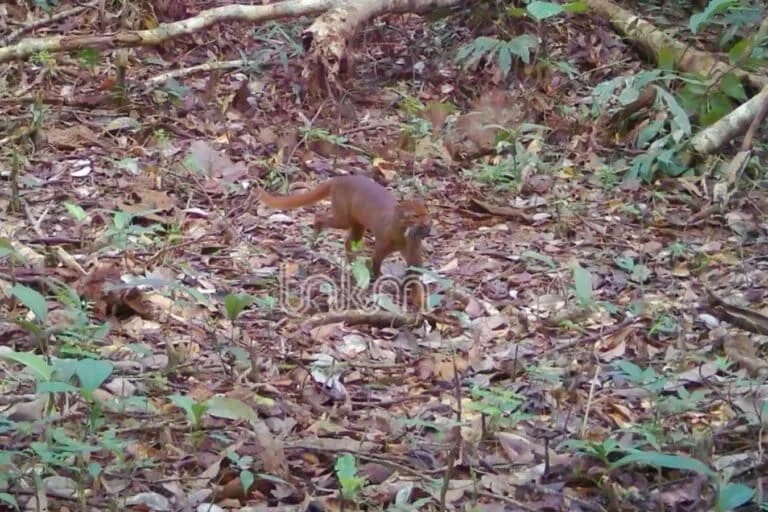
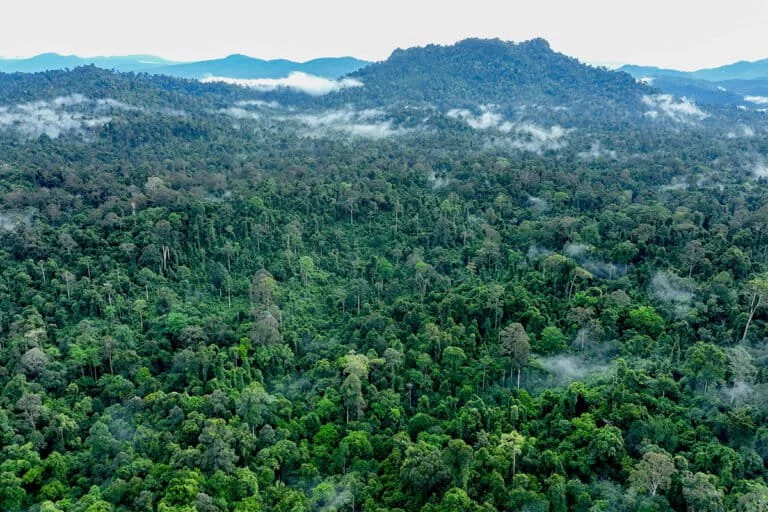
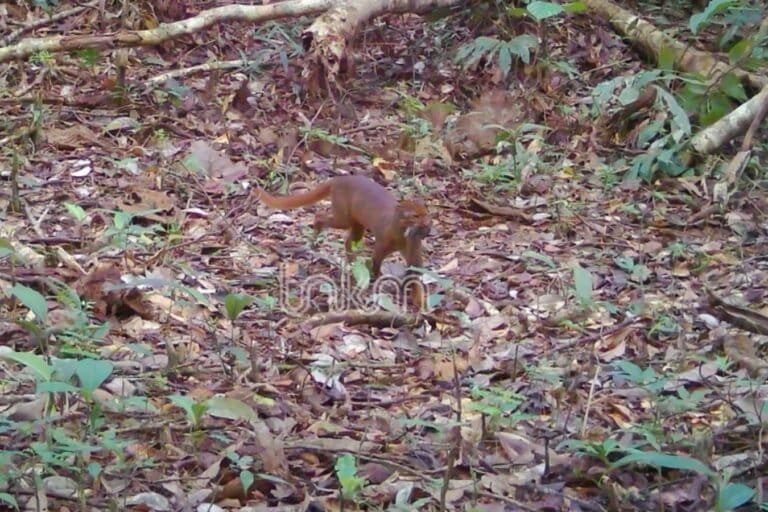
Deep beneath the dense, emerald canopy of the primary rainforests in Kayan Mentarang National Park (TNKM), located in the remote reaches of North Kalimantan, a silent observer has been at work. For months, motion-activated camera traps positioned along game trails remained undisturbed, documenting the secret lives of the forest’s most reclusive inhabitants. When field researchers finally retrieved the data in 2026, they discovered a rare and scientifically significant sequence: a Bornean bay cat (Catopuma badia) captured in the act of carrying prey through its natural habitat. This discovery provides a vital window into the behavior of one of the most enigmatic carnivores on the planet.
The Bornean bay cat, often referred to as the "ghost of Borneo," is a species shrouded in mystery. Listed as Endangered by the IUCN, the cat is notorious for its elusive nature, characterized by a solitary lifestyle, remarkably low population density, and an instinctive avoidance of human presence. For biologists and conservationists, securing high-quality footage of this species is akin to finding a needle in a haystack, making the recent findings in the Mentarang Tubu Resort of Rian Tubu Village a monumental achievement for biodiversity monitoring in the region.
A Chronology of Elusiveness and Discovery
The journey to document the Bornean bay cat in Kayan Mentarang has been a long-term endeavor marked by significant gaps in observation. The cameras that captured the recent images were deployed during a routine forest protection patrol conducted in 2025, with the data retrieval process completed in early 2026. This success follows a similar, albeit long-delayed, milestone. Three years prior, in 2023, the species was recorded in the Sungai Bahau Resort. That particular event was historically significant because it marked the first confirmed presence of the cat in that specific sector of the national park after more than two decades of silence.
The historical timeline of the species’ documentation reflects the immense challenges inherent in studying it. Despite its distinct appearance—often characterized by a vibrant reddish-brown coat, though some individuals exhibit a rare grey morph—the bay cat was once considered a creature of myth among local communities. Scientific records remained sparse throughout the late 20th century, with the species being one of the least studied felids in the world. The shift from decades of near-total invisibility to sporadic, high-quality camera trap documentation represents a significant evolution in conservation technology and field strategy.
Behavioral Insights and Dietary Patterns
The recent footage provides more than just a confirmation of the cat’s presence; it offers a rare glimpse into its predatory behavior. In the captured images, the cat is seen carrying what researchers have identified as a striped ground squirrel (Tupaia dorsalis). This visual evidence reinforces existing, albeit limited, knowledge that the bay cat’s diet consists primarily of small rodents and squirrels.
While the gender of the individual in the footage remains unidentified, experts estimate the specimen to be a sub-adult or young adult. The cat’s physical morphology—a sleek, streamlined body, rounded ears, and a proportionally long tail—suggests an evolutionary adaptation for agility and speed. These traits are highly specialized for maneuvering through the thick, complex undergrowth of the Bornean rainforest, allowing the cat to close the distance on prey with explosive bursts of movement.
Furthermore, the footage challenges previous academic assumptions regarding the species’ activity patterns. Historically, the Bornean bay cat was categorized as a strictly nocturnal predator. However, the recent documentation in Kayan Mentarang clearly captures the individual moving during daylight hours. This observation suggests that the cat may be cathemeral, adapting its activity cycles based on environmental factors, prey availability, or the absence of anthropogenic disturbances. The consistently solitary nature of the individual in the footage, combined with all other documented instances, further reinforces the scientific consensus that the species is fundamentally solitary, coming together only for mating purposes.
Conservation Status and Ecological Significance
The Bornean bay cat is endemic to the island of Borneo, with its range spanning across Indonesia and the Malaysian states of Sabah and Sarawak. With an estimated global population of only 2,200 individuals remaining in the wild, the species is teetering on a precarious edge. Alarmingly, there are no recorded instances of the species living in captivity, meaning that the survival of the Catopuma badia is entirely dependent on the integrity of its natural wild habitat.
Seno Pramudito, Head of the Kayan Mentarang National Park Office, emphasized the critical role of technology in modern conservation efforts. "This species is exceptionally difficult to encounter directly, which makes documentation through camera traps indispensable," Pramudito stated. "It allows us to gather verifiable data on their distribution and persistence within the protected zone, which would otherwise remain entirely unknown."
The cat’s reliance on primary or high-quality secondary forests is absolute. It does not possess the plasticity to survive in monoculture plantations or areas subject to severe deforestation. This makes the species an "indicator species"—a biological barometer for the health of the entire ecosystem. The presence of the bay cat suggests that the forest landscape in Kayan Mentarang is still providing sufficient territorial space, cover, and a healthy prey base for a top-tier predator.
Threats and Future Mitigation Strategies
Despite the success of the recent documentation, the long-term future of the Bornean bay cat remains under threat from several anthropogenic pressures. Habitat loss, driven by land-use changes, remains the primary threat to the species. The fragmentation of forests isolates sub-populations, which can lead to genetic bottlenecks and reduced resilience to disease.
Additionally, the prevalence of illegal trapping and the use of snares intended for other wildlife species pose a lethal risk to the bay cat. Even if the cat is not the intended target, it is frequently caught in indiscriminate wire snares. The conservation of the species, therefore, cannot be viewed in isolation; it requires a landscape-level approach that addresses the illegal wildlife trade and enforces stricter protections against encroachment.
The life history of the bay cat remains a subject of intense scientific inquiry. Experts estimate a generation length of approximately six years, yet fundamental reproductive metrics—such as the exact gestation period and the average lifespan of an individual in the wild—remain unknown. This lack of data complicates the development of comprehensive management plans. As such, the 2026 footage serves as a vital call to action for international research collaboration to better understand the life history of this elusive felid before it is lost to extinction.
Implications for Regional Biodiversity
The appearance of the Bornean bay cat in Kayan Mentarang is more than just a success story for park rangers; it is an indicator of ecological stability. Because the bay cat requires a significant range to hunt and reproduce, its presence signifies that the food chain within the national park remains largely intact. The forest is not merely a collection of trees; it is a functioning, complex web of life that sustains high-level predators.
As the global community increasingly recognizes the importance of the Bornean rainforests as a critical carbon sink and a repository of global biodiversity, the bay cat stands as a symbol of what is at stake. The protection of its habitat provides a "co-benefit" for countless other species that share the same ecosystem, including the Bornean orangutan, the clouded leopard, and the sun bear.
Moving forward, the Kayan Mentarang National Park authority plans to expand its camera trap network, aiming to determine the density of the bay cat population across different sectors of the park. By mapping these movements and correlating them with habitat quality data, researchers hope to identify "hotspots" for conservation that require enhanced patrolling and legal protection.
In conclusion, the documentation of the Bornean bay cat in 2026 serves as both a celebration of resilience and a sobering reminder of the species’ vulnerability. While the "ghost of Borneo" continues to walk the shadows of the Kayan Mentarang forest, its future depends on the sustained commitment of those tasked with guarding the wild. Every image captured is a piece of a puzzle, helping humanity understand a creature that has evolved in isolation for millennia, and highlighting the urgent necessity of maintaining the wild, untamed frontiers that still exist in the heart of Borneo.