Bambang Pamungkas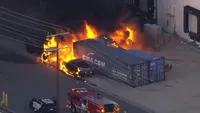
A catastrophic aviation accident unfolded on Tuesday evening, September 15, 2026, when a news helicopter operated by NBC Los Angeles crashed in the residential and commercial neighborhood of Chatsworth, located in the northwestern region of Los Angeles, California. The tragic incident resulted in the deaths of three individuals, while a fourth person sustained severe injuries and was rushed to a nearby medical facility for emergency treatment. The aircraft involved was identified by the network as NewsChopper 4, a vital aerial reporting asset utilized for decades to cover breaking news, traffic congestion, and emergency situations across the sprawling Southern California metropolis.
The disaster occurred shortly before 7:00 p.m. local time, sending shockwaves through the local community, the American media landscape, and the newsroom of NBC Los Angeles itself. The revelation of the crash was handled with profound grief and professionalism live on air by veteran news anchor Colleen Williams, who had to inform viewers of the unimaginable tragedy unfolding involving her own colleagues. The National Transportation Safety Board (NTSB) and the Federal Aviation Administration (FAA) immediately launched comprehensive investigations to determine the precise chain of events and environmental or mechanical factors that led to the fatal descent.
The disaster compounded an already grim day for emergency responders in Los Angeles, occurring in the immediate vicinity of a separate, catastrophic vehicular collision that had claimed at least two lives only hours prior. The convergence of multiple fatal incidents in a single neighborhood strained local emergency infrastructure and prompted high-level statements of mourning and solidarity from civic leaders, including Los Angeles Mayor Karen Bass. As federal investigators sift through the wreckage scattered across Chatsworth, aviation safety experts, media executives, and the public are left grappling with the profound risks inherent in airborne journalism.
Chronology of the Tragedy: From Breaking News to Breaking Heart
The sequence of events on Tuesday, September 15, 2026, began with a major traffic incident in the Chatsworth area that demanded extensive media and municipal attention. Earlier in the evening, a violent collision occurred involving a municipal Los Angeles Metro bus and a standard passenger vehicle. The impact of the crash was severe, resulting in the immediate deaths of at least two individuals and leaving several others injured. Given the magnitude of the transit accident, local television stations dispatched mobile reporting units and aerial news helicopters to capture live footage of the scene, monitor traffic diversions, and provide real-time updates to commuters navigating the San Fernando Valley.
Among the aircraft dispatched to the scene was NBC Los Angeles’s NewsChopper 4. As the helicopter hovered over the designated airspace near Chatsworth, it was reportedly one of several media aircraft monitoring the aftermath of the bus collision. However, as evening approached and visibility began to shift, communication with NewsChopper 4 abruptly ceased. Ground crews and newsroom producers realized they had lost contact with the onboard personnel.
Moments later, emergency dispatchers at the Los Angeles Fire Department (LAFD) began receiving frantic calls from residents reporting a low-flying aircraft in distress followed by a loud impact and plumes of smoke. The crash occurred shortly before 7:00 p.m. Local emergency units, including engine companies, paramedic squads, and urban search-and-rescue teams, were immediately dispatched to the new coordinates, arriving at the crash site within minutes to initiate rescue and containment operations.
On-Air Realization and Immediate Official Response
The reality of the disaster broke publicly during an active evening news broadcast on NBC Los Angeles. Viewers and station anchors experienced a surreal and heartbreaking moment as the network transitioned from reporting the day’s events to confronting a crisis within its own ranks. Colleen Williams, anchoring the broadcast, addressed the audience with visible composure masking deep sorrow.
"We have been telling you that we are trying to gather information regarding this incident. We know that it is a news helicopter. We know that we have lost contact with our people at the scene, and we have just received confirmation that NewsChopper 4 crashed shortly before 7:00 p.m. tonight in Chatsworth," Williams stated to the stunned viewing audience.
Emergency responders arriving at the wreckage found a chaotic and devastating scene. According to official statements released by the Los Angeles Fire Department, four individuals were evaluated at the primary site of the impact. The severity of the structural damage to the aircraft and the intensity of the localized impact left little room for hope regarding most of the occupants. Three individuals were pronounced dead at the scene by LAFD paramedics. A fourth occupant was extricated from the wreckage with critical injuries and transported under emergency conditions to a regional trauma center. The exact identity of the hospitalized survivor and their subsequent medical condition remained closely guarded by medical staff and network representatives as families were notified.
NBCUniversal and corporate management released preliminary statements expressing profound devastation over the loss of their personnel. While the network initially withheld exact figures regarding the total manifest of souls on board pending official notifications, the confirmation that NewsChopper 4 was down cast a pall over the entire Southern California journalistic community. Colleagues from rival networks, including KCAL, KTLA, and ABC7, immediately offered expressions of solidarity, broadcasting live updates while extending condolences to the families and coworkers of the fallen journalists and pilot.
Federal Investigations: NTSB and FAA Mobilize
In the wake of any fatal civil aviation accident on United States soil, a rigorous, multi-agency federal investigation is legally mandated. For the Chatsworth crash, the Federal Aviation Administration and the National Transportation Safety Board assumed immediate jurisdiction over the inquiry.
A team of NTSB investigators, specializing in aerospace engineering, human factors, maintenance records, and operational meteorology, was deployed to the Chatsworth site. The investigating team’s primary objectives are to establish a factual record of the flight, determine the probable cause of the crash, and issue safety recommendations designed to prevent similar tragedies in the future.
The investigative process encompasses several critical pillars:
- Wreckage Analysis: Investigators will meticulously document the distribution pattern of the debris field. The integrity of the rotor blades, engine components, tail rotor assembly, and avionics systems will be examined in a secure facility to rule out or confirm mechanical failure, structural fatigue, or component seizure.
- Flight Data and Communications: The recovery of onboard electronic logging devices, GPS data, air traffic control (ATC) radio transmissions, and internal cockpit communications will provide a second-by-second narrative of the flight’s final moments. Analysts will examine whether the pilot reported any mechanical anomalies, erratic flight behavior, or spatial disorientation.
- Environmental and Meteorological Conditions: Weather conditions at the time of the crash—including wind shear, visibility, lighting, and ambient temperature—will be cross-referenced with meteorological data recorded in the San Fernando Valley to determine if environmental factors played a role in the accident.
- Human Factors and Pilot History: The pilot’s medical background, training logs, flight hours, rest periods, and psychological state will be scrutinized to assess whether fatigue or sudden medical incapacitation could have contributed to the mishap. Furthermore, investigators will evaluate operational pressures, such as the competitive nature of breaking news coverage and airspace congestion over a major accident scene.
The Intersection of Tragedy: The Bus Collision and Airspace Congestion
A notable dimension of the Chatsworth disaster is its spatial and temporal proximity to the severe vehicular collision that occurred earlier that same afternoon. The initial accident—a violent collision between a Los Angeles Metro bus and a passenger vehicle—had already claimed two lives and created a high-visibility crisis management scenario for local authorities.
In major metropolitan areas like Los Angeles, breaking news events involving mass transit accidents routinely attract significant media attention, prompting television stations to deploy electronic news gathering (ENG) helicopters to capture aerial perspectives that provide context to gridlocked commuters and anxious citizens. On Tuesday evening, multiple news helicopters from competing networks were operating in the vicinity of the San Fernando Valley to cover the aftermath of the bus crash.
This convergence of multiple aircraft in a restricted airspace over a localized emergency zone has historically raised concerns among aviation safety advocates. While the FAA maintains strict visual flight rules (VFR) and communication protocols for media aircraft operating in shared airspace, the chaotic nature of breaking news environments can introduce high levels of cognitive load for pilots. Investigators are expected to examine whether air traffic congestion, visual distractions, or coordinated routing among competing media helicopters contributed in any way to the operational environment preceding the crash of NewsChopper 4.
Civic and Community Reactions
The double tragedy in Chatsworth—claiming lives both on the highway and in the skies above—prompted an outpouring of grief, sorrow, and administrative response from municipal leaders. Los Angeles Mayor Karen Bass released an official statement expressing her profound anguish over the dual incidents.
"Our city is in mourning tonight," Mayor Bass stated. "We are completely heartbroken by the tragic loss of life resulting from the devastating helicopter crash in Chatsworth, which occurred just hours after a horrific collision involving a Metro bus in the same community. The courage and dedication of our emergency responders, who were forced to pivot from one catastrophic scene to another, demonstrate the unwavering commitment of our fire and police departments. We stand ready to support the families of those lost—both the victims of the highway crash and the dedicated professionals of the media who perished while keeping our city informed."
Local city council members representing the San Fernando Valley also expressed their condolences, highlighting the vital role that local journalists play in community safety and transparency. Community centers and houses of worship in Chatsworth announced plans for candlelight vigils to honor all the lives lost during the fateful Tuesday evening.
Implications for Aerial Journalism and Aviation Safety
The loss of NBC Los Angeles NewsChopper 4 marks a somber milestone in the history of electronic news gathering in the United States. For decades, helicopters have served as the eyes in the sky for major television markets, providing indispensable coverage of high-speed chases, natural disasters, major fires, and traffic crises. However, the inherent risks associated with low-altitude flight, hovering maneuvers, and congested airspaces have occasionally resulted in fatal accidents.
The Chatsworth crash is expected to trigger a broader industry-wide reassessment regarding the safety protocols of ENG operations. Key areas of discussion among media executives and aviation consultants include:
- The increasing viability of Unmanned Aerial Systems (UAS) or drones as a safer alternative to manned helicopters for routine traffic and breaking news overhead shots.
- Enhanced collision-avoidance technology, including advanced ADS-B (Automatic Dependent Surveillance-Broadcast) In/Out systems and proximity warning alerts specifically calibrated for media fleets operating in close proximity.
- Stricter internal corporate policies governing minimum safe altitudes, weather minimums, and mandatory crew rest periods for aviation personnel working under the intense pressure of 24-hour news cycles.
As the NTSB and FAA investigations progress over the coming months, the findings will undoubtedly shape the future regulatory framework for media aviation. For now, however, the primary focus remains on honoring the memories of the three individuals who lost their lives in the service of journalism, supporting the surviving crew member through recovery, and providing solace to a grieving newsroom and community.