Azin Asro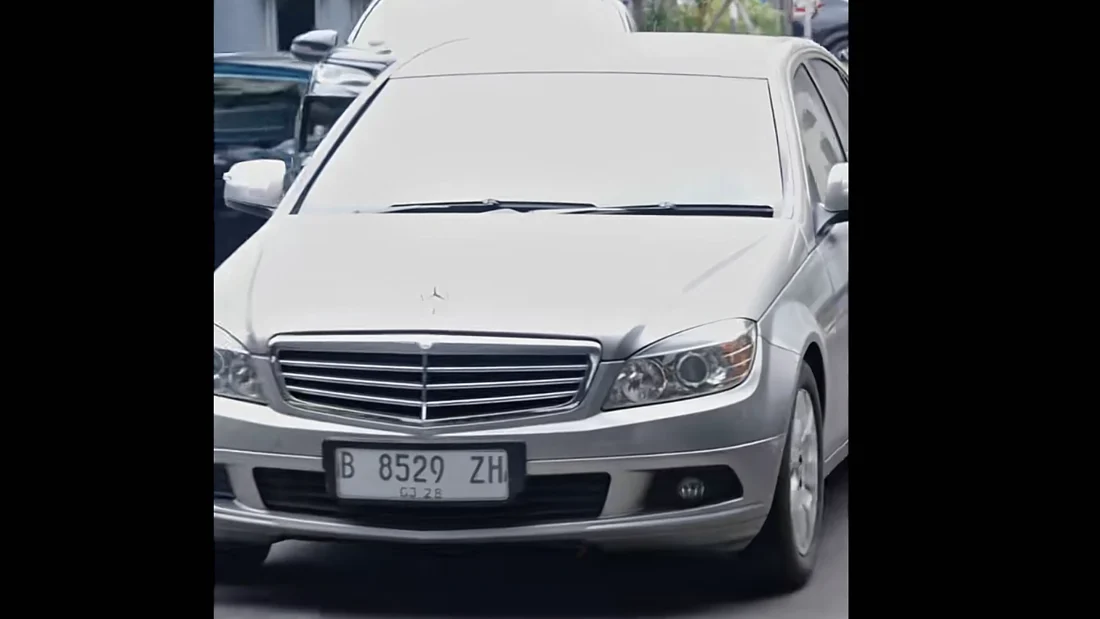
Jakarta — In an era where high-ranking government officials typically rely on heavily guarded, modern, and standardized official state vehicles, former Minister of Finance Purbaya Yudhi Sadewa recently captured public attention through a display of automotive nostalgia and personal simplicity. A video shared on his official TikTok account featured the former minister driving himself from his private residence to the Ministry of Finance headquarters behind the wheel of a classic German sedan. The digital footprint left by this casual commute quickly drew the curiosity of automotive enthusiasts and the general public alike, casting a spotlight not only on the personal life of a high-profile economic policymaker but also on the enduring legacy of a well-maintained vehicle that has accompanied him since his corporate days.
The viral social media post provided a rare glimpse into the daily routine of a prominent public servant navigating the bustling streets of Jakarta without the usual motorcade fanfare. Beyond the novelty of a cabinet minister driving his own car to work, the incident prompted widespread interest in the technical specifications, history, and current status of the vehicle in question. As discussions surrounding the post multiplied across digital platforms, a comprehensive examination of the automobile revealed a fascinating backstory that bridges Purbaya’s corporate career in the financial sector with his tenure at the pinnacle of Indonesia’s fiscal administration.
Vehicle Specifications and Historical Context
The automobile featured in the viral video is a metallic gray Mercedes-Benz classic bearing the police registration number B 8529 ZH. Official data retrieved from regional tax databases indicates that the vehicle maintains an active tax status valid until March 8, 2027. A closer inspection of the vehicle’s registration details confirms that it is a 2008 model year belonging to the C-Class family, specifically designated as the Mercedes-Benz C200K.
The letter "K" appended to the model nomenclature stands for Kompressor, a marketing designation utilized by the German automaker to denote engines equipped with a mechanical supercharger. This forced-induction system is engineered to enhance power delivery and throttle response by compressing incoming air into the engine cylinders, thereby boosting overall performance without requiring a significantly larger displacement engine.
Under the hood, the C200K houses a 1,796 cc four-cylinder powerplant capable of generating a respectable output of 181 horsepower and a peak torque of 250 Newton-meters. Power is transmitted to the rear wheels via a five-speed automatic transmission. Built upon the factory chassis code W204—widely recognized among automotive aficionados as the Mercy W204—this compact executive sedan represents a specific era of automotive engineering characterized by robust build quality and refined driving dynamics.
In terms of chassis and handling, the vehicle is equipped with 17-inch alloy wheels wrapped in 225/45 tires. It features independent front and rear suspension systems meticulously tuned to deliver the signature ride comfort traditionally associated with the Mercedes-Benz marque. Safety features incorporated into the 2008 model include four-wheel disc brakes supported by an Anti-lock Braking System (ABS), Electronic Brake-force Distribution (EBD), Brake Assist, and Electronic Stability/Traction Control systems. Occupant protection is further reinforced by a comprehensive arrangement of front, side, and curtain airbags distributed throughout the cabin.
The interior appointments reflect the technological standards of the late 2000s executive segment, featuring a retractable central dashboard display screen, a radio and CD player unit, and Bluetooth connectivity for telephone integration. Climate control is managed through a digital dual-zone automatic system, complemented by power-adjustable front seats designed to maximize long-distance driving comfort.
Chronology of the Viral Disclosure
The disclosure of this automotive vignette occurred against the backdrop of significant political and administrative transitions within the Indonesian government. Purbaya Yudhi Sadewa’s tenure as Minister of Finance concluded on September 14, 2026, when he was succeeded by Suahasil Nazara, who previously served as the Deputy Minister of Finance.
Several days prior to the public dissemination of the video, Purbaya reflected on his time owning and driving the classic sedan. In the caption accompanying his social media post, he noted the emotional and practical longevity of the automobile, recalling that he acquired the vehicle during his previous professional tenure at Danareksa, a prominent state-owned financial services firm.
"It’s been a while since I drove the old Mercy. From back when I worked at Danareksa. It’s durable, still around. Still looks good and handsome," Purbaya wrote in the post. He added a lighthearted comment regarding his commute, stating, "Pretty nice for a gentle drive from home to the office. Coming soon for Part 2."
The juxtaposition of a former senior cabinet minister casually discussing a vehicle from his corporate past resonated deeply with internet users, many of whom expressed appreciation for the unpretentious nature of the commute. The video quickly accumulated thousands of views, likes, and comments, transforming a routine administrative memory into a viral internet phenomenon.
Broader Implications and Public Reception
The public reaction to Purbaya’s social media disclosure highlights the complex interplay between the personal lives of public officials and public perception in the digital age. In contemporary governance, social media platforms serve as vital communication channels that allow policymakers to humanize their public personas, bridging the gap between institutional authority and everyday citizenry.
Automotive analysts and cultural commentators note that the choice to showcase a nearly two-decade-old vehicle rather than a contemporary luxury automobile conveys a subtle message of financial prudence and sentimental attachment to personal milestones. By publicly acknowledging a car purchased during his private sector career, Purbaya underscored a continuity of lifestyle that predated his high-profile government appointments.
Furthermore, the longevity and roadworthiness of the 2008 Mercedes-Benz C200K served as an inadvertent testament to automotive preservation. In a market where luxury vehicles often experience rapid depreciation and high maintenance turnover, the ability to maintain a European classic in active, compliant, and aesthetically pleasing condition for nearly twenty years offers a compelling case study in vehicle care and regulatory compliance—as evidenced by its up-to-date tax administration records.
As administrative transitions continue to shape the leadership landscape of Indonesia’s key economic ministries, moments like these provide a human element to the otherwise rigorous and high-pressure world of state finance. While formal policies, budgetary allocations, and macroeconomic indicators remain the primary metrics by which a Minister of Finance is judged, the cultural footprint left by personal anecdotes on digital platforms demonstrates the enduring power of nostalgia and relatability in modern public life.