Azin Asro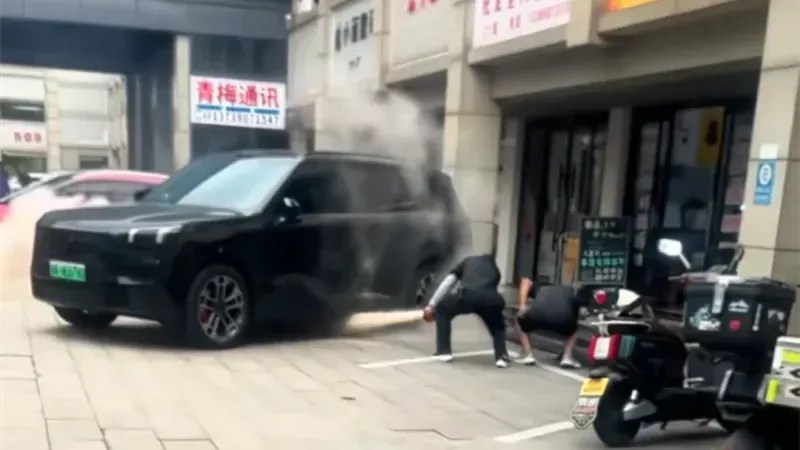
The unexpected combustion of a modern electrified vehicle invariably draws intense public scrutiny, particularly in markets where New Energy Vehicles (NEVs) have achieved widespread adoption. Such an incident recently unfolded in Hangzhou, the capital of China’s prosperous Zhejiang province, involving a plug-in hybrid electric vehicle (PHEV) from the Lynk & Co brand. The occurrence quickly generated digital interest, prompting swift rejoinders from the manufacturer’s local dealership network amidst competing narratives regarding the ignition source. While online speculation immediately targeted the vehicle’s sophisticated high-voltage battery architecture—a common focal point in contemporary automotive mishaps—the local dealership firmly contested these assumptions, attributing the blaze instead to an external consumer electronic device.
As regulatory bodies and municipal fire authorities continue their meticulous forensic examination of the site, the event highlights broader conversations surrounding vehicle safety, public information dissemination in the digital age, and the complex challenge of managing consumer perception in the rapidly expanding NEV sector.
Chronology of the Incident
The sequence of events commenced on the afternoon of September 9, 2026. At approximately 16:06 local time, within a bustling commercial district in Hangzhou, a Lynk & Co plug-in hybrid SUV—identified in preliminary reports as the 900 model—was parked when it became the center of a sudden emergency.
Eyewitness accounts captured on mobile devices indicated that smoke and subsequent flames began emanating from the lower portion of the stationary vehicle. The rapid escalation prompted immediate emergency calls to local municipal authorities. First responders arrived at the scene in a timely manner, securing the perimeter and deploying suppression equipment to extinguish the fire before it could cause catastrophic structural damage to the surrounding commercial environment or inflict severe harm upon pedestrians.
Visual documentation retrieved from the scene demonstrated active intervention by firefighters, though the initial footage did not definitively establish the precise origin point of the fire relative to the vehicle’s internal components. Following the containment of the blaze, the immediate area was cordoned off to facilitate standard investigative protocols, preserving physical evidence for the municipal fire department’s forensic specialists.
Official Dealership Response and Denial
In the wake of the incident, Hangzhou Lingyue Lynk & Co Centre, the local authorized dealership representing the brand, issued a comprehensive formal statement to address circulating speculations and clarify the preliminary findings gathered from the vehicle owner.
According to the dealership’s public communication, the vehicle owner provided a firsthand account suggesting that the fire was precipitated by an external object rather than any mechanical or electrical failure inherent to the vehicle itself. Specifically, the owner reported that a pedestrian had accidentally dropped a portable powerbank in the vicinity of the vehicle. The device was reportedly kicked or displaced in such a manner that it lodged underneath the SUV prior to the onset of the fire.
The dealership categorically rejected assertions circulating across social media platforms that the incident constituted a spontaneous combustion event originating from the vehicle’s high-voltage traction battery pack. Emphasizing that the ultimate determination must rest upon official documentation, the dealership stated that a definitive conclusion would be officially established solely through the issuance of the official Fire Incident Certificate by the competent municipal authorities.
"According to the vehicle owner, the fire was caused by a powerbank that caught fire spontaneously after being dropped and sliding underneath the automobile. The flames did not originate from the vehicle’s battery systems or any internal automotive components," the dealership noted in its statement. "Following the incident, the owner promptly reported the occurrence to the fire department and relevant authorities, ensuring the site was secured in accordance with established safety protocols."
Furthermore, the dealership addressed the proliferation of unverified claims on digital networks, cautioning against premature judgments. Representatives asserted that online narratives labeling the incident as an unprovoked vehicle failure deviated significantly from the realities observed at the scene. The dealership underscored its intention to monitor digital discourse closely, retaining the legal prerogative to pursue formal action against entities intentionally fabricating or amplifying misleading rumors regarding the brand’s safety standards.
Broader Context and Industry Implications
The rapid response from the manufacturer’s retail network reflects the heightened sensitivity surrounding electric and plug-in hybrid vehicle safety within the global automotive market, and particularly within China. As the world’s largest market for New Energy Vehicles, China boasts millions of registered plug-in hybrids and battery electric vehicles, making public confidence in battery technology a critical asset for automotive conglomerates.
Incidents involving thermal events in electrified vehicles, regardless of their actual root cause, frequently capture disproportionate media attention. This phenomenon places immense pressure on manufacturers to act swiftly, transparently, and decisively to separate verifiable engineering data from speculation. In many instances, aftermarket accessories—ranging from portable chargers and dashboard cameras to consumer powerbanks—introduce variables into vehicle safety equations that fall outside the direct control of automotive designers and manufacturers.
Lithium-ion consumer powerbanks, commonly carried by individuals for mobile device charging, contain energy-dense cells that can, under specific conditions of physical trauma, manufacturing defects, or thermal stress, undergo thermal runaway. If such an event occurs externally and in close proximity to flammable undercarriage components, plastics, or accumulated debris, it can inadvertently trigger secondary combustion events that mimic vehicle-origin fires to casual observers.
The reliance on official forensic reports from municipal fire departments remains the gold standard in resolving such ambiguities. Automotive engineers and safety regulators depend on systematic metallurgical, electrical, and chemical analysis of the remaining wreckage to determine whether an ignition source originated internally—such as a short circuit within the battery management system, wiring harness, or powertrain controllers—or externally from environmental factors.
Conclusion and Next Steps
As the investigation in Hangzhou proceeds toward its formal conclusion, the case serves as a poignant reminder of the complexities inherent in modern urban mobility and public information ecosystems. The distinction between vehicle-induced thermal events and external interference remains critical for both consumer reassurance and the accurate tracking of automotive safety metrics.
Stakeholders across the automotive industry, regulatory bodies, and consumer advocacy groups continue to emphasize the necessity of exercising restraint when evaluating preliminary social media reports. Until the official Fire Incident Certificate is released by the Hangzhou municipal authorities, the precise sequence of events remains subject to final forensic validation. Meanwhile, the incident underscores the growing importance of public safety awareness concerning the handling and management of consumer electronics in proximity to modern transport infrastructure.