Nila Kartika Wati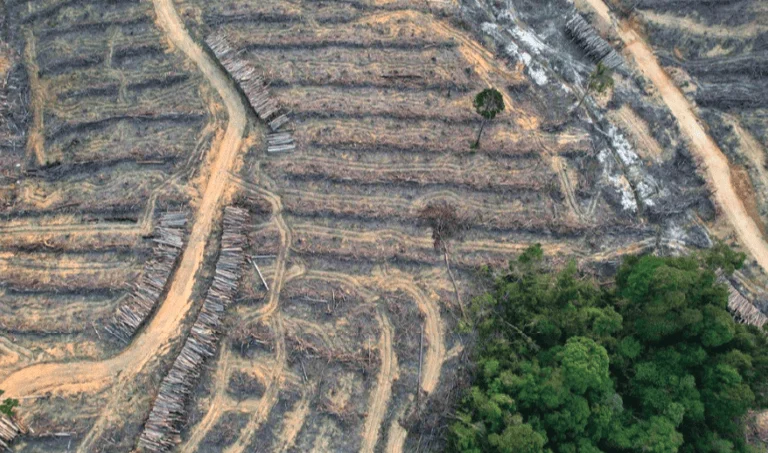
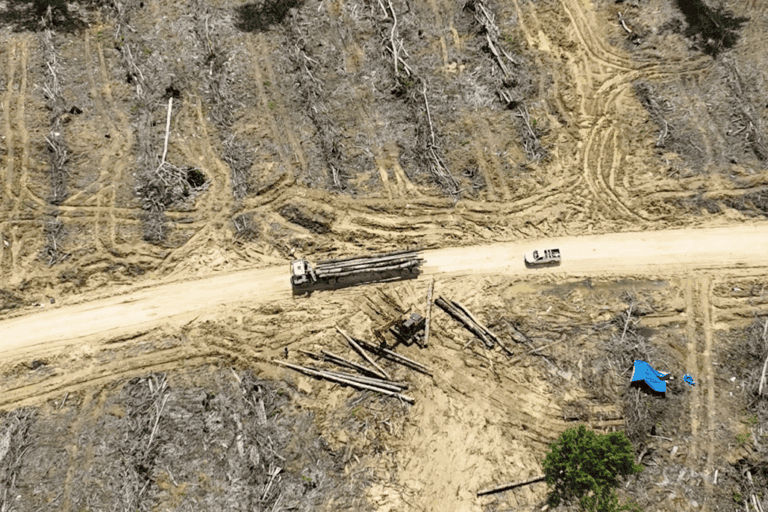
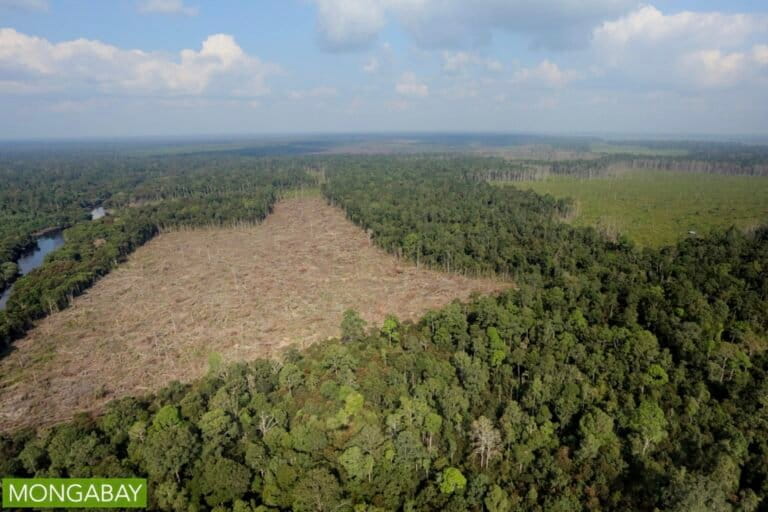
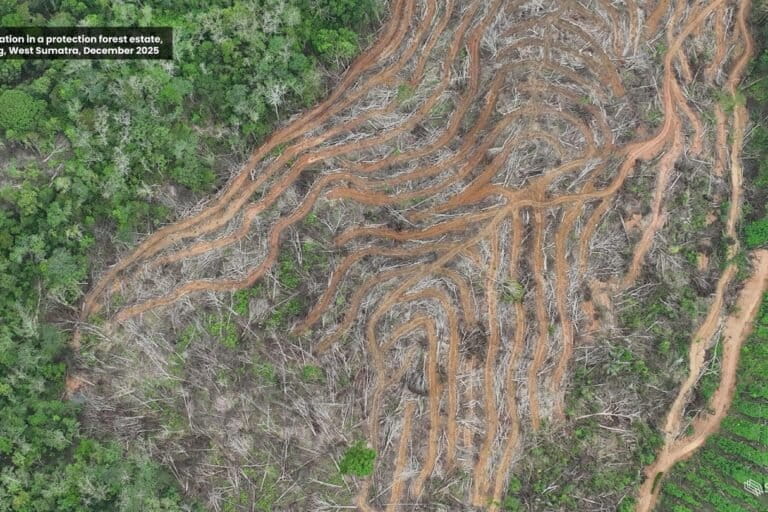
The state of Indonesia’s natural forests has reached a critical juncture, with new data revealing a persistent and accelerating decline in forest cover across the archipelago. According to the latest report from Forest Watch Indonesia (FWI) released in late August 2025, the country’s remaining natural forest cover has dwindled to 88.43 million hectares. This figure represents approximately 47% of Indonesia’s total landmass, marking a net loss of 1.06 million hectares in just one year compared to 2024. The data paints a harrowing picture of an ecosystem under siege, driven by a combination of industrial expansion, fragmented governance, and the failure of current environmental mitigation strategies.
The geographical distribution of this loss is uneven but widespread. Kalimantan and Sumatra remain the regions most severely impacted by forest fragmentation, with losses totaling 1.55 million hectares and 928,760 hectares, respectively. While Papua retains the largest expanse of contiguous natural forest—accounting for more than 80% of the national total at 25.46 million hectares—it is no longer immune to destruction. Approximately 2.45 million hectares of Papua’s forest have begun to show signs of moderate fragmentation, signaling that the last bastion of Indonesia’s primary forest is increasingly vulnerable to the same industrial pressures that have already devastated the western regions.
A Surge in Deforestation and the Shift in Industrial Modus Operandi
The scale of forest loss is underscored by a 37% spike in the national deforestation rate between 2024 and 2025. Kalimantan leads the country in this grim metric, with 352,070 hectares of forest cleared during the 2024–2025 period, followed by Sumatra at 269,250 hectares and Papua at 169,020 hectares.
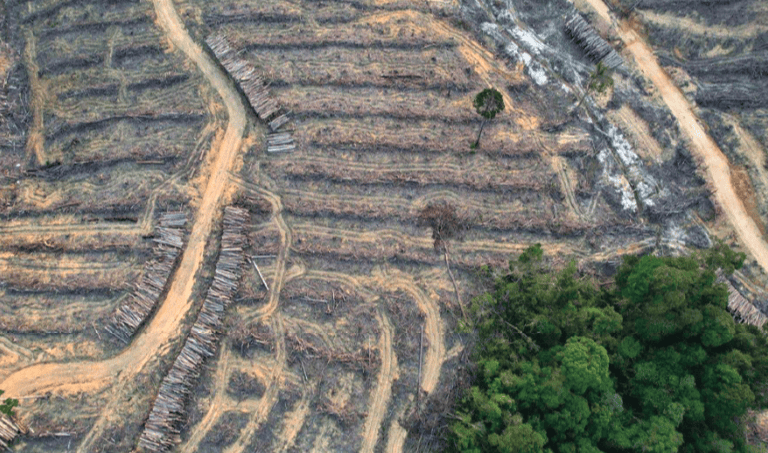
Ogy Dwi Aulia, Head of the Research and Information Data Division at FWI, emphasizes that the mechanisms driving this destruction have evolved. The era of simple, conventional land clearing is being superseded by complex, state-sanctioned projects operating under the banners of "energy transition" and "National Strategic Projects" (PSN).
A primary example cited by researchers is the massive 2.3-million-hectare food estate project in the Merauke Regency of South Papua. Approximately 34.5% of this designated development area still consists of primary natural forest. Between 2024 and 2025 alone, the region experienced 17,900 hectares of deforestation directly linked to these activities. Beyond the immediate loss of trees, the project threatens 11,000 hectares of carbon-rich peatlands and jeopardizes the livelihoods of 159 indigenous communities spanning 1.56 million hectares. Concerns regarding human rights are profound, with critics arguing that the project involves land grabbing, the desecration of sacred sites, and inadequate compensation, all while encroaching on 442,000 hectares of protected areas that were intended to remain strictly off-limits to exploitation.
The Persistence of Illegal Logging and Catastrophic Fires
While state-sanctioned projects account for a significant portion of the loss, illicit activities continue to play a major role in forest degradation. In the Aru Islands, FWI has documented a resurgence of large-scale illegal logging, a practice previously flagged to the Ministry of Forestry in 2021 but which has since resumed with increased intensity.
The impacts of these activities extend beyond ecological loss; they exacerbate social instability, particularly for women in forest-dependent communities who often face heightened insecurity and conflict as a result of illegal incursions into their customary lands.
Compounding these anthropogenic threats is the recurring crisis of forest and land fires (karhutla). Data from the Ministry of Forestry indicates that as of August 2026, fires had scorched over 202,000 hectares across 340 regencies. West Kalimantan recorded the highest area of burnt land at 38,310 hectares, followed by South Papua and East Nusa Tenggara. Satellite data from NASA’s Terra/AQUA system detected 14,851 high-confidence fire hotspots by September 2026, a staggering increase from the 110 hotspots recorded in January of the same year. Independent data from the Atlas Nusantara project provides an even grimmer assessment, estimating that by July 2026, the area affected by fire had already reached 285,914 hectares, with nearly half a million hotspots identified by early September.
Governance Failures and the Mirage of Sustainability
The rapid disappearance of Indonesia’s forests is happening despite, and in some cases because of, contradictory government policies. The government’s pursuit of a 20-million-hectare "Food and Energy Reserve" zone, formalized under Ministry of Forestry Regulation 8/2026, is a major point of contention.
Analysis by FWI shows that 10.8 million hectares of this reserve are concentrated in Kalimantan and Papua, with 50% of that land currently holding intact natural forest cover. During the 2024–2025 period, areas designated for this reserve contributed to 196,010 hectares of deforestation. Furthermore, the FoLU (Forestry and Other Land Use) Net Sink 2030 program—the government’s flagship strategy to reduce carbon emissions—appears to be failing in its implementation. A study of four of the program’s 12 operational plans, covering 45.92 million hectares, revealed that 20% of the national deforestation occurred within these supposedly protected zones.
The structural weakness of forest management is further exacerbated by systemic corruption. Indonesia Corruption Watch (ICW) reports that between 2010 and 2025, 56 major corruption cases in the forestry sector resulted in state losses of approximately IDR 4.8 trillion. Nisa Zonzoa, a researcher at ICW, notes that the prevalence of illicit activities—ranging from permit manipulation to the abuse of state authority—highlights a governance framework that prioritizes profit over protection. In 2012 alone, ICW estimated that corruption related to the release of forest areas in Kalimantan could have cost the state up to IDR 321 trillion, a testament to the long-standing nature of the rot within the sector.
The Limits of Law Enforcement
Legal mechanisms intended to curb forest crimes are often criticized for their lack of efficacy. Muhammad Ichwan, Executive Director of the Independent Forestry Monitoring Network (JPIK), argues that current enforcement is "sharp downward and blunt upward." Authorities frequently target small-scale actors while allowing major corporate entities to escape with minor administrative fines.
The case of the Ramin tree (Gonystylus bancanus), a protected species endemic to peat swamps, serves as a sobering case study. Once abundant, the population of Ramin has been decimated, with legal exports falling from 1.5 million cubic meters in the 1970s to negligible amounts today, largely due to sophisticated smuggling syndicates that forge documentation to reclassify protected timber as general commercial wood. JPIK has documented over 170 instances of forestry crimes, yet the reliance on the mandatory SVLK (Forestry Legality Verification System) remains inadequate. Critics argue that the system is only as good as its auditors, and with verification occurring only every two years, it fails to provide the real-time oversight necessary to stop ongoing illegal exploitation.
The Gendered Burden of Environmental Crisis
The consequences of forest destruction are not felt equally across society. Siti Aminah Tardi, a former commissioner of the National Commission on Violence Against Women, highlights that women bear a disproportionate burden of the ecological crisis. As forests disappear, women lose access to traditional medicine, food sources, and economic stability.
This loss of resources creates a "multiplier effect" of vulnerability. As household incomes collapse, women face increased risks of domestic violence, and in some regions, the influx of industrial labor has been linked to higher incidences of human trafficking and child marriage. Furthermore, when men in the community are criminalized for defending their land, women are often left to manage the household and legal battles alone, facing immense psychological and economic strain.
Despite these hardships, women remain the primary guardians of ecological knowledge, possessing the expertise to identify medicinal plants and manage forest ecosystems sustainably. Their role as "frontline defenders" of the environment is critical, yet they are rarely included in decision-making processes. Their exclusion not only hampers conservation efforts but also perpetuates a cycle of systemic injustice.
A Future at Risk
The trajectory of Indonesia’s natural forests suggests that without a radical overhaul of land-use policies and a genuine commitment to law enforcement, the country risks losing its remaining primary forests within a generation. The tension between the government’s economic ambitions—driven by the need for energy security and food independence—and the ecological imperative to preserve biodiversity and mitigate climate change has reached a breaking point.
As the 2030 deadlines for international climate commitments approach, the gap between policy rhetoric and the reality on the ground continues to widen. The data from 2025 and 2026 serves as a clarion call: current strategies are insufficient to halt the loss of the world’s third-largest tropical forest. For the indigenous communities, the local women, and the global climate, the survival of these forests is not merely a matter of environmental policy, but a question of basic survival and the preservation of the future for generations to come. The evidence is clear; the time for fragmented, administrative, and profit-driven approaches has long passed, leaving only a small window for the meaningful reform required to reverse the tide of destruction.