Azin Asro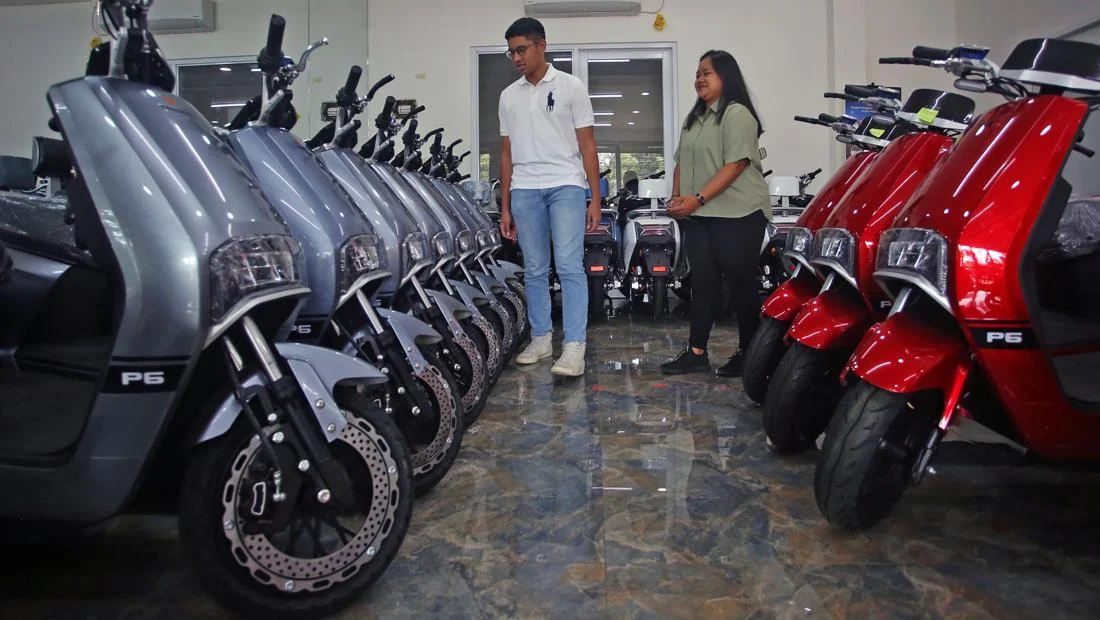
The transition toward green mobility in Indonesia faces significant headwinds, with the adoption rate of electric motorcycles remaining starkly disproportionate to traditional vehicles powered by internal combustion engines. Industry stakeholders point to a complex matrix of regulatory delays, unpredictable fiscal stimulus, infrastructure deficits, and financing bottlenecks as the primary deterrents holding back broader consumer uptake.
During a recent working meeting with Commission VII of the House of Representatives, the Chairman of the Indonesian Electric Motorcycle Industry Association (AISMOLI), Budi Setiyadi, presented a sobering assessment of the domestic market. Despite concerted government efforts to promote eco-friendly transportation, the cumulative sales of new electric motorcycles in the archipelago have only reached approximately 280,000 units. When juxtaposed against the robust annual growth of conventional fuel-powered motorcycles—which consistently record between 5 million and 6 million units sold every year—the electric vehicle (EV) sector commands a minute fraction of the overall market share.
This vast disparity underscores the formidable challenges confronting manufacturers, policymakers, and consumers alike. While the global automotive landscape accelerates its pivot away from fossil fuels, Indonesia’s two-wheeled EV ecosystem remains in a vulnerable developmental phase, heavily reliant on government intervention to stimulate consumer demand and overcome initial market resistance.
The Chronology and Volatility of Government Subsidies
A primary catalyst for the stagnation in electric motorcycle sales is the fluctuating implementation of government subsidy programs. Inconsistent policy signals and unfulfilled promises regarding financial incentives have created a pervasive wait-and-see attitude among prospective buyers. Rather than purchasing units immediately, consumers frequently delay their decisions in anticipation of state-backed price reductions.
The trajectory of annual sales figures vividly illustrates the impact of policy predictability versus uncertainty. In 2023, during the nascent stages of the national EV incentive framework, the industry managed to sell a modest 15,000 units. The following year, in 2024, sales surged to approximately 77,000 units as public awareness grew and initial distribution channels matured.
However, momentum stalled heading into subsequent fiscal cycles. In 2025, despite the absence of direct subsidies, the market demonstrated a degree of organic resilience by moving around 70,000 units. The true contraction became acutely apparent in 2026. As of August 2026, cumulative sales for the year managed to reach only about 18,900 units, reflecting severe market fatigue driven by prolonged administrative delays.
The lack of clarity regarding the continuation of financial incentives has exacerbated consumer hesitation. The government had previously floated plans to introduce a refreshed subsidy scheme as early as August 2025, yet successive timeline revisions left the initiative in limbo. Early in 2026, expectations were renewed when officials indicated that a Rp 3 million subsidy per unit would be disbursed under the guidance of former Finance Minister Purbaya. Nevertheless, as of September 2026, the promised assistance has failed to materialize, directly choking the retail pipeline and frustrating industry stakeholders who rely on predictable policy frameworks to forecast production and inventory levels.
Infrastructure Deficits and Consumer Apprehension
Beyond fiscal incentives, structural challenges within the domestic market continue to impede widespread adoption. Budi highlighted that charging infrastructure—often termed the primary bottleneck alongside subsidies—remains woefully inadequate for mass-market reassurance. Unlike conventional motorcycles that can refueled at ubiquitous roadside fuel stations within minutes, electric vehicle users face limited access to reliable public charging or battery-swapping stations, particularly outside major urban centers.
Compounding the infrastructure deficit is consumer anxiety surrounding after-sales support and maintenance. A recurring question among potential buyers concerns vehicle longevity and repair logistics. Many citizens remain skeptical about purchasing electric motorcycles due to the scarcity of authorized service centers and specialized mechanics capable of diagnosing and repairing electrical faults. Without a robust, nationwide network of service hubs, consumers perceive electric motorcycles as a high-risk investment, fearing that minor technical failures could render their vehicles unusable due to a lack of local technical support.
Financing Obstacles and Institutional Friction
Financial ecosystem integration represents another critical hurdle. While state-owned banking institutions grouped under the Association of State-Owned Banks (Himbara) have repeatedly expressed verbal support for green financing initiatives, translating these policy commitments into accessible retail credit remains problematic.
In official forums with the government and industry representatives, Himbara banks have consistently affirmed their readiness to fund the electric vehicle sector, spanning both manufacturing operations and consumer-facing vehicle financing. However, execution on the ground tells a different story. Prospective buyers frequently encounter stringent credit scoring requirements, high down payment mandates, or a general reluctance among local loan officers to portfolio-finance electric motorcycles due to uncertain residual asset values. This discrepancy between high-level institutional pledges and grassroots lending practices effectively restricts capital flow to the consumer base, stifling transaction volumes.
Broader Economic and Environmental Implications
The sluggish penetration of electric motorcycles carries significant ramifications for Indonesia’s national development and environmental targets. Transport emissions constitute a major share of urban air pollution and greenhouse gas emissions in densely populated Indonesian cities such as Jakarta, Surabaya, and Bandung. The electrification of the nation’s massive two-wheeler fleet is a cornerstone of Indonesia’s commitment to reducing carbon emissions and achieving its long-term net-zero goals.
Economically, the failure to scale the domestic EV market threatens to undermine investments made by local manufacturing and assembly plants. Manufacturers that invested heavily in retooling facilities to meet projected government production targets now face underutilized capacity and mounting operational pressures. Furthermore, delays in building a robust domestic market compromise Indonesia’s ambition to position itself as a strategic regional hub for electric vehicle production and supply chains in Southeast Asia.
Policy Recommendations and Future Outlook
Industry observers and legislative members stress that overcoming the current stagnation requires decisive and transparent government action. Restoring consumer confidence necessitates immediate clarity regarding the execution of financial incentives, streamlining the disbursement of subsidies, and ensuring that bureaucratic hurdles do not undermine fiscal commitments.
Concurrently, expanding charging infrastructure through public-private partnerships and incentivizing traditional service networks to transition into certified EV maintenance shops will be vital to alleviating consumer anxiety. Financial institutions must also be encouraged to operationalize green lending products with flexible terms that reflect the unique lifecycle and operating economics of electric motorcycles.
Until these systemic bottlenecks—ranging from policy execution to charging availability and financing access—are comprehensively addressed, Indonesia’s electric motorcycle market will likely continue to struggle to bridge the vast chasm separating it from traditional internal combustion vehicles.