Nila Kartika Wati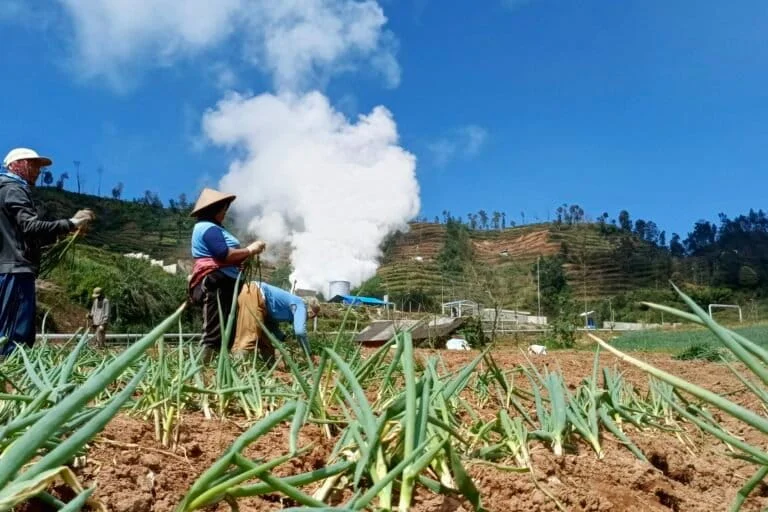
The development of the Mount Ungaran Geothermal Power Plant (PLTP) has once again become a flashpoint for social and environmental tension in Central Java. Following the issuance of Ministry of Energy and Mineral Resources (ESDM) Decree Number 134.TK/EK.04/MEMBPE/2026, which formally tasks the state-owned electricity provider PLN with continuing exploration and development in the region, local communities have reignited their long-standing opposition. This project, which envisions the extraction of geothermal energy from depths of 1,900 to 2,200 meters, faces not only the hurdle of community distrust but also significant questions regarding data integrity, economic viability, and the preservation of national heritage sites.
A Chronology of Contention: Nearly Two Decades of Unrest
The conflict surrounding the geothermal potential of Mount Ungaran is not a new phenomenon. The area was first designated as a geothermal working area (WKP) in 2007, marking the beginning of a cycle of planning and public resistance.
The history of the site is marked by repeated attempts to harness its subsurface heat. Between 2010 and 2013, a private entity conducted initial exploration efforts, which were later followed by a secondary phase led by PLN between 2017 and 2022. Despite these multi-year efforts, the data resulting from these investigations remained largely opaque to the public. The lack of transparency regarding previous failures or findings has fostered a climate of skepticism among residents who feel their livelihoods are being gambled on projects that have yet to demonstrate tangible success.
Under the current government mandate, officials have set a target for exploration to conclude by 2029, with the plant expected to reach commercial operation by 2031. However, the path to that deadline is obstructed by a legacy of unresolved environmental concerns and administrative inconsistencies.
The Socio-Economic Stakes: Agriculture and Water Security
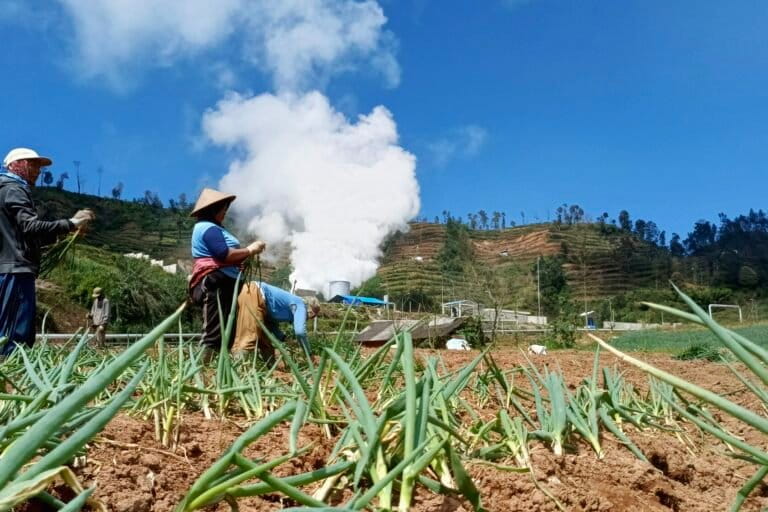
At the heart of the resistance is the Aliansi Semarang Menggugat, a local advocacy group representing the interests of farmers and residents living in the shadows of Mount Ungaran. For these communities, the mountain is not merely a source of geothermal energy; it is the vital watershed that sustains their agricultural economy.
Rahman, the coordinator of the Aliansi Semarang Menggugat, emphasizes that the local economy relies heavily on the stability of water springs and soil integrity. "We have been prosperous through farming. If geothermal operations commence, we fear the reduction of water volume and the risk of contamination," Rahman stated. He noted that the drilling processes, which involve penetrating thousands of meters into the earth, could disrupt local aquifers, potentially causing irreversible damage to the irrigation systems that support the region’s agricultural output.
Beyond water, residents have expressed alarm over the risk of gas leaks and the potential for induced seismic activity. The prospect of drilling near active fault lines—a geological reality of the volcanic landscape—has heightened the anxiety of those who have lived safely in the area for generations.
Cultural Heritage and the Gedongsongo Complex
The project also faces significant challenges regarding the proximity of the Mount Ungaran geothermal site to the Gedongsongo temple complex. Designated as a National Cultural Heritage site, Gedongsongo is a critical center for tourism, spiritual practice, and cultural identity in Central Java.
The community argues that the industrialization of the surrounding landscape threatens the sanctity and structural integrity of these ancient monuments. For many locals, the temple complex represents the history of the region, and they view any industrial encroachment as a threat to their cultural heritage. The intersection of modern energy production and historical preservation remains one of the most sensitive aspects of the ongoing debate, as the government faces the dual responsibility of meeting national energy targets and upholding its commitment to protect Indonesia’s cultural assets.
The Data Dilemma: Questionable Economic Viability
A critical technical issue undermining the project’s credibility is the vast discrepancy in data regarding the actual energy capacity of the Mount Ungaran geothermal field.
The Ministry of ESDM has projected an energy potential of approximately 55 megawatts. However, this figure is starkly contradicted by other scientific assessments. A 2025 study conducted by the Bandung Institute of Technology (ITB) estimated the output capacity to be as low as 20 megawatts. This lower estimate aligns with a 2021 report from the Central Java Energy and Mineral Resources Office, which concluded that initial optimistic estimates were revised downward following rigorous surveys and modeling.
Furthermore, the National General Plan for Electricity (RUKN) for 2008-2027 once suggested a potential as high as 100 megawatts. This wide variance—ranging from 20 to 100 megawatts—has led experts and observers to question the fundamental feasibility of the project. If the actual capacity is closer to the lower estimates, the economic viability of the project becomes highly questionable, as the high capital expenditure required for deep-well drilling may not yield a sufficient return on investment.
Wishnu Try Utomo, a researcher at the Center of Economic and Law Studies (CELIOS), has publicly questioned the government’s insistence on pushing forward with the project. "We must ensure that this project is not being forced if it lacks the necessary economic and energy potential," he warned, noting that forcing an uneconomical project could result in a significant waste of state funds and unnecessary environmental degradation.
Official Response and Governance Concerns
In response to the growing dissent, the Central Java Provincial Government has indicated a willingness to facilitate dialogue. Deputy Governor Taj Yasin stated that any energy project interacting with residential areas and environmental zones must prioritize safety, ecological sustainability, and local welfare.
However, legal experts argue that the government’s approach has been procedurally flawed. Fajar Muhammad Andhika from the Legal Aid Institute (LBH) of Semarang suggests that the government has failed to provide adequate information to the people most likely to be affected. "The lack of sufficient information makes the community increasingly vulnerable," Andhika said. He argued that the government should prioritize transparency and public consultation before issuing decrees, rather than attempting to manage opposition after the fact.
The history of the project suggests that the lack of public disclosure regarding the results of the 2010-2013 and 2017-2022 exploration phases has left a vacuum of trust. Without a clear, transparent account of why previous attempts failed—or what exactly was discovered during those periods—it is difficult for the local community to view the new mandate as a legitimate development effort rather than a repeat of past oversights.
Broader Implications for Indonesia’s Energy Transition
The standoff at Mount Ungaran highlights a broader challenge in Indonesia’s national energy transition. While the government is under pressure to reach net-zero emissions targets by shifting toward renewable sources like geothermal energy, the implementation of these projects often encounters significant friction at the local level.
The "just transition" framework, which advocates for energy projects that are environmentally sustainable and socially inclusive, is being tested in Ungaran. If the project continues without addressing the concerns of the agricultural community or resolving the discrepancies in the geological data, it risks becoming a symbolic failure of the state’s approach to renewable energy development.
The outcome of this situation will likely set a precedent for how future geothermal projects are handled across the Indonesian archipelago. Whether the government chooses to conduct an independent, transparent audit of the energy potential and engages in a genuine collaborative process with the local community, or continues to prioritize top-down mandates, will determine not only the future of the Mount Ungaran site but also the broader success of Indonesia’s geothermal energy strategy.
As it stands, the project remains in a state of limbo. With the 2029 deadline looming and community resistance hardening, the government is at a crossroads: it must decide whether to continue down a path of scientific and social uncertainty or to pivot toward a more transparent and evidence-based strategy that respects the rights and livelihoods of the local people. For now, the people of Ungaran continue to monitor the mountain, not just as a source of potential energy, but as the foundation of their daily existence, waiting for clarity that has been absent for nearly two decades.