Tyo Susilo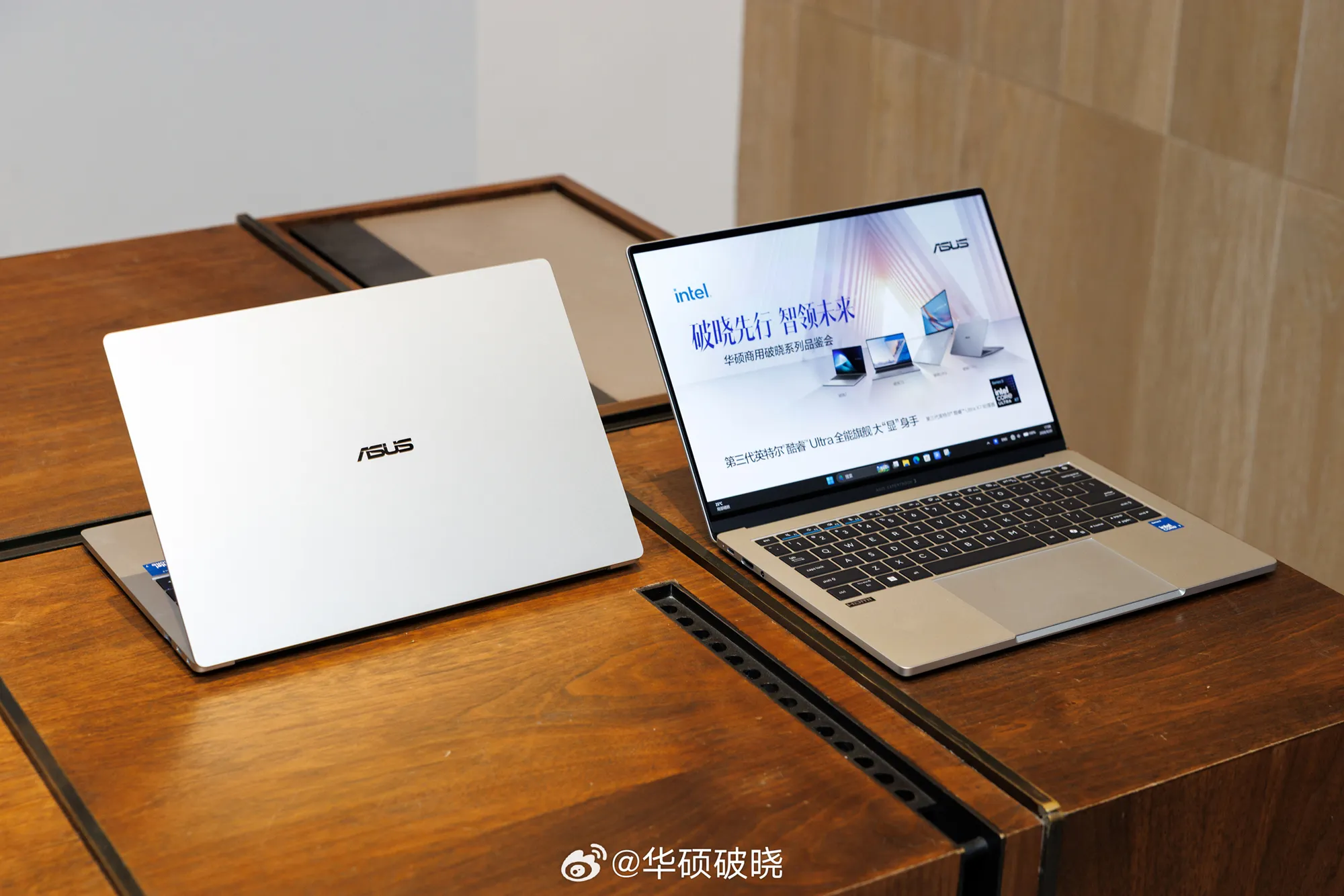
ASUS has officially expanded its prestigious lineup of business-oriented portable computers with the debut of the ASUS ExpertBook Air in the Chinese market. This newly unveiled notebook represents a significant milestone in enterprise computing, blending extreme portability with cutting-edge internal hardware and display technology. Designed specifically for modern professionals, frequent travelers, and corporate executives who demand uncompromising performance in a featherlight form factor, the ExpertBook Air introduces Intel’s latest Wildcat Lake processor architecture to the commercial laptop sector. With its ultra-slim chassis, vibrant high-refresh-rate OLED panel, and exceptional battery endurance, ASUS aims to redefine the standards of enterprise mobility.
Main Facts and Core Specifications
The centerpiece of the ASUS ExpertBook Air is its remarkable visual real estate. The laptop is equipped with a 14-inch OLED display boasting a crisp 2.8K resolution and a variable refresh rate of up to 120Hz. Designed to deliver exceptional visual clarity and color accuracy, the panel covers 100% of the DCI-P3 color gamut, making it ideal for content creators, data analysts, and professionals who work extensively with high-definition media. Furthermore, the screen achieves a peak brightness of 500 nits and features an impressive 90% screen-to-body ratio, framed by ultra-narrow bezels. To ensure comfortable viewing over extended working hours, ASUS has integrated an anti-glare coating alongside VESA DisplayHDR True Black 600 certification, which guarantees deep contrast levels and vivid color reproduction.
Despite housing robust internal components, the ExpertBook Air maintains a remarkably sleek physical profile. The device measures a mere 10.4 millimeters in thickness and tips the scales at just 1.28 kilograms, placing it securely in the upper echelon of ultrathin and light laptops. Beneath its minimalist exterior lies the processing power of Intel’s newly minted Wildcat Lake platform. Consumers in the Chinese market can choose between two primary configurations: the Intel Core 5 320 and the more powerful Intel Core 7 350. Both processors feature a 6-core CPU architecture paired with an integrated Xe3 graphics processing unit containing 2 cores. The higher-tier Core 7 350 offers elevated clock speeds and a slightly more capable Neural Processing Unit (NPU), catering to users who require enhanced AI-driven productivity workloads.
Chronology and Market Context
The rollout of the ExpertBook Air follows a strategic trajectory by ASUS to capture the rapidly growing segment of premium, ultra-portable enterprise devices. Over the past several years, the commercial laptop market has witnessed a paradigm shift. Professionals no longer accept the trade-off between a bulky workstation loaded with performance and a lightweight machine with limited capabilities. In response, semiconductor manufacturers and hardware developers have accelerated the development of power-efficient architectures.
The integration of Intel Wildcat Lake processors into the ExpertBook series marks the culmination of months of hardware anticipation. The platform’s debut in China serves as an initial regional launchpad, a common industry strategy deployed by major hardware manufacturers to gauge consumer reception and optimize supply chains before wider international distribution. While ASUS has not yet officially confirmed the timeline for a global rollout, industry analysts widely anticipate that localized variants of the ExpertBook Air will appear in North American, European, and Southeast Asian markets in the subsequent quarters.
Supporting Data and Connectivity Features

Power management is one of the most critical metrics for mobile professionals, and ASUS has addressed this by outfitting the ExpertBook Air with a high-capacity 65Wh battery. According to official laboratory metrics provided by the manufacturer, this power cell is capable of delivering up to an astonishing 26 hours of continuous usage under optimal conditions. This longevity allows users to navigate multiple consecutive workdays or long-haul international flights without needing to tether the device to a wall outlet.
Thermal management in such an exceptionally thin chassis often presents a formidable engineering challenge. Rather than relying entirely on passive cooling, which can lead to thermal throttling under sustained heavy workloads, ASUS has integrated an active cooling system. This compact thermal solution ensures that the Intel Wildcat Lake processor maintains peak performance levels during intensive multitasking, data compilation, or video conferencing.
In terms of connectivity, the ExpertBook Air defies its slender dimensions by offering a surprisingly comprehensive selection of ports. The peripheral interface includes one traditional USB-A port, two versatile USB-C ports, an HDMI 2.1 output for high-resolution external display connectivity, and a standard 3.5mm audio jack for headphones or microphones. For wireless communication, the laptop incorporates cutting-edge Wi-Fi 6E and Bluetooth 5.4 standards, ensuring stable, high-speed data transmission in congested corporate networks or public hotspots.
Pricing and Regional Availability
As of its initial launch in China, the ASUS ExpertBook Air is competitively positioned within the premium business segment. The baseline configuration, featuring the Intel Core 5 320 processor, carries a starting price tag of 5,999 yuan, which translates to approximately USD $840 or roughly IDR 13 million. Meanwhile, the higher-end iteration equipped with the Intel Core 7 350 processor, coupled with 16GB of RAM and a 512GB solid-state drive (SSD), is retailed at 7,499 yuan, or approximately USD $1,050 / IDR 16.4 million. These price points reflect ASUS’s strategy to offer aggressive value within the ultra-premium tier, directly challenging rival commercial offerings from major competitors like Dell, HP, and Lenovo.
Broader Impact and Industry Implications
The introduction of the ExpertBook Air with Intel Wildcat Lake technology carries several significant implications for the broader personal computer industry. First, it highlights the relentless pace of miniaturization in laptop engineering. Achieving a thickness of just 10.4 mm while accommodating active cooling and a full suite of physical ports demonstrates a notable leap in mechanical design and component density.
Second, the incorporation of advanced NPUs within the Wildcat Lake platform underscores the accelerating integration of artificial intelligence into everyday enterprise workflows. As operating systems and productivity software increasingly rely on local AI processing for tasks such as real-time transcription, automated security monitoring, and predictive text generation, hardware like the ExpertBook Air ensures that business users are equipped for the next generation of software capabilities.
Finally, the consumer-friendly pricing strategy observed in the Chinese market may spark heightened competition among commercial PC vendors globally. As remote and hybrid work models continue to dominate the modern corporate landscape, the demand for devices that seamlessly bridge the gap between high-end entertainment displays and enterprise-grade reliability will only intensify. The ASUS ExpertBook Air stands as a formidable contender in this evolving ecosystem, setting a high benchmark for what professionals can expect from ultrathin business laptops in the years ahead.